<?xml version="1.0" encoding="UTF-8"?>
<feed xmlns="http://www.w3.org/2005/Atom">
  <title type="text">Harrisburg Historical</title>
  <updated>2026-10-01T12:32:24+00:00</updated>
  <generator uri="http://framework.zend.com" version="1.12.20">Zend_Feed_Writer</generator>
  <link rel="alternate" type="text/html" href="https://harrisburghistorical.org/"/>
  <link rel="self" type="application/atom+xml" href="https://harrisburghistorical.org/items/browse?output=rss2"/>
  <id>https://harrisburghistorical.org/</id>
  <author>
    <name>Harrisburg Historical</name>
    <uri>https://harrisburghistorical.org</uri>
  </author>
  <link rel="hub" href="https://pubsubhubbub.appspot.com/"/>
  <entry>
    <title type="html"><![CDATA[A Gathering at the Crossroads: The Story of the Commonwealth Monument]]></title>
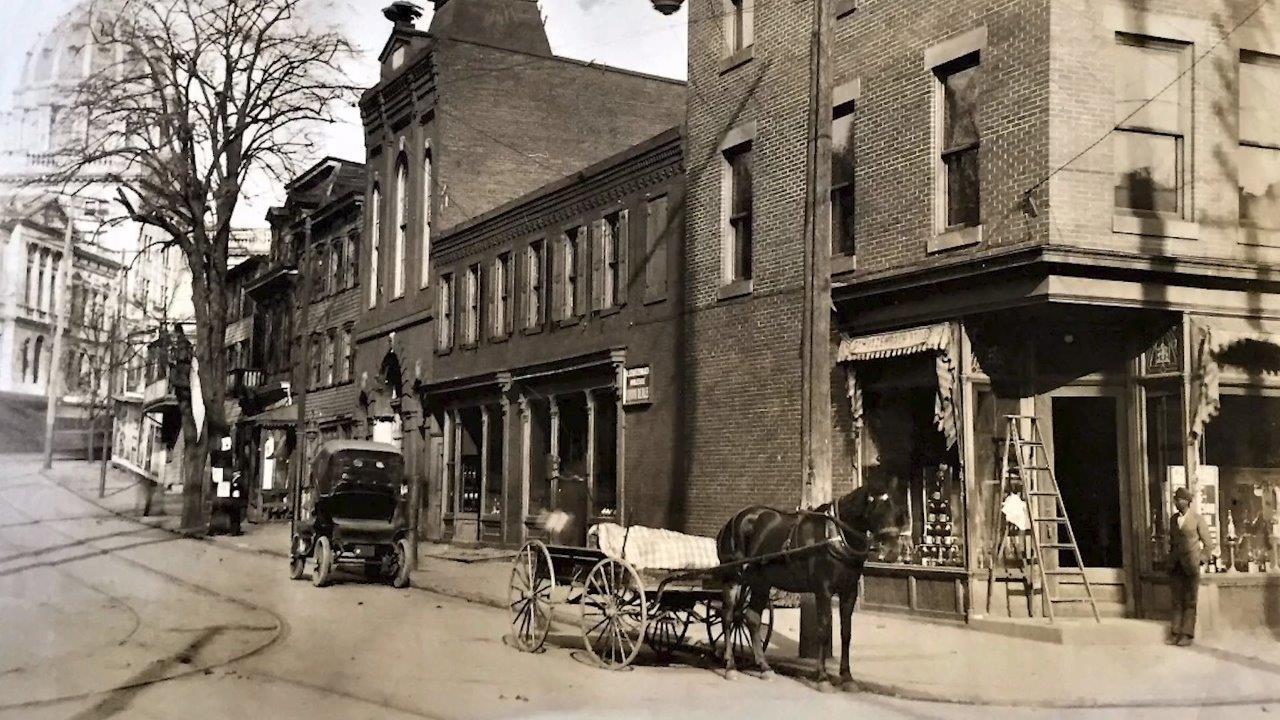
    <summary type="html"><![CDATA[<p><strong><em>In 2020, as communities around the nation took down monuments symbolizing the legacies of American slavery, Harrisburg residents set up a monument to African American history and the power of the vote. </em></strong></p><img src="https://harrisburghistorical.org/files/fullsize/deaad0b9295abae0a1dfa266d3e54656.jpg" alt="A Gathering at the Crossroads" /><br/><p>On August 26, 2020, <em>A Gathering at the Crossroads</em> commemorated the anniversaries of the Fifteenth and Nineteenth  Amendments through the installation of a monument to Harrisburg’s Black history. 150 years after the right to universal male suffrage was granted to the people of the United States, and 100 years after women's suffrage was established, 2020 marked the intersection of the legacies of past achievements, and the inconsistencies and obstacles of the present. Beginning in the Spring of 2020, protests against police brutality toward Black Americans swept the nation, calling attention to continued injustices in American society. </p><p>At the height of this racial reckoning, a new bronze monument was placed on the Irvis Equality Circle, which marks the south <span>lawn of the Speaker K. Leroy Irvis Office Building </span>in Harrisburg’s Capitol Complex. A little more than a century ago, neither the Circle nor the expansive Capitol building existed. The area where this monument now stands was once a part of the Old Eighth Ward known as Tanner’s Alley, a predominantly African American neighborhood. Instead of lush green spaces and domed ceilings, this part of Harrisburg was filled with thriving churches, schools, businesses, and private residences. In the early twentieth century, however, these spaces were torn down and families were forced out of their homes due to the Capitol expansion project. The City Beautiful movement started as a push to create new green spaces and waste disposal measures that would benefit the entire community, but by the 1910s, it had morphed into a drive to complete the Capitol Complex that stands today. The Old Eighth, home to significant Black, Jewish, and immigrant populations, was demolished and residents were forced to relocate. For many years, their names and stories were forgotten. </p><p>The monument at Irvis Equality Circle is, to date, the only monument on the Capitol grounds honoring Harrisburg's Black community. The Commonwealth Monument Project is an initiative of the the International Institute for Peace through Tourism and was led by Lenwood Sloan (Executive Director), Jeb Stuart (Secretary of Logistics and Installation), Kelly Summerford (Treasurer), Phyllis Bennett (Government and Business Liaison), and Valerie Leblanc (Planning and Development). It enjoyed bipartisan support from both the Pennsylvania House of Representatives and Senate, along with major financial contributions from the City of Harrisburg, the Foundation for Enhancing Communities, Peggy Grove, Dauphin County Commissioners, Messiah University, Senator Sharif Street, and many other generous donors. </p><p>Artist Becky Ault and Art Design Group crafted four life-sized bronze statues of African American orators, each of whom made major contributions to the quest for racial justice in America and have a meaningful connection to the city of Harrisburg. These include, from left to right: </p><p>Thomas Morris Chester (1834–1892), a Civil War correspondent and Harrisburg native. In 1863, he became the captain of one of Harrisburg’s Union companies. Through 1864, Chester reported on the war effort, particularly the contributions of African American troops. Most newspapers completely overlooked the African American soldiers, but through Chester’s journalism, papers such as the <em>Philadelphia Press</em> printed information about them. After the war, Chester returned to Harrisburg where he became the secretary of the newly founded Garnet Equal Rights League, which advocated for Black rights and freedoms. This section of Walnut Street is named the "T. Morris Chester Way" in his honor.</p><p>Jacob T. Compton (1836–1905), sergeant in Company D of the 24th United States Colored Infantry (USCT) and local musician. In the Harrisburg community, Compton was known for leading the choirs of both African Methodist Episcopal and African Methodist Episcopal Zion churches, and for founding the Excelsior Band. Compton was also a carriage driver. Among the ranks of his passengers was Abraham Lincoln, soon to be the sixteenth president of the United States. In February 1861, before his inauguration, president-elect Abraham Lincoln visited Harrisburg. When an assassination plot was uncovered, it was Compton who <span>drove the getaway carriage.</span></p><p>The third figure, Reverend William Howard Day (1825–1900), was a prominent educator and orator, and one of America’s most renowned civil rights activists of his time. His contributions to Harrisburg were plentiful. In the 1870s, Day was appointed to the Harrisburg School Board of Directors. He successfully led the board in allocating funds to public schools for new textbooks and blackboards. Day fought for better education for African Americans both by improving the schools that existed for African American students and by beginning the process of integration at Harrisburg’s all-white Boys High School. Day was also an active community leader at the Wesley Union African Methodist Episcopal Zion Church on South Street. </p><p>The final figure on the right is Francis Ellen Watkins Harper (1825–1911), who fought for the abolition of slavery, women’s suffrage, and temperance. This statue of Francis holds the Fifteenth Amendment, which guaranteed universal male suffrage. She is depicted passing the document back to Day, demonstrating that there was still more to do: women were not yet enfranchised. Harper was a renowned antislavery journalist, poet, and public speaker, who gave lectures in cities across the United States, including Harrisburg. One of her most famous speeches, “We Are All Bound Up Together,” expressed the frustrations of Black women at being largely excluded from the women’s suffrage movement and called for universal voting rights.</p><p>These four visionaries surround a pedestal at the center of the monument. A model of the Old Eighth Ward sits on top. A blue star indicates the location of the monument relative to the vanished landscape of the Old Eighth Ward. The sides of the pedestal bear the names of one hundred influential Black residents of Harrisburg. These individuals were freedom seekers, abolitionists, suffragists, church leaders, doctors, businesspeople, poets, and more. All called Harrisburg home, and all fought for a better, more equitable city. </p><p>The impact of the many Black Americans honored by <em>A Gathering at the Crossroads</em> is not confined to this space on Walnut Street. Their legacies are everywhere: in Harrisburg’s school system, churches, cemeteries, and homes. Some of their stories have been explored throughout the “Chester Way” tour. Each location highlights a moment in time when Harrisburg’s residents spoke out against oppressive structures and ushered in radical change in areas of education, politics, and social life. As you reflect on each stop on the tour, you may discover something new about the capital city’s history and find yourself at a different kind of “crossroads,” as the struggles, hopes, and triumphs of the past intersect with the aspirations of the present. </p><p>A full list of the resources used in this story can be found <a href="https://www.zotero.org/groups/5114087/harrisburg_historical/collections/3WI8N8R7/items/7RE3X2J3/collection">here</a>.</p><p><strong>Related Stories:</strong></p><p><a href="https://harrisburghistorical.org/items/show/10">The Second Capitol Extension of Harrisburg, Pennsylvania</a></p><p><a href="https://harrisburghistorical.org/items/show/4">The Lincoln Street School</a></p><p><a href="https://harrisburghistorical.org/items/show/13">Lincoln's Close Call</a></p><p><a href="https://harrisburghistorical.org/items/show/12">It's a Family Business</a></p><p><a href="https://harrisburghistorical.org/items/show/18">Taking the Moose Lodge to Court</a></p><p><em><strong><a href="https://harrisburghistorical.org/items/show/6">For more (including 6 images, 2 audio files,&#32;&amp;&#32;1 video) view the original article</a></strong></em></p>]]></summary>
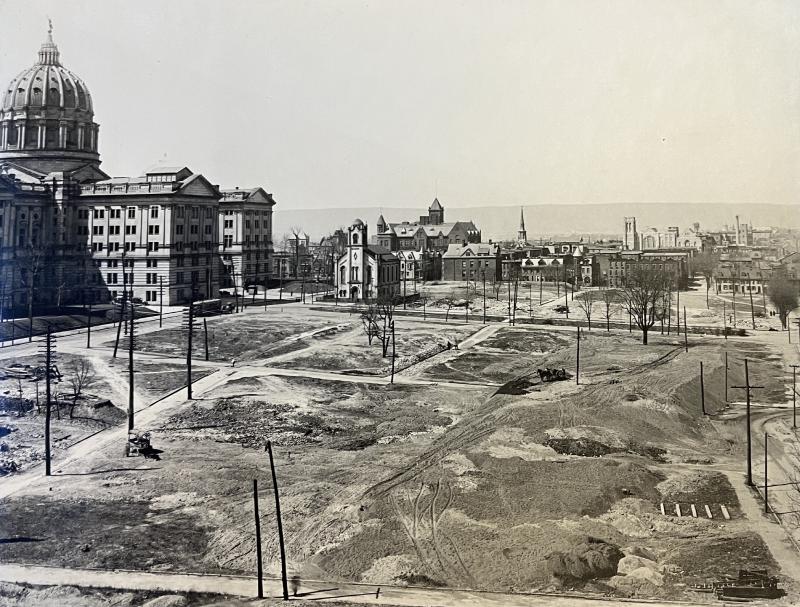
    <published>2023-11-01T15:40:47+00:00</published>
    <updated>2026-04-17T19:49:02+00:00</updated>
    <link rel="alternate" type="text/html" href="https://harrisburghistorical.org/items/show/6"/>
    <id>https://harrisburghistorical.org/items/show/6</id>
    <author>
      <name>Alexandra Shehigian</name>
    </author>
  </entry>
  <entry>
    <title type="html"><![CDATA[Black Politics and City Beautiful: Dr. William H.C. Jones and the Eighth Ward]]></title>
    <summary type="html"><![CDATA[<p><strong><em>During a time when African American voices were rarely heard, Dr. Jones convinced Black residents of Harrisburg to offer their needed support to the City Beautiful movement.</em></strong></p><img src="https://harrisburghistorical.org/files/fullsize/e4b3b21d149e137327393a2c9dd00a8a.jpg" alt="Dr. William H.C. Jones" /><br/><p>On December 20, 1900, Mira Lloyd Dock gave a presentation before the Harrisburg Board of Trade with nearly one hundred slides comparing Harrisburg’s badly maintained riverfront with those of some well-kept cities in Europe. She argued that Harrisburg had the space and natural resources to be sanitary and beautiful if the city put in the effort. Her speech sparked the City Beautiful movement that spanned 1901 to 1915 and resulted in a new capitol building, street and sewage improvements, and additional parks and playgrounds. To do all that, Dock needed support from the Board and Harrisburg’s communities. As a member of the Board of Trade, Dr. William H.C. Jones, Jr. was at Dock’s speech and became the only Black member of the Municipal League for Civic Improvement, a group organized in May 1901 to drive the movement. The League needed the support of the Eighth Ward where Jones lived, so he used his respectability to influence the large African American and immigrant populations there to endorse the beautification of Harrisburg.<p>Dr. William H.C. Jones, Jr. was born in 1860 in Snow Hill, Maryland, to William H. and Esther Jones. He studied medicine at Howard University and the New York Polyclinic Institute before moving to the Eighth Ward of Harrisburg in September 1887. He was a highly respected medical professional and played an active role in a variety of Harrisburg communities with both Black and white residents, especially those in the Eighth Ward. A generous man, he donated to poor houses, flood survivors, and John Harris’s Memorial.</p><p>One of his obituaries described him as someone who was “active in the advancement of Harrisburg, and [prominent] in professional and business life.” Indeed, he was appointed to a juvenile court board of inquiry in 1902 and elected as a School Board Director representing the Eighth Ward from 1902 to 1904. He was president of the Baker Building and Loan Association and a member of the John Harris Memorial Committee. He served as a common councilman for the Eighth Ward and the medical examiner of Brotherly Love Lodge, No. 896, Grand United Order of Odd Fellows. Professionally, he was a member of the American Medical Association and the Pennsylvania State Medical Society, a charter member of the Harrisburg Academy of Medicine, and the only Black man to serve as president of the Dauphin County Medical Society.</p><p>Deeply involved in the communities of Harrisburg, Jones championed the City Beautiful movement from 1901 until his death on January 19, 1905. He wanted to convince the African American community in the Eighth Ward that improving the city would bring much-needed changes to the city. The Eighth Ward was not only one of the most densely populated areas of the city, but the primary neighborhood for African American residents; white populations of lower socio-economic status; and immigrants from Hungary, Italy, Greece, and the Russian-occupied territories, among others. Jones, along with several others in the ward, pushed the neighborhood to support the improvements. Due to his strong relationships and influence in the community, he was able to use his medical knowledge and leadership to help gather support for the city improvement project.</p><p>The committee appointed by the Board of Trade in 1901 was tasked with organizing a mass meeting of citizens to discuss how to improve Harrisburg. As an original member of this group, Jones presided over meetings within the Eighth Ward. He led the first meeting that occurred at the Wesleyan African Methodist Episcopal Church on January 31, 1902, just before the city-wide vote to decide on the changes proposed by the Harrisburg City Municipal League. Newspapers, including the <i>Harrisburg Patriot</i>, noted hundreds in attendance. Jones and other notable leaders spoke at the gathering, including Reverend F. H. Hill, the pastor of the church; Spencer C. Gilbert, a board member for Public Works; and J. Horace McFarland, a key architect of the City Beautiful movement. All of these speakers emphasized their desire for change, progress, and overall beautification of the city. They also included demonstrations emphasizing health benefits and plans for cleanliness, two major driving forces for the movement.</p><p>Since companies had been dumping sewage waste into the Susquehanna River for several years, Jones was convinced that informing residents about its connection with disease would help gather support to clean it up. By conserving Paxton Creek and the banks of the Susquehanna River, Jones believed that residents of the whole city would benefit physically from the sanitized water. Similarly, parks would beautify the city while providing clean places to be outside. During the time that Jones served as president of the Dauphin County Medical Society, the organization recommended specific quarantine periods for diphtheria and scarlet fever to the sanitary committee. At the same meeting, other groups addressed sites for parks, the installation of sewers, and the addition of more telephone lines in the city. Jones continually argued for better sanitation, while he worked to gather support and money for the movement in the Eighth Ward. As a resident of the ward and the only Black member of the Municipal League for Civic Improvement, Jones had a unique opportunity to shape conversations surrounding the ward and the movement.</p><p>The neighborhood of the Eighth Ward was an ethnically diverse community within Harrisburg City. While representation was poor and many voices of the African American community were left out of the decision-making process, prominent leaders like Jones led the community to support the movement. Jones’s main influence was in the first precinct of the Eighth Ward, the southernmost district where many African Americans resided. This precinct voted overwhelmingly in favor of improvements in 1902. Of the 272 votes recorded for the bond issue that year, 261 voted in favor of improvement. This 96 percent acceptance rate was the highest of any of Harrisburg’s precincts. Jones’s efforts created a tentative bond of trust between residents of the Eighth Ward and city leadership looking to build a stronger capital city.</p><p>On the morning of January 19, 1905, Dr. William Harrison Jones, Jr. tragically died, at age forty-four, from double pneumonia after a fall down the Capitol building's steps weakened his body. His fiancé, Margaret Lewis, was at his side when he passed away. Many prominent citizens spoke at his funeral, including Dr. Charles H. Crampton, the future deputy secretary of the State Health Department; Thomas McDowell Jones, an associate editor of the <i>Harrisburg Daily Telegraph;</i> and Benjamin Matthias Nead, a lawyer and politician. The eulogies they gave commended Jones as a businessman, physician, Christian, citizen, philanthropist, and educator. After this untimely loss, the community commemorated his life with the Dr. William Harrison Jones Memorial Entrance and Fountain to a 12th Street playground in 1915. An automobile parade celebrating fifteen years of public improvements in Harrisburg included the dedication of the memorial entrance. This allowed people to formally recognize Jones’s contributions to the City Beautiful movement as a talented doctor and dedicated leader.</p><p>A full list of the resources used in this story can be found <a href="https://www.zotero.org/groups/5114087/harrisburg_historical/collections/P2BGENTE">here</a>.</p><p><strong>Related Stories</b></p><p><a href="https://harrisburghistorical.org/items/show/10">The Second Capitol Extension of Harrisburg, Pennsylvania</a></p><p><em><strong><a href="https://harrisburghistorical.org/items/show/15">For more (including 7 images&#32;&amp;&#32;2 audio files) view the original article</a></strong></em></p>]]></summary>
    <published>2024-07-20T13:51:08+00:00</published>
    <updated>2026-04-17T19:49:02+00:00</updated>
    <link rel="alternate" type="text/html" href="https://harrisburghistorical.org/items/show/15"/>
    <id>https://harrisburghistorical.org/items/show/15</id>
    <author>
      <name>Kyle Shively&amp;#32;&amp;amp;&amp;#32;Emmy Varner</name>
    </author>
  </entry>
  <entry>
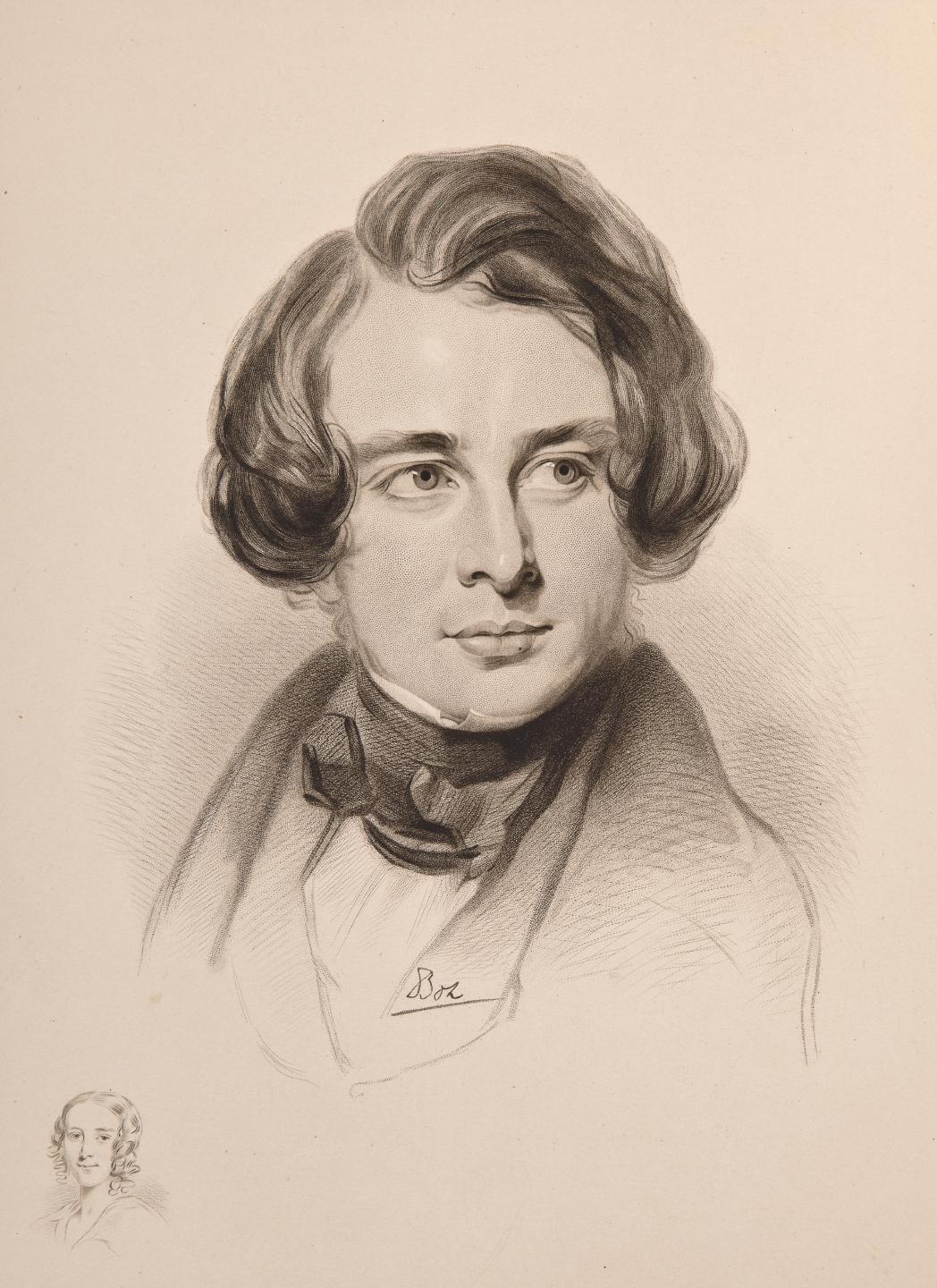
    <title type="html"><![CDATA[Charles Dickens in Harrisburg: A One-Day Visit That Left a Lasting Impression]]></title>
    <summary type="html"><![CDATA[<p><strong><em>While touring the United States in 1842, Charles Dickens briefly stopped in Harrisburg. Though largely unimpressed, he praised the hospitality he received at the Buehler Hotel, described the Susquehanna Valley in detail, and explored notable locations throughout the city, including the Capitol Building, the newly improved Dauphin County Prison, and John Harris’s gravesite.</em></strong></p><img src="https://harrisburghistorical.org/files/fullsize/f382265904397dcac6ba417b50438ac4.jpg" alt="Charles Dickens in 1842 " /><br/><p>The celebrated English writer Charles Dickens, along with his wife, Catherine, and her maid, Anne Brown, toured cities and towns across the United States in 1842 to experience America firsthand, recording his impressions in his travelogue, <i>American Notes for General Circulation</i>. One stop on his tour was Harrisburg. Although marked by discomfort and disappointment, Dickens toured important landmarks and monuments in the city, experienced firsthand American hospitality, and took pleasure in the immaculate views of the Susquehanna Valley. </p><p>After a rough ride from York, the thirty-year-old Dickens and his entourage arrived in Harrisburg on March 24, 1842, and left the very next day. He stayed in a local hotel at the northeast corner of Second and Market streets, known at the time as the Buehler House. Dickens’s fond remembrance of the modest Buehler House was owed to the hospitality of its landlord, Henry Buehler. “We were soon established in a snug hotel,” he wrote in <i>American Notes</i>, “which though smaller and far less splendid than many we put up at, it raised above them all in my remembrance, by having for its landlord the most obliging, considerate, and gentlemanly person I ever had to deal with.” Henry, who inherited the hotel from his father, George Buehler, in 1816, was known for his consideration and friendliness. Due to the hotel’s proximity to the Capitol Building, as well as Buehler’s interest in politics, the hotel became a hub for local politicians. Here, Dickens stayed in a room for legislators; however, he was not particularly fond of the room itself, expressing concern over the politicians spitting tobacco on the carpets of the hotel. </p><p>Dickens had mixed views on Harrisburg<i>. </i>Much of what he had to say about the city was negative. Still, he stated that he was fond of both the Buehler Hotel and the Susquehanna Valley. He described the Susquehanna River with the same descriptive detail he gave his fiction: </p><p>The river, dotted with innumerable green islands, lay upon our right; and on the left, a steep ascent, craggy with broken rock, and dark with pine trees. The mist, wreathing itself into a hundred fantastic shapes, moved solemnly upon the water; and the gloom of evening gave to all an air of mystery and silence which greatly enhanced its natural interest. </p><p>However, despite his interest in the surrounding nature, Dickens was not as fond of the city itself. Although Dickens wrote that he enjoyed Pennsylvania as a whole, stating that Philadelphia was “more provincial than Boston or New York,” he was not as impressed with Harrisburg. He and his wife travelled across the only bridge leading into Harrisburg at the time, the mile-long covered bridge known as the Camelback Bridge (now the Market Street Bridge). The bridge "was profoundly dark," Dickens said. "We had no lamps; and as the horses stumbled and floundered through this place, towards the distant speck of dying light, it seemed interminable." When he and his wife finally arrived, they met a wet and dark city whose gloominess disappointed them. “At length, however, we emerged upon the streets of Harrisburg, whose feeble lights, reflected dismally from the wet ground, did not shine out upon a very cheerful city.” It rained the whole trip, which only added to Dickens’s displeasure, as well as the city’s bleakness. </p><p>The next morning, Dickens set out to explore the city. He first visited the newly erected “model prison,” now known today as the Dauphin County Prison. Built in 1790, the prison was destroyed and remodeled from 1838 to 1841. Dickens’s arrival in 1842 meant he saw a brand-new prison. The prison tour showcased the then-popular “Solitary System,” which was based on isolation as punishment. Dickens strongly criticized this system, calling it inhumane. This was similar to his reaction to another prison, the Eastern State Penitentiary in Philadelphia, whose solitary system he noted was “cruel and wrong,” but also mentioned that he believed that the creators of the penitentiary did not know the full extent of this injustice. </p><p>After that, Dickens paid a visit to the gravesite of Harrisburg’s founder, John Harris, Jr. Upon viewing Harris’s grave, located under a mulberry tree on Front Street, Dickens noted the story of Harris’s capture by Native Americans at the same site in 1733. Keenly interested in interactions between settlers and Native Americans, Dickens strongly sympathized with the Native American people. He even visited the Office of the Secretary of the Commonwealth to view a variety of treaties in which the Native Peoples ceded their lands to the colony of Pennsylvania, such as the Iroquois Deed of 1736 and the Walking Purchase deed of 1737. Dickens sided with the Native Americans in <i>American Notes, </i>describing how they were misled by settlers and lied to in various treaties. This was a relatively unpopular sentiment for the time, as tensions between the two groups were especially high due to westward expansion. </p><p>Dickens then took a tour of the Capitol Building. At the Capitol, he met with Governor David Porter in the executive chamber and briefly looked at the state library. Later that day, he went down to the canal boat to scope out the conditions of the boat and the river where he would travel for the next three days on his way to Pittsburgh. Dickens and his wife left after an early dinner at the Buehler Hotel, thus concluding their trip to Harrisburg. </p><p>After reading <i>American Notes,</i> many Americans were unhappy, believing Dickens portrayed them as uncivilized and unsophisticated. As a result of this backlash, Dickens noted in the book’s preface that he did not intend to write about America with hostility, but instead to encourage Americans to reflect on their principles. He frequently praised the friendliness of the American people, as well as the country’s natural beauty. Although Dickens was not particularly fond of Harrisburg, he did enjoy his time at the Buehler Hotel, which helped shape not only his perception of the city but also contributed to his lasting impression of American hospitality.</p><p>A full list of resources used in this story can be found <a href="https://www.zotero.org/groups/5114087/harrisburg_historical/collections/MBQHUPUN/collection" target="_blank" rel="noreferrer noopener">here</a>.</p><p><em><strong><a href="https://harrisburghistorical.org/items/show/33">For more (including 4 images) view the original article</a></strong></em></p>]]></summary>
    <published>2026-03-15T00:41:54+00:00</published>
    <updated>2026-09-25T22:03:29+00:00</updated>
    <link rel="alternate" type="text/html" href="https://harrisburghistorical.org/items/show/33"/>
    <id>https://harrisburghistorical.org/items/show/33</id>
    <author>
      <name>Hannah Boes</name>
    </author>
  </entry>
  <entry>
    <title type="html"><![CDATA[Douglass at the Dauphin County Courthouse: Abolition and Violence in the State Capital]]></title>
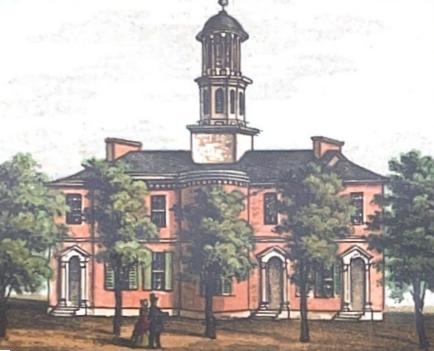
    <summary type="html"><![CDATA[<p><strong><em>In 1847, Frederick Douglass traveled to Harrisburg. The anti-slavery community supported his visit, but his work in the city was overshadowed by a racist mob that attacked him during his speech. Reports of the incident made their way into newspapers across the country, illustrating to many, including Douglass, the North’s role in perpetuating slavery and racism in the United States.</em></strong></p><img src="https://harrisburghistorical.org/files/fullsize/8a578acf7a88b765227c3d3851141026.jpg" alt="Sketching of Dauphin County Court House in 1799" /><br/><p><i>Listen to this story in <a href="https://harrisburghistorical.org/files/show/179" target="_blank" rel="noreferrer noopener">full version</a> or in <a href="https://harrisburghistorical.org/files/show/178" target="_blank" rel="noreferrer noopener">summary</a></i>.<p>In the summer of 1847, two giants of the abolitionist movement, Frederick Douglass and William Lloyd Garrison, toured Pennsylvania to speak at various abolitionist societies and meet other prominent figures in the movement to end the institution of slavery, which had plagued the land for more than two centuries. </p><p>Douglass, the more famous of the two, escaped slavery and went on to become one of the most notable orators, writers, thinkers, and abolitionists of nineteenth-century America. Douglass was an especially charismatic orator, known for his ability to speak and command a stage and to capture the hearts and minds of his audience. Garrison, in contrast, was known as a more timid, introverted man who focused on writing rather than speaking. Both men were controversial even for abolitionists, often causing splits in the anti-slavery camp by criticizing the emigration movement and emphasizing the improvement of the lives of Black people in the United States.</p><p>Douglass's and Garrison’s visit to the capital region came at a time of growing optimism in the anti-slavery cause, when multiple states were passing legislation in support of abolition. Harrisburg itself became a center for the abolitionist movement despite persisting pro-slavery sentiment in the capital. </p><p>On the morning of August 7, 1847, Frederick Douglass and William Garrison arrived in Harrisburg after a difficult train ride during which a belligerent and bigoted man harassed Douglass. Upon their arrival, Douglass and Garrison walked several blocks to the Dauphin County Courthouse, where they were scheduled to speak about their work and the blight of slavery in the country. Garrison spoke for an hour without issue and then gave the floor to Douglass. While the crowd had been very respectful and listened to Garrison’s speech, Douglass was heckled soon after he began speaking, and rabble-rousers threw rotten eggs at him. It didn’t end there. The mob set off fireworks outside; lobbed another volley of eggs toward him, one of which hit Garrison in the back of the head; and shouted racial epithets at Douglass. </p><p>Following this reaction, the abolitionists promptly concluded their speaking engagement. Garrison announced to the people, "Our mission to Harrisburg is ended. If there be not sufficient love of liberty and self-respect in the place, to protect the right of assembly and the freedom of speech, [Douglass] would not degrade himself by attempting to speak under such circumstances, and he would therefore recall the appointment for Sunday night and go where he could be heard." </p><p>As their security escorted Douglass and Garrison out, a mob harassed them while Harrisburg police watched. After the incident, they went to visit some colleagues in the anti-slavery movement at Wesley Union Church, where they received a warmer welcome. At the time, Harrisburg had a sizable free Black population of eleven percent, most of whom created communities around the African Methodist Episcopal and Presbyterian churches. </p><p>The remainder of the tour in Pennsylvania was not as difficult or memorable as their time in Harrisburg. Upon arriving in Pittsburgh on August 9, a notable abolitionist of the area, J.B. Vashon, welcomed them with a brass band. In his speeches, Douglass argued against the institution of slavery, appealing to the people’s religious sensibilities. Mainly, Douglass argued that owning people as property violated the Golden Rule, as well as the democratic principles laid out in the Declaration of Independence. More controversially, Douglass said that the Constitution was a pro-slavery document, which was especially illustrated by the clause stating that runaway slaves should be returned to their enslavers. He also described the North as complicit in keeping slavery alive. Douglass, addressing these pious abolitionists, also railed against the clergymen who defended slavery, calling them hypocrites who dishonored the profession. </p><p>After their speeches, Garrison and Douglass met with Dr. Martin R. Delany, who ultimately helped Douglass finance and establish his publication, the <i>North Star</i>. They later met some other abolitionists in Youngstown, Ohio, and concluded their tour on August 14. The men went their separate ways after that. </p><p>In the end, the intention of Frederick Douglass and William Lloyd Garrison was not to change minds and gain new supporters during their tour of Pennsylvania (as they were largely speaking to established abolitionist societies), but to motivate, inspire, and give direction to abolitionists.</p><p>The work of these men was instrumental to the end of slavery and played a role in the events leading to the Civil War a few years later in 1861. Without them, landmark civil rights legislation such as the Thirteenth, Fourteenth, and Fifteenth Amendments may not have been possible. These changes to the Constitution freed enslaved Americans, made all people equal under the law, and gave all men the right to vote, respectively. </p><p>A full list of the resources for this story can be found <a href="https://www.zotero.org/groups/5114087/harrisburg_historical/collections/HANBHTT2">here</a>.</p><p><strong>Related Stories</p><a href="https://harrisburghistorical.org/items/show/3">Men of God</a></p><p><a href="https://harrisburghistorical.org/items/show/8">Harrisburg's Role in the Underground Railroad</a></p><p><em><strong><a href="https://harrisburghistorical.org/items/show/5">For more (including 3 images&#32;&amp;&#32;2 audio files) view the original article</a></strong></em></p>]]></summary>
    <published>2023-10-26T01:25:15+00:00</published>
    <updated>2026-04-17T19:49:02+00:00</updated>
    <link rel="alternate" type="text/html" href="https://harrisburghistorical.org/items/show/5"/>
    <id>https://harrisburghistorical.org/items/show/5</id>
    <author>
      <name>Dominic Gomez</name>
    </author>
  </entry>
  <entry>
    <title type="html"><![CDATA[Fort Couch, Fort Washington, and the Defense of Harrisburg: How Black Civilians, Laborers and Soldiers Helped Defend Pennsylvania&#039;s Capital]]></title>
    <summary type="html"><![CDATA[<p><strong><em>In June 1863, Black and white Union troops and civilians constructed two forts on Hummel Heights, an elevated point on the western bank of the Susquehanna River, to defend against the approaching Confederate troops. Today, the remnants of Fort Couch stand as a testament to the importance of Black soldiers and civilians in the Union’s defense of Pennsylvania.</em></strong></p><img src="https://harrisburghistorical.org/files/fullsize/450039cc3940606c15b28a448bed97d8.jpg" alt="Pennsylvania civilians digging of earthworks on Hummel Heights" /><br/><p><span style="font-weight:400;">In 1863, a fierce Confederate invasion threatened the Pennsylvania capital of Harrisburg. The hot summer sun, frequent rains, and low morale plagued Union forces. Thanks in part to the construction of Fort Couch and Fort Washington, built largely by Black laborers, the rebel invasion was halted, a crucial part of turning the tide against the Confederacy during the Civil War. Equally significant, the inclusion of local Black men in the northern war efforts illustrated substantial progress toward a truly integrated military.</span>
<span style="font-weight:400;">Intending to strike a devastating blow to Union forces, Confederate General Robert E. Lee launched an invasion into northern territory in the summer of 1863. As Lee’s army rapidly approached Harrisburg, the Pennsylvania Capital’s fortifications and Union Militia along the Susquehanna River helped turn the rebels toward Gettysburg. The Confederates’ defeat there resulted in their retreat southward and eventual surrender to Union General Ulysses S. Grant in 1865, marking the end of the Civil War.</span>
<span style="font-weight:400;">But in June 1863, the South’s defeat was far from inevitable. Harrisburg, a vulnerable point in Union defenses, stood as an ideal gateway northward. Capturing the city would give the rebels control over the ports of the Susquehanna River, the railroads, and the defensive points along the River. As the Confederate forces approached, mass evacuations took place leaving the typically busy state capital nearly empty. </span>
<span style="font-weight:400;">To fend off incoming Confederate forces, Union Major General Darius N. Couch ordered the construction of fortifications overlooking the river on Hummel Heights, an elevated point on the west bank of the Susquehanna. He was assisted by Major James Brady, of the Pennsylvania Volunteer Artillery, and Engineer John A. Wilson. The first fortification, named Fort Washington, was built on the bluffs of what is today Lemoyne’s Negley Park. However, as this position was vulnerable to attack from a nearby high point, General Couch called for another fortification half a mile to the west. The second location was the site of Fort Couch, which occupied a higher, more tactically advantageous position.</span>
<span style="font-weight:400;">Construction of Fort Washington began on June 15, 1863. Volunteers eagerly started digging the earthworks, swinging their pickaxes into the topsoil. As the soft ground soon gave way to hard shale, the men began to weary and morale plummeted. By the next morning, after digging through the night by the light of bonfires, many volunteers had quit. In response, William T. Hildrup, superintendent of the Hummel Heights fortifications, placed advertisements in </span><i><span style="font-weight:400;">The Patriot and Union</span></i><span style="font-weight:400;"> directed to white and Black residents. Significantly, he offered equal pay — $1.25 per day — to Blacks. Finding extra men to work on the fortifications was a priority regardless of race. The Pennsylvania Railroad also sent workers, many of whom were African Americans, to complete some of the hardest work. Over six hundred citizens and railroad workers helped build the fortifications.</span>
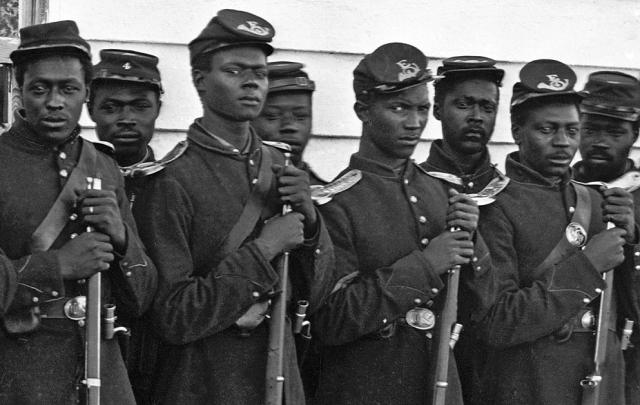
<span style="font-weight:400;">As the fortifications were being constructed, Pennsylvania Governor Andrew Curtin called for Pennsylvanians to defend their state, issuing an emergency call for volunteer troops on June 15. Men quickly signed up, including a full company of ninety African American men who departed from Philadelphia under white officers just twelve hours after the Governor’s call. But upon arriving in Harrisburg, Major General Couch turned them away, citing that Congress had authorized the enlistment of Black troops only if they were signed up for at least three years — not for emergency militia service. Word of their refusal reached Secretary of War Edwin Stanton, who then ordered Couch, "You are authorized to receive into the service any volunteer troops that may be offered, without regard to color." Privately, however, Stanton told noted abolitionist George Stearns not to send any more Black companies, probably because he feared disharmony at a crucial moment in the city's defense. </span>
<span style="font-weight:400;">In response to the Philadelphian troops’ rejection, Harrisburg's African American community convened a meeting "for the purpose of organizing and offering their services to the Governor." Days later, Harrisburg's first Black company was formed by Henry Bradley, a forty-one-year-old local Black barber. T. Morris Chester, who became the only Black war correspondent during the Civil War, quickly formed a second company, raising their numbers to 120.</span>
<span style="font-weight:400;">On June 26, as Confederate lines spread out across the state, Governor’s General Orders No. 44 was issued. The order, which made no racial distinction, called for “sixty thousand men for the defense of the State, to be mustered into the service of the State, for the period of ninety days, unless sooner discharged.” Bradley’s and Chester’s companies were then equipped with uniforms and equipment, but Harrisburg’s military authorities refused to provide them rifles, even as the Adjutant General ordered that all citizens could be furnished weapons at the city arsenal. The companies nonetheless continued to drill in the streets around the Capitol, patiently waiting for their time to come.</span>
<span style="font-weight:400;">As the troops drilled, construction of the city’s fortifications on Hummel Heights continued steadily. When Couch called Fort Washington complete on June 19, he feared it was threatened by a higher bluff to the west. In response, he ordered the construction of another fort, called Fort Couch in his honor, on the higher ground. Alongside Union troops from Pennsylvania and New York, African American civilians, refugees, and railroad workers once again completed most of the work. They dug day in and day out in heavy rain at the tough clay ground. Though it is unclear if Fort Couch was ever finished, it was nevertheless armed with cannons.</span>
<span style="font-weight:400;">On June 28, with artillery booming in the distance, the crisis reached its apex. Probably owing to false intelligence that the rebels were preparing to cross the river, the two Black companies, who had continued to drill in the streets, were finally permitted to carry arms. They promptly joined the other troops at the fortifications on Hummel Heights to await the Confederate attack.</span>
<span style="font-weight:400;">That attack, however, never came. Though rebels led by General Albert G. Jenkins and his cavalry took Mechanicsburg by June 28 and divisions were ordered towards Harrisburg, advancing Union forces caused Lee to concentrate his troops at Gettysburg. </span>
<span style="font-weight:400;">The defense of Harrisburg is an important event in the city’s African American history, for it marks a moment in which Harrisburg’s African Americans volunteered to defend their home even as they faced discrimination. After Captain Bradley’s company received their weapons from the arsenal, they marched through the Capitol grounds to the admiration of white and Black onlookers. Drilling unarmed in the streets for days, these soldiers, now armed with rifles issued by the State of Pennsylvania, evoked an image of resilience, determination, and agency. During a war in which this agency was threatened, Harrisburg’s African Americans contributed to the fight for their freedom in a variety of ways. From taking up arms to taking up a pickaxe, their actions represented one more step towards equality.</span>
<span style="font-weight:400;">After the war, Fort Washington and Fort Couch fell into neglect and were largely forgotten. Today, nothing remains of them except traces of dug-out breastworks — indications of the people of Harrisburg’s readiness to defend their city.</span>
A full list of the resources used in this story can be found <a href="https://www.zotero.org/groups/5114087/harrisburg_historical/collections/KG5ITEGZ">here</a>.</p><p><strong>Related Stories</strong></p><p><a href="https://harrisburghistorical.org/items/show/11">Welcome Home USCT</a></p><p><em><strong><a href="https://harrisburghistorical.org/items/show/9">For more (including 4 images&#32;&amp;&#32;2 audio files) view the original article</a></strong></em></p>]]></summary>
    <published>2024-02-12T20:31:55+00:00</published>
    <updated>2026-04-17T19:49:02+00:00</updated>
    <link rel="alternate" type="text/html" href="https://harrisburghistorical.org/items/show/9"/>
    <id>https://harrisburghistorical.org/items/show/9</id>
    <author>
      <name>Dominic Gomez</name>
    </author>
  </entry>
  <entry>
    <title type="html"><![CDATA[Genevieve Blatt and the Commonwealth Court: Changing Pennsylvania politics for the better ]]></title>
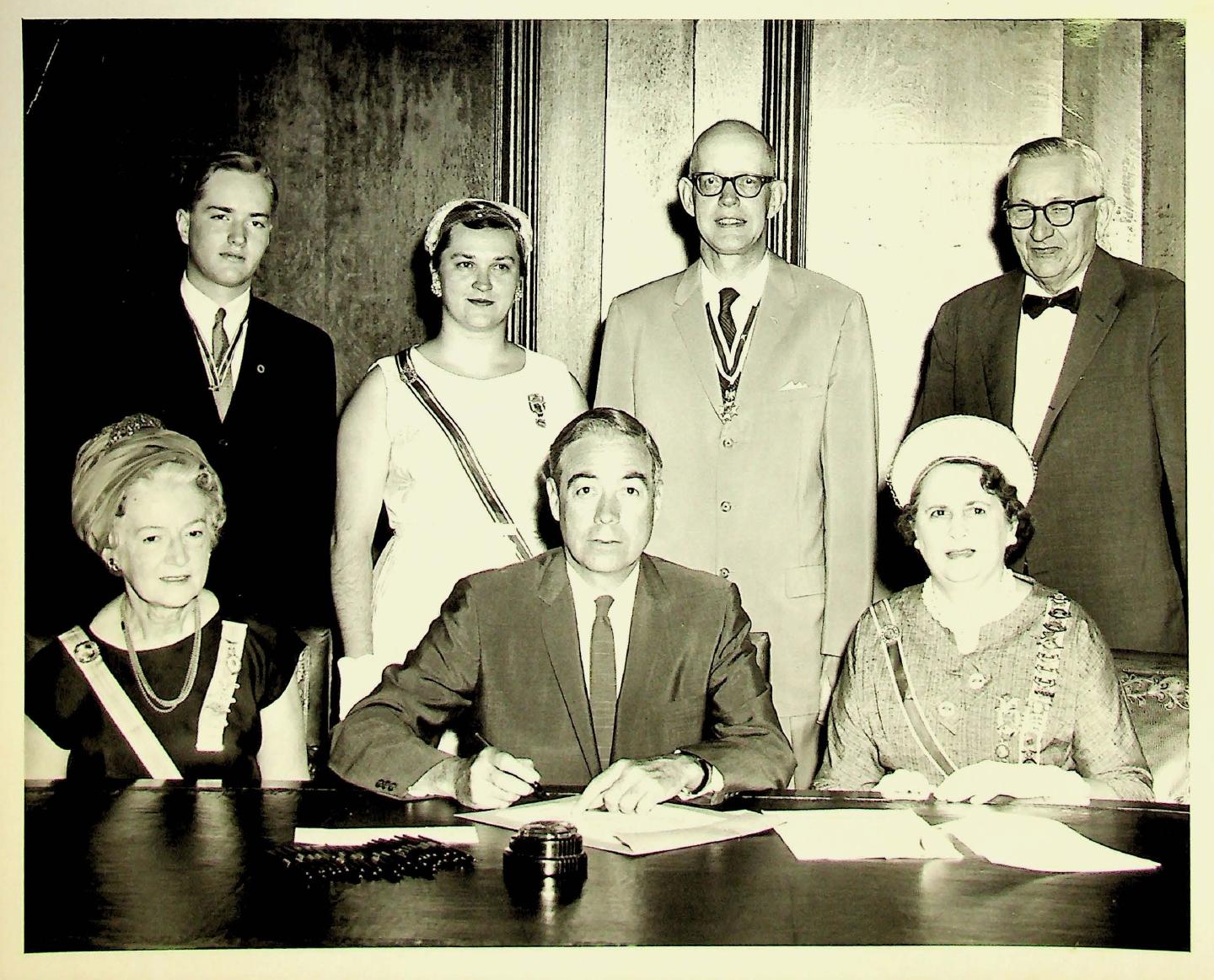
    <summary type="html"><![CDATA[<p><strong><em>In 1972, Genevieve Blatt made history when she was appointed to Pennsylvania's Commonwealth Court in Harrisburg, where she would go on to issue landmark rulings advancing women's rights, including a pivotal decision requiring equal access to sports programs for female athletes.</em></strong></p><img src="https://harrisburghistorical.org/files/fullsize/0c2e3ba2affabb583c56b89aa0171a6c.jpg" alt="Genevieve Blatt (far right) with others (including Governor Scranton)" /><br/><p>Genevieve Blatt made history in 1972 as the first woman appointed to Pennsylvania's Commonwealth Court. One of Blatt's most significant rulings concerned the enforcement of Title IX, a federal law prohibiting sex-based discrimination in education. Title IX states, “No person in the United States shall, on the basis of sex, be excluded from participation, be denied the benefits of, or be subjected to discrimination under any education program or activity receiving Federal financial assistance.” Blatt ruled that the Pennsylvania Interscholastic Athletic Association must provide women access to sports programs and ruled that they could no longer discriminate based on sex. </p><p>Learn more in <em><a href="https://storymaps.com/stories/e87ed988e9f04fdf99c0b9fc4bbae73f" target="_blank" rel="noreferrer noopener">Breaking the Glass Ceiling: </a></em><span><em><a href="https://storymaps.com/stories/e87ed988e9f04fdf99c0b9fc4bbae73f" target="_blank" rel="noreferrer noopener">How Genevieve Blatt Changed Pennsylvanian Politics Forever</a></em>. </p>A full list of resources used in this story can be found <a href="https://www.zotero.org/groups/5114087/harrisburg_historical/collections/MSQXMIHQ/items/DJW957E2/collection" target="_blank" title="Genevieve Blatt Zotero Folder" rel="noreferrer noopener">here</a>.</p><p><em><strong><a href="https://harrisburghistorical.org/items/show/23">For more (including 4 images) view the original article</a></strong></em></p>]]></summary>
    <published>2024-12-12T19:59:14+00:00</published>
    <updated>2026-04-17T19:49:02+00:00</updated>
    <link rel="alternate" type="text/html" href="https://harrisburghistorical.org/items/show/23"/>
    <id>https://harrisburghistorical.org/items/show/23</id>
    <author>
      <name>Maddie Graham</name>
    </author>
  </entry>
  <entry>
    <title type="html"><![CDATA[George Washington in Harrisburg: A Visit on the Road to the Whiskey Rebellion]]></title>
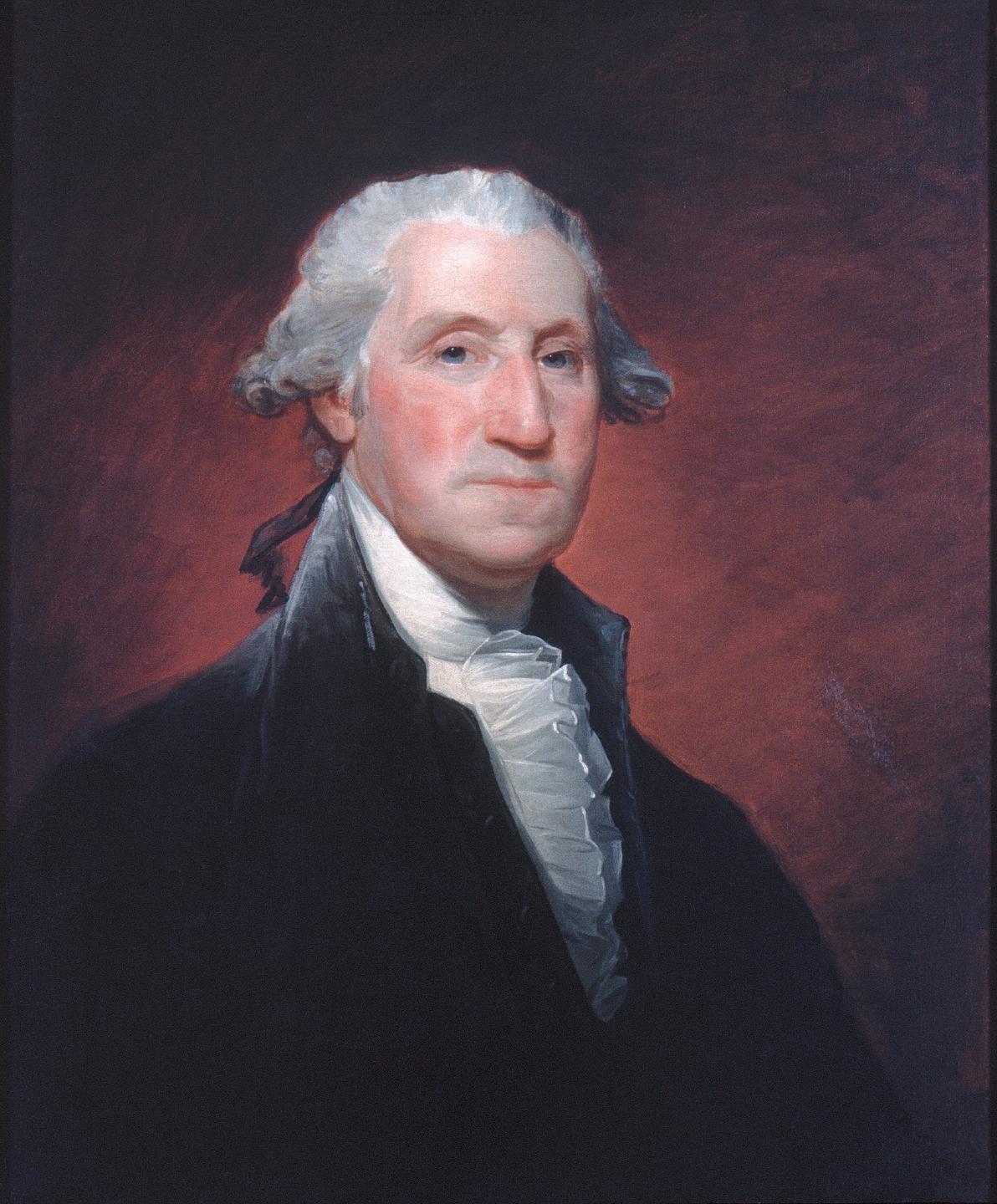
    <summary type="html"><![CDATA[<p><strong><em>As President George Washington travelled westward to quell the Whiskey Rebellion in 1794, he made a brief stop in Harrisburg, where he stayed in a log building that would later be named the Washington Inn in his honor. His diary entries record his observations about the new town—then only nine years old—as his army prepared to ford the Susquehanna River.</em></strong></p><img src="https://harrisburghistorical.org/files/fullsize/5b2c8d7c422d3c757498e09a45041c5c.jpg" alt="George Washington" /><br/><p>The newly formed United States, still celebrating its independence from Britain, faced heavy war debts. To pay off these debts, the government imposed a tax on the distillation of whiskey. Opposition to the tax was especially potent in western Pennsylvania, where the production of whiskey from surplus grain formed an important part of farmers’ livelihoods. In 1794, spurred by continued violence towards tax collectors and fears of open rebellion against the federal government, President Washington raised a large militia force to suppress the conflict and assert the new government’s authority. On his way out west, he stopped briefly in Harrisburg and recorded his observations about the Susquehanna River and the nascent town. </p><p>Washington arrived in Harrisburg on October 3, 1794. He traveled with notable figures such as Secretary of War Henry Knox, Secretary of the Treasury Alexander Hamilton, District Court Judge Richard Peters, and his secretary, Mr. Dandridge. The president met the First Regiment of New Jersey, which had arrived in Harrisburg earlier that morning in a rainstorm and consisted of about 560 men. According to David Ford, a captain in the regiment, Washington had intended to cross the Susquehanna that day because he feared the past two days of heavy rain would make crossing in the morning difficult. After some residents assured him the rain would not affect the river, he and his troops stayed overnight. Rather than pitch their tents, they relied on local hospitality, with some residents taking in upwards of twenty men. </p><p>Washington stayed in a log building on a site located now on the southeast corner of Second and Market Streets in Market Square. After dinner, he went for a walk, describing the young town, only nine years old, as “considerable for its age.” Captain Ford detailed what Washington would have seen at the time, saying Harrisburg consisted “of about 300 houses, 2 markets, court house and other public buildings, 3 churches, a number of very genteel well built brick houses.” Washington also noted in his diary the abundance of fish in the Susquehanna, describing rockfish over a foot long and salmon swimming in the water. </p><p>The citizens of Harrisburg had an overwhelmingly favorable opinion of Washington. A<i> Philadelphia Gazette</i> article from October 6, 1794, states that, “The pleasure excited, in beholding, for the first time, our beloved chief, in this borough, is not easily described.” Two burgesses, Conrad Bombach and Alex Berryhill, delivered an address to Washington on behalf of the city of Harrisburg. They expressed both joy at seeing Washington in their town and concern over the unrest caused by the Whiskey Rebellion. Their address affirms their trust that virtuous, peaceful citizens will prevail and the rebellion will not. They also show complete faith and trust in Washington to quell the conflict.</p><p>Washington responded with a gracious message of his own, which was published, alongside the burgesses’ statement, in the <i>Philadelphia Gazette</i>. He affirmed the patriotism of Harrisburg’s residents and thanked them for their support, describing his mission to end the unrest as a “defense of the laws.” Washington made plain that the Whiskey Rebellion threatened the new Constitution and that his success in quelling it would “serve to confirm the blessings of peace we enjoy, under a constitution that well deserves the confidence, attachment and support of virtuous men.” Such men, he continued, included the inhabitants of Harrisburg. </p><p>Washington departed Harrisburg the next day, on October 4. At daybreak on a chilly morning, the army began fording the Susquehanna’s cold, shallow waters. Major William Gould recorded how the men “suffered much with the cold in crossing.” Gould also noted that Washington crossed the river in a carriage, which the president drove himself. Washington then continued westward, reaching Carlisle early in the afternoon, ending his first and only stay in Harrisburg. </p><p>To commemorate the first president’s visit, Harrisburg residents christened the log building where Washington spent the night as the Washington Inn. The site of the Washington Inn would go on to have a long history in the city. It eventually became the location for the Jones House, a hotel that, sixty-seven years after Washington, President Abraham Lincoln stopped at on February 22, 1861, on his way to his inauguration. Although he intended to stay the night at the Jones House, his team caught wind of a plot to assassinate him in Baltimore, leading them to arrange for a secret train to carry the reluctant president directly to Washington, D.C. The Jones House later became the Commonwealth Hotel, and then the Dauphin Building, owned by the former Dauphin Deposit Bank. That building was demolished in 1990 to make way for the Bank’s new headquarters, now known as the Allfirst Tower. But the Washington Inn, and later the Jones House, will forever be part of Harrisburg’s history as the site of a visit from two of the country’s most consequential presidents. </p><p>A full list of the resources used in this story can be found <a href="https://www.zotero.org/groups/5114087/harrisburg_historical/collections/YHDBMJA9/items/AI9VIUE4/item-list">here</a>.</p><p><em><strong><a href="https://harrisburghistorical.org/items/show/32">For more (including 2 images) view the original article</a></strong></em></p>]]></summary>
    <published>2026-02-04T13:35:07+00:00</published>
    <updated>2026-10-01T12:32:24+00:00</updated>
    <link rel="alternate" type="text/html" href="https://harrisburghistorical.org/items/show/32"/>
    <id>https://harrisburghistorical.org/items/show/32</id>
    <author>
      <name>Kylie Smith&amp;#32;&amp;amp;&amp;#32;J.T. Crocenzi</name>
    </author>
  </entry>
  <entry>
    <title type="html"><![CDATA[Harrisburg&#039;s African Methodist Episcopal Churches: The Road to Emancipation]]></title>
    <summary type="html"><![CDATA[<p><strong><em>During the nineteenth century, the African American churches of Harrisburg were much more than houses of worship; they were agents of enfranchisement and liberation.</em></strong></p><img src="https://harrisburghistorical.org/files/fullsize/9448317b18fa8ff935d4157d3f4d961e.jpg" alt="Bethel AME,  Short Street View" /><br/><p>It was January 1, 1863. To many residents of Harrisburg, it was likely just a typical New Year's Day, but to the city's African American community, it held far greater significance as it marked the day the newly passed Emancipation Proclamation took effect. That evening, three chosen men met at the Bethel African Methodist Episcopal (AME) Church on Short Street to write a response to this momentous occasion. Not only did they encapsulate the joy and approval that African Americans felt, but also the anger and frustration that stemmed from two centuries of racial discrimination and dehumanization, warranting such a proclamation in the first place. By the end of that night’s worship service, the response was approved via a vote, simultaneously celebrating a win for African Americans worldwide while also acknowledging that work was far from over — work that Black churches in Harrisburg had already been doing for decades and would continue in the years ahead. 
The resolution composed by schoolteacher John Wolf, prominent community member Samuel Bennett, and Reverend David Stevens of the Wesley Union AME Zion Church may have captured what Harrisburg’s African American community felt about slavery, but their actions spoke louder. Despite its small stature, under the leadership of Reverend Mifflin Gibbs, the Bethel AME Church “included many of those who did man's work by day and the Lord's work by night, maintaining an active presence in that shadowy operation known as the Underground Railroad.” Understanding the difficulties that resulted from escaping slavery, the church provided housing for freedom seekers and found them employment in the local coal, iron, and steel industries, helping them settle into their new lives in the North, whether Harrisburg was their final home or merely a stop on the way. Later, following the ratification of the Fifteenth Amendment in 1870, Bethel AME took things a step further by registering new voters and offering classes in civic education, ushering in a new era of voting rights for the city. Although the Short Street church played a crucial role in the antislavery movement and in advancing the rights of African Americans, it was not alone. 
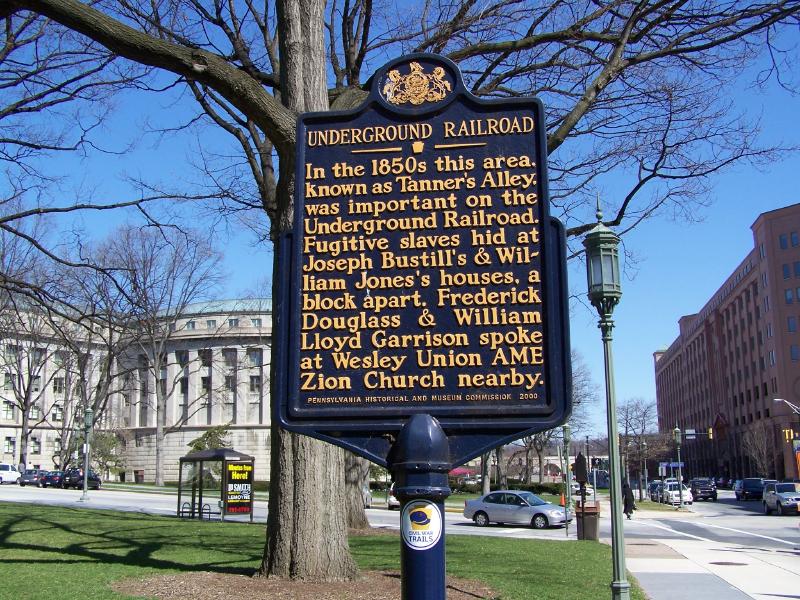
At the corner of Third and Mulberry Streets sat the small log building that housed the Wesley Union Church. Its neighborhood of “Judy’s Town” was a key spot for African American social and spiritual life, so it is unsurprising that it became the first of Harrisburg’s regular Underground Railroad stops, becoming the epicenter of the movement in the city by 1829. As at Bethel AME, many freedom seekers found refuge at Wesley Union, a direct result of the sermons that congregants heard during worship services, filling them with a sense of love and duty that inspired them to put everything on the line to help total strangers. One early Wesley Union congregant, William “Pap” Jones, was known for being one of the most effective Underground Railroad conductors in the area, using his extensive knowledge of northern routes to create guides for freedom seekers. Another congregant, Harriet McClintock Marshall, assisted freedom seekers by providing them with shelter, food, and clothing before ushering them to their next stops on their journeys to freedom; her husband’s status as a formerly enslaved man likely strengthened her resolve to help others on their journeys to freedom.
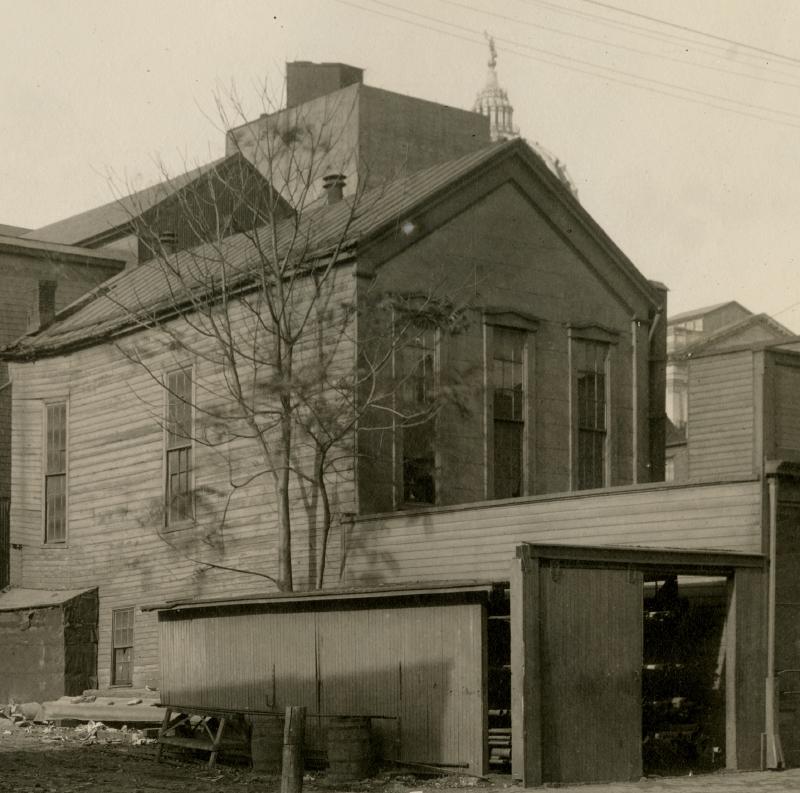
In fact, Harrisburg’s African American community was participating in Underground Railroad activities long before the Underground Railroad was established. For instance, Reverend David Stevens of Wesley Union Church encouraged his congregation to “strive for self-reliance and community,” a mission they fulfilled by assisting the needy in every way possible. The “needy,” of course, included enslaved people who had escaped from their bonds and were settling in the North. These actions led to the formation of a sort of network that connected different members of the Harrisburg African American community throughout the 1820s and 1830s under a common goal. Stevens and fellow African American minister Jacob D. Richardson publicly denounced slavery and opened the church to anti-slavery meetings and events, even attempting to start their own anti-slavery newspaper — <i>Zion’s Wesleyan Connection </i>— in 1841. The church continued to grow until their small log building in Judy’s Town was no longer big enough, leading founding pastor Stevens to seek out a new location at the corner of Tanner’s Alley and State Street, east of the Capitol building, where the congregation moved in its entirety in 1839. The construction of new buildings on the same site in 1862 and then again in 1894 demonstrates Wesley Union's success throughout the nineteenth century as it continued to flourish in spite of adversity. 
Churches such as Bethel AME and Wesley Union played a pivotal role in organizing Harrisburg’s Underground Railroad. From holding recruitment meetings for Black Civil War regiments to hosting national-scale anti-slavery speakers, houses of worship stood at the forefront of the city’s efforts to resist slavery and to support freedom seekers. Indifferent or discriminatory residents of Harrisburg may have viewed these African American men and women as "radicals" or lawbreakers, but in reality, they were fighting for justice and human dignity as children of God.<b></b></p><p>A full list of the resources used in this story can be found <a href="https://www.zotero.org/groups/5114087/harrisburg_historical/collections/6HAU588N">here</a>.
Related Stories</p><p><a href="https://harrisburghistorical.org/items/show/8">Harrisburg's Role in the Underground Railroad</a></p><p><a href="https://harrisburghistorical.org/items/show/5">Douglass in Harrisburg</a></p><p><a href="https://harrisburghistorical.org/items/show/4">The Lincoln Street School</a></p><p><a href="https://harrisburghistorical.org/items/show/2">Harrisburg's Lincoln Cemetery</a></p><p><em><strong><a href="https://harrisburghistorical.org/items/show/3">For more (including 5 images&#32;&amp;&#32;2 audio files) view the original article</a></strong></em></p>]]></summary>
    <published>2023-10-24T20:35:55+00:00</published>
    <updated>2026-07-05T18:14:55+00:00</updated>
    <link rel="alternate" type="text/html" href="https://harrisburghistorical.org/items/show/3"/>
    <id>https://harrisburghistorical.org/items/show/3</id>
    <author>
      <name>Rachel Petroziello</name>
    </author>
  </entry>
  <entry>
    <title type="html"><![CDATA[Harrisburg&#039;s Lincoln Cemetery : Restoring Dignity in Death ]]></title>
    <summary type="html"><![CDATA[<p><strong><em>The Lincoln Cemetery in Penbrook, Pennsylvania, features the largest burial ground for African Americans in the Harrisburg region. Founded in the 1870s, the cemetery is the final resting place for some of the Commonwealth's most influential Black citizens.</em></strong></p><img src="https://harrisburghistorical.org/files/fullsize/b8b82bc1c928e9652b68a56805032bf4.jpg" alt="Jacob T. Compton Headstone" /><br/><p><span style="font-weight:400;">Harrisburg, Carlisle, Chambersburg, and Gettysburg: four communities in south-central Pennsylvania with their own rich histories. However, one rather surprising fact unites them all: each contains a burial ground called the Lincoln Cemetery. Following the Civil War, this name became common for Black cemeteries nationwide, many of which were founded in response to discriminatory policies that barred African Americans from decent burials elsewhere. Black Americans achieved dignity in death despite discriminatory policies, as exemplified by Harrisburg's Lincoln Cemetery on South Thirtieth Street in Penbrook. Through the dedication of its founders, church, and volunteer caretakers, this cemetery has persevered through challenges to serve the local community and remains an essential landmark of Harrisburg's Black history.</span>
<span style="font-weight:400;">The plot of land that would become the Lincoln Cemetery officially fell under the ownership of the Wesley Union Church on November 17, 1877. The church, together with solicitor David Mumma, had widely advertised their plans for a new cemetery the previous year. Their proactive efforts in alerting the Black community led to well over one thousand bodies to be disinterred from other cemeteries across the city and reinterred in Lincoln Cemetery. By some estimates, the majority of the Black burials of Harrisburg's preexisting cemeteries — at the <span>African Burying Ground, Wesleyan Church Cemetery, and Harris Free Cemetery — were moved to Lincoln Cemetery at this time.</span></p><p>Both white and Black citizens attended the cemetery's dedication ceremony on a windy Sunday afternoon, enjoying music provided by the church, as well as addresses from speakers such as William Howard Day, who also read aloud the deed transferring ownership to the church trustees. In the few years following the opening of the Lincoln Cemetery, all appeared well; the Wesley Union African Methodist Episcopal (AME) Church was praised for owning all of its properties, including Lincoln, with no debt, and one April 1882 article of <em>The</em> </span><i><span style="font-weight:400;">Patriot </span></i><span style="font-weight:400;">described it as being “in a most flourishing condition.”</p><p>Lincoln Cemetery was segregated, as was common to all nineteenth-century cemeteries in the city. Though segregation is often associated with the South, it was prevalent in northern cities as well. In Harrisburg, the dilapidated condition of Wesley Union’s older burial ground reflected the cards that Black residents had been dealt in this regard. The realities of segregation made the Lincoln Cemetery necessary to provide African Americans with proper, dignified burials. Thanks to the actions of the Wesley Union AME Church, Harrisburg gained an essential new center for Black burials.</span>
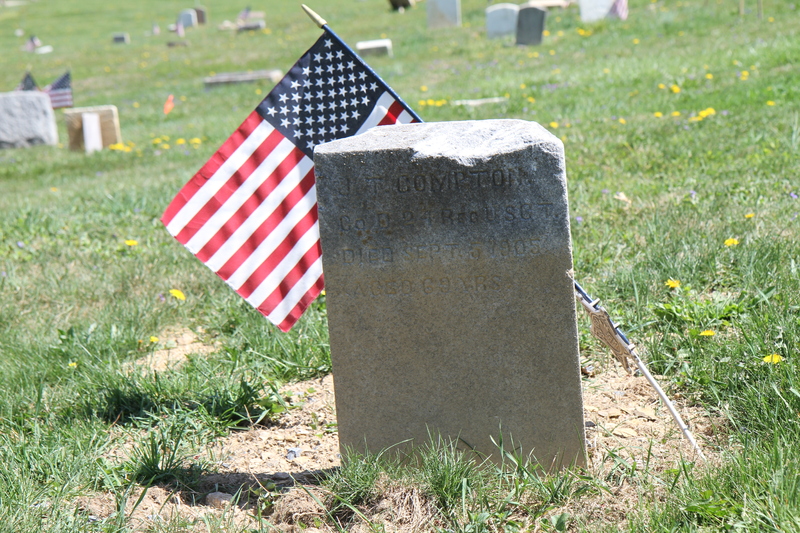
<span style="font-weight:400;">In fact, the Lincoln Cemetery is so significant that numerous influential members of Harrisburg's African American community have made it their final resting place. One of these is none other than William Howard Day, who had delivered a speech at the cemetery’s opening about twenty years before his death in 1900. His funeral was the first to be held in Wesley Union’s auditorium, and hundreds of guests came to pay tribute to this highly influential Black school board president, scholar, and activist. Another notable figure buried in the cemetery is T. Morris Chester, the famed Black Civil War correspondent and lawyer whose successes began at his family’s oyster house in Harrisburg before expanding internationally. Harriet McClintock Marshall, Wesley Union Church member and Underground Railroad conductor, is not only buried there, but she contributed to a monument for African American Civil War veterans in the cemetery as well. Those veterans include Ephraim Slaughter, who was the city’s last living Civil War veteran and namesake of American Legion Post 733. The gravesites for four of these figures can still be visited in the Lincoln Cemetery alongside thousands of others. </span>
<span style="font-weight:400;">However, dignity was not always accessible to African Americans, even in death. While Black cemeteries elsewhere in Harrisburg attracted attention for their extreme states of neglect in the latter half of the nineteenth century, the Lincoln Cemetery faced its own troubles well into the twentieth century, demonstrating how the effects of segregation persisted long after these harmful policies were supposedly abolished. Even as recently as the early 1990s, vandals and motorbike riders toppled around two hundred gravestones, causing an estimated $20,000 to $25,000 in damage. Jeanne E. Jones, chairwoman of the church’s cemetery committee, did what she and other volunteers could to restore as much as possible, but the Wesley Union AME Zion Church struggled with a lack of adequate funding for the job. Today, Saving Our Ancestors' Legacy (SOAL) plays the important role of safeguarding the cemetery. </span>
<span style="font-weight:400;">The 1990s saw an increase in recognition of the Lincoln Cemetery as an essential part of Harrisburg’s history as well. Amid the cleanup efforts following vandalism, the Lincoln Cemetery was chosen as a recipient of the 1991 Historical Preservation Award by the Historic Harrisburg Association. Then, during the summer of 1994, the cemetery received its historical marker in a dedication ceremony sponsored by the Pennsylvania Historical and Museum Commission and the Wesley Union AME Zion Church. Nevertheless, a lack of adequate funding and other resources for maintenance still haunted the Lincoln Cemetery for years, even after receiving its honors, leaving it in an “extreme state of neglect” as of June 2021. </span>
<span style="font-weight:400;">Today, restoration of the Lincoln Cemetery is overseen by SOAL, a grassroots volunteer organization founded by the descendants of those buried there. SOAL has conducted a regular program of physical restoration, including cleaning and repairing grave markers, groundskeeping efforts, uncovering lost graves, restoring the landscape, and protecting against ongoing vandalism. SOAL has also collaborated with a range of institutions, including Messiah University and the Harrisburg University of Science and Technology, to document and share the cemetery’s story with wider audiences. SOAL is committed to restoring and preserving “Harrisburg’s Oldest Black Cemetery” both in the physical world and in the digital one, helping ensure that the stories of the people buried there — as well as those of the cemetery as a whole — will be honored for generations to come, bringing some much-deserved dignity to one of the city’s most significant unsung landmarks. </span>
<span style="font-weight:400;">A full list of the resources used in this story can be found </span><a href="https://www.zotero.org/groups/5114087/harrisburg_historical/collections/E6U94JF8"><span style="font-weight:400;">here</span></a><span style="font-weight:400;">.</p><p><strong>Related Stories</p><a href="https://harrisburghistorical.org/items/show/13">Lincoln's Close Call</a></p><p><a href="https://harrisburghistorical.org/items/show/8">Harrisburg's Role in the Underground Railroad</a></p><p><a href="https://harrisburghistorical.org/items/show/3">Men of God</a></span></p><p><em><strong><a href="https://harrisburghistorical.org/items/show/2">For more (including 2 images, 2 audio files,&#32;&amp;&#32;2 videos) view the original article</a></strong></em></p>]]></summary>
    <published>2023-10-09T17:20:17+00:00</published>
    <updated>2026-04-17T19:49:02+00:00</updated>
    <link rel="alternate" type="text/html" href="https://harrisburghistorical.org/items/show/2"/>
    <id>https://harrisburghistorical.org/items/show/2</id>
    <author>
      <name>Rachel Petroziello</name>
    </author>
  </entry>
  <entry>
    <title type="html"><![CDATA[Harrisburg&#039;s Once &quot;Lunatic Hospital&quot; : The Beginnings of the Pennsylvania State Lunatic Hospital]]></title>
    <summary type="html"><![CDATA[<p><strong><em>As the Pennsylvania State Lunatic Asylum developed out of emerging ideas of moral treatment in the mid-nineteenth century, it welcomed mentally ill patients and sought to create a home for Harrisburg's "insane poor."</em></strong></p><img src="https://harrisburghistorical.org/files/fullsize/6e6fe72ff611bf594e943d38c424a000.jpg" alt="Mixed group about 1900" /><br/><p><p style="font-weight:400;">In 1851, the Pennsylvania State Lunatic Asylum emerged as the region’s first mental health institution, embodying a "moral treatment" approach to mental health care. Moral treatment challenged negative views of mental illness as unrepairable and evil and instead encouraged compassionate approaches that transformed treatment. Throughout the late nineteenth century, the hospital’s design and care were organized according to ideas of moral treatment, seeking ways to improve the mental condition of the ill. <span> </p>On February 3, 1845, Dorothea Dix’s “Memorial” was read to the Pennsylvania State Legislature. Dix argued against the inhumane practice of confining mentally ill patients in poorhouses and jails, advocating for a mental hospital to intentionally care for them. Through her advocacy, the foundations for the Pennsylvania State Lunatic Asylum were established. By 1849, Governor Johnston declared that "a home" was "being made for the insane poor” at the institute’s cornerstone. In 1851, the hospital was built and opened for patients.
<p style="font-weight:400;">The Main Building of the hospital was designed to maximize sunlight and fresh air for patients, with separate wings for male and female patients. In 1888, the North and South Branches were built to house patients when the Main Building grew overcrowded. Male patients were housed in the North Branch (Male nine and ten), while female patients stayed in the South Branch (Female nine and ten). The Administration Building opened in 1895 after demolishing the Main Building, and by 1913, the hospital included a chapel building that hosted weekly Sunday services and frequent prayer meetings. The chapel highlighted the role of faith in moral treatment and patient care in the institution, demonstrating its commitment to improving patient experiences and shaping their “moral faculties.”
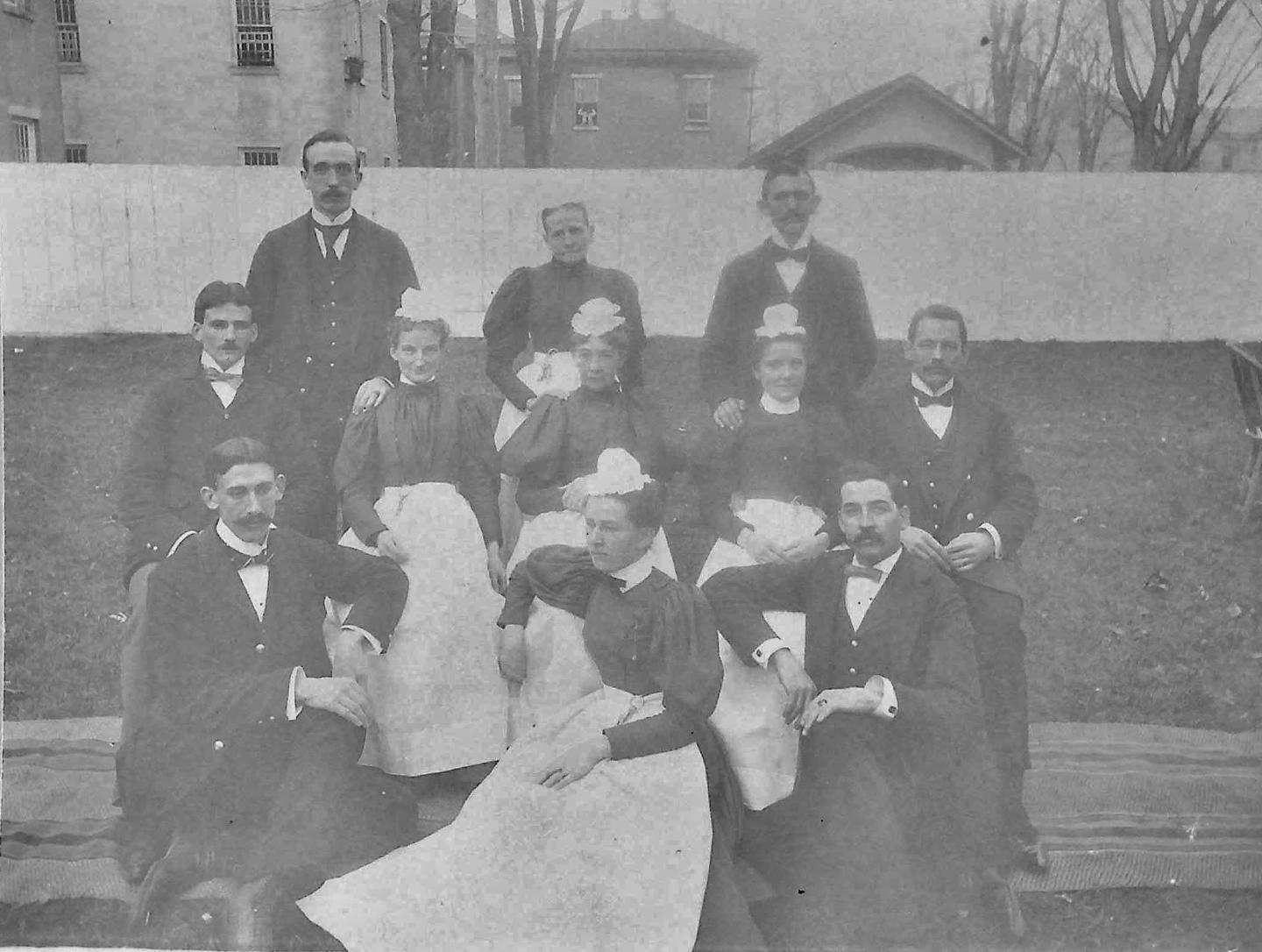
<p style="font-weight:400;">Patients from various backgrounds filled the hospital, including blacksmiths, carpenters, lawyers, and teachers. A register of female patients from 1852 to 1884 records their admission into the hospital, their illnesses, and their health status, revealing various ailments such as grief, anxiety, trouble, disappointment, exertion, and poverty.
<p style="font-weight:400;">Two male patients, William Smith (undated) and Sigmund Purist (1865), provide glimpses into their experiences at the hospital. William Smith penned his letter to a minister, Dr. Robinson, expressing his joy in hearing his sermon and submitting his pieces of scriptural reflection to see if they had any “literary merit.” On the other hand, Purist’s letter in 1865 grimly expresses his objection to being wrongfully confined in the asylum and petitions for discharge from the hospital. He argued that he was confined through “heinous false preference” and instead wished to enjoy the free condition that “millions the majority enjoy.” While Purist’s letter provides insight into patients' experiences at the hospital, it may not reflect all of their stories. Comparatively, William Smith expressed no negative emotion and instead shared his delight over the minister’s sermon, insisting that he should read his reflections and consider publishing them.
<p style="font-weight:400;">The hospital’s development and founding principles of “moral treatment” shaped its growth, intentionality, and approach to patient care. In 1921, the Pennsylvania State Lunatic Hospital was renamed “Harrisburg State Hospital.” It had successfully created a home for the mentally ill.<span>   </span>
A full list of resources used in this story can be found <a href="https://www.zotero.org/groups/5114087/harrisburg_historical/collections/6TH6HWA6" target="_blank" rel="noreferrer noopener">here</a>.</p><p><em><strong><a href="https://harrisburghistorical.org/items/show/27">For more (including 5 images&#32;&amp;&#32;1 audio file) view the original article</a></strong></em></p>]]></summary>
    <published>2024-12-12T20:40:30+00:00</published>
    <updated>2026-04-17T19:49:02+00:00</updated>
    <link rel="alternate" type="text/html" href="https://harrisburghistorical.org/items/show/27"/>
    <id>https://harrisburghistorical.org/items/show/27</id>
    <author>
      <name>Sophia Snyder</name>
    </author>
  </entry>
  <entry>
    <title type="html"><![CDATA[Harrisburg&#039;s Role in the Underground Railroad: The Heart of the Central Route]]></title>
    <summary type="html"><![CDATA[<p><strong><em>Harrisburg, Pennsylvania connected southern states and western cities to larger hubs along the Underground Route railroad, making it the heart of the central route. Anti-slavery committees, abolitionists, and advocacy groups created pathways, safehouses, and resources for freedom seekers to travel northward towards independence.</em></strong></p><img src="https://harrisburghistorical.org/files/fullsize/7989c78a5857fb741d76fa00e73c13a3.jpg" alt="Underground Railroad Marker" /><br/><p>Harrisburg played a crucial role in the Underground Railroad. The city lay on the Central Route of the Northern Underground Railroad system due to its large Black population and long history as the capital city of a free state. Escape routes led to and from the city, creating four major exit routes for freedom seekers to travel. </p><p>A Pennsylvania state marker, located on Walnut Street near the Commonwealth Monument in the Pennsylvania State Capitol Complex, describes Harrisburg’s participation in the Underground Railroad. It identifies the roles of Wesley Union African Methodist Episcopal Church, Joseph Bustill, and William M. Jones in hiding and assisting freedom seekers. In the 1850s, the area connecting these individuals and institutions was known as Tanner’s Alley and numbered among the city’s most important Black neighborhoods. It is now recognized as a prominent location in Harrisburg’s Underground Railroad. </p><p>Wesley Union Church, the first Black church in Harrisburg, was founded in 1829. In 1836, the Harrisburg Fugitive Slavery Society, an informal society that sent freedom seekers to Philadelphia, began using the church and its influence among the Black community to promote abolition. Historical sources provide the names of a number of Harrisburg residents involved in the Underground Railroad. </p><p>One of these was Joseph Cassey Bustill, an African American schoolteacher who had been born in Philadelphia to a distinguished family. Joseph joined the Underground Railroad at age seventeen and was perhaps the youngest member of the movement. According to Bustill’s daughter, Bustill made use of homes, churches, halls, and lodging rooms to help the fugitives. Furthermore, he assisted in the formation of the Harrisburg Fugitive Slave Society, and often contacted William Still regarding the arrival of freedom seekers in Philadelphia, referring to them as “packages” nearing “delivery.” </p><p>Another was William “Pap” Jones, an African American doctor whose home served as the site of his medical practice and a refuge for freedom seekers. The Jones residence was one of the primary stations on the Underground Railroad in Harrisburg, where Dr. Jones and his wife, Mary, provided a safe space to rest and ample provisions for the journey ahead. Dr. Jones transported freedom seekers to their next station on the Underground Railroad via a covered wagon operating under the guise of a “rag merchant.” Through his extensive knowledge of the routes leading North and collaboration with fellow guides, Dr. Jones took many freedom seekers closer to safety.</p><p>Harriet McClintock Marshall, born in Harrisburg in 1840, was also a conductor on the Harrisburg Underground Railroad, most likely working through the Wesley Union AME Church founded by her mother. Harriet and her husband Elisha Marshall, a former freedom seeker, opened their home as a safe house and offered refuge, food, and clothing to those seeking freedom.</p><p>Harrisburg also connected freedom seekers to the Vigilant Committee of Philadelphia. The Vigilant Committee was formed by Robert Purvis in 1837 to “create a fund to aid [Black Americans] in distress.” It was responsible for helping many freedom seekers and their families. The committee appointed officers, raised money, and made resources available to assist freedom seekers attempting to live in or pass through Philadelphia on their way further north. Although the original committee was disbanded in 1852, another quickly took its place with Purvis as the head of the general committee. </p><p>The travels of the Taylor family, a notable family aided by these committee resources, exemplify how the network functioned. In 1856, Owen and Mary Ann Taylor and their family fled Clear Spring, Maryland, in a desperate attempt to claim freedom. Owen Taylor and his brothers had been enslaved by a farmer Henry Fiery, his son. The Taylor brothers harnessed horses belonging to Fiery, placed their families in the carriage, and headed north. The eight freedom seekers traveled eighty-seven miles from Clear Spring to Harrisburg, crossing the Pennsylvania-Maryland border, and traveling through Chambersburg, Pennsylvania. From there, the group made their way to Philadelphia, where the Vigilant Committee met them. </p><p>Henry Fiery quickly realized the Taylors were missing and contacted Joseph C. Bustill, who assured Fiery he would work to return the group. However, correspondence between Bustill and other Underground Railroad conductors reveals just the opposite. Bustill, despite being in contact with enslavers, actively worked against them and aided freedom seekers, directing them to safe spaces farther north. The remarkable story of Owen Taylor and his family for many such narratives in Harrisburg’s rich history of the Underground Railroad. </p><p>Despite Harrisburg’s historic presence of Black freedmen, the anti-slavery fight faced adversity during the 1850s. The Fugitive Slave Act (1850) required the return of people to their enslavers even if they were in a free state. The same year, a Slave Commission Office opened in Harrisburg. Richard McAllister, a local attorney and commissioner, was infamous for seizing Blacks, fugitives or free, and sending them to the slave market. McAllister had a notorious reputation. As the historian, R. J. M. Blackett noted, McAllister boasted that “more fugitives have been remanded by me than any other U.S. Com.” He asserted the Fugitive Slave Law should be kept to protect the “peace and interest of the country.” The next year, the congregation of St. Stephen’s Episcopal Church in Harrisburg gave McAllister an ultimatum: he could resign as commissioner or forfeit his position as Vestryman. McAllister chose the former and resigned as slave commissioner in 1852. By 1853, the Slave Commission Office ceased operations. After McAllister resigned, Harrisburg more freely aided countless freedom seekers on their journey north.</p><p>Harrisburg, Pennsylvania played a critical role for those seeking freedom for themselves and their families. There are many more stories of Harrisburg area residents who helped aid freedom seekers, including Henry Watson, Daniel Kaufmen, Jacob Shockley, Hiram E. Werz, James McCallister, Dr. William W. Rutherford of Front Street, and Reverend James Graham. Indeed, Harrisburg and its residents helped innumerable freedom seekers to safety. Their lives and the history of the city are forever intertwined in the fight against slavery, a time that represents a pivotal period in American history. </p><p>A full list of the resources used in this story can be found <a href="https://www.zotero.org/groups/5114087/harrisburg_historical/collections/I8I8SMVX">here</a>.</p><p><strong>Related Stories</p><a href="https://harrisburghistorical.org/items/show/3">Men of God</a></p><p><a href="https://harrisburghistorical.org/items/show/12">It's a Family Business</a></p><p><a href="https://harrisburghistorical.org/items/show/5">Douglass in Harrisburg</a></p><p><a href="https://harrisburghistorical.org/items/show/2">Harrisburg's Lincoln Cemetery</a></p><p><em><strong><a href="https://harrisburghistorical.org/items/show/8">For more (including 5 images&#32;&amp;&#32;2 audio files) view the original article</a></strong></em></p>]]></summary>
    <published>2024-02-12T20:25:46+00:00</published>
    <updated>2026-04-17T19:49:02+00:00</updated>
    <link rel="alternate" type="text/html" href="https://harrisburghistorical.org/items/show/8"/>
    <id>https://harrisburghistorical.org/items/show/8</id>
    <author>
      <name>Elizabeth Movinsky</name>
    </author>
  </entry>
  <entry>
    <title type="html"><![CDATA[Harrisburg&#039;s Zoo: A History of the Wildwood Zoological Park]]></title>
    <summary type="html"><![CDATA[<p><strong><em>Harrisburg's Wildwood Park was formerly home to the Wildwood Zoological Park, a recreational space that housed a relatively large collection of wild animals. During the 1940s, the zoo disappeared, with only a few traces of it left today.</em></strong></p><img src="https://harrisburghistorical.org/files/fullsize/fb8687339cf858cb6d6421ad77ea70a3.jpg" alt="Municipal Zoo Entrance" /><br/><p>In the early twentieth century, greater amounts of leisure time encouraged Americans to pursue new recreational activities. One such activity was visiting zoos. Many cities prided themselves on having impressive animal collections for the public to view. Harrisburg was no different, and in the late 1920s plans for a zoo were underway in an unlikely location—a swamp. </p><p>Before the new zoo, the area formerly known as Wetzel’s Swamp was home to Harrisburg’s Wildwood Park. This was a recreational space where residents could host picnics, attend camps, and enjoy boating. Service clubs first proposed the zoo at a joint meeting. There, community leaders wondered whether Harrisburg residents, especially the children, would patronize a zoo. This concern proved unfounded almost immediately. Children eagerly donated their pocket money to the establishment of the zoo, being awarded with “Junior Founder’s Certificates.” </p><p>Before construction on Wildwood Zoo began, Park Superintendent Herman A. Earley and Assistant Superintendent V. Grant Forrer visited the Washington and Philadelphia Zoos to gather ideas for Wildwood Zoo, whose construction was scheduled to begin in July 1928. Carving out a 10-acre, rectangular plot in Wildwood Park, the zoo would house numerous paddocks, cages, and shelters accessible by a roadway. In addition, plans were made to construct a Keeper Lodge, a house at the zoo where the zookeeper could see all the animals and birds from his home. Although the zoo was supposed to open during Labor Day weekend, it officially opened on June 7, 1929. The delays in opening only seemed to heighten excitement, and the local media continued to cover its development with considerable fanfare. </p><p>The stars of the new Wildwood Zoological Park were the animals themselves. Over the years, the zoo housed numerous species, from local wildlife such as deer and bears to exotic animals like lions and monkeys. Local newspapers frequently featured articles about baby animal births, additions to the collection, and even April Fool's Day pranks featuring the animals. Animals had various amenities, including a bear bathtub that earned an article in the May 24, 1929, edition of <i>The Patriot</i>. While zoos have sometimes had a negative reputation for not treating their animals well, Harrisburg’s residents apparently valued animal welfare. One newspaper story notified residents that the animals “Think the Zoo is More Than All Right,” and were enjoying proper meals delivered on tight schedules. </p><p>The growing zoo moved to add more species. In 1930, a lynx and an ant bear (now more commonly known as an aardvark) appeared, as well as multiple American bison. Two particular bison, Napoleon and Nancy, were featured in an “interview” in the <i>Harrisburg Telegraph,</i> in which they allegedly claimed that their ancestors were hunted by Buffalo Bill and Kit Carson, and that they “like it here” at the zoo. Elk, groundhogs, white ferrets, and more were added until the Wildwood Zoo collection was teeming with creatures great and small. Local newspapers covered the animals extensively, from the birth of a doe named Fannie Fawn to an elk struggling with indigestion. </p><p>Nevertheless, even caring zookeepers could not keep the animals safe during trouble. Shortly after opening, three unlicensed dogs reportedly scared white-tailed deer so severely that one deer died after crashing into a fence during a panic attack. A campaign to track down the offending dogs resulted in orders to kill them. Love for the zoo animals led to hatred for stray dogs and cats, and game wardens went on a warpath to dispatch any stray pet that might have scared or killed zoo animals. Not long after the crusade against stray animals, owls and hawks began fighting each other within their enclosures, resulting in the death of one Great Horned Owl. In 1932, two local boys were charged with shooting the zoo’s rabbits, and indigestion proved fatal to a resident male bison. </p><p>In early 1934, disaster struck when a fire broke out, causing significant damage to the zoo. The emotional distress shook the animals. News articles repeatedly noted the distressing noise of frightened animals, especially the nearby coyotes, crying out in fear while firefighters worked. Thankfully, insurance covered much of the damage. The damages cost about $1,500 in city funds, about $28,724 today. The fortunate aspect of the zoo fire was that no animals died. But the troubles at Wildwood Zoo were far from over. </p><p>The Great Depression and World War II made operating the zoo financially difficult. Lions, wolves, and other species that required intensely meat-heavy diets suffered greatly as the cost of meat soared during the Depression. When the US entered World War II in 1941, meat rationing made it even more difficult for the zookeepers to feed their charges. In the event of an air raid on Harrisburg, officials planned to kill some of the more dangerous species to prevent their escape. </p><p>Ultimately, facing high operating costs, the city decided to close the zoo. On December 18, 1945, City Councilman and Park Director Robert C. Leitner announced that Wildwood Zoo would close, effective immediately. Estimating that the zoo's closure would save the city at least $6,500 in 1946, Leitner outlined what would happen to the animals. Dangerous animals and reptiles would be killed, while harmless wildlife would be released. Bears and bison would be "cut up into steaks and roasts" and given to local institutions, and the monkeys were to be donated to a medical institution in Philadelphia for experimentation. Leitner quickly received requests for various animals, including raccoons, from people who wanted them as pets. </p><p>After the zoo closed, the discussion centered on what to do with the land. Empty animal runs were briefly dog shelter pens, and ideas of turning the land into veteran housing were also considered. Nowadays, the Wildwood land is home to a nature center and preserve. Wildlife roam freely through the park, benefiting from the safe habitat and abundant food away from the urban center. The exotic animals may have passed, but populations of native Pennsylvania species are thriving. Some of the animals of the Wildwood Zoological Park may have died at the hands of those who loved them most, but their importance should not be understated. It was unquestionably an influential yet fleeting moment in local history. </p><p>A full list of resources used in this story can be found <a href="https://www.zotero.org/groups/5114087/harrisburg_historical/collections/5C5PDHDI" target="_blank" title="Citations" rel="noreferrer noopener">here.</a></p><p>Special thanks to the Oweline Nature Center and Dauphin County Parks and Recreation for generously providing access to their archived collections.</p><p><em><strong><a href="https://harrisburghistorical.org/items/show/28">For more (including 9 images&#32;&amp;&#32;1 audio file) view the original article</a></strong></em></p>]]></summary>
    <published>2024-12-17T15:06:26+00:00</published>
    <updated>2026-06-17T13:42:53+00:00</updated>
    <link rel="alternate" type="text/html" href="https://harrisburghistorical.org/items/show/28"/>
    <id>https://harrisburghistorical.org/items/show/28</id>
    <author>
      <name>Kylie Smith</name>
    </author>
  </entry>
  <entry>
    <title type="html"><![CDATA[Hercules, Harris, and the Mulberry Tree: History and Memory in the Founding of Harrisburg]]></title>
    <summary type="html"><![CDATA[<p><strong><em>Among the folk tales recounting the early days of the settlement of Harrisburg, Pennsylvania, none is more dramatic than the story of Hercules rescuing John Harris, Sr. from almost certain death at a mulberry tree. Passed down by Harris’s descendants, the story positions Black individuals at the forefront of the capital area’s history and raises critical questions about the complex relationship between history, memory, and race. </em></strong></p><img src="https://harrisburghistorical.org/files/fullsize/4d66a9bbd66237b4789bedc478ee20a6.jpg" alt="Hercules Rescuing John Harris" /><br/><p>Around 1720, a group of Native Americans allegedly approached the first European settler of Harrisburg, John Harris, Sr., at his settlement near the Susquehanna River, demanding rum. As later historical accounts would describe, Harris refused their request and the frustrated Native Americans tied him to a nearby mulberry tree to burn him alive. Just in time, Hercules, who was enslaved by Harris, led a different band of Native Americans to the rescue. Overwhelmed and grateful, Harris immediately released Hercules from slavery. Before he died in 1748, Harris insisted on being buried at the mulberry tree. Over generations, the people of Harrisburg would remember the names of John Harris and Hercules as they retold this narrative. Though the ultimate veracity of the incident is uncertain, and certain elements doubtful, it offers a compelling example of the intersection between memory and history—how events can, in the shared memories of a community, take on a life and power of their own, continuing to inspire, shape, and challenge a city's past. </p><p>In the retelling of John Harris’s and Hercules’s experience at the mulberry tree, John Harris’s leading figure captivated audiences. Born in 1673 in Yorkshire, England, he abandoned his profession as a brewer in London and arrived in America sometime before 1700. He first lived in Philadelphia, where he met his wife, Esther Say, and later moved to the lower bank of the Susquehanna River in what is today Harrisburg’s Riverfront Park. In 1705, Harris began trading with the Native Americans and furthered his success in agriculture. </p><p>Hercules’s role in the story has usually been small in comparison, and his person shrouded in memory. That Hercules was a real man, initially enslaved and later freed by John Harris, Sr., is clear, although "Hercules" cannot have been his original name, but one given to him by his white enslaver after his daring deed of rescue. Key details about Hercules's life and death, such as his location of burial, remain elusive. An 1858 piece from the <em>Harrisburg Daily Telegraph</em> implies that Hercules was first buried at a small graveyard that the Harris family owned, and by 1785, had been moved to another gravesite created specifically for African Americans. The cemetery was disturbed in the 1850s and was then moved to Harrisburg Cemetery on Allison Hill. Hercules’s burial site, therefore, is long lost and unknown. </p><p>The same mystery about Hercules’s whereabouts also surrounds the mulberry tree incident. Inconsistencies between Harris's descendants' accounts and a lack of recorded evidence fuel the uncertainty surrounding the narrative’s historicity. The location of the incident is unverified, although a long tradition has placed it at the Harris Burial Ground in Riverfront Park. The date of the mulberry tree incident is also uncertain. </p><p>Even the core details of the story raise questions. The presence of drunken Native Americans, for example, reflects a familiar stereotype of Indigenous peoples of colonial times. The conflict Harris had with them, if true, was probably more complex than a dispute over rum. The publication of the story in the late 1820s, a century after the incident, also raises questions about the role of Hercules, because it appeared at a time of growing abolitionism in the Commonwealth that favored stories of obedient and virtuous slaves. </p><p>On the other hand, certain details surrounding Hercules suggest that he did in fact do something significant for John Harris, Sr. Aside from his heroized name, we find credible evidence regarding Hercules's life in Harris's will of 1746, which details the distribution of his land and property between his sons John, William, Samuel, and David; his daughters Elizabeth and Esther; and his wife, Esther. Harris would “leave” two enslaved people, Tom and Cherida, with his children, but instructed that Hercules be “sett free” and “allowed to live on part of the land . . . left to my son William.” </p><p>Additionally, an account published by the <em>Harrisburg Telegraph </em>in 1900 purports to transcribe account books of John Harris, Jr., founder of Harrisburg, and notes specific instances of Hercules working for John Harris, Jr., for a year in 1754; receiving supplies (powder, shott, and hooks) in 1761; and gaining cash payment in 1773. The evident emancipation of Hercules, and continued enslavement of Cherida and Tom, may point to a significant event through which Hercules earned Harris's assent to freedom. </p><p>In the nineteenth century, however, Harris’s descendants were unable to provide credible evidence of Hercules's participation in the mulberry tree incident, which contributed to various interpretations and embellishments of the tale by Harrisburg’s authors.</p><p>In 1828, when author Samuel Breck first published an account of the incident as told by Robert Harris, great-great-grandson of John Harris Sr., Hercules was Harris’s rescuer. Contrarily, a letter by Robert Harris’s son, George Harris, published in the <em>Harrisburg Telegraph</em> in 1878, claimed that Robert Harris did not actually believe that Hercules saved John Harris. However, George Harris himself believed that Hercules was well-deserving of the credit and that his father's opinion may have been faulty. </p><p>If even the family members were divided, it is no surprise that some authors discounted Hercules altogether, while others praised him. George Morgan, for example, echoed Breck’s description in his <em>Annals of Harrisburg</em> (1858), conveying the narrative as a part of the Harris family’s traditional history that should be trusted. Hercules, Morgan wrote, was “virtuous” and should “share largely in our praise and admiration.” Similarly, William Egle emphasized in his <em>History of the County of Dauphin</em> (1883) that this narrative, including Hercules’s role, was based on accurate resources and “was no myth.” Other authors embellished the story with differing emphases, such as Marian Inglewood (1925), who described Hercules's involvement as a timely rescue, rather than a brave, faithful act. </p><p>The narrative also captivated artists. A woodcut by G. Gilbert dating to the 1840s, for example, shows Hercules leading a friendly band of Native Americans to rescue Harris from his intoxicated captors. William S. Reeder’s painting, "The Attempt to Burn John Harris," lithographed by Ralph Trembly around 1839, became a representative image of the mulberry tree incident with Harris and Hercules. Its origin and creation date are not certain, but George Harris revealed that his father, Robert Harris, and Reeder closely communicated about this painting. In 1895, Robert Harris said in a column in <em>The Harrisburg Telegraph</em> that Reeder’s painting originally depicted a Native American as Harris’s rescuer. Only later was it recreated to represent an African American figure, Hercules, rescuing Harris. </p><p>While Hercules’s complete identity remains a mystery, his figure reflects Pennsylvania’s wider colonial history of enslavement and abolitionism. Though slavery had a comparatively small presence in the colony—the institution peaking at six thousand in 1750—Pennsylvania, like other colonies, introduced slave codes that restricted enslaved people's movement and conduct. Abolitionist efforts to end slavery in the colony culminated in 1780 with "An Act of the Gradual Abolition of Slavery," which mandated that all enslaved persons born after its passing would gain freedom upon turning age twenty-eight. </p><p>Aside from Hercules, John Harris owned two other individuals, whom we know as Tom and Cherida. At the time of Harris’s written will, Cherida was pregnant with a child. Hercules’s role, then, in the fascinating tale of John Harris’s rescue at the mulberry tree is significant in such a period of growing stratification between enslaved African Americans and their white enslavers. </p><p>The story of the mulberry tree is a marked event in Harrisburg’s early history, introducing a fascinatingly dramatic tale of Harrisburg’s first European settler, Indigenous tribes, and an otherwise obscure African American named Hercules. Though records of Hercules's life remain sparse, his role in early Pennsylvania history stands out as one of the first documented instances in which an African American emerged as a central figure in Harrisburg's colonial narrative, challenging the typical erasure of Black voices from this era. While we may never find a resolution to the events at the mulberry tree or confirm Hercules's role, the dramatic yet evasive event continues to enrapture Harrisburg and capture our memory with awe and mystery.</p><p>A full list of resources used in this story can be found <a href="https://www.zotero.org/groups/5114087/harrisburg_historical/collections/X3PK2GFQ">here</a>.</p><p><em><strong><a href="https://harrisburghistorical.org/items/show/14">For more (including 6 images&#32;&amp;&#32;2 audio files) view the original article</a></strong></em></p>]]></summary>
    <published>2024-07-20T13:44:30+00:00</published>
    <updated>2026-04-17T19:49:02+00:00</updated>
    <link rel="alternate" type="text/html" href="https://harrisburghistorical.org/items/show/14"/>
    <id>https://harrisburghistorical.org/items/show/14</id>
    <author>
      <name>Sophia Snyder</name>
    </author>
  </entry>
  <entry>
    <title type="html"><![CDATA[Jack&#039;s Hotel and the Jackson House: Black Business in Harrisburg’s Green Book]]></title>
    <summary type="html"><![CDATA[<p><strong><em>During a time of segregated dining and lodging, Jack’s Hotel, the Jackson House, and other Black-owned businesses in Harrisburg provided essential accommodations to Black travelers.</em></strong></p><img src="https://harrisburghistorical.org/files/fullsize/5db3b3f8fda83c1dbe78056e1539ab4d.jpg" alt="The Jackson House Hotel" /><br/><p>In 1937, over one hundred Philadelphia teachers visited Harrisburg. Among them was a small group of African American educators. When the Penn Harris Hotel refused to serve food to African American principal Arthur H. Fauset and a handful of other teachers because of their race, their fellow visiting teachers declared a boycott of the hotel, igniting a debate surrounding Pennsylvania’s Equal Rights Law. As a matter of fact, the Pennsylvania law — which prevented denial of service based on race in a broad scope of “public places” — was a source of contention ever since its passage in 1935 on the grounds that it was too vague, supposedly rendering it ineffective. Appealing to this line of reasoning, Franklin Moore, chairman of the Hotel Association’s legislative committee and manager of the Penn Harris Hotel at the time of the 1937 incident, advised hotels not to comply. Therefore, not even the law protected Black travelers within Pennsylvania. </p><p>The Equal Rights Bill was declared valid in the end, but the whole situation nonetheless demonstrated the immense challenges that often came when traveling as an African American during Jim Crow, even in a northern city such as Harrisburg. Due to the rejection and discrimination that African Americans faced on the road throughout the United States, many turned to African American postal worker Victor H. Green’s <em>Green Book</em> for guidance on which businesses — including restaurants and hotels — would accept them and be safe for them in a Jim Crow environment. The <em>Green Book</em>, first published in 1936, listed several Harrisburg locations throughout its many editions. Today, only two remain standing, with only one still in operation. These businesses serve as a reminder of not only the hardships that African Americans faced when traveling, but also of the immense successes that Black business owners were able to achieve in spite of it all. </p><p>Jack’s Hotel was opened in 1946 by Calobe Jackson, Sr., father of prominent Harrisburg historian Calobe Jackson, Jr., who recalls that during his childhood, its location on North Sixth Street was vibrant and full of small businesses. Jackson, Jr. remembers the <em>Green Book</em> as something that offered African Americans a sense of comfort and safety, so they could travel without confrontation, an expectation that was no doubt fulfilled by Jack’s Hotel as well as Jack’s Barber Shop, another <em>Green Book</em> location that was owned by his father. </p><p>On the very same street, a different Jackson family was operating their own hotel, seemingly causing some confusion in the 1962 iteration of the <em>Green Book</em>. The Jackson House was founded by German Jackson, the son of an enslaved man who had come to Harrisburg in the 1920s as part of the "Great Migration," the steady movement of millions of Black Americans from southern states to the north to escape racial injustice and inequality. Working at the Penn Harris Hotel for more than thirty years did not deter German Jackson from operating his own business that attracted such clientele as boxer Joe Louis and bandleader Cab Calloway. Although the hotel portion of the Jackson House has since been demolished, its cafe is still standing. Today, it is owned and operated by German Jackson's friend, Dave Kegris, as the Jackson House sandwich shop. The Jackson House restaurant and the building that once housed Jack’s Hotel are not only Harrisburg’s final <em>Green Book</em> locations; they are also two of the last three remnants of the historic Seventh Ward, the African American business district of the early twentieth century, which was demolished during the 1950s in order to expand the Capitol Complex. </p><p>Even if most of Harrisburg’s historic Black businesses no longer exist in a tangible sense, their legacy lives on through the stories of those who built them — or advocated for them. African Americans fought for safe travel and accommodations decades before the <em>Green Book</em>’s publication. One of the most prominent figures was William (W.) Justin Carter, a Black attorney who participated in civil rights cases both locally in Harrisburg and nationally. In light of the Old Eighth Ward’s demolition during the 1910s, the Frye Hotel, a State Street hotel that welcomed African Americans, needed a liquor license in order to move to a new location at 1012 North Seventh Street. Alderman Charles P. Walter, the man in charge of the new property, had plans to build a modern, forty-room hotel there, declaring that Harrisburg needed a hotel that would serve traveling African Americans, and if the Frye Hotel was forced out of business because it was unable to relocate, then they would no longer have “adequate accommodations” when visiting the city. </p><p>It was not long before objections began rolling in. Some argued that the Frye Hotel would attract “unlawful” clientele to North Seventh Street, while others shuddered at the possibility of white and Black patrons being served together, leading owner Theodore Frye to “vigorously [deny] that white men or women [were] permitted to drink together in his State Street hotel.” Others yet claimed that North Seventh Street already had enough bars, raising the question of whether race should ever be a factor in the granting of liquor licenses, considering that there would be “no licensed [bars] conducted by a colored man” if the Frye Hotel closed. Defending the Frye Hotel, W. Justin Carter argued that a hotel for African Americans was a necessity, pointing to the fact that even though they were legally allowed to purchase liquor just as whites were for the same price, the act of doing so was often met with humiliation by racist bartenders. He also pointed out that in many hotels, while white patrons received pure liquor, African Americans were given “jigger” whiskey, described as a “concoction of cologne and alcohol.” A hotel catering mainly to African Americans, on the other hand, would give its patrons better treatment regardless of race.</p><p>Unfortunately, the Frye Hotel lost its legal battle, and was memorialized in a 1917 article in the <em>Harrisburg Telegraph</em> as “one of the most notorious dives of the city.” However, the work of W. Justin Carter was not in vain; he paved the way for <em>Green Book</em> locations such as Jack’s Hotel and the Jackson House, helping to inspire African Americans to create safe places for themselves if nobody else would. These places were not “notorious dives” as some in the past have argued. Rather, they were opportunities for African Americans to travel and to patronize businesses that welcomed them with open arms. Today we may have a habit of taking the ability to lodge at a hotel for granted, but the stories of those Black teachers in 1937, the two Jackson families, and W. Justin Carter’s defense of the Frye Hotel demonstrate that such a convenience has not always been so accessible for everyone. </p><p>A full list of resources used in this story can be found <a href="https://www.zotero.org/groups/5114087/harrisburg_historical/collections/KXTVDKGT">here</a>.</p><p><strong>Related Stories</strong></p><p><a href="https://harrisburghistorical.org/items/show/10">The Second Capitol Extension of Harrisburg, Pennsylvania</a></p><p><a href="https://harrisburghistorical.org/items/show/18">Taking the Moose Lodge to Court</a></p><p><a href="https://harrisburghistorical.org/items/show/19">The Rowland Beauty School</a></p><p><em><strong><a href="https://harrisburghistorical.org/items/show/7">For more (including 5 images&#32;&amp;&#32;2 audio files) view the original article</a></strong></em></p>]]></summary>
    <published>2023-11-30T01:09:44+00:00</published>
    <updated>2026-04-17T19:49:02+00:00</updated>
    <link rel="alternate" type="text/html" href="https://harrisburghistorical.org/items/show/7"/>
    <id>https://harrisburghistorical.org/items/show/7</id>
    <author>
      <name>Rachel Petroziello</name>
    </author>
  </entry>
  <entry>
    <title type="html"><![CDATA[Jacob T. Compton: The Musician, Sergeant, and President&#039;s Coachman ]]></title>
    <summary type="html"><![CDATA[<p><strong><em>On a cold February night in 1861, President-elect Abraham Lincoln, en route to Washington D.C., spent an hour in a carriage with Jacob T. Compton, a notable Black coachman, musician, and liberated man. One went on to serve a contentious but impactful presidential term during the American Civil War; the other became an influential USCT sergeant, musician, activist, organizer, and minister.</em></strong></p><img src="https://harrisburghistorical.org/files/fullsize/a10de33cff77c9e0be01ebdf701e2124.jpg" alt="Jacob T. Compton Statue" /><br/><p>On the night before arriving in Harrisburg, Pennsylvania (February 20, 1861), president-elect Abraham Lincoln received word of an assassination plot planned for his expected journey through Baltimore. Harrisburg resident Simon Cameron, Lincoln's future Secretary of War, entrusted the president's safety to his coachman, Jacob Compton. In a matter of an hour, Compton swiftly escorted Lincoln and his family from their lodgings at the Jones House to a covert train bound for his inauguration in Washington, D.C. The whisking away of Abraham Lincoln was remembered for decades to come.</p><p>Lincoln's escort, Jacob Tilford Compton (Cumpton), was born on August 3, 1836, in Williamsport, Maryland, to Rebecca and Ezekiel Compton. Although his father was enslaved, his mother was free, which gave him the legal status of a Freeman. A year after his parents died of cholera in 1854, Compton left Williamsport after allegations surfaced that he had helped two men, George and John Butler, escape to Harrisburg. He reached Harrisburg, where he spent much of the rest of his life. </p><p>In Pennsylvania's capital city, Compton found employment first in a brickyard, where he once warded off an abduction attempt. Soon he met U.S. Senator Simon Cameron, who hired him as his personal coachman. It was through this connection that Compton later met the president-elect, who was journeying in 1861 from Illinois to Washington, D.C. </p><p>When Lincoln's aides learned of the plot to assassinate Lincoln in Baltimore, they made arrangements for a secret train to carry him to Washington, D.C. Lincoln agreed to the plan but only after honoring his commitment to attend the events planned by Pennsylvania Governor Andrew Curtin. Lincoln’s first stop was the Jones House, a hotel overlooking Market Square (later known as the Commonwealth Hotel), where he gave a speech to the residents of Harrisburg. He then addressed the state legislature at the Pennsylvania Capitol and returned to the Jones House. Although Lincoln had intended to spend the night at the hotel, Governor Curtin, Chicago police detective Allan Pinkerton, and Pennsylvania Senator Simon Cameron devised a plan that allowed the president-elect to make an earlier exit.</p><p>Cameron called on his personal carriage driver, Jacob Compton, to help. Compton drove one of the two carriages that secretly transported Lincoln and Colonel Ellsworth, another man traveling with Lincoln, from the Jones House to a Pennsylvania Railroad station at Second and Vine. According to the <em>Harrisburg</em> <em>Telegraph</em>, Compton would later recall that "all the way to the station Mr. Lincoln protested against the secrecy, ridiculed the idea of great danger and with difficulty was persuaded to be guided by the counsel of his escort." </p><p>Compton is best known today for spiriting the Lincolns out of Harrisburg, but his transport of the presidential family was only a short moment in an influential life that would continue for nearly half a century more. Most notably, Compton enlisted in the 100th Pennsylvania United States Colored Troops on July 18, 1864, and subsequently served as a corporal and then a sergeant for Company D of the 24th Infantry Regiment of the USCT, which guarded the nation's capital. Compton's seventeen months of military service to the Union cause demonstrated his commitment to freedom. Clearly he was proud to serve: he marched in the USCT Grand Review parade on November 13, 1865. </p><p>After the war, Compton remained an active member of Harrisburg’s community. He resided on South Street, two blocks away from the State Capitol, and operated a restaurant at the Bolton Hotel. He was extensively involved in the Bethel African Methodist Episcopal (A.M.E.) Church, a congregation that assisted new voters in registration after the passing of the Fifteenth Amendment in 1870. Compton was also an outstanding musician who played the cornet for the Harrisburg Keystone Band. He assisted with music programs at Bethel A.M.E. Zion Church and starred in Excelsior, Harrisburg’s most popular all-Black musical group. Compton also directed the choirs of the city's A.M.E. Zion churches and taught Sunday school music lessons. He was a prominent member of his local chapter of the Grand United Order of Odd Fellows Friendly Society, a fraternal group that focused on charity and community service; and he served as Trustee of Brotherly Love Lodge #896, which met on Cowden Street in the Eighth Ward.</p><p>During the final ten years of his life, Compton and his wife Lucretia lived in Wilkes-Barre, Pennsylvania, where he worked as a coachman for a local attorney and a doctor. Newspaper reports from the late nineteenth century show him serving in the Bethel A.M.E. Church, singing in the church choir, organizing the Fred Douglass Literary Society, and coordinating a parade for the Odd Fellows.</p><p>Jacob Compton passed away on September 6, 1905, at age sixty-nine. Newspaper articles about him in later years described him as friendly, gentle, curious, and well-regarded by many in Harrisburg and Wilkes-Barre. According to an obituary published in the <em>Harrisburg Telegraph</em>, Compton was one of the city’s oldest Black residents of the time. He was buried in block F of the Lincoln Cemetery, a historically African American cemetery in Harrisburg. Numerous obituaries hailed Compton as a hero who drove Lincoln’s carriage during his escape and recognized his work with musical groups, church communities, the Freemasons, and the United States Colored Troops. Compton’s commitment to civic service, civil rights, and serving his community and country makes him an important historical figure to remember. </p><p>The site of the Jones House itself serves as a living reminder of Compton’s bravery and his assistance to the Lincoln family, signifying the beginning of the escape. While a marker at the site of the Jones House memorializes Lincoln’s flight, it does not mention Compton’s role in transporting the president-elect. Compton's numerous accomplishments demonstrate both his resilience and his selfless service to Harrisburg — traits that should be remembered when memorializing the Old Eighth Ward. The new bronze statue of Jacob Compton in the monument group known as "A Gathering at the Crossroads" offers a fitting legacy to a man who made a local difference, leaving rippling effects across the country.</p><p>A full list of the resources used in this story can be found <a href="https://www.zotero.org/groups/5114087/harrisburg_historical/collections/Z2JMA7JK">here</a>.</p><p><strong>Related Stories</strong></p><p><a href="https://harrisburghistorical.org/items/show/11">Welcome Home USCT</a></p><p><a href="https://harrisburghistorical.org/items/show/6">A Gathering at the Crossroads</a></p><p><a href="https://harrisburghistorical.org/items/show/2">Harrisburg's Lincoln Cemetery</a></p><p><em><strong><a href="https://harrisburghistorical.org/items/show/13">For more (including 3 images&#32;&amp;&#32;2 audio files) view the original article</a></strong></em></p>]]></summary>
    <published>2024-07-16T00:43:45+00:00</published>
    <updated>2026-04-17T19:49:02+00:00</updated>
    <link rel="alternate" type="text/html" href="https://harrisburghistorical.org/items/show/13"/>
    <id>https://harrisburghistorical.org/items/show/13</id>
    <author>
      <name>Kylie Smith</name>
    </author>
  </entry>
  <entry>
    <title type="html"><![CDATA[K. Leroy Irvis vs. the Moose Lodge: A Legal Battle against Segregation in Harrisburg]]></title>
    <summary type="html"><![CDATA[<p><strong><em>Five years after the passage of the Civil Rights Act of 1964, an act that outlawed racial segregation and discrimination across the country, an African American legislator was denied service at a restaurant on the banks of the Susquehanna River. This account, an all too common one in the twentieth century, is the story of K. Leroy Irvis, a native Pittsburgher, once a member of the Pennsylvania House of Representatives and now, a man remembered as a key figure in Pennsylvania's civil rights history.</em></strong></p><img src="https://harrisburghistorical.org/files/fullsize/5795db4286d3b9d6c80dda39c1293001.jpg" alt="K. Leroy Irvis as Pennsylvania Speaker of the House" /><br/><p>On 225 State Street in Harrisburg, Pennsylvania, less than five hundred feet from the Capitol building, the Moose Lodge no. 107 sat as the local branch of an international organization called The Loyal Order of Moose. Founded in Louisville, Kentucky, in 1888, the purpose of this fraternal order was “to serve a modest goal of offering men an opportunity to gather socially, to care for one another’s needs and celebrate life together.” The Order was headquartered in Mooseheart, Illinois, a strictly segregated unincorporated community. Sadly, the discriminatory practices of the headquarters were passed down to all the Lodges that fell under their jurisdiction. </p><p>Traveling for a late dinner with fellow democrat and Pennsylvania Speaker of the House-designate Herbert Fineman, as well as another unidentified gentleman, House Majority Leader K. Leroy Irvis and his group decided to scout out Harrisburg’s local branch of the Moose Lodge as a potential venue for a larger dinner later in the year. One of their trio was already a member, and according to the club’s rules, two guests were permitted to follow him in for a visit. However, upon arriving, Mr. Irvis and his retinue were denied dinner menus, being told “there was no food in the place,” despite seeing numerous white patrons dining all around them, according to <em>The Pittsburgh Press</em>. No stranger to the effects of segregation, Irvis told the <em>Press</em> this wasn’t the first time he’d been denied service because of his race, but he added that he later realized, “it was more important to my people than just to myself that we be treated fairly. I have decided I will do something about this.” </p><p>Three years later in 1972, Irvis brought the issue to the courts. Harrisburg journalist Paul Beers recounted Irvis’s tale: “before he was finished, Attorney Irvis had the Moose before the U.S. Supreme Court.” In Moose Lodge no. 107 v. Irvis, he leaned on the Equal Protection Clause of the Fourteenth Amendment, which states that no state may “deny to any person within its jurisdiction the equal protection of the laws.” Irvis argued that since the Moose Lodge’s state-granted right to a liquor license made the Lodge a state-governed entity, it was subject to the Equal Protection Clause and thus could no longer maintain racially discriminatory bylaws. The District Court agreed with Irvis’s motion, but his opponent took the issue to the highest court in the land. </p><p>The Supreme Court utilized a 1961 case from Delaware to compare with Irvis’s claim: Burton v. Wilmington Parking Authority. In that case, a failed sit-in by seven African American workers at the Eagle Coffee Shoppe led to an immense legal dispute, in which a city councilman, William H. Burton, leaned on the Equal Protection Clause to attack the business for refusing him service. The Eagle Coffee Shoppe was found to be closely intertwined with the city’s Parking Authority, which was financing the parking space outside its walls. In this way, they were a “state actor” and subject to the consequences of the Equal Protection Clause.</p><p>The Moose Lodge had no such connection with any state-operated groups, however, and though their practices were discriminatory in nature, they remained private and untouchable by the legal power of the clause. The Supreme Court ruled in favor of the Lodge, and Irvis lost the case. Nevertheless, Irvis’s case against the Moose would have a lasting impact. His efforts marked the beginning of the end of racial discrimination in private clubs across the nation. Just one year later in Brunswick, Maine, the Elks Lodge had its liquor license revoked for racial discrimination by the state Supreme Judicial Court on December 11, 1972. </p><p>In time, even after clubs like the Moose or the Elks Lodge opened their membership to non-whites, membership within these groups began to fall. In 1994, the Order came under fire once again after a Maryland branch of the Lodge in Hagerstown denied membership to an African American car dealership worker because of his race. Just over one week later, the governing Moose International would revoke the Lodge’s charter and close the location permanently, displacing eight thousand members—a loss of the Order’s largest branch in the world. </p><p>The changing social pressures of passing generations eventually did what the law could not—and economic discrimination in all organized forms was eradicated across the nation. Years later, Irvis continued to serve as a statesman, notching two terms as Speaker of the House in 1977 and 1983 in the Pennsylvania House of Representatives. </p><p>Today, Irvis is honored as a speaker, a leader, and a Pennsylvania native who stood up to discrimination within the borders of his home state, and his story was the catalyst for a wave of social changes across the nation. In Harrisburg, The Commonwealth Monument Project has sought to honor Irvis’s name by christening the grounds on which “A Gathering at the Crossroads” monument stands as the K. Leroy Irvis Equality Circle, a testament to the life and legacy of a voice for equality, unity, and progress in the name of justice for all.</p><p>A full list of the resources used in this story can be found <a href="https://www.zotero.org/groups/5114087/harrisburg_historical/collections/9986ER5C">here</a>.</p><p><strong>Related Stories</p><a href="https://harrisburghistorical.org/items/show/6">A Gathering at the Crossroads</a></p><p><em><strong><a href="https://harrisburghistorical.org/items/show/18">For more (including 3 images&#32;&amp;&#32;2 audio files) view the original article</a></strong></em></p>]]></summary>
    <published>2024-07-20T13:56:19+00:00</published>
    <updated>2026-04-17T19:49:02+00:00</updated>
    <link rel="alternate" type="text/html" href="https://harrisburghistorical.org/items/show/18"/>
    <id>https://harrisburghistorical.org/items/show/18</id>
    <author>
      <name>Nik Lego</name>
    </author>
  </entry>
  <entry>
    <title type="html"><![CDATA[KKK Labor Day Rally: The Rise and Fall of the Klan in Harrisburg]]></title>
    <summary type="html"><![CDATA[<p><strong><em>On September 7, 1925, the Ku Klux Klan held a rally at Island Park in Harrisburg. With fireworks, a live band, and thousands of attendees, the rally showcased the strength of the Klan and its white supremacist messaging in Central Pennsylvania. </em></strong></p><img src="https://harrisburghistorical.org/files/fullsize/51e58c599c2ceb9603c4cb2e9098e481.jpg" alt="Flags are Massed at Head of Klan Parade" /><br/><p>Picture the landscapes and sounds of Harrisburg’s own City Island, nestled in the middle of the Susquehanna River. Perhaps you hear the ambient roar of a Senators game, the rush of a passing steamboat, or the lively conversations of pedestrians rounding the trail. Find yourself in the same place nearly a century ago, and a drastically different scene would stretch out before you.  </p><p>On September 7, 1925, the Ku Klux Klan organized a Labor Day parade that featured more than five thousand Klansmen and women. Clad in bright robes and displaying banners emblazoned with the Klan’s red, black, and white emblem, the marchers started north on Front Street up to Hamilton Street, then wound through downtown, passing the Capitol building and crossing the Market Street bridge to City Island. This “Great Demonstration” garnered large crowds, whose vehicles backed up streets and bridges amid the Labor Day traffic. </p><p>This bold show of Klan power in 1925 is just one peak in a long cycle of racial tensions in America. These tensions ebbed and flowed over time, as did the responses of African American and European American communities. Racial inequality was prevalent, but it was not a constant—there were many who fought against it. Though the Civil War had ended, the effects of slavery still permeated both the South and the North. </p><p>While the original Klan met its end in 1871, a 1915 Klan revival in Tennessee soon made the Keystone State an important bastion for the organization. With a state-wide membership numbering in the tens of thousands, the Klan garnered increasing popularity not by white supremacist doctrine alone, but also through an emphasis on nationalism and patriotic brotherhood. This new wave of the Klan was anti-Catholic, anti-Semitic, and anti-immigrant, appealing to a belief that true American values were white and Protestant. Many white, working-class, native-born Americans bought into this narrative, and the Klan increased in numbers and power. </p><p>This growth culminated in the 1925 rally—a massive effort that bolstered the Klan’s grip on Pennsylvania. The Klan used the rally to paint itself as a benevolent, family-focused organization, further softening public opinion in the capital region. <i>The Telegraph </i>touted the Klan as a “great organization,” citing their remarkable differences from the “masked, night raiding organization it had been so often pictured.” Advertisements for the rally itself promised “fun all day” with attractions such as live bands, food, and a major fireworks display. The parade featured thousands of hooded Klansmen from multiple counties, led by one Sam D. Rich of Pittsburgh, one of the Order’s “Grand Dragons.” </p><p>Women, too, were given bold representation, with groups like the “Altoona Kitchenettes” performing music for their fellow marchers. Speeches by Klan-affiliated doctors and officers at City Island’s baseball stadium enhanced perceptions of the organization’s credibility and attracted an “impressive throng.” These orators explained the history, purpose, and supposed righteousness of the Klan, with one speaker even offering rewards for those who could “prove the Klan guilty of a crime.” </p><p>However, the final scene of this rally is the most striking. In keeping with the older Ku Klux Klan’s traditions, a “large fiery cross was burned” during a mass initiation ceremony. Kneeling beneath the flames before thousands of their brethren, two hundred new Klansmen were inducted into the Dauphin County branch of the Order that day. According to <i>The Evening News: </i>“The speakers last night referred to the mask . . . and said that the day will soon come when the Klan will wear the mask and will rid the country of crime.” </p><p>In time, however, internal strife tore the once-brimming order to shreds, eventually consumed by its own grandiosity. As is often the case, money was a significant contributor to the Pennsylvania Klan’s downfall—with disagreements about spending, taxation, and funding sparking revolts by inside leaders. Intense factionalism arose, and recruiting all but ceased. Membership was more than cut in half between 1926 and 1927, dropping from more than seventy thousand to just over thirty thousand in a single year. By 1930, this figure had plummeted to a relatively meager four thousand Klansmen.</p><p>Perhaps more importantly, societal sentiments changed with the times. In the years following the Klan’s 1925 peak, the idea of multiculturalism as a threat to American life was declining, and feelings of “cultural insecurity” began to fall with it. The sense of nationalism that the Klan had leaned on for so long also saw trying times as Pennsylvania Protestants began to find themselves on two sides of a cold war, between church officials in support of the Order, and those who stood firmly against it. </p><p>Though the Klan’s considerable presence made the streets of Harrisburg a space of fear, leaders in the African American community found ways to foster unity and support for one another. The Phyllis Wheatley branch of the YWCA, for example, was founded in 1919 as a welcoming space for African American women, while the local chapter of the NAACP grew rapidly during this same period. </p><p>The Klan, on the other hand, was resigned to a slow death. City Island would never again see demonstrators such as the one it hosted in 1925—the streets would never bear the manifold banners of the Klan again. While Pennsylvania was certainly no postwar South, it was once a bastion of fear—but today, no longer.</p><p>A full list of the resources used in this story can be found <a href="https://www.zotero.org/groups/5114087/harrisburg_historical/collections/WK7ECR9E">here</a>.</p><p>Related Stories</p><p><a href="https://harrisburghistorical.org/items/show/17">The Phyllis Wheatley YWCA</a></p><p><em><strong><a href="https://harrisburghistorical.org/items/show/16">For more (including 5 images&#32;&amp;&#32;2 audio files) view the original article</a></strong></em></p>]]></summary>
    <published>2024-07-20T13:52:31+00:00</published>
    <updated>2026-04-17T19:49:02+00:00</updated>
    <link rel="alternate" type="text/html" href="https://harrisburghistorical.org/items/show/16"/>
    <id>https://harrisburghistorical.org/items/show/16</id>
    <author>
      <name>Nik Lego</name>
    </author>
  </entry>
  <entry>
    <title type="html"><![CDATA[Lafayette Comes to Harrisburg: How Pennsylvania&#039;s Capital Welcomed the Nation&#039;s Guest in 1825]]></title>
    <summary type="html"><![CDATA[<p><strong><em>During the Marquis de Lafayette's tour of the United States in 1824 and 1825, he made a short stop in Harrisburg. Adored by the city, his presence evoked in Harrisburg the patriotic pride of a nation celebrating its fiftieth birthday.</em></strong></p><img src="https://harrisburghistorical.org/files/fullsize/ba8ef8ff49670ef91ab5b5dae5fab11e.jpg" alt="Lafayette in 1825" /><br/><p>Early on Sunday morning, January 30, 1825, Pennsylvania Governor John Andrew Shulze received a crisp three-word message: “Here we come!” The note’s purpose was, in effect, to tell Harrisburg to brace for what was next. As the governor read the words, a cavalcade was rumbling up from York bearing the “Nation’s Guest.” Although it was Sunday, crowds nevertheless filled the streets in anxious expectation. They had been alerted earlier by the ringing of bells, which announced, in clear, distinct tones, the coming of the Marquis de Lafayette to Harrisburg.
Lafayette entered the Pennsylvania capital as part of his grand tour of the country. Invited by President James Monroe to celebrate the nation’s fiftieth anniversary, Lafayette left France for New York in 1824. Accompanied by his son, he would visit all twenty-four states in thirteen months. The last surviving major general of the American Revolution, the country gave the sixty-six-year-old Lafayette a hero’s welcome. Forty-seven years earlier, the young Lafayette, spurred by emerging Enlightenment ideals of liberty and democracy, bought and outfitted his own ship, crossed the Atlantic, and offered his military services to the Continental Congress without pay in 1777. Appointed a major general at just twenty years of age, Lafayette fostered a close relationship with George Washington and commanded troops at several important battles. Now, the country was eager to celebrate his return with pomp and ceremony.
By the time Lafayette arrived in Harrisburg on January 30, the city had had little time to prepare. Lafayette was visiting the Virginia state legislature in Richmond when Harrisburg residents were startled to read in the January 25 edition of the <i>Richmond Enquirer</i> that the Frenchman would be leaving for Harrisburg the next day. Lawmakers in Harrisburg quickly passed a resolution authorizing Governor Shulze to draw funds from the treasury for Lafayette’s reception and accommodation. The legislature established a committee of arrangement to oversee his stay. There was also the matter, made more difficult by the short notice, of where Lafayette would lodge. Although some lawmakers contemplated renting out a suite of rooms in the city, the Assembly ultimately accepted Governor Shulze’s request to host their guests at his residence on 27 N. Front Street. </p><p>Shulze first met Lafayette in Philadelphia in 1824 and invited him to visit Harrisburg to tour the new Capitol building, which had been completed in 1822. After being elected, Shulze leased part of the residence on Front Street from architect Stephen Hills, who had built the home as his personal residence in 1812 but was forced to sell it to businessman Jacob Haldeman around 1825 because of financial trouble. When Lafayette arrived, the Shulze, Hills, and Haldeman families occupied the residence. Later known as the Haldeman-Haly House, it is today part of the McCormick Riverfront Library complex.
Lafayette entered Harrisburg from York at 5:00 p.m. on Sunday, and was escorted amid cheering crowds to the Front Street residence. There, he dined with the speakers of both houses, the committee of arrangement, and other government officials. Members of the legislature streamed through the house throughout the night to meet him.
The next morning, Lafayette was welcomed by a Mr. Hawkins, a member of the committee of arrangement, with the high-flying oratory that characterized his visit. “After an absence of more than forty years,” Hawkins announced, “we behold you as if rising from your tomb, casting your eyes about upon the nation in whose cause you unsheathed your sword at an early age, without incentive other than that fire for liberty, which jeopardized your life, rank, and fortune.” Now, Lafayette was “an object of universal wonder and admiration.” 
Lafayette then endured another day of introductions. Arriving at the Capitol at 11:00 a.m., he greeted lawmakers, lawyers, government officials, and ordinary citizens who wished to meet the famous man. During his four hours at the Capitol, he shook upwards of a thousand hands. Later that evening, Lafayette, a prominent member of the Masons, visited the Perseverance Masonic Lodge #21.
At 10:00 a.m. the next day, Lafayette’s last full day in Harrisburg, cavalry in complete uniform paraded through the streets. Once again, the schedule was packed with introductions. Escorted by a volunteer battalion, he arrived at the Capitol at noon, and a cannon fired thirteen times in his honor as he stepped down from his carriage. He was then formally introduced to the House and Senate and exchanged speeches with the respective speakers of the chambers. 
In his speech, Senate leader William Marks recalled the revolutionary days. “You will, no doubt,” he told Lafayette, “be gratified to behold . . . a relic of the revolutionary times.” Hanging in the Senate Chamber was, Marks said, the first American flag to be flown in the English Channel, created under the direction of Benjamin Franklin. In response, Lafayette said he was grateful to remember those “remote times” under “our beloved George Washington.” 
At about 2:00 p.m., students from Dickinson College greeted him. The<i> Pennsylvania Intelligencer</i> noted the honed aristocratic patience and charm that Lafayette showed the students. “The cordiality with which every person was received was peculiar—was indescribable, and as such filled the crowd with the highest enthusiasm.”
The final event commemorating Lafayette’s visit was a dinner held at the State Capitol hotel that night. 120 men attended the dinner, including the governor, lawmakers, judges, and Revolutionary War veterans. Dozens of attendees gave a dizzying array of toasts. Lafayette toasted to thirteen items. A defender and advocate for women’s rights, he gave his final toast to women: “‘Tis our delight, to love, our pride to defend, our ambition to deserve her.” After the toasts—and much drinking—the whole room stood up and belted a rendition of “Hail Columbia.” At 8:00 p.m., Lafayette and the governor went home. With the man of the hour gone, the party ended shortly afterwards.
The next morning, on Wednesday, volunteer troops paraded in market square and saluted Lafayette at the governor’s mansion. At 11:00, he departed, beginning his journey to the Deep South. 
Amid the patriotic speeches and remembrances that looked back to the nation’s birth, Lafayette’s language also looked forward. At his farewell dinner, he toasted to the soil of the United States. “Trod by freemen alone,” declared the ardent opponent of slavery, “it shall never want freemen to defend it.” As Lafayette headed south into the heart of slavery, he could hardly have missed the contradiction between the nation’s ideals and its institutions. The question of freedom would have to be answered by future generations. “Upon the youth of the United States," he told the students of Dickinson College, “we depend for the preservation of the free institutions and republican spirit.”
A full list of resources used in this story can be found <a href="https://www.zotero.org/groups/5114087/harrisburg_historical/collections/D6V8ZG3R/items/8NHNEGEH/collection">here</a>.</p><p><em><strong><a href="https://harrisburghistorical.org/items/show/36">For more (including 3 images) view the original article</a></strong></em></p>]]></summary>
    <published>2026-06-07T02:49:27+00:00</published>
    <updated>2026-07-31T21:22:14+00:00</updated>
    <link rel="alternate" type="text/html" href="https://harrisburghistorical.org/items/show/36"/>
    <id>https://harrisburghistorical.org/items/show/36</id>
    <author>
      <name>J.T. Crocenzi</name>
    </author>
  </entry>
  <entry>
    <title type="html"><![CDATA[Maude Coleman and the Case Against Harrisburg&#039;s Second Capitol Extension : The Defense of the Seventh Ward ]]></title>
    <summary type="html"><![CDATA[<p><strong><em>In 1950, the prominent Maude Coleman, Interracial Consultant for the Commonwealth of Pennsylvania, wrote a letter to Governor James Henderson Duff advocating for the rights of Black homeowners of the Seventh Ward. In it, Coleman continued her fight to combat the state's seizure of property in her neighborhood.</em></strong></p><img src="https://harrisburghistorical.org/files/fullsize/7ee4dec21fd47f765423d3bfb6630a06.jpg" alt="Walnut and Short Looking North Toward Capitol, January 4, 1918" /><br/><p>In the first half of the twentieth century, during a time of radical change and social upheaval following the Reconstruction period, urban African American communities found themselves at a crossroads of uncertainty. The multiethnic neighborhoods east and northeast of the Pennsylvania State Capitol Building had faced similar circumstances through the First and Second Capitol Extension Projects carried out by the State legislature between the 1910s and 1950s. Those living in these neighborhoods did not capitulate without a fight, with one individual in particular, a community organizer named Maude Coleman, publicly writing to the state governor to affirm the value of her home and those of her neighbors. The letter to the Second Capitol Extension project renewed awareness of the unjust seizure of property in the diverse communities within the City of Harrisburg. </p><p>The appropriation of neighborhoods for the construction of Pennsylvania government buildings took place during multiple decades, beginning in the early twentieth century. North Street formed the divider between the destruction of properties in the "First Capitol Extension" and the "Second Capitol Extension." The first extension was passed by an act of the Pennsylvania Assembly in 1911 and claimed the section of the Old Eighth Ward defined by today's Walnut Street, Seventh Street, North Street, and Commonwealth Avenue. The Capitol Park Extension Commission invested thirty-six million dollars post-1913 to demolish twenty-nine acres (and 538 buildings) east of the Capitol building to create new state government buildings and recreational land by the early 1930s. In 1941, the Capitol Grounds Extension Planning Committee led by J. Horace McFarland outlined a proposal for a second extension and the acquisition of twenty-three more acres between North Street and Forster Street, from Third to Seventh Street across the northeastern corner of the Fourth Ward, and most of what remained of the Old Eighth Ward. This area contained 334 properties with 176 specific owners and a sizable residential population, of whom 50 percent were African Americans. Further extensions in the 1950s claimed neighborhoods north of Forster Street in the southern part of Harrisburg's Seventh Ward.</p><p>It was not uncommon for local, state, or federal officials to factor in race for urban planning efforts during the early to mid-twentieth century. Often, city planners applied generalized stereotypes of poor living conditions in diverse communities to accomplish their goals. In the case of the communities outlined for the initial phase of the Second Extension, the 1935–1936 Home Owners’ Loan Corporation survey noted that the homes between Third and Sixth Street possessed “considerable new paint and good exteriors” as opposed to remaining sections of the Old Eighth Ward to the east which was “run down [and] neglected” and was occupied by “alien white, negroes, and less desirable native whites.” In the planning report, these supposedly run-down homes were labeled as fire hazards (27 percent), with around 30 percent having outdoor plumbing. The planners also outlined other reasons to justify why the location should be purchased, including the improvement and widening of roads to ease traffic and to replace substandard buildings with favorable land for future construction projects. </p><p>The report prepared by the Capitol Grounds Extension Planning Committee was expansive, covering the usability of the extension area; the status and quality of its buildings and owners; the cost factors relating to how properties were to be acquired; the ways in which their project was to be financed; external legal aspects, the block plan; and a seven-step list of ways the extension area was to be further developed. Even still, the document does not offer any specific evidence regarding the social, cultural, or genealogical characteristics of those who lived in the second extension properties. There is, however, a blueprint of the area with a corresponding list of all the property owners as of 1930 (see Plan of Properties, below).</p><p>The Second Capitol Extension began in early 1942, one year after the report’s publication and twelve years after the 1930 property assessment blueprint. During the next decade, the Pennsylvania government seized properties in the designated area north of the Capitol Complex, but also expanded well beyond the originally planned district into the neighborhood of the Seventh Ward north of Forster Street. When Maude Coleman received a notice that the Capitol Park Extension planned to confiscate houses on her own block to create office space for the Department of Labor and Industry, she shared her feelings with then-Pennsylvania Governor James Duff. </p><p>Coleman was born in 1879 and lived briefly in the Old Eighth Ward until the First Capitol Extension claimed her property in 1912. Later, Coleman lived on Boas Street in the Seventh Ward from 1920 to 1953. On February 20, 1950, Coleman sent a letter to Governor Duff on behalf of a friend. Coleman was familiar enough with Pennsylvania's governors because of her intermittent service as Interracial Consultant from 1924 to 1953. Coleman used her professional capacity to appeal to Duff on behalf of the predominantly African American community located in and around the Second Extension area. While not located in the area initially proposed in the 1930 report, her neighborhood on Boas Street lay just one block north of Forster Street and marked the target for new appropriations in the 1950s. Coleman’s letter to Duff argued that the conditions for African Americans to acquire (new) housing in Harrisburg were “absolutely impossible” due to unwritten restrictions within the city. Additionally, Coleman pointed out that the homes in the extension area were not slum houses as the Planning Commission labeled them. Some of the occupants of this neighborhood included “ . . . our only Negro druggist in Central Pennsylvania, a practicing physician, a mortician, the best tourist home for Negroes in the city, and State and city employees.” In her view, they numbered "among the best homes for Negroes in Harrisburg."</p><p>Maude Coleman’s plea for consideration was ignored. In the end, Coleman's home met the same fate as 500 other properties of the Fourth, Seventh, and Eighth wards removed during the execution of the First and Second Capitol Extensions. Coleman's house at 641 Boas Street became the parking lot north of the Pennsylvania Labor and Industry Building where, ironically, stands the Pennsylvania Worker Statue today — a sculpture designed to honor the state's working population. The construction of office buildings, parkland, the Pennsylvania State Museum, and the former site of the Pennsylvania State Archives has shrouded the histories of hundreds of residential properties like that of Maude Coleman beneath the administrative facilities of the state.</p><p>A full list of the resources used in this story can be found <a href="https://www.zotero.org/groups/5114087/harrisburg_historical/collections/H8H94BBI">here</a>.</p><p><strong>Related Stories</p><a href="https://harrisburghistorical.org/items/show/17">The Phyllis Wheatley YWCA</a></p><p><a href="https://harrisburghistorical.org/items/show/6">A Gathering at the Crossroads</a></p><p><a href="https://harrisburghistorical.org/items/show/15">Black Politics and City Beautiful</a></p><p><a href="https://harrisburghistorical.org/items/show/7">Green Book Harrisburg</a></p><p><em><strong><a href="https://harrisburghistorical.org/items/show/10">For more (including 5 images&#32;&amp;&#32;2 audio files) view the original article</a></strong></em></p>]]></summary>
    <published>2024-03-25T01:17:05+00:00</published>
    <updated>2026-04-17T19:49:02+00:00</updated>
    <link rel="alternate" type="text/html" href="https://harrisburghistorical.org/items/show/10"/>
    <id>https://harrisburghistorical.org/items/show/10</id>
    <author>
      <name>Kelan Amme</name>
    </author>
  </entry>
  <entry>
    <title type="html"><![CDATA[Mira Dock’s Impact on Riverfront Renewal: Dock&#039;s Environmental Legacy]]></title>
    <summary type="html"><![CDATA[<p><strong><em>One woman's campaigning created a mass movement and vision for a cleaner and healthier city, resulting in beautiful green space and improved quality of life within Harrisburg.</em></strong></p><img src="https://harrisburghistorical.org/files/fullsize/0e40530119adff1b3c7f75b207b231e7.jpg" alt="Mira Lloyd Dock" /><br/><p><em>We need not only play-grounds and parks, but we need woods . . . [where] the strong gain greater strength and clearer purpose; the weary soul achieves serenity.</em> </p><p>—Mira Lloyd Dock
Mira Lloyd Dock, a native of Harrisburg, was born on December 25, 1853, and died on July 11, 1945. She was a trailblazer for the City Beautiful Movement, leaving behind a legacy of urban beautification and environmental preservation. She also found help and empowerment from J. Horace McFarland, who was a fellow Harrisburg citizen and urban reformer. McFarland found Dock to be an appropriate person to partner with in his endeavors as she had contacts scattered throughout the city due to her volunteering and advocacy. On December 20, 1900, McFarland convinced Mira Lloyd Dock to give a presentation to the Board of Trade, a group composed of<span> Harrisburg’s elite or middle class</span>. By showcasing potential improvements through her lantern slides and embracing civic action in Harrisburg, Mira Lloyd Dock and the Civic Club helped gain support for the city's campaign for improvement. Her speech ultimately sparked Harrisburg’s desire to incorporate more trees and parks within the city, to improve public health, and to beautify the urban space.
The Harrisburg Improvement Movement was an urban reform initiative that aimed to enhance aesthetics, expand green space, and improve public health. While other cities in the United States pursued beautification programs, Harrisburg was among the most successful in implementing reform ideals. Future initiatives in cities across the nation aimed to model their movements after the success of the Harrisburg campaign.
Her goals for the movement were not limited to beautification but also improving the health of Harrisburg citizens by enhancing water quality. One way she achieved this was by working to improve the waterways of the Susquehanna River, drastically benefiting both environmental and public health. Her campaign garnered immense support, as she emphasized not only the preservation of green space but also the health benefits for Harrisburg residents.
Dock had good reason to be concerned about the waterways surrounding the city. Many citizens were treating the Susquehanna as a dumping ground for trash and sewage, leading to poor water quality. She repeatedly addressed issues with sewage and water purity, often speaking to children benefiting from the playground program completed by the Women’s Civic Club. The members of that club visited schools to discuss proposals from the improvement campaign aimed at ensuring pure water. Dock hoped to inspire voting fathers to see the benefits of the campaign by emphasizing better sanitary conditions for both current and future residents.
Before Dock’s involvement, the Susquehanna River was polluted, treated as a dumping ground for trash and sewage. Recognizing the relationship between urban spaces and nature, Dock actively worked to address the river’s impact on community health. As a passionate advocate for clean water and urban reform, she made the preservation and beautification of Harrisburg’s waterways central to her work. She knew that improving the riverfront would not only enhance the city's aesthetics but also promote public health by addressing pollution and ensuring clean water.
Dock’s efforts to improve the riverfront began with public outreach. One of her key strategies for promoting the improvement movement was engaging the public, especially working-class citizens. She often spoke to community groups, including children, about the importance of maintaining clean streets and preserving natural resources like the river. Dock understood that educating the public was essential to gaining support for environmental and urban reform. By emphasizing the health benefits of a clean and accessible riverfront, she made a compelling case for preservation and beautification, encouraging citizens to take ownership of the city’s environmental future.
Dock’s campaigning also involved practical projects for cleaning and improving the surrounding areas. She advocated for proper sewage systems to prevent contamination of the river and promoted urban planning initiatives prioritizing sanitation. Her involvement with the Harrisburg Civic Club, which she co-founded, furthered these goals. She convinced the group to plant trees along the streets in 1898 and set up a summer playground program in 1900. Additionally, she organized a contest for window flower boxes and backyard gardens to spark public interest in beautifying their neighborhoods. This initiative promoted both cleanliness and awareness of the improvement campaign. Her efforts demonstrated how the movement could create not only an aesthetically pleasing environment but also a higher quality of life. Her actions created a renewed sense of pride within Harrisburg citizens as they could see their contributions come to fruition in the city’s transformations.
After propelling the improvement movement in Harrisburg, Dock began to advocate for clean water and improvement projects elsewhere. Through her role in the Conservation Department for the General Federation of Women’s Clubs, she helped pass the federal National Parks Bill in 1916. As a result of Dock's campaigning, Harrisburg gained designated spaces for sewage, flood control measures, and riverfront steps that beautified the waterways.
Victorian societal norms about what women could and could not do did not stop Mira Lloyd Dock from fulfilling her desires for a stronger, more visually appealing community in Harrisburg. Her work has forever influenced the beauty of not only the Harrisburg area, but other states that followed in Harrisburg’s footsteps. While her goals seemed bold at the time, her convincing lectures, volunteering, and public outreach all resulted in creating support for the improvement campaign. Much of Mira Lloyd Dock’s work has resulted in the beautification of the city, but it also offered practical health, economic, and political improvements and led to the creation of Riverfront Park. Mira Lloyd Dock was later accepted into the Pennsylvania Forestry Reservation Commission and continued to aid organizations with their beautification endeavors. Mira Lloyd Dock’s successes in Harrisburg expanded to a national scale as her campaigning inspired broader environmental reforms.
<span>A full list of the resources used in this story can be found <a href="http://www.zotero.org/groups/5114087/harrisburg_historical/collections/4VI2IZTC" target="_blank" rel="noreferrer noopener">here</a>.</p></p><p><em><strong><a href="https://harrisburghistorical.org/items/show/24">For more (including 4 images&#32;&amp;&#32;2 audio files) view the original article</a></strong></em></p>]]></summary>
    <published>2024-12-12T19:59:15+00:00</published>
    <updated>2026-04-17T19:49:02+00:00</updated>
    <link rel="alternate" type="text/html" href="https://harrisburghistorical.org/items/show/24"/>
    <id>https://harrisburghistorical.org/items/show/24</id>
    <author>
      <name>Phoebe Lemin</name>
    </author>
  </entry>
  <entry>
    <title type="html"><![CDATA[Restrictions on Locust Street: Building Homes to Build Fences]]></title>
    <summary type="html"><![CDATA[<p><strong><em>In the 1920s and 1930s, communities of Harrisburg and its surrounding boroughs and townships increasingly limited access of African American and immigrant residents to settle in specific neighborhoods. These restrictive covenants, common throughout the capital region, created channels of segregation with long legacies.</em></strong></p><img src="https://harrisburghistorical.org/files/fullsize/df2ef035724adb6db6f753aef8a470de.jpg" alt="HOLC Zoning Map of Harrisburg" /><br/><p>"It is a part of the consideration hereof, that the grantee, his heirs, executors, administrators or assigns, or his successors in title, shall not sell or lease to any but the Caucasian race." So stated the housing contract made between two Harrisburg citizens in November of 1926 concerning a property on Locust Street south of the capitol. As part of an official sale, this clause contains a restriction that limits the occupants of said property indefinitely to white buyers only. Racially restrictive covenants like this began to appear in Harrisburg and surrounding suburbs during the 1920s and, by the late 1930s, were common in cities across the nation. At a time when pre-existing racial divisions drew distinctive lines between neighborhoods, restrictive housing covenants of this kind were employed to ensure these lines were impassable for non-whites.
Restrictions in the deeds of sale of American homes and property were nothing new in the 1930s. Dating back at least to the early 19th century, property owners and developers used restrictive covenants—legal provisions in deeds that limited how property could be used, developed, or transferred—to bind buyers and even future owners to certain conditions of property usage. A deed might regulate fences, building setbacks, construction materials, or allowable uses of the property. Racial restrictions were a later form of this legal mechanism that worked to regulate the race of those who could own, lease, or occupy a property.
The Locust Street covenant was located in Harrisburg’s Third Ward near the riverfront on a brief stretch of road connecting Front Street to Third Street. In the 1920s, this area included mixed residential housing, businesses, churches, and community centers such as the Young Men’s Christian Association. However, it also lay in close proximity to the railroad and other industrial factories. Ward Three had a population of 88.5% white and 5.7% Black in 1920, but by 1935 had only 68% native white and 8.9% Black. That same year the population was described as “Capitol employees and transients in rooming houses.” With a slowly growing population of immigrants, industrial workers, and other non-whites pressing up against wealthier Front Street residents, Locust Street became a connector between two worlds: one predominantly white upper-middle class and the other an increasingly non-white working class of Wards Three and Four.
The Locust Street property was on the very edge of the white area and had been sold with a racially restrictive covenant in 1923. In other examples of racially restrictive covenants from this time, the restriction appears in a list with other stipulations such as fence length, size of yard, and types of trees allowed to be planted. When this property was resold in 1926, however, the racial clause was the only restriction in the contract. Since it sat on the border between white and Black neighborhoods, this property acted as a fence. The Locust Street deed is an early example of how racial restrictions were utilized in individual contracts as an obstacle to African Americans who wished to cross color lines. This contract, in fact, predates by roughly nine years a nationwide movement to create similar long-lasting barriers for African American home buyers, suggesting that local property owners and real-estate actors were already constructing racial barriers before federal housing policy systematized these practices in the 1930s
Restrictive covenantal language increased after 1935 when, under President Franklin Roosevelt’s New Deal, the Home Owners Loan Corporation (HOLC) was created (Rothstein, <i>The Color of Law</i>, 2017). In conjunction with the Federal Housing Association (FHA), the HOLC evaluated insurable zones in cities across the country and issued mortgages that included both principal and interest in payments. This enabled poorer Americans in areas of low insurance risk to purchase housing and accrue equity.
The HOLC outsourced its loan risk evaluations to local real estate agents who surveyed their home city and created a risk map for each neighborhood. Color ratings were given to each area based on factors such as population type, amount of commercial and industry areas, home conditions, possibility of new construction, and “detrimental influences” such as “less desirable elements of the population.” These less desirable elements were usually cited as, but not limited to, “foreigners,” “negro and alien,” and “less desirable native whites.” Grades of risk included green (“best”), blue (“static”), yellow (“definitely declining”), and red (“hazardous”). Given authority to determine which neighborhoods were worthy of investment, these local agents had legal power to devalue existing non-white neighborhoods that they deemed “undesirable.” This process is now known as “redlining,” referring to the red color given to “hazardous” neighborhoods on the HOLC maps.
In Harrisburg, the work of assigning HOLC risk grades was carried out by five local real-estate professionals who were themselves active participants in the city’s housing market. Some of them clearly stood to benefit from redlining. William Nelson and William Hollinger, for example, had been in the process of creating new suburban developments just outside of the central city in the mid-1930s. Even as their surveys devalued the neighborhoods in the heart of Harrisburg, they attracted white citizens to their more expensive developments, which excluded Black buyers and sometimes non-native whites. They achieved this in two ways: high pricing and restrictive covenants. An advertisement for Hollinger’s development in Woodland Park in Paxton township lists house prices starting at $8000 ($188,420.90 today)—a sharp contrast with the housing costs of redlined working-class neighborhoods such as Wards Seven and Eight, which were $800–$2,500 ($18,842.09–$58,881.53 today). The advertisement for this development emphasizes that buyers could easily apply for FHA loans to finance a property. Residents of redlined, high-risk wards such as Seven and Eight, however, were unlikely to receive comparable loans.
Although the price of housing was not itself a direct deterrent to African American home buyers, restrictive housing covenants effectively segregated new communities from the rest of the city. Hollinger Realty Co. and Nelson Investment and Development Corporation marketed suburban developments as a haven for middle and upper-class whites; through carefully placed racial restrictions, they were able to ensure this exclusivity. Colonial Park in Susquehanna, which began construction in 1936, has twelve (known) restrictive covenants. Nelson’s company issued nine known covenants and Hollinger’s issued at least twenty, all in new suburban communities or on borders between higher-rated communities and their redlined neighbors.
Some sixty discovered covenants in Harrisburg seem to lie on borders between a higher and lower-ranked neighborhood or in clusters within suburban developments. For example, there were at least four covenants in the central city that sit on borders between majority white (shown in blue/yellow) and majority African American (shown in red) communities. Suburban neighborhoods surrounding the city tended to have large clusters of restrictive covenants: dense clusters existed in areas like Lower Paxton Township, Progress Township, and Camp Hill. In this way, racially restrictive covenants became a border surrounding white suburbia that was nearly impassable to African Americans and non-native whites living in lower-income areas.
Racially restrictive covenants became unenforceable after the Supreme Court's Shelley vs. Kraemer decision (1948), and the Fair Housing Act of 1968 made racially restrictive covenants illegal more broadly. These acts, however, did nothing to retroactively repair the divisions covenants created. Maude Coleman, an Interracial Board and Pennsylvania Department of Welfare member, had been displaced twice because of Capitol extension projects, and her community north of the Capitol Park was at risk of being destroyed again. She <a href="https://harrisburghistorical.org/files/show/28">wrote to the Pennsylvania governor</a> in 1950 saying, “Our position, Governor Duff, is not like that of other groups. It is absolutely impossible for us to rent or buy property in Harrisburg in any decent neighborhood because of all kinds of restrictions. Certain districts are designated zones for Negroes, and there seems to be an unwritten law against them living anywhere else.” Though people such as Coleman lobbied for more equal treatment within the housing market, Harrisburg’s opportunities for home ownership continued to bleed into the outskirts while barricading the center.
The selling party on Locust Street in this case may not have been aware of the greater movement they participated in, but racially restrictive housing covenants like theirs perpetuated a systemic gap in access to decent housing and, by extension, generational wealth between white and Black residents. As recently as 2002, African American residents in the capital area reported that realtors discouraged them from purchasing property on the western shore of the Susquehanna, which historically hosted several racially restrictive neighborhoods (Loewen, <i>Sundown Towns,</i> 2018). At the same time, the most impoverished areas of the city align with the same areas deemed “undesirable” nearly 100 years ago by the HOLC maps. Restrictive covenants were not the sole factor that limited African American movement within and outside of Harrisburg, but clearly acted as legal fences, inhibiting Black social and physical advancement.
A full list of resources used in this story can be found <a href="https://www.zotero.org/groups/5114087/harrisburg_historical/collections/5CNEH4GC/collection">here</a>.</p><p><em><strong><a href="https://harrisburghistorical.org/items/show/35">For more (including 5 images) view the original article</a></strong></em></p>]]></summary>
    <published>2026-04-19T02:31:38+00:00</published>
    <updated>2026-09-25T22:02:52+00:00</updated>
    <link rel="alternate" type="text/html" href="https://harrisburghistorical.org/items/show/35"/>
    <id>https://harrisburghistorical.org/items/show/35</id>
    <author>
      <name>Molly Elspas</name>
    </author>
  </entry>
  <entry>
    <title type="html"><![CDATA[Sister Mary Clare Grace and the St. Clare Infirmary: A Story of Care and Compassion in Harrisburg&#039;s Eighth Ward]]></title>
    <summary type="html"><![CDATA[<p><strong><em>After Sister Mary Clare Grace arrived in Harrisburg in 1869, she overcame anti-Catholic prejudice to become known as a woman of great service in her community. Among her many accomplishments was the establishment of an infirmary that treated troops during the Spanish-American War.</em></strong></p><img src="https://harrisburghistorical.org/files/fullsize/fc46f64c38ae11e19fb51f9f24444ec5.jpg" alt="Mother Mary Clare Grace" /><br/><p>On September 1, 1869, six sisters from the Convent of Mercy in Chicago arrived in Harrisburg. Their mission was to help the founder of the Harrisburg Diocese, Bishop Jeremiah Shanahan, strengthen the Catholic presence within the city. There was no convent available for them upon their arrival, so the sisters stayed at the residence of Reverend Shanahan at 214 State Street.Shanahan detailed that the labor the sisters would do would be difficult and strenuous; however, he felt that their passion for service would overcome such hardships. 
The sisters arrived with the understanding that they could return to Chicago if their work in Harrisburg proved undesirable. Within a year, two sisters departed for Chicago, while a third left the community altogether, returning to life as a layperson. This left three sisters, including Sister Mary Clare Grace, as the only remaining members in Harrisburg. Sister Grace was soon appointed as Superior by Mother Scholastica, the Mother Superior of St. Xavier’s Convent in Chicago, who believed that God had appointed Sister Mary Clare Grace to this position.
Sister Mary Clare Grace was born Mary Ellen Grace in County Waterford, Ireland, in 1833 into a devout and prosperous family. Her father, Thomas Grace, was the nephew of Thomas L. Grace, Archbishop of St. Paul’s Church in Dublin. Despite her wealthy upbringing, Mother Clare dedicated herself to a life of holy poverty, seeking to embody the example of Jesus Christ. Before moving to Harrisburg, she taught as a sister at St. Xavier Academy, a private school in Chicago for nine years. After being appointed by Mother Scholastica as Superior of the Harrisburg Foundation, she devoted herself to training aspiring young women and girls to become Catholic nuns.
During her time at the Harrisburg Foundation, Mother Clare was known for her deep humility and compassion, as well as her strict religious discipline. Some women chafed at her strong expectations and left the Harrisburg Foundation program. As one of the Sisters’ later biographers noted, “To many, Mother Clare seemed too rigid, too severe in the enforcement of religious discipline…many aspirants who entered the program did not remain.” Those who stayed “entered for the sole purpose of seeking their own perfection to make themselves worthy instruments of God.” Mother Clare was uncompromising in her belief that a holy life should include strict discipline, humility, selflessness, and a service to one’s community.
Her strict religious stance also made her a successful institutional leader. She established and led institutions such as St. Genevieve’s Academy on McClay Street, which was known as the Motherhouse and a main revenue source of the diocese. Here, she worked closely with Very Reverend John Vincent O’Reilly to set up a boarding school for women that would educate in religion and the arts. She also founded the Mercy Home residence on the corner of Second and Liberty streets, which provided low-income housing to girls and women. Next, she spearheaded the Sylvan Heights Orphanage on the corner of Twelfth and Derry streets to serve as an orphanage for girls from infancy to age seventeen. 
A central building used by Mother Clare and the Sisters of Mercy was the James Russ House, located at the corner of North and Fourth Streets. The largest mansion in the Eighth Ward, the James Russ House contained the Keeley Institute, which was known at the time for its pioneering treatment for alcohol addiction and drug use, serving as a place for patients to receive care during their recovery. The Keeley Institute operated in the James Russ House from 1892 to 1896 and again from 1901 to around 1908. After the Keeley Institute temporarily relocated to a property at the corner of North and Capitol streets, the Russ House served as St. Clare’s Infirmary. Founded in 1897, the Infirmary provided medical care, particularly to soldiers during the Spanish-American War, and was highly regarded by the local community. 
The layout of the infirmary included the kitchen, refectory, and offices on the first floor, while the second and third floors contained twelve private rooms and an operating room. The fourth floor contained two large rooms used for wards. There was, however, no room for a chapel in the building. 
Due to a desperate need for nurses and overflowing hospitals during the Spanish-American War, many soldiers from nearby Camp Meade were treated at the infirmary until financial trouble forced it to close in 1899. The sisters were known for their hospitality and compassion. Addressing the family of John Sholly, a Civil War veteran and patient at the Infirmary, Sister Pauline said, “We will take the poor man gladly and do all in our power to make him comfortable.” Indeed, the infirmary left a positive legacy in treating 260 civilians and 70 soldiers from nearby Camp Meade. The War Department recognized their excellent hospitality by paying the institution a sum of three hundred and four dollars. 
After the Infirmary’s closing in 1899, the Keeley Institute moved back into the James Russ House in 1901, where it likely remained until about 1908. The James Russ House then served as a boarding house until the building’s destruction around 1913 as part of the demolition of the Eighth Ward and the creation of the new Capitol grounds.
Despite the infirmary’s closure, the sisters continued their work at the Mercy Home and St. Genevieve’s Academy, where they provided low-income housing to women and children in the community. Mother Clare retired as Superior of the Harrisburg Foundation in 1902, but continued to serve in the Mercy Home and St. Genevieve’s Academy until her death on June 16, 1911. Although the infirmary and the community no longer exist today, the compassion of Mother Clare and the Sisters of Mercy added to the positive reputation of the infirmary and created a space of unity and care in Harrisburg. Mother Clare’s strong religious beliefs, combined with her emphasis on helping the poor, established a notable Catholic presence in the city that remains to this day. 
J. Howard Wert, a well-known columnist for the <i>Harrisburg Patriot</i>, described the Infirmary’s excellent service:</p><p><blockquote style="margin-left:40px;padding-left:20px;border-left:3px solid #ccc;">During the Spanish-American war . . . the work of this St. Clare Infirmary became especially conspicuous. Many a stricken soldier had reason to bless its shelter and thank God for the ministering care of those devoted Sisters of Mercy. Mother Clare now rests beneath the low green tent toward which we are all trending, but I would be recreant in my duty, if, in this connection, I did not place a wreath of recognition and laudation on her tomb.</blockquote>
</p><p>A full list of the resources used in this story can be found<a href="https://www.zotero.org/groups/5114087/harrisburg_historical/collections/743XH4ZJ"> here.</a></p><p><em><strong><a href="https://harrisburghistorical.org/items/show/30">For more (including 4 images) view the original article</a></strong></em></p>]]></summary>
    <published>2025-07-09T20:28:37+00:00</published>
    <updated>2026-09-01T20:23:50+00:00</updated>
    <link rel="alternate" type="text/html" href="https://harrisburghistorical.org/items/show/30"/>
    <id>https://harrisburghistorical.org/items/show/30</id>
    <author>
      <name>Hannah Boes</name>
    </author>
  </entry>
  <entry>
    <title type="html"><![CDATA[The Chester Family Oyster House: Serving up a Legacy of Activism]]></title>
    <summary type="html"><![CDATA[<p><strong><em>Like all great historical figures, the story of Harrisburg's civil right leader, T. Morris Chester, was not created in a vacuum. Chester's parents, George and Jane Chester, and their Oyster House on Market Street, were channels for abolitionism and activism in nineteenth-century Harrisburg and influenced their children to pursue civil rights efforts in the city, state, and country. </em></strong></p><img src="https://harrisburghistorical.org/files/fullsize/7fd1baaad4f690023c642ad574c1a479.jpg" alt="Thomas Morris Chester Historical Marker" /><br/><p><span style="font-weight:400;">On May 11, 1834, a child was born in the second-story apartment above an oyster shop on Market Street. That child was Thomas Morris Chester, who became one of Harrisburg’s most prominent civil rights leaders. Chester is remembered for his role as the United States’s first Black war correspondent, his advocacy for Black citizenship, and many other contributions. Today, Chester is the centerpiece of many Harrisburg initiatives to honor local Black history and advocacy, including this civil rights tour. Chester’s legacy begins with his parents, George and Jane Chester. The Chesters were activists in their own right, as well as the owners and operators of an oyster house that served as a locus of abolitionist activity in the mid-nineteenth century.</span>
<span style="font-weight:400;">The exact location of the Chesters’ oyster house and restaurant is difficult to identify. In the 1840s, the restaurant was situated in the basement of a building that, according to local historian George F. Nagle, “flanked the county property . . . to the east.” This means that the restaurant was in some way connected to the county courthouse of Harrisburg — the very place where Frederick Douglass was egged after giving an abolitionist speech in 1847. Additionally, records indicate that by 1856 the restaurant sat on the corner of Third and Market Streets. Historians believe either that the building in question was one long structure, extending all the way to this corner from the Courthouse property, or that the Chester family relocated to the building on the corner in 1856. This house hosted freedom-seeking people of all kinds. Not only did it function as a social spot for civil rights activists but also as a stop on the Underground Railroad for those escaping slavery.</span>
<span style="font-weight:400;">The house on Market Street belonged to George Chester, the patriarch of the family. Little is known about George. He was born in 1784 and was someone deeply involved in fighting for Black Americans’ civil rights. He was Harrisburg’s only agent of the <em>Liberator</em>, an abolitionist newspaper published by William Lloyd Garrison, which ran from 1831 to 1865 and was the most widely circulated publication of its kind.</span>
<span style="font-weight:400;">It is also known that George was present when a young woman named Jane arrived in York, Pennsylvania, after escaping from enslavement in Maryland. Jane M. Chester, Thomas’s mother, was born into slavery and, according to later accounts, was possibly enslaved four different times before she escaped from Maryland in 1825. Though the journey from Maryland to Pennsylvania may seem like a comparatively small distance, there was no Underground Railroad at this point to aid Jane. To make matters more dire, slavery was still occurring in Pennsylvania at the time, the last recorded case in the state ending in 1847. </span>
<span style="font-weight:400;">Upon arriving in York, she met George Chester, and the two went on to wed and settle in Harrisburg. </span><span style="font-weight:400;">Together, they had twelve children, but only seven survived into adulthood.</span><span style="font-weight:400;"> In Harrisburg, Jane worked with her husband to provide a safe place for freedom seekers and activists. George and Jane capitalized on the relatively lucrative, high-demand business of oystering in order to build a successful life for themselves and to help make it possible for their fellow African American peers to endure. At the time, there was a relative boom in demand for seafood, and working as an oysterman was one of the most profitable jobs a Black man could hold. </span><span style="font-weight:400;">Because of this position of marginal privilege, the Chesters’ restaurant connected many patrons to the abolitionist movement and the fight for civil rights.</span>
<span style="font-weight:400;">Following George’s death in 1859, Jane moved her residence and the catering business to a home she bought on 305 Chestnut Street. It was rare for either women or African Americans to own homes in the city during this time, let alone someone who belonged to both categories. Considered one of the best caterers in Harrisburg, Jane catered more than three hundred wedding ceremonies and cooked for many prominent people in the state capital, including several governors. In short, Jane carried on the family business of serving the community by promoting justice while supplying delicious food.</span>
<span style="font-weight:400;">It is no wonder, then, that Jane passed on to her children her passion for serving the community and fighting for civil rights. After her death, this legacy of Chester hospitality continued as Jane’s daughter, Eliza Zedericks, lived in the Chestnut Street home with her husband into the twentieth century. Like her mother, she utilized the family home to organize and provide hospitality to people traveling through the city. </span>
<span style="font-weight:400;">Tragically, Jane outlived most of her children, dying on March 19, 1894, at age ninety-two. Thomas Morris Chester had passed away just two years earlier on September 30, 1892. However, the pain of burying her beloved children did not stop her from fighting for what she believed in. An obituary in the </span><i><span style="font-weight:400;">Harrisburg Telegraph</span></i><span style="font-weight:400;"> reveals the impact that Jane had on the community amid her continuous struggle for justice:</span>
<p style="padding-left:48px;"><span style="font-weight:400;">During the later years of her life she was in the habit of going about among the business offices and hotels selling her famous home-made taffy, which was always in demand. She was the principal caterer twenty-five years ago and no great feast or fashionable entertainment was complete without her presence and assistance. She was a consistent Christian and had many friends among all classes of citizens. During her life she saw many famous men, and . . . she could relate interesting incidents of the visits of distinguished public men to [Harrisburg].</span>
<span style="font-weight:400;">Jane set an example for her children by hosting, serving, and providing for those fighting for their rights. Significantly, her house served as the epicenter of this. She opened her home to the downtrodden, served the community from her kitchen, and welcomed with open arms those who turned to her. </span>
<span style="font-weight:400;">The Chester family business may have changed locations, but the legacy of the Chester Oyster House remained the same. Currently, Market Street boasts a historical marker where all can pay witness to that legacy that inspired so many to follow in her footsteps in the past, and still has the power to do so today.</span>
</p><p>A full list of the resources used in this story can be found <a href="https://www.zotero.org/groups/5114087/harrisburg_historical/collections/34H3X4IX">here</a>.</p><p><strong>Related Stories</p><a href="https://harrisburghistorical.org/items/show/6">A Gathering at the Crossroads</a></p><p><a href="https://harrisburghistorical.org/items/show/8">Harrisburg's Role in the Underground Railroad</a></p><p><a href="https://harrisburghistorical.org/items/show/11">Welcome Home USCT</a></p><p><em><strong><a href="https://harrisburghistorical.org/items/show/12">For more (including 6 images&#32;&amp;&#32;2 audio files) view the original article</a></strong></em></p>]]></summary>
    <published>2024-07-10T00:16:45+00:00</published>
    <updated>2026-04-17T19:49:02+00:00</updated>
    <link rel="alternate" type="text/html" href="https://harrisburghistorical.org/items/show/12"/>
    <id>https://harrisburghistorical.org/items/show/12</id>
    <author>
      <name>Meredith Gardner</name>
    </author>
  </entry>
  <entry>
    <title type="html"><![CDATA[The Commonwealth Statue and the 50 State Quarters Program]]></title>
    <summary type="html"><![CDATA[<p><strong><em>Standing atop Pennsylvania's Capitol dome, the golden statue <em>Commonwealth</em> found its way onto hundreds of millions of quarters, carrying the state's symbol of justice and mercy across America.</em></strong></p><img src="https://harrisburghistorical.org/files/fullsize/276a361ba466a8c5b4ba796c7ef72606.jpg" alt="Pennsylvania State Quarter Nomination" /><br/><p><em>The Pennsylvania commemorative quarter will invite the world to learn about the core principles of our commonwealth.</em></p><p>—Governor Tom Ridge 
The statue <em>Commonwealth</em> was installed on the top of the Pennsylvania State Capitol building’s dome on May 25, 1905. Architect Joseph Huston had commissioned Roland Hinton Perry to sculpt the 14’6” gilded statue for the new State Capitol building. The three-ton woman holds a ribbon in her left hand to symbolize justice and extends her right hand to show mercy. This same statue is featured on the Pennsylvania state quarter, a reminder of the spirit of Pennsylvania.
This <a href="https://arcg.is/0zPaKn0" target="_blank" rel="noreferrer noopener">StoryMap</a> contains more information on the Fifty State Quarters Program, the Pennsylvania quarter, and the <em>Commonwealth</em>. </p><p><span>A full list of the resources used in this story can be found <a href="https://www.zotero.org/groups/5114087/harrisburg_historical/collections/FUNS7PHA" target="_blank" rel="noreferrer noopener">here</a>.</span></p><p><em><strong><a href="https://harrisburghistorical.org/items/show/26">For more (including 4 images) view the original article</a></strong></em></p>]]></summary>
    <published>2024-12-12T19:59:52+00:00</published>
    <updated>2026-04-17T19:49:02+00:00</updated>
    <link rel="alternate" type="text/html" href="https://harrisburghistorical.org/items/show/26"/>
    <id>https://harrisburghistorical.org/items/show/26</id>
    <author>
      <name>Emmy Varner</name>
    </author>
  </entry>
  <entry>
    <title type="html"><![CDATA[The Demolition of the Old Eighth Ward: The Lost Neighborhood in the Shadow of the Pennsylvania Capitol ]]></title>
    <summary type="html"><![CDATA[<p><strong><em>In the second decade of the 20th century, the Commonwealth of Pennsylvania demolished hundreds of homes, businesses, churches, and synagogues to create the green space and state government buildings east of the State Capitol. The demolition of the Eighth Ward displaced over a thousand residents and ended the life of one of Harrisburg's oldest and most diverse neighborhoods.         </em></strong></p><img src="https://harrisburghistorical.org/files/fullsize/dfbf6282c3a5326201554e5f6ec2439a.jpg" alt="[Untitled]" /><br/><p>STORY UNDER DEVELOPMENT</p><p><em><strong><a href="https://harrisburghistorical.org/items/show/22">For more view the original article</a></strong></em></p>]]></summary>
    <published>2024-12-12T19:59:08+00:00</published>
    <updated>2026-04-17T19:49:02+00:00</updated>
    <link rel="alternate" type="text/html" href="https://harrisburghistorical.org/items/show/22"/>
    <id>https://harrisburghistorical.org/items/show/22</id>
    <author>
      <name>David Pettegrew</name>
    </author>
  </entry>
  <entry>
    <title type="html"><![CDATA[The Lincoln Street School: Educational Inequity and Reform during the Nineteenth Century]]></title>
    <summary type="html"><![CDATA[<p><strong><em>The Lincoln School was one of several institutions founded in the 1860s and 1870s to address the lack of quality education opportunities for Black students in Harrisburg. It stood as a testament to the strides toward educational reform in the late nineteenth century and the work left to be done.</em></strong></p><img src="https://harrisburghistorical.org/files/fullsize/e11d19d15b7995eef6808f61be58b63a.jpg" alt="The William Howard Day School" /><br/><p><em>More advantages should be procured for the further advancement of our children in knowledge, so as to fit them to occupy the various positions that are every day opening to our people, and not only that, but to sufficiently qualify them for the business pursuits of life.</p>— William Howard Day, speech quoted in the <em>Harrisburg Telegraph</em>, Dec. 11, 1874</p><p>In early-nineteenth-century Harrisburg, Black children had limited access to formal education. The public school system was segregated and the provision of classroom spaces fell upon Black churches. In 1817, the Wesley Union Zion African Methodist Episcopal church-run Franklin Hall opened its doors to pupils. Such church schools served as Black Americans’ primary form of access to education until after the Civil War. Some Black students enrolled in the Lancasterian School on Walnut Street, founded in 1827. The school provided free education to a racially diverse group of students until the city closed it in 1834 on the grounds that it was not sufficiently profitable. Harrisburg’s “first integrated school” was then replaced by the all-white DeWitt School for Boys. </p><p>One approach to addressing the educational inequity in Harrisburg was to establish schools specifically for the Black population. Under the guidance of State Superintendent of Public Instruction James P. Wickersham, Harrisburg constructed several schools in majority-Black neighborhoods in the Sixth and Eighth Wards. One such institution was the Lincoln School, which opened at the corner of North and Fifth Streets in 1871. Led by Principal Spencer P. Irvin, the Lincoln School was widely known for its robust extracurricular offerings, including Christmas festivals, musical ensembles, and skilled athletics teams. </p><p>As much a testament to racially restrictive policy as to progress, the Lincoln School suffered from Harrisburg’s unwillingness to prioritize funding for Black institutions. While white schools received grants to expand their buildings and upgrade equipment, the Lincoln School went decades without receiving finances for renovations. Parents protested the injustice, noting how their children and teachers frequently contracted illness from the poorly ventilated rooms. Something more needed to be done. </p><p>Major strides in educational reform for Harrisburg’s Black population were made under the leadership of one of the most celebrated civil rights leaders of the era: Reverend William Howard Day. Originally from New York City, Day was an activist and orator who spoke out against slavery and, later, the subjugation of Black Americans in the United States. He also served as the Superintendent of Colored Schools in Maryland and Delaware in the late 1860s. Day arrived in Harrisburg in 1871 to work as the secretary for the auditor general-elect, but in 1874, he became directly involved in Harrisburg’s education system when he was appointed to the Pennsylvania Department of Education Board of Examiners. He held numerous other offices, serving as the first African American member of the Harrisburg School Board in 1878 and, in 1891, rising to become its president. At the time, he was the only Black school board president in the nation. While in office, Day oversaw the enhancement of schools for all children in Harrisburg, but was especially committed to improving the quality of education for the city’s Black students. </p><p>Recognizing the disparity between resources provided to white and Black schools, Day advocated tirelessly for the desegregation of Harrisburg’s education system. He called for the “abolition of white schools,” acknowledging that this was the surest path to ensure equitable access to resources for both Black and white students. Day also successfully decreased truancy rates across the city by implementing a more effective attendance system and allocated city funds toward the purchase of textbooks for all schools, including the majority-Black institutions.</p><p>Day also served as a mentor to Black students, encouraging them to own their education and pursue excellence. In the late 1870s, he advocated for two Black students at the Lincoln School, John P. Scott and William H. Marshall, to be admitted to the all-white Boys' High School. After excelling on their entrance exams, Scott and Marshall were the first Black students enrolled at the Boys' School in 1878. That same year, two African American girls, whose names have been lost to history, were the first to be admitted to the Girls’ School. These four students marked the first major victory of a century-long battle to integrate Harrisburg’s schools. When they graduated in 1883, both Scott and Marshall read commencement addresses. Scott pursued a career as an educator, remaining in the Harrisburg school system for forty-seven years. He ultimately returned to the Lincoln School as principal and, working alongside Day, helped establish a new library for its students. </p><p>The reforms of the 1870s and 80s were not the final strides of the education justice movement but its first steps. William Howard Day, John P. Scott, and their contemporaries helped bring the call for educational reform to the center stage of Harrisburg politics amid continued resistance from white residents. It would be their twentieth-century successors who picked up the mantle, and the students of the 1970s who would see the full realization of the dream for integrated schools. As for the Lincoln School, it was renamed the Day School in 1903, memorializing its friend and strongest supporter, William Howard Day. In 2020, Harrisburg unveiled a bronze statue of Day as part of the monument group called "A Gathering at the Crossroads" — a fitting reminder and celebration of the orator's legacy of change.</p><p>A full list of the resources used in this story can be found <a href="https://www.zotero.org/groups/5114087/harrisburg_historical/collections/P563VGMA">here</a>.</p><p><strong>Related Stories</p><a href="https://harrisburghistorical.org/items/show/3">Men of God</a></p><p><a href="https://harrisburghistorical.org/items/show/6">A Gathering at the Crossroads</a></p><p><em><strong><a href="https://harrisburghistorical.org/items/show/4">For more (including 4 images&#32;&amp;&#32;2 audio files) view the original article</a></strong></em></p>]]></summary>
    <published>2023-10-25T23:59:48+00:00</published>
    <updated>2026-04-17T19:49:02+00:00</updated>
    <link rel="alternate" type="text/html" href="https://harrisburghistorical.org/items/show/4"/>
    <id>https://harrisburghistorical.org/items/show/4</id>
    <author>
      <name>Alexandra Shehigian</name>
    </author>
  </entry>
  <entry>
    <title type="html"><![CDATA[The Phyllis Wheatley YWCA : Black Women Activists of Twentieth-Century Harrisburg]]></title>
    <summary type="html"><![CDATA[<p><strong><em>The Young Women’s Christian Association, or YWCA, has been active in Harrisburg since 1894. The organization offered language and dance classes, as well as affordable housing, to local (white) women. In 1920, the Phyllis Wheatley branch of the YWCA was opened in Harrisburg. Named after the famous African American poet, the Phyllis Wheatley branch was dedicated specifically to addressing the needs of Harrisburg’s Black women.</em></strong></p><img src="https://harrisburghistorical.org/files/fullsize/ef1615c4569c9fb0dc6ae34487fc9610.jpg" alt="Children at Harrisburg YWCA&#039;s Phyllis Wheatley Branch" /><br/><p>On Cowden and Briggs, a street corner that no longer exists, stood the Odd Fellows building, owned by the Odd Fellows Fraternal Order, with a large room that served as the Phyllis Wheatley branch of the Young Women’s Christian Association. Next door sat a house owned by the YWCA with sleeping facilities available for the women. The YWCA, and nearby YMCA, represented a primary social center of the Black community in the 1920s and 1930s, hosting concerts, clubs, and events available to the local children and adults. <p>The Phyllis Wheatley Branch of the nationwide YWCA was organized in Harrisburg, Pennsylvania, on April 1, 1920, at a time when the social and civic lives of Black and white residents were sharply divided and segregated. The Phyllis Wheatley branch began with 123 members, a number that would flourish as the community took advantage of the resources and programs offered. The Phyllis Wheatley branch, alongside the Forster Street YMCA, was formed from the War Camp Community Service that had provided for World War I soldiers. According to news editor Joe McClure, the Harrisburg YWCA was dedicated to the “recreational, educational, social and religious development of Black women and girls.” The Phyllis Wheatley YWCA branch was a center for solidarity and camaraderie, serving as a safe haven for many Black women. The YWCA helped the region’s Black community combat white nationalism, promote activism, and provide a place for youth through its after-school programs. </p><p>The Phyllis Wheatley YWCA was a refuge with educational programs, home assistance, and spaces for women to be cared for and respected. The branch was named after Phyllis Wheatley, the famous Black poet (1753–1784) who wrote of the challenges she faced during her enslavement. The Phyllis Wheatley branch was named in her honor due to her inspiration for the Black community and the YWCA’s mission of empowerment.</p><p>The Phyllis Wheatley branch developed under the direction of numerous influential leaders throughout the twentieth century, the primary being Mrs. Maude Coleman (1882–1954). Maude B. Deering Coleman, married to John W. Coleman, was born in Virginia but fled the South, becoming a waitress in Harrisburg before the couple moved to Seattle, from 1911 to 1919. During her time in Seattle, Coleman gained significant experience with the YWCA and its role in political and social service. She reportedly received social work training from the University of Washington before they returned to Pennsylvania. According to historian Carrie Streeter, Coleman’s experience and training in Seattle allowed her “to secure a position as the first executive secretary of Harrisburg’s newly opened Phyllis Wheatley YWCA." Once there, she created basketball teams and gymnastics classes for young girls, formed a storytelling club, and, Streeter notes, “arranged for a local lawyer to teach classes in citizenship, a move that coincided with women’s newly ratified right to vote." Coleman wanted to provide safety to women within the Harrisburg community and fought to combat racial discrimination and promote resilience. Coleman was recognized for her service through her appointment as a special representative of the Pennsylvania Department of Welfare in 1924 by Governor Gifford Pinchot (s. 1923–1927; 1931–1935). </p><p>Another influential woman, Ella Frazier (1886–1977), came to Harrisburg in 1923 and became the second executive director of the YWCA Phyllis Wheatley branch. Frazier entered neighboring communities, promoting the YWCA to any young woman she could find. She encouraged young women to become involved in “productive activities” emphasizing etiquette and skills that would provide employment opportunities for women. Mr. Quann, a member of the YMCA, remembered Ella Frazier as “the driving force behind the YWCA” and said, “she kept that organization going and going and going." Ella Frazier was an impactful member of the YWCA, driven to support and assist as many young women in the community as possible, dedicating thirty-two years to the YWCA mission before retiring in 1955. </p><p>The Phyllis Wheatley YWCA was a prominent feature in the Harrisburg community that impacted its members through the attention given to educational, social, and political aspects of life. An announcement published on January 14, 1930, in <i>The Evening News</i>, a local newspaper, lists classes the YWCA offered to the community including sewing, gymnasium, glee club, piano class, arts and crafts, Bible study class, and home nursing. Additionally, the YWCA hosted events throughout the year including an annual Christmas dinner and program and a “Hanging of the Greens” for younger groups to celebrate the Christmas season. One highlight of the social events was the formal dance hosted by the Phyllis Wheatley YWCA and the Forster Street YMCA. Mr. Robert Quann, a Harrisburg resident in the 1920s, reflected on the formal dances where “you always gave your girl a corsage, you just had to do that and you had to wear a boutonniere . . . and you just couldn’t be dressed wrong, not for that.” The YWCA and YMCA were committed to supporting the lives of their community and providing opportunities for people to improve all aspects of their lives.</p><p>Frazier’s retirement coincided with the relocation of the Phyllis Wheatley branch to the main branch, after the original building was demolished in 1954 along with Maude Coleman’s home as part of the Second Capitol Extension. In an effort to make more space for the Capitol Complex, the state government repossessed buildings, including residences and community centers, against the protests of Harrisburg citizens and organizations. The Health and Welfare building was added in the 1950s where the Odd Fellows Hall once stood after its forced seizure. </p><p>Today, the YWCA serves the area with a focus on “economic development, veterans services and violence prevention,” and committed itself to a core mission “to empower women and eliminate racism.” Additionally, the YWCA aims to help victims of human trafficking through grant funding from the United States Department of Justice. U.S. Attorney David J. Freed wrote about the YWCA: </p><p>“Over the course of my career in public service, I have had the opportunity to work together with the dedicated staff at the YWCA of Harrisburg on behalf of victims of Domestic Violence, Sexual Assault, Human Trafficking and Stalking . . . With a small staff and a limited budget, the YWCA provides direct services and advocacy to some of our most vulnerable citizens.”</p><p>Because of the dedication and hard work of the founders, leaders, and organization members, the YWCA of Greater Harrisburg has created a lasting impact on the Pennsylvania community and continues to honor Phyllis Wheatley and her inspiring legacy. </p><p>A full list of the resources used in this story can be found <a href="https://www.zotero.org/groups/5114087/harrisburg_historical/collections/7WPRB7FC">here</a>.</p><p><strong>Related Stories</b></p><p><a href="https://harrisburghistorical.org/items/show/10">The Second Capitol Extension of Harrisburg, Pennsylvania</a></p><p><a href="https://harrisburghistorical.org/items/show/19" target="_blank" rel="noreferrer noopener">The Rowland Beauty School</a></p><p><em><strong><a href="https://harrisburghistorical.org/items/show/17">For more (including 5 images&#32;&amp;&#32;2 audio files) view the original article</a></strong></em></p>]]></summary>
    <published>2024-07-20T13:54:54+00:00</published>
    <updated>2026-04-17T19:49:02+00:00</updated>
    <link rel="alternate" type="text/html" href="https://harrisburghistorical.org/items/show/17"/>
    <id>https://harrisburghistorical.org/items/show/17</id>
    <author>
      <name>Elizabeth Movinsky&amp;#32;&amp;amp;&amp;#32;Sarah Meeks</name>
    </author>
  </entry>
  <entry>
    <title type="html"><![CDATA[The Rowland Beauty School: Mentoring Young African American Women]]></title>
    <summary type="html"><![CDATA[<p><strong><em>With her beauty school, Ruth Rowland Reed empowered young African American women to learn competitive vocational skills at a time when barriers of race and sex limited their opportunities.</em></strong></p><img src="https://harrisburghistorical.org/files/fullsize/1991a8bbebe961d02890853ac6df9158.jpg" alt="Open House" /><br/><p><i>Together we rise to greater prosperity and strength; apart we are sure to lay by the wayside.</i>
Those are the words of Ruth Rowland Reed, a young African American entrepreneur who mentored Black women in Harrisburg. After receiving cosmetology training, Reed opened the Rowland School of Scientific Beauty Culture to empower young Black women through education and leadership. Born in 1915 to William H. Rowland and Mammie M. (Goodwin) Rowland, Reed spent her early childhood in Tennessee before moving to Steelton, Pennsylvania. After attending Steelton High School, she continued her education at West Virginia State College, where she was involved in the Alpha Kappa Alpha Sorority. After graduating, Reed moved back to Harrisburg and attended the Harrisburg School of Beauty Culture. In 1939, at age twenty-four, she opened the Rowland's Beauty Shop in her family home at 644 Verbeke Street.
Ruth Rowland's business venture expanded two years later (December 3, 1941) when she opened the Rowland Beauty School, which quickly gained traction, with highly qualified teachers and the most up-to-date equipment in cosmetology. Endorsed by influential people such as Maude B. Coleman, Pennsylvania's first interracial consultant who worked to ensure safe working environments for African Americans, the school flourished as a positive environment for young women.
The first class consisted of fifteen girls, mostly from Harrisburg and the surrounding areas. In just a few years, though, the school started gaining a positive reputation, and students arrived from states as far away as Kentucky, Alabama, Georgia, and Ohio. At least one World War II female veteran studied there under the Veterans Administration’s rehabilitation training program. In 1945, 98 percent of the graduating class successfully passed the State Board Examination.
Located at 1321 North 6th Street in Harrisburg’s Seventh Ward, the school served the community in a number of important ways. One of the school's most notable events was its annual fashion show, which was open to the public. These shows featured themes such as “parade of stars” and “the hour of relaxation,” two themes used in the school’s fourth year.
In 1942, the school's students and alumni started a yearbook titled <i>The Cosmetise</i>. It was a space where students could express their gratitude for the school and share their experiences. Many students looked up to Ruth Reed, grateful for the opportunities she provided for them. In one section called “What My School Means to Me,” student Marion Scott wrote about Reed, saying:
First of all, our teacher deserves enthusiastic praise. She has worked very hard to impress upon our minds the importance of beauty culture. In our school we are taught not only how to dress hair; but the importance of clean lives, bodies and homes. We are being prepared to meet competition with all workers. We do appreciate being given the opportunity to go to one of the most beautiful, modern, and up-to-date beauty schools in Pennsylvania.<b>
These admiring words reflect the respect Reed gained only a year after the school opened. </p><p>Her legacy of service extended beyond her beauty school to wider work in the community. Reed was active in churches and civic organizations that were dedicated to advancing education, economic opportunities, and civil rights in Harrisburg. She organized Harrisburg’s branch of the National Negro Business and Professional Women’s Club—an organization composed of African American female business owners and certified, licensed, and degreed professionals. Founded in 1935 and still active across the U.S. today, their mission is to encourage and develop professional opportunities for Black women and to serve as advisors for young people seeking to enter professional fields. Additionally, she served as the treasurer of the Harrisburg-Steelton branch of the NAACP, advocating for the civil rights of African Americans in her local community. She also regularly volunteered with the Phyllis Wheatley Branch of the Young Women's Christian Association and area churches, such as the Capital Street Presbyterian and Wesley Union AME Zion. Harrisburg newspapers record her singing soprano, performing in plays—including "Wisdom's Quest," a dramatic play about Black history by W. Justin Carter—and working with civilian defense organizations to make soldier kits for the Red Cross during World War II.</p><p>In the 1945 issue of <i>The </i><i>Cosmetise</i>, Reed advanced the important connection between vocation, hard work, and improvement of the citizen: Among my most prized ambitions exists the ultimate desire that each student who shall cross the threshold of our institution will find within its walls peace and contentment compared with the fact that he has found at last the precise vocation which he has been seeking. That he will immediately put forward the necessary effort to make his chosen profession bigger and better. That as a result of his attendance here that he will go forth a better citizen, better business character, and a more valued American.
Reed herself embodied this view by dedicating her life to enriching the lives of Black youth in her community. </p><p>Even with her focus on community service, Reed still had time to start a family. On July 15, 1943, almost two years after the opening of her beauty school, Ruth Rowland married Samuel Reed in Detroit, Michigan. Samuel Reed served in the Army during World War II from November 1943 to October 1945. When he returned to Harrisburg, he worked as a truck driver and chauffeur. Ruth and Samuel had two daughters, Patti Jo Anna and Ginger Alice Reed, and a son, Rowland Reed.
Reed eventually moved to Philadelphia, where she opened another beauty salon. She died there on June 11, 1958, at the age of forty-four, leaving behind her husband and three children. Her funeral service was held on June 16 at the First Baptist Church, her home congregation in Steelton, Pennsylvania. Reed’s pastor, the Reverend E.L. Green, officiated at her burial in Steelton’s William Howard Day Cemetery. Ruth Rowland Reed was a strong leader for young Black men and women, aiding them in finding their passion and confidence through her beauty school. She contributed significantly to Harrisburg’s community by working with local and national organizations. Her ability to create a place where women could learn, despite the racial and gender barriers of her time, is a testament to her leadership and dedication to her community. Thanks to Reed’s commitment to bettering others, her school served as a safe space not only for its students but also for the surrounding community.
A full list of the resources used in this story can be found <a href="https://www.zotero.org/groups/5114087/harrisburg_historical/collections/7PJDVWHM">here</a>.</p><p><strong>Related Stories</p><a href="https://harrisburghistorical.org/items/show/7">Jack's Hotel and the Jackson House</a><a href="https://harrisburghistorical.org/items/show/17" target="_blank" rel="noreferrer noopener">The Phyllis Wheatley YWCA</a></p><p><em><strong><a href="https://harrisburghistorical.org/items/show/19">For more (including 6 images&#32;&amp;&#32;2 audio files) view the original article</a></strong></em></p>]]></summary>
    <published>2024-07-20T14:00:44+00:00</published>
    <updated>2026-04-17T19:49:02+00:00</updated>
    <link rel="alternate" type="text/html" href="https://harrisburghistorical.org/items/show/19"/>
    <id>https://harrisburghistorical.org/items/show/19</id>
    <author>
      <name>Tessa Spinosa&amp;#32;&amp;amp;&amp;#32;Elyse Acosta</name>
    </author>
  </entry>
  <entry>
    <title type="html"><![CDATA[The US Colored Troops Grand Review: Harrisburg Welcomes Home the Black Veterans of the Civil War]]></title>
    <summary type="html"><![CDATA[<p><strong><em>When Civil War soldiers were recognized in a Grand Review march in Washington, DC, the United States Colored Troops (USCT) were excluded. The city of Harrisburg held its own Grand Review march on November 14, 1865, to recognize the struggle and participation of the Black soldiers in their fight for freedom. </em></strong></p><img src="https://harrisburghistorical.org/files/fullsize/b48402a41d588662aaed976bb2e7e0b3.jpg" alt="Company E, 4th USCT" /><br/><p>On the morning of November 14, 1865, the streets of Harrisburg echoed with the footsteps of regiments from the United States Colored Troops (USCT). Beginning at 10 a.m., the soldiers marched from Filbert and State Street (now Soldier’s Grove), through the Eighth Ward, up Market Street, and along Front Street past Simon Cameron’s home. Cameron, Lincoln’s former Secretary of War, watched approvingly from his porch. His remarks, reprinted in the <em>North American and United States Gazette </em>in Philadelphia on November 15, 1865, honored the troops: “I cannot let this opportunity pass without thanking the African soldiers . . . for the great service which they have been to their country in the terrible rebellion.” </p><p>These soldiers marched in the Harrisburg Grand Review, a historic event planned to honor the thousands of Black soldiers who fought in the United States Civil War for the Union Army. The Garnett League, Harrisburg’s chapter of the Pennsylvania State Equal Rights League, determined that the USCT deserved recognition for their contributions to the Northern victory and, alongside Harrisburg community members and political figures, organized the Grand Review. Thomas Morris Chester, who served as both Chief Marshall and Chairman of the Committee of Arrangements, led the march. A Harrisburg native himself, Chester served in the USCT and was the United States’s first Black war correspondent. </p><p>Many festivities marked the reception, including live music, speeches, and a dinner for the soldiers. Thousands of Harrisburg citizens, white and Black, lined the streets, showing their support and gratitude to the men who fought for their own freedom in the United States Civil War. Railroads into the city even cut their rates by half to encourage turnout. After the procession, William Howard Day, Orator of the Review, delivered a long address on the steps of the Capitol Building, and a letter from Generals George Meade and Benjamin Butler was read to the attendees.</p><p>The controversial decision to permit Black Americans into the United States Army was made in the midst of the Civil War. Toward the beginning of the conflict, the Northern armies still followed the Militia Act of 1792, allowing only white male citizens to participate in militias. The Northern armies attempted to abide by this act, but midway through the war, states struggled to meet their volunteer quotas and sought a new way to recruit soldiers. Then came the Militia Act of 1862. Enacted on July 17, 1862, the new act authorized a state militia draft when volunteer quotas were not met, and for the first time, allowed African Americans to serve in militias as soldiers or laborers. Abolitionists in the North praised this controversial decision as a step toward equality. </p><p>Many Black residents of Harrisburg served in the Civil War through the USCT. One such man was Henry C. Keith, who enlisted in September 1863. Keith enlisted in the 8th USCT Company B, which underwent rigorous training at Camp William Penn near Philadelphia before deployment to the Easter Theater. Company B fought in significant combat, particularly during the Battle of Olustee on February 20, 1864, which ended in a Confederate victory. Keith survived the intense combat that characterized the Civil War and eventually started a family and became a policeman in 1885. </p><p>Ephraim Slaughter was another USCT soldier with ties to Harrisburg. In 1863, he escaped slavery in North Carolina and joined Company B of the 3rd North Carolina Colored Infantry (later the 37th USCT) in January of 1864. After the war, Slaughter settled in Harrisburg’s Old Eighth Ward, where he was a real estate investor and active member of Bethel African Methodist Episcopal Church. When he died in 1943, Slaughter was Harrisburg’s last surviving Civil War veteran. </p><p>Roughly 179,000 Black men served as soldiers in the United States Army, while 19,000 more served in the United States Navy. By the end of the Civil War, almost 40,000 Black soldiers died, of those, 30,000 as a result of infection or disease. They served in artillery and infantry while also performing all the non-combat functions that supported and sustained the armies. According to the National Archives, Black carpenters, guards, laborers, nurses, spies, scouts, and surgeons contributed to the war. There were almost eighty Black commissioned officers. Confederate troops often targeted Black soldiers, who faced crueler conditions if captured. Black Americans proceeded to enlist anyway, a testament to their bravery and sacrifice. </p><p>After four years of intense fighting and high casualty numbers, the Confederacy surrendered. A month later, on May 23–24, 1865, the Northern Armies completed their final military march, the Grand Review, which moved from the U.S. Capitol toward the White House. Secretary of War Edwin Stanton was quoted, “You see in these armies, the foundation of the Republic: our future railroad managers, congressmen, bank presidents, manufacturers, judges, governors, and diplomats; yes and not less than a half dozen presidents.” </p><p>But not a single Black American who had bravely fought in the Civil War was represented in May’s Grand Review in Washington D.C. </p><p>The Militia Act of 1862 was perhaps the governmental change that enabled the Union to defeat the Confederacy in a war fought primarily over the future of Black Americans. Even so, the members of the USCT were intentionally excluded from the Grand Review march in Washington, D.C. In response, Harrisburg organized its own Review. This distinctive move towards equality was supported by formal committees and citizens alike, with a great number of citizens, white and Black, coming to pay respect to the soldiers of the USCT and their role in the Union Army victory. </p><p>According to the November 15, 1865, edition of the <em>North American and United States Gazette</em>, “The reception of these troops was, as it should be, respectful and honorable by the mass of the people of Harrisburg, and many a fair white hand did not shrink from waving a kerchief in welcome of those who escaped the perils of a contest in which they risked their lives, in defense of the national honor and support of the constitutional authorities.” </p><p>Orator William Howard Day believed the Union victory in the American Civil War represented a future of “improvement, social elevation, and the acquirement of political rights.” </p><p>134 Black Civil War veterans, including Chester, Keith, and Slaughter, are buried at Harrisburg’s Lincoln Cemetery. The city’s oldest surviving African American burial ground, Lincoln Cemetery was established in January 1876. In the words of Rachael Williams, Executive Director of Saving Our Ancestors' Legacy (SOAL), an organization working to restore and preserve Lincoln Cemetery, it “stands as a symbol of resilience and unity within the community.” Other notable Black veterans buried there include Aquila H. Amos, James M. Auter, and Harry F. Flowers. Their memories—and the memories of the thousands of other Black Americans who served in the USCT—are honored through the retelling of their stories and the significant role they played in the fight for freedom and equality during the American Civil War.</p><p>A full list of the resources used in this story can be found <a href="https://www.zotero.org/groups/5114087/harrisburg_historical/collections/P97IUEEE">here</a>.</p><p><strong>Related Stories</strong></p><p><a href="https://harrisburghistorical.org/items/show/9">Men of Muscle</a></p><p><a href="https://harrisburghistorical.org/items/show/12">It's a Family Business</a></p><p><a href="https://harrisburghistorical.org/items/show/13">Lincoln's Close Call</a></p><p><em><strong><a href="https://harrisburghistorical.org/items/show/11">For more (including 6 images&#32;&amp;&#32;2 audio files) view the original article</a></strong></em></p>]]></summary>
    <published>2024-06-29T18:06:03+00:00</published>
    <updated>2026-04-17T19:49:02+00:00</updated>
    <link rel="alternate" type="text/html" href="https://harrisburghistorical.org/items/show/11"/>
    <id>https://harrisburghistorical.org/items/show/11</id>
    <author>
      <name>Elizabeth Movinsky</name>
    </author>
  </entry>
  <entry>
    <title type="html"><![CDATA[The Wagner Family Bakery: Bakeries, Confectioneries, and Immigrant Life in Harrisburg ]]></title>
    <summary type="html"><![CDATA[<p><strong><em>Bakeries and confectioneries came and went throughout the Old Eighth Ward’s history, but a few served the people for decades. Among the longest-lasting was the bakery owned by the German immigrant Frederick Wagner.</em></strong></p><img src="https://harrisburghistorical.org/files/fullsize/8a27046bd496313b0e90a8c31c9199c4.jpg" alt="Frederick Wagner" /><br/><p>In the early twentieth century, confectioneries and bakeries were the heart of the community, much like coffee shops are today. People enjoyed the candies of confectioneries and purchased essential goods from bakeries while sharing neighborhood news. In the Eighth Ward, there were ten bakeries owned by sixteen bakers and eleven confectioneries owned by thirteen confectioners between the years 1890 and 1917. Among these was Frederick Wagner’s bakery, located on the corner of State and Cowden Streets, which served Harrisburg for forty-four years. </p><p>Immigrants often operated bakeries and confectioneries, reflecting their crucial role in Harrisburg’s economic and social life. German immigrants and their children ran many of the Eighth Ward’s bakeries. However, by the early twentieth century, Lithuanian Jews and Italians also owned and operated bakeries. Confectioners’ ethnicities were more diverse than those of bakers. African Americans, Greeks, Lithuanian Jews, and Italians maintained confectioneries in Harrisburg. Notably, at least four women owned confectioneries, highlighting this profession’s diversity. </p><p>While bakeries and confectioneries were relatively easy for immigrants to establish, they turned over frequently. The historian Stephanie Patternson Gilbert determined that bakeries and confectioneries in the Eighth Ward were open for an average of 6.3 and 5.3 years, respectively. Operating a bakery or confectionery was often a matter of survival because immigrants faced restricted access to professional and industrial jobs, forcing many into family-run food businesses where they could forge a living and support one another. </p><p>Within this world of immigrant entrepreneurship, confectioneries stood out as particularly accessible. More affordable equipment and available literature about confectioneries encouraged immigrants, freedmen, and women to join this profession because they could teach themselves how to do it. These businesses were also commonly family-owned, run by pairs of brothers, such as the Greek Rolles family, or parents and their children. However, the low barrier to entry also meant high competition, leading some businesses to fail quickly. The most successful establishments, such as Frederick Wagner’s bakery, thrived due to individual talent, strong community support, and, perhaps, good fortune. </p><p>Frederick Wagner’s personal journey demonstrates how immigrant entrepreneurs could establish themselves in Harrisburg over several decades. Born in Wittenberg, Germany in 1834, he immigrated to the United States in 1855. He began his baking career on the street corner of State and Cowden in 1863. When called to serve in the Civil War several months later, he paid for a substitute. That decision probably saved the business, as no one else would have been available to run it in his absence. Two years later, he married Maragareth, a native of Alsace-Lorraine. They had four children, twins Henry and Maggie, and two other daughters, Minnie and Annie. The eldest and only son, Henry, served as a baker’s apprentice for his father for several years. Frederick also helped mentor numerous other immigrants and young people. He had at least one other baker or apprentice in the household continually, fostering the next generation of skilled tradespeople. </p><p>Wagner’s deep roots in the local German-American community helped his business thrive. The German immigrants in Harrisburg were a very tight-knit community. This community prospered through marriages between German families and German-speaking institutions such as the church the Wagners attended. The German Evangelical Zion Church in Old Verbecktown (today’s Midtown) was an offshoot of St. Michael’s German Lutheran Church on State Street. Speaking in their native language was part of their heritage and was one way they kept their culture alive. The Wagners were also able to achieve some social stability within their community, as is evident in Frederick and his daughter Maggie leading the grand march for the Concordia Ball on New Year’s Eve at Shakespeare Hall in 1885. The Wagners also brought German bakers to work at their bakery and would hire apprentices from German families. It would not be a stretch to consider that the German families of the Eighth Ward helped Wagner’s bakery to thrive by purchasing their goods there, much as families today support businesses that they feel connected to. </p><p>The Wagner family, like many immigrant families, maintained their business despite personal and professional challenges. A fire in 1887, for example, damaged the bakery and forced Frederick to close his business for a time; he was able to reopen a couple of weeks later. In 1894, a personal tragedy befell him: Frederick’s oldest son, Henry, the heir apparent to the bakery, died at age thirty-one of a cerebral hemorrhage while working in the bakery, depriving the family of a future owner. Frederick’s bakery closed in 1907 due to Frederick advancing in years. Even if a family member had taken over the business at this point, the new owner would have had to move to a different location due to the Eighth Ward’s demolition a few years later, and would have had to compete with emerging industrialized bread factories. Frederick’s wife, Maragareth, passed away in 1907, two years before Frederick himself died after falling from a second-story window, evidently having suffered illness for several months prior. The Wagner story underscores both the resilience and fragility of family businesses during this period. </p><p>By providing a space to buy food, share news, and connect with others, bakeries were essential to life in the early twentieth century. Bakers in the Eighth Ward had to survive through difficult circumstances, such as the demolition of the Eighth Ward and the industrialization of bread factories, which made bread cheaper and more easily available. Yet, despite all these challenging circumstances, bakers like Frederick Wagner continued to thrive. He and his family operated a successful bakery for forty-four years, thanks in part to the support of the local German community. </p><p>A full list of resources for this story can be found <a href="https://www.zotero.org/groups/5114087/harrisburg_historical/collections/YW4733U6">here</a>.</p><p><em><strong><a href="https://harrisburghistorical.org/items/show/31">For more (including 4 images&#32;&amp;&#32;4 audio files) view the original article</a></strong></em></p>]]></summary>
    <published>2025-07-31T14:43:37+00:00</published>
    <updated>2026-09-25T22:04:18+00:00</updated>
    <link rel="alternate" type="text/html" href="https://harrisburghistorical.org/items/show/31"/>
    <id>https://harrisburghistorical.org/items/show/31</id>
    <author>
      <name>Emmy Fogle</name>
    </author>
  </entry>
</feed>