Fort Couch, Fort Washington, and the Defense of Harrisburg
How Black Civilians, Laborers and Soldiers Helped Defend Pennsylvania's Capital
In June 1863, Black and white Union troops and civilians constructed two forts on Hummel Heights, an elevated point on the western bank of the Susquehanna River, to defend against the approaching Confederate troops. Today, the remnants of Fort Couch stand as a testament to the importance of Black soldiers and civilians in the Union’s defense of Pennsylvania.
In 1863, a fierce Confederate invasion threatened the Pennsylvania capital of Harrisburg. The hot summer sun, frequent rains, and low morale plagued Union forces. Thanks in part to the construction of Fort Couch and Fort Washington, built largely by Black laborers, the rebel invasion was halted, a crucial part of turning the tide against the Confederacy during the Civil War. Equally significant, the inclusion of local Black men in the northern war efforts illustrated substantial progress toward a truly integrated military.
Intending to strike a devastating blow to Union forces, Confederate General Robert E. Lee launched an invasion into northern territory in the summer of 1863. As Lee’s army rapidly approached Harrisburg, the Pennsylvania Capital’s fortifications and Union Militia along the Susquehanna River helped turn the rebels toward Gettysburg. The Confederates’ defeat there resulted in their retreat southward and eventual surrender to Union General Ulysses S. Grant in 1865, marking the end of the Civil War.
But in June 1863, the South’s defeat was far from inevitable. Harrisburg, a vulnerable point in Union defenses, stood as an ideal gateway northward. Capturing the city would give the rebels control over the ports of the Susquehanna River, the railroads, and the defensive points along the River. As the Confederate forces approached, mass evacuations took place leaving the typically busy state capital nearly empty.
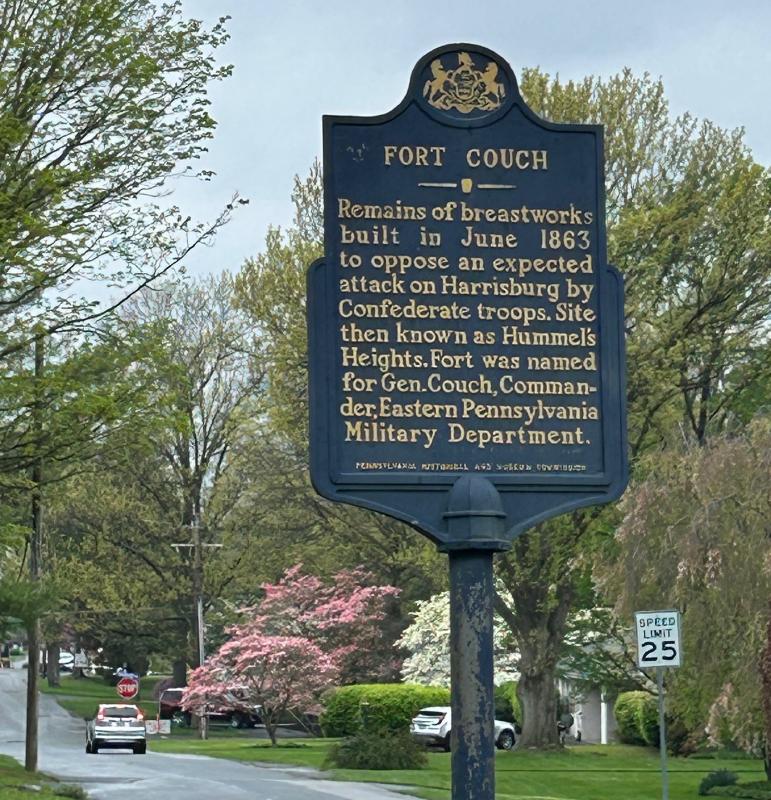
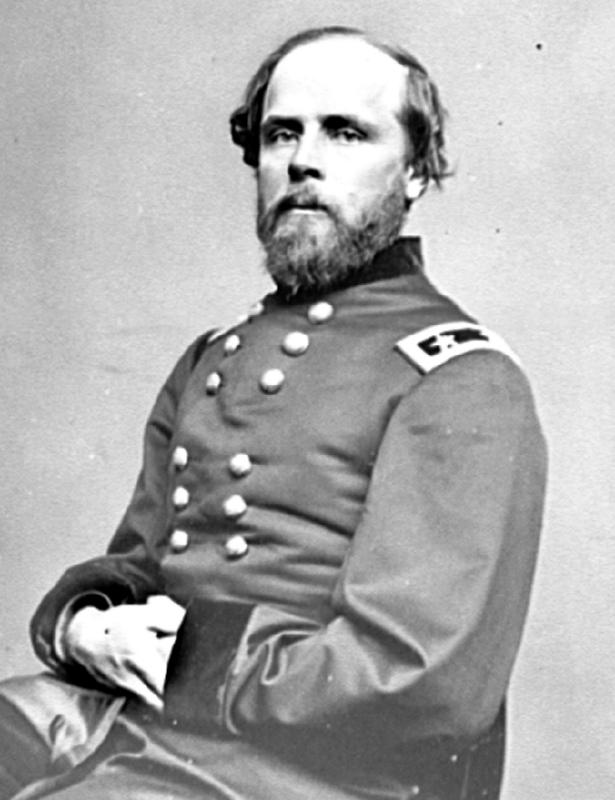
To fend off incoming Confederate forces, Union Major General Darius N. Couch ordered the construction of fortifications overlooking the river on Hummel Heights, an elevated point on the west bank of the Susquehanna. He was assisted by Major James Brady, of the Pennsylvania Volunteer Artillery, and Engineer John A. Wilson. The first fortification, named Fort Washington, was built on the bluffs of what is today Lemoyne’s Negley Park. However, as this position was vulnerable to attack from a nearby high point, General Couch called for another fortification half a mile to the west. The second location was the site of Fort Couch, which occupied a higher, more tactically advantageous position.
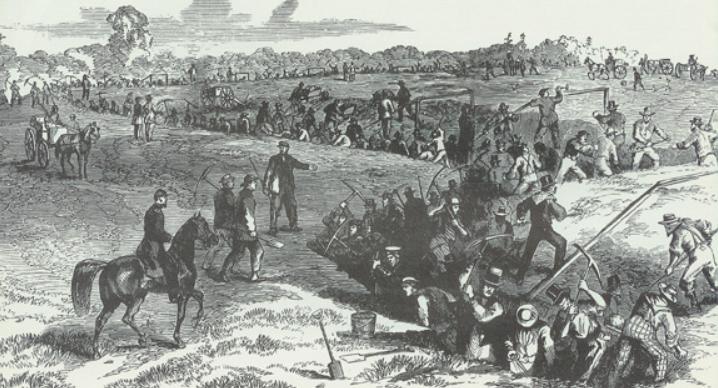
Construction of Fort Washington began on June 15, 1863. Volunteers eagerly started digging the earthworks, swinging their pickaxes into the topsoil. As the soft ground soon gave way to hard shale, the men began to weary and morale plummeted. By the next morning, after digging through the night by the light of bonfires, many volunteers had quit. In response, William T. Hildrup, superintendent of the Hummel Heights fortifications, placed advertisements in The Patriot and Union directed to white and Black residents. Significantly, he offered equal pay — $1.25 per day — to Blacks. Finding extra men to work on the fortifications was a priority regardless of race. The Pennsylvania Railroad also sent workers, many of whom were African Americans, to complete some of the hardest work. Over six hundred citizens and railroad workers helped build the fortifications.
As the fortifications were being constructed, Pennsylvania Governor Andrew Curtin called for Pennsylvanians to defend their state, issuing an emergency call for volunteer troops on June 15. Men quickly signed up, including a full company of ninety African American men who departed from Philadelphia under white officers just twelve hours after the Governor’s call. But upon arriving in Harrisburg, Major General Couch turned them away, citing that Congress had authorized the enlistment of Black troops only if they were signed up for at least three years — not for emergency militia service. Word of their refusal reached Secretary of War Edwin Stanton, who then ordered Couch, "You are authorized to receive into the service any volunteer troops that may be offered, without regard to color." Privately, however, Stanton told noted abolitionist George Stearns not to send any more Black companies, probably because he feared disharmony at a crucial moment in the city's defense.
In response to the Philadelphian troops’ rejection, Harrisburg's African American community convened a meeting "for the purpose of organizing and offering their services to the Governor." Days later, Harrisburg's first Black company was formed by Henry Bradley, a forty-one-year-old local Black barber. T. Morris Chester, who became the only Black war correspondent during the Civil War, quickly formed a second company, raising their numbers to 120.
On June 26, as Confederate lines spread out across the state, Governor’s General Orders No. 44 was issued. The order, which made no racial distinction, called for “sixty thousand men for the defense of the State, to be mustered into the service of the State, for the period of ninety days, unless sooner discharged.” Bradley’s and Chester’s companies were then equipped with uniforms and equipment, but Harrisburg’s military authorities refused to provide them rifles, even as the Adjutant General ordered that all citizens could be furnished weapons at the city arsenal. The companies nonetheless continued to drill in the streets around the Capitol, patiently waiting for their time to come.
As the troops drilled, construction of the city’s fortifications on Hummel Heights continued steadily. When Couch called Fort Washington complete on June 19, he feared it was threatened by a higher bluff to the west. In response, he ordered the construction of another fort, called Fort Couch in his honor, on the higher ground. Alongside Union troops from Pennsylvania and New York, African American civilians, refugees, and railroad workers once again completed most of the work. They dug day in and day out in heavy rain at the tough clay ground. Though it is unclear if Fort Couch was ever finished, it was nevertheless armed with cannons.
On June 28, with artillery booming in the distance, the crisis reached its apex. Probably owing to false intelligence that the rebels were preparing to cross the river, the two Black companies, who had continued to drill in the streets, were finally permitted to carry arms. They promptly joined the other troops at the fortifications on Hummel Heights to await the Confederate attack.
That attack, however, never came. Though rebels led by General Albert G. Jenkins and his cavalry took Mechanicsburg by June 28 and divisions were ordered towards Harrisburg, advancing Union forces caused Lee to concentrate his troops at Gettysburg.
The defense of Harrisburg is an important event in the city’s African American history, for it marks a moment in which Harrisburg’s African Americans volunteered to defend their home even as they faced discrimination. After Captain Bradley’s company received their weapons from the arsenal, they marched through the Capitol grounds to the admiration of white and Black onlookers. Drilling unarmed in the streets for days, these soldiers, now armed with rifles issued by the State of Pennsylvania, evoked an image of resilience, determination, and agency. During a war in which this agency was threatened, Harrisburg’s African Americans contributed to the fight for their freedom in a variety of ways. From taking up arms to taking up a pickaxe, their actions represented one more step towards equality.
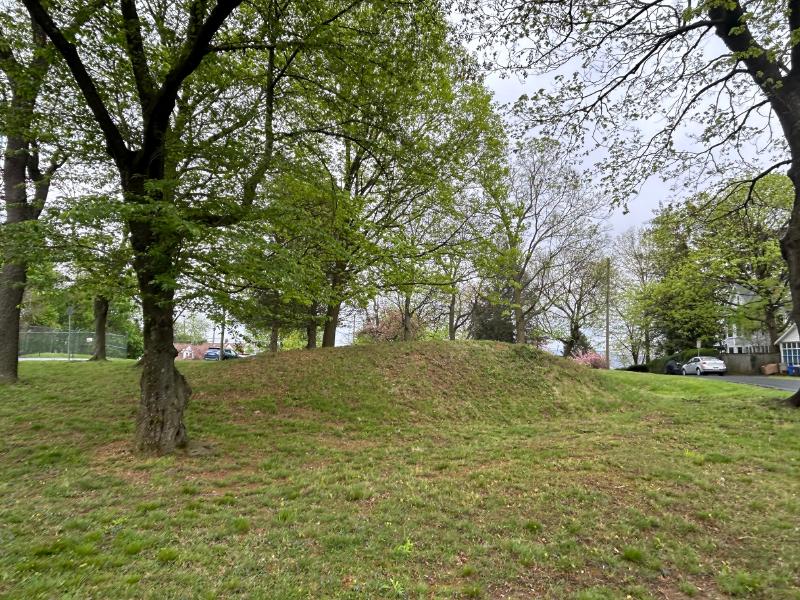
After the war, Fort Washington and Fort Couch fell into neglect and were largely forgotten. Today, nothing remains of them except traces of dug-out breastworks — indications of the people of Harrisburg’s readiness to defend their city.
A full list of the resources used in this story can be found here.Related Stories
Welcome Home USCT
Audio
Images