Charles Dickens in Harrisburg
A One-Day Visit That Left a Lasting Impression
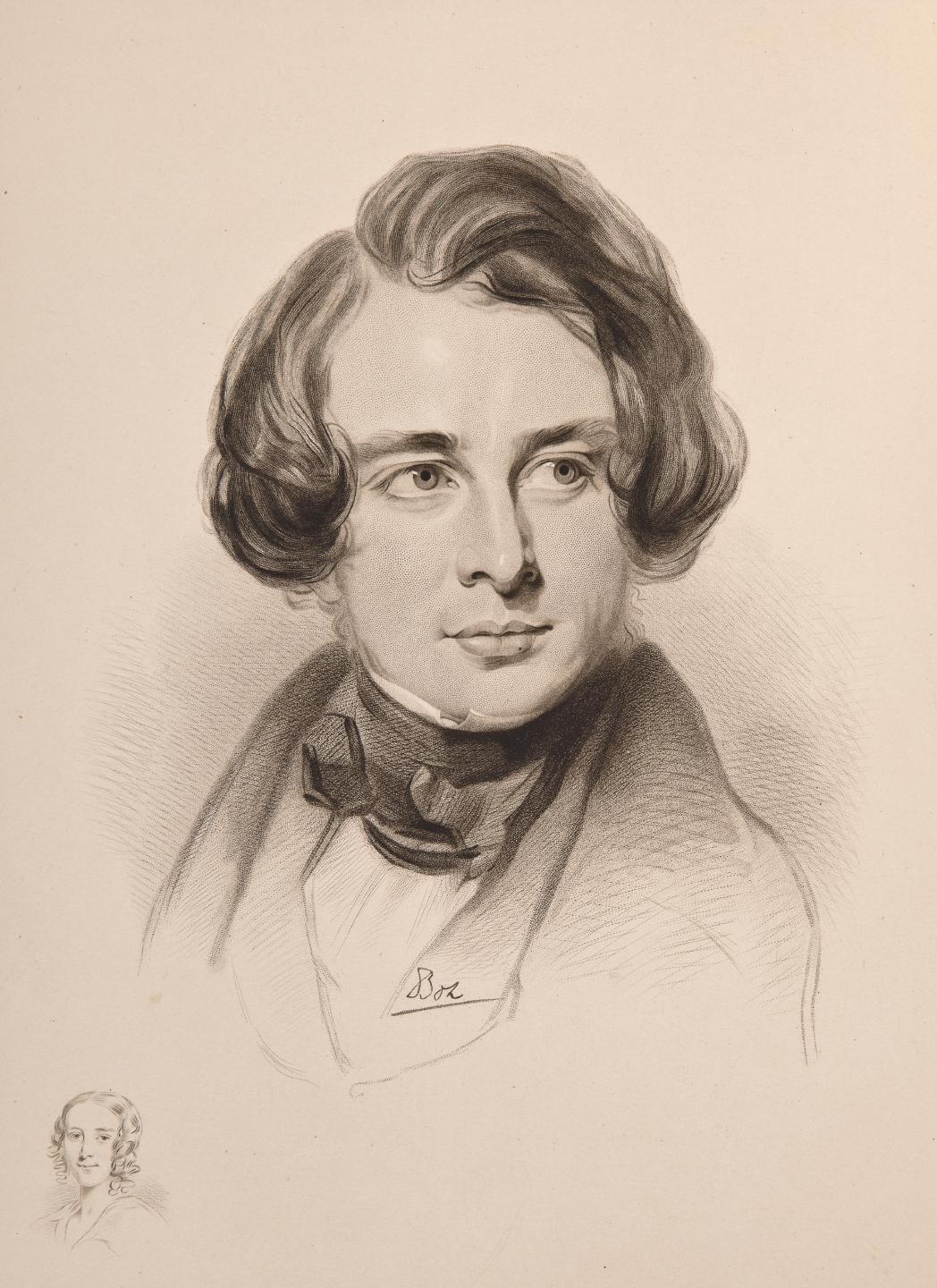
While touring the United States in 1842, Charles Dickens briefly stopped in Harrisburg. Though largely unimpressed, he praised the hospitality he received at the Buehler Hotel, described the Susquehanna Valley in detail, and explored notable locations throughout the city, including the Capitol Building, the newly improved Dauphin County Prison, and John Harris’s gravesite.
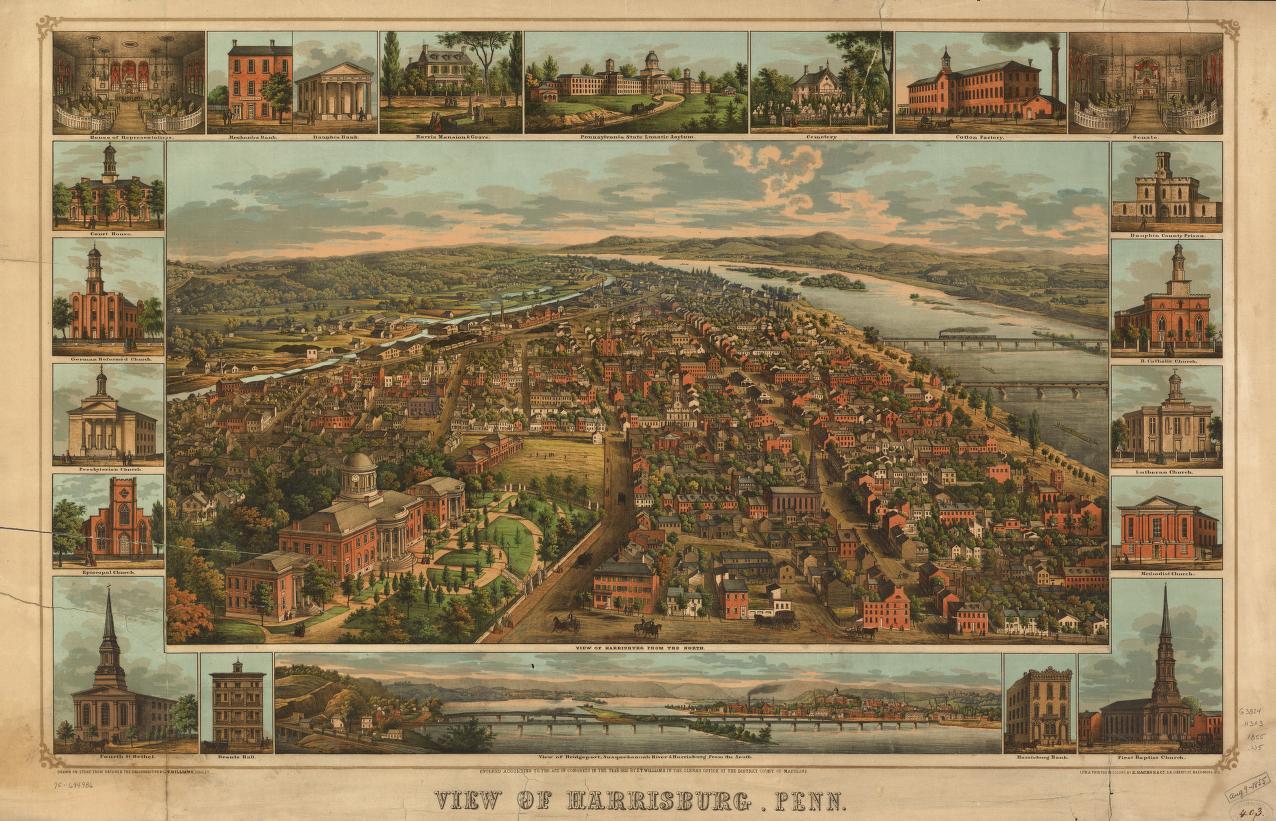
The celebrated English writer Charles Dickens, along with his wife, Catherine, and her maid, Anne Brown, toured cities and towns across the United States in 1842 to experience America firsthand, recording his impressions in his travelogue, American Notes for General Circulation. One stop on his tour was Harrisburg. Although marked by discomfort and disappointment, Dickens toured important landmarks and monuments in the city, experienced firsthand American hospitality, and took pleasure in the immaculate views of the Susquehanna Valley.
After a rough ride from York, the thirty-year-old Dickens and his entourage arrived in Harrisburg on March 24, 1842, and left the very next day. He stayed in a local hotel at the northeast corner of Second and Market streets, known at the time as the Buehler House. Dickens’s fond remembrance of the modest Buehler House was owed to the hospitality of its landlord, Henry Buehler. “We were soon established in a snug hotel,” he wrote in American Notes, “which though smaller and far less splendid than many we put up at, it raised above them all in my remembrance, by having for its landlord the most obliging, considerate, and gentlemanly person I ever had to deal with.” Henry, who inherited the hotel from his father, George Buehler, in 1816, was known for his consideration and friendliness. Due to the hotel’s proximity to the Capitol Building, as well as Buehler’s interest in politics, the hotel became a hub for local politicians. Here, Dickens stayed in a room for legislators; however, he was not particularly fond of the room itself, expressing concern over the politicians spitting tobacco on the carpets of the hotel.
Dickens had mixed views on Harrisburg. Much of what he had to say about the city was negative. Still, he stated that he was fond of both the Buehler Hotel and the Susquehanna Valley. He described the Susquehanna River with the same descriptive detail he gave his fiction:
The river, dotted with innumerable green islands, lay upon our right; and on the left, a steep ascent, craggy with broken rock, and dark with pine trees. The mist, wreathing itself into a hundred fantastic shapes, moved solemnly upon the water; and the gloom of evening gave to all an air of mystery and silence which greatly enhanced its natural interest.
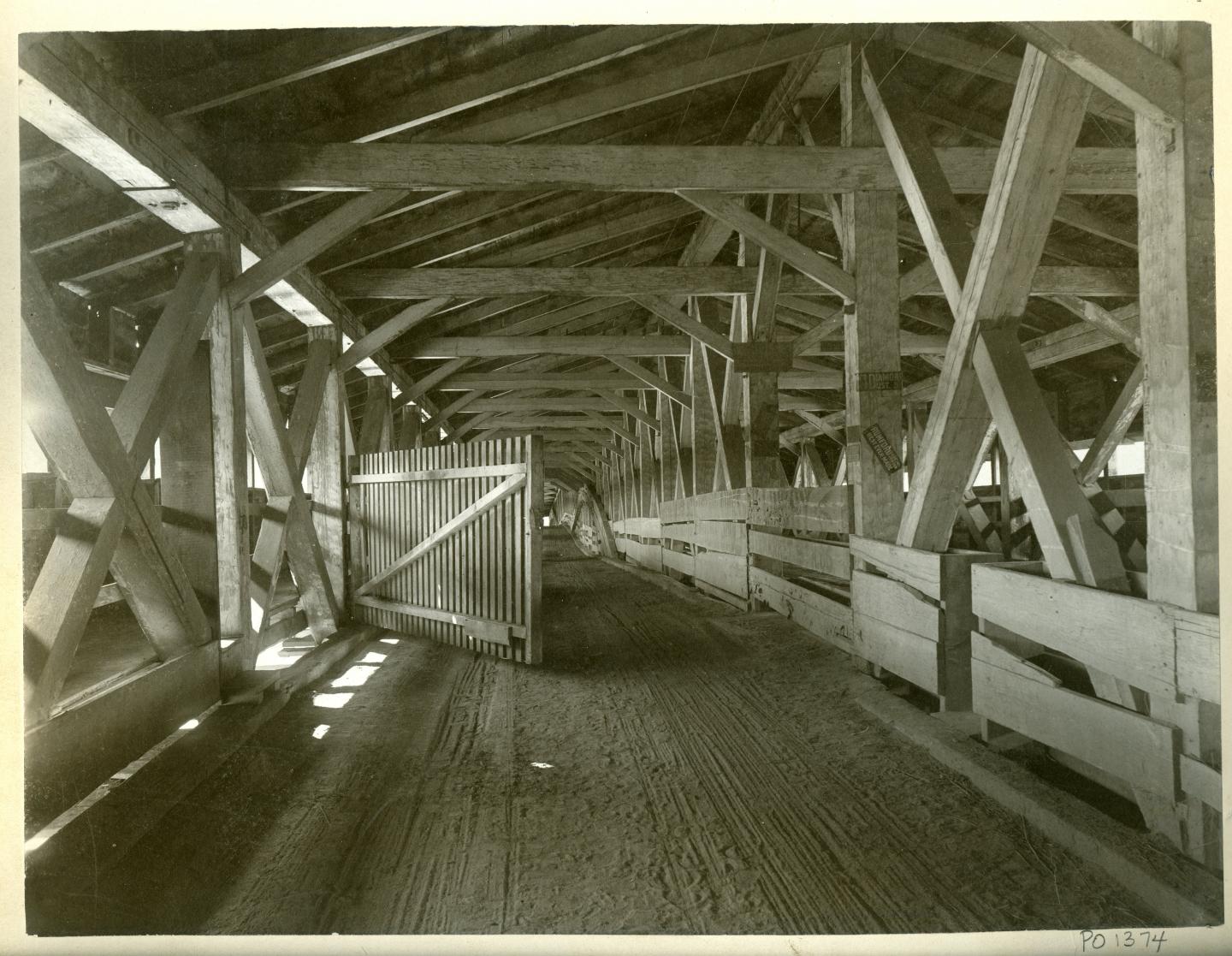
However, despite his interest in the surrounding nature, Dickens was not as fond of the city itself. Although Dickens wrote that he enjoyed Pennsylvania as a whole, stating that Philadelphia was “more provincial than Boston or New York,” he was not as impressed with Harrisburg. He and his wife travelled across the only bridge leading into Harrisburg at the time, the mile-long covered bridge known as the Camelback Bridge (now the Market Street Bridge). The bridge "was profoundly dark," Dickens said. "We had no lamps; and as the horses stumbled and floundered through this place, towards the distant speck of dying light, it seemed interminable." When he and his wife finally arrived, they met a wet and dark city whose gloominess disappointed them. “At length, however, we emerged upon the streets of Harrisburg, whose feeble lights, reflected dismally from the wet ground, did not shine out upon a very cheerful city.” It rained the whole trip, which only added to Dickens’s displeasure, as well as the city’s bleakness.
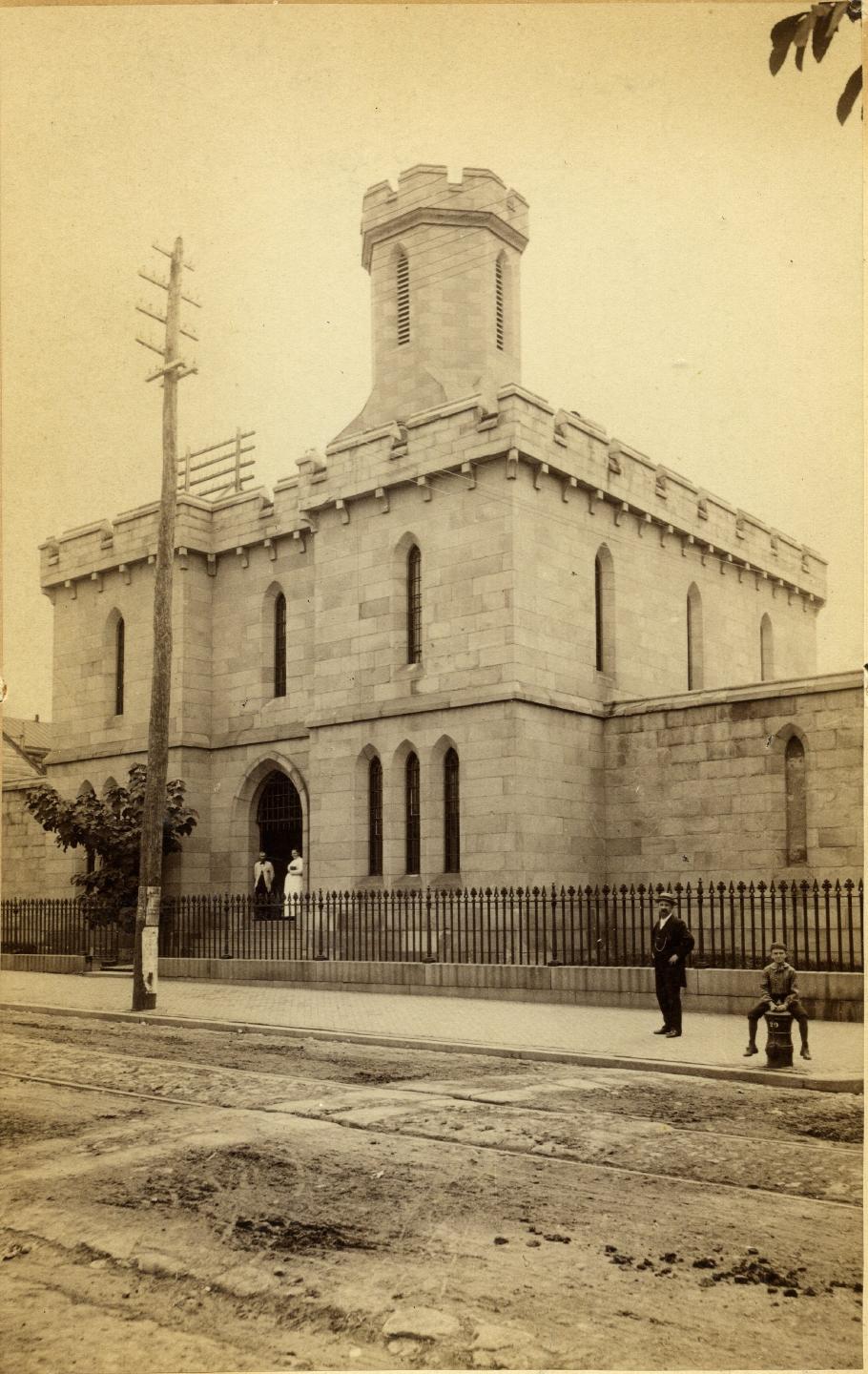
The next morning, Dickens set out to explore the city. He first visited the newly erected “model prison,” now known today as the Dauphin County Prison. Built in 1790, the prison was destroyed and remodeled from 1838 to 1841. Dickens’s arrival in 1842 meant he saw a brand-new prison. The prison tour showcased the then-popular “Solitary System,” which was based on isolation as punishment. Dickens strongly criticized this system, calling it inhumane. This was similar to his reaction to another prison, the Eastern State Penitentiary in Philadelphia, whose solitary system he noted was “cruel and wrong,” but also mentioned that he believed that the creators of the penitentiary did not know the full extent of this injustice.
After that, Dickens paid a visit to the gravesite of Harrisburg’s founder, John Harris, Jr. Upon viewing Harris’s grave, located under a mulberry tree on Front Street, Dickens noted the story of Harris’s capture by Native Americans at the same site in 1733. Keenly interested in interactions between settlers and Native Americans, Dickens strongly sympathized with the Native American people. He even visited the Office of the Secretary of the Commonwealth to view a variety of treaties in which the Native Peoples ceded their lands to the colony of Pennsylvania, such as the Iroquois Deed of 1736 and the Walking Purchase deed of 1737. Dickens sided with the Native Americans in American Notes, describing how they were misled by settlers and lied to in various treaties. This was a relatively unpopular sentiment for the time, as tensions between the two groups were especially high due to westward expansion.
Dickens then took a tour of the Capitol Building. At the Capitol, he met with Governor David Porter in the executive chamber and briefly looked at the state library. Later that day, he went down to the canal boat to scope out the conditions of the boat and the river where he would travel for the next three days on his way to Pittsburgh. Dickens and his wife left after an early dinner at the Buehler Hotel, thus concluding their trip to Harrisburg.
After reading American Notes, many Americans were unhappy, believing Dickens portrayed them as uncivilized and unsophisticated. As a result of this backlash, Dickens noted in the book’s preface that he did not intend to write about America with hostility, but instead to encourage Americans to reflect on their principles. He frequently praised the friendliness of the American people, as well as the country’s natural beauty. Although Dickens was not particularly fond of Harrisburg, he did enjoy his time at the Buehler Hotel, which helped shape not only his perception of the city but also contributed to his lasting impression of American hospitality.
A full list of resources used in this story can be found here.
Images