The Rowland Beauty School
Mentoring Young African American Women

With her beauty school, Ruth Rowland Reed empowered young African American women to learn competitive vocational skills at a time when barriers of race and sex limited their opportunities.
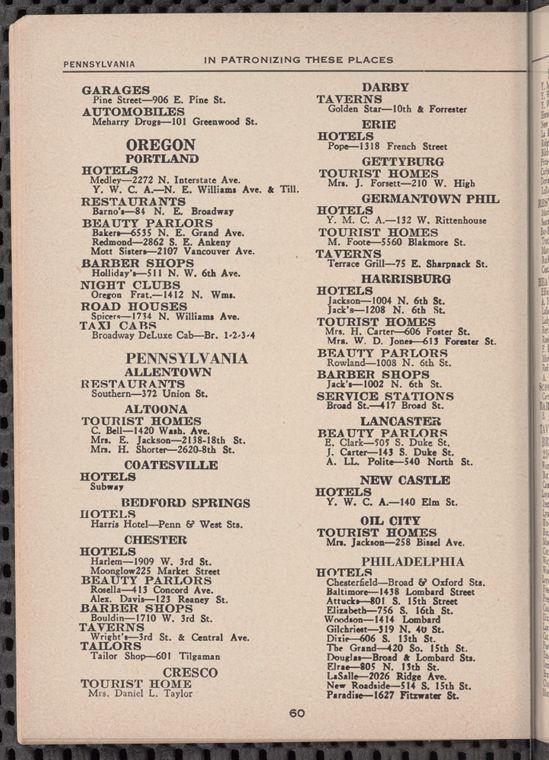
Together we rise to greater prosperity and strength; apart we are sure to lay by the wayside. Those are the words of Ruth Rowland Reed, a young African American entrepreneur who mentored Black women in Harrisburg. After receiving cosmetology training, Reed opened the Rowland School of Scientific Beauty Culture to empower young Black women through education and leadership. Born in 1915 to William H. Rowland and Mammie M. (Goodwin) Rowland, Reed spent her early childhood in Tennessee before moving to Steelton, Pennsylvania. After attending Steelton High School, she continued her education at West Virginia State College, where she was involved in the Alpha Kappa Alpha Sorority. After graduating, Reed moved back to Harrisburg and attended the Harrisburg School of Beauty Culture. In 1939, at age twenty-four, she opened the Rowland's Beauty Shop in her family home at 644 Verbeke Street. Ruth Rowland's business venture expanded two years later (December 3, 1941) when she opened the Rowland Beauty School, which quickly gained traction, with highly qualified teachers and the most up-to-date equipment in cosmetology. Endorsed by influential people such as Maude B. Coleman, Pennsylvania's first interracial consultant who worked to ensure safe working environments for African Americans, the school flourished as a positive environment for young women. The first class consisted of fifteen girls, mostly from Harrisburg and the surrounding areas. In just a few years, though, the school started gaining a positive reputation, and students arrived from states as far away as Kentucky, Alabama, Georgia, and Ohio. At least one World War II female veteran studied there under the Veterans Administration’s rehabilitation training program. In 1945, 98 percent of the graduating class successfully passed the State Board Examination. Located at 1321 North 6th Street in Harrisburg’s Seventh Ward, the school served the community in a number of important ways. One of the school's most notable events was its annual fashion show, which was open to the public. These shows featured themes such as “parade of stars” and “the hour of relaxation,” two themes used in the school’s fourth year. In 1942, the school's students and alumni started a yearbook titled The Cosmetise. It was a space where students could express their gratitude for the school and share their experiences. Many students looked up to Ruth Reed, grateful for the opportunities she provided for them. In one section called “What My School Means to Me,” student Marion Scott wrote about Reed, saying: First of all, our teacher deserves enthusiastic praise. She has worked very hard to impress upon our minds the importance of beauty culture. In our school we are taught not only how to dress hair; but the importance of clean lives, bodies and homes. We are being prepared to meet competition with all workers. We do appreciate being given the opportunity to go to one of the most beautiful, modern, and up-to-date beauty schools in Pennsylvania. These admiring words reflect the respect Reed gained only a year after the school opened.
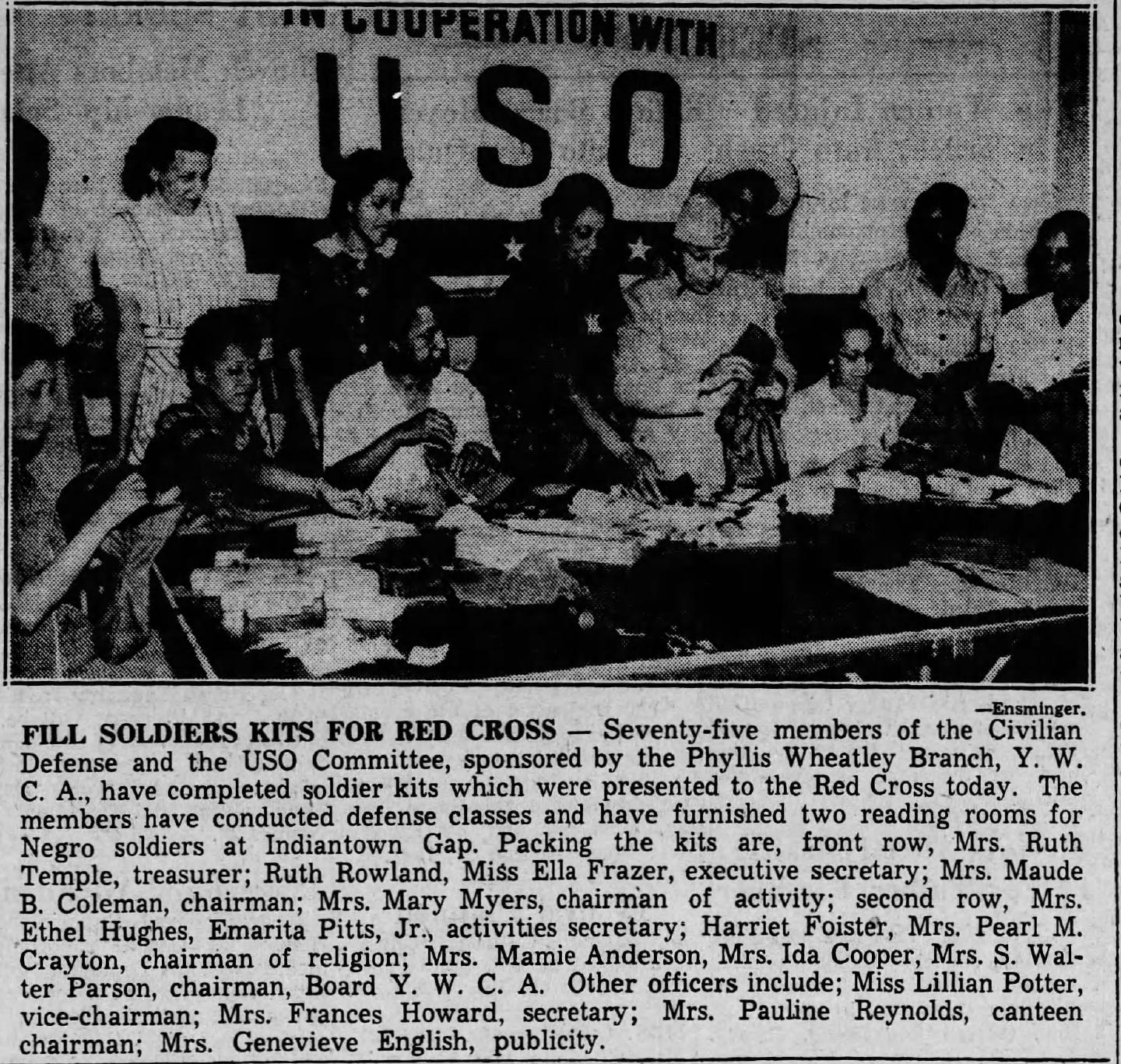
Her legacy of service extended beyond her beauty school to wider work in the community. Reed was active in churches and civic organizations that were dedicated to advancing education, economic opportunities, and civil rights in Harrisburg. She organized Harrisburg’s branch of the National Negro Business and Professional Women’s Club—an organization composed of African American female business owners and certified, licensed, and degreed professionals. Founded in 1935 and still active across the U.S. today, their mission is to encourage and develop professional opportunities for Black women and to serve as advisors for young people seeking to enter professional fields. Additionally, she served as the treasurer of the Harrisburg-Steelton branch of the NAACP, advocating for the civil rights of African Americans in her local community. She also regularly volunteered with the Phyllis Wheatley Branch of the Young Women's Christian Association and area churches, such as the Capital Street Presbyterian and Wesley Union AME Zion. Harrisburg newspapers record her singing soprano, performing in plays—including "Wisdom's Quest," a dramatic play about Black history by W. Justin Carter—and working with civilian defense organizations to make soldier kits for the Red Cross during World War II.
In the 1945 issue of The Cosmetise, Reed advanced the important connection between vocation, hard work, and improvement of the citizen: Among my most prized ambitions exists the ultimate desire that each student who shall cross the threshold of our institution will find within its walls peace and contentment compared with the fact that he has found at last the precise vocation which he has been seeking. That he will immediately put forward the necessary effort to make his chosen profession bigger and better. That as a result of his attendance here that he will go forth a better citizen, better business character, and a more valued American. Reed herself embodied this view by dedicating her life to enriching the lives of Black youth in her community.
Even with her focus on community service, Reed still had time to start a family. On July 15, 1943, almost two years after the opening of her beauty school, Ruth Rowland married Samuel Reed in Detroit, Michigan. Samuel Reed served in the Army during World War II from November 1943 to October 1945. When he returned to Harrisburg, he worked as a truck driver and chauffeur. Ruth and Samuel had two daughters, Patti Jo Anna and Ginger Alice Reed, and a son, Rowland Reed. Reed eventually moved to Philadelphia, where she opened another beauty salon. She died there on June 11, 1958, at the age of forty-four, leaving behind her husband and three children. Her funeral service was held on June 16 at the First Baptist Church, her home congregation in Steelton, Pennsylvania. Reed’s pastor, the Reverend E.L. Green, officiated at her burial in Steelton’s William Howard Day Cemetery. Ruth Rowland Reed was a strong leader for young Black men and women, aiding them in finding their passion and confidence through her beauty school. She contributed significantly to Harrisburg’s community by working with local and national organizations. Her ability to create a place where women could learn, despite the racial and gender barriers of her time, is a testament to her leadership and dedication to her community. Thanks to Reed’s commitment to bettering others, her school served as a safe space not only for its students but also for the surrounding community. A full list of the resources used in this story can be found here.
Related Stories
Jack's Hotel and the Jackson House
The Phyllis Wheatley YWCA
Audio
Images