<?xml version="1.0" encoding="UTF-8"?>
<feed xmlns="http://www.w3.org/2005/Atom">
  <title type="text">Harrisburg Historical</title>
  <updated>2026-04-17T19:49:02+00:00</updated>
  <generator uri="http://framework.zend.com" version="1.12.20">Zend_Feed_Writer</generator>
  <link rel="alternate" type="text/html" href="https://harrisburghistorical.org/"/>
  <link rel="self" type="application/atom+xml" href="https://harrisburghistorical.org/items/browse?output=rss2"/>
  <id>https://harrisburghistorical.org/</id>
  <author>
    <name>Harrisburg Historical</name>
    <uri>https://harrisburghistorical.org</uri>
  </author>
  <link rel="hub" href="https://pubsubhubbub.appspot.com/"/>
  <entry>
    <title type="html"><![CDATA[The Chester Family Oyster House: Serving up a Legacy of Activism]]></title>
    <summary type="html"><![CDATA[<p><strong><em>Like all great historical figures, the story of Harrisburg's civil right leader, T. Morris Chester, was not created in a vacuum. Chester's parents, George and Jane Chester, and their Oyster House on Market Street, were channels for abolitionism and activism in nineteenth-century Harrisburg and influenced their children to pursue civil rights efforts in the city, state, and country. </em></strong></p><img src="https://harrisburghistorical.org/files/fullsize/7fd1baaad4f690023c642ad574c1a479.jpg" alt="Thomas Morris Chester Historical Marker" /><br/><p><span style="font-weight:400;">On May 11, 1834, a child was born in the second-story apartment above an oyster shop on Market Street. That child was Thomas Morris Chester, who became one of Harrisburg’s most prominent civil rights leaders. Chester is remembered for his role as the United States’s first Black war correspondent, his advocacy for Black citizenship, and many other contributions. Today, Chester is the centerpiece of many Harrisburg initiatives to honor local Black history and advocacy, including this civil rights tour. Chester’s legacy begins with his parents, George and Jane Chester. The Chesters were activists in their own right, as well as the owners and operators of an oyster house that served as a locus of abolitionist activity in the mid-nineteenth century.</span>
<span style="font-weight:400;">The exact location of the Chesters’ oyster house and restaurant is difficult to identify. In the 1840s, the restaurant was situated in the basement of a building that, according to local historian George F. Nagle, “flanked the county property . . . to the east.” This means that the restaurant was in some way connected to the county courthouse of Harrisburg — the very place where Frederick Douglass was egged after giving an abolitionist speech in 1847. Additionally, records indicate that by 1856 the restaurant sat on the corner of Third and Market Streets. Historians believe either that the building in question was one long structure, extending all the way to this corner from the Courthouse property, or that the Chester family relocated to the building on the corner in 1856. This house hosted freedom-seeking people of all kinds. Not only did it function as a social spot for civil rights activists but also as a stop on the Underground Railroad for those escaping slavery.</span>
<span style="font-weight:400;">The house on Market Street belonged to George Chester, the patriarch of the family. Little is known about George. He was born in 1784 and was someone deeply involved in fighting for Black Americans’ civil rights. He was Harrisburg’s only agent of the <em>Liberator</em>, an abolitionist newspaper published by William Lloyd Garrison, which ran from 1831 to 1865 and was the most widely circulated publication of its kind.</span>
<span style="font-weight:400;">It is also known that George was present when a young woman named Jane arrived in York, Pennsylvania, after escaping from enslavement in Maryland. Jane M. Chester, Thomas’s mother, was born into slavery and, according to later accounts, was possibly enslaved four different times before she escaped from Maryland in 1825. Though the journey from Maryland to Pennsylvania may seem like a comparatively small distance, there was no Underground Railroad at this point to aid Jane. To make matters more dire, slavery was still occurring in Pennsylvania at the time, the last recorded case in the state ending in 1847. </span>
<span style="font-weight:400;">Upon arriving in York, she met George Chester, and the two went on to wed and settle in Harrisburg. </span><span style="font-weight:400;">Together, they had twelve children, but only seven survived into adulthood.</span><span style="font-weight:400;"> In Harrisburg, Jane worked with her husband to provide a safe place for freedom seekers and activists. George and Jane capitalized on the relatively lucrative, high-demand business of oystering in order to build a successful life for themselves and to help make it possible for their fellow African American peers to endure. At the time, there was a relative boom in demand for seafood, and working as an oysterman was one of the most profitable jobs a Black man could hold. </span><span style="font-weight:400;">Because of this position of marginal privilege, the Chesters’ restaurant connected many patrons to the abolitionist movement and the fight for civil rights.</span>
<span style="font-weight:400;">Following George’s death in 1859, Jane moved her residence and the catering business to a home she bought on 305 Chestnut Street. It was rare for either women or African Americans to own homes in the city during this time, let alone someone who belonged to both categories. Considered one of the best caterers in Harrisburg, Jane catered more than three hundred wedding ceremonies and cooked for many prominent people in the state capital, including several governors. In short, Jane carried on the family business of serving the community by promoting justice while supplying delicious food.</span>
<span style="font-weight:400;">It is no wonder, then, that Jane passed on to her children her passion for serving the community and fighting for civil rights. After her death, this legacy of Chester hospitality continued as Jane’s daughter, Eliza Zedericks, lived in the Chestnut Street home with her husband into the twentieth century. Like her mother, she utilized the family home to organize and provide hospitality to people traveling through the city. </span>
<span style="font-weight:400;">Tragically, Jane outlived most of her children, dying on March 19, 1894, at age ninety-two. Thomas Morris Chester had passed away just two years earlier on September 30, 1892. However, the pain of burying her beloved children did not stop her from fighting for what she believed in. An obituary in the </span><i><span style="font-weight:400;">Harrisburg Telegraph</span></i><span style="font-weight:400;"> reveals the impact that Jane had on the community amid her continuous struggle for justice:</span>
<p style="padding-left:48px;"><span style="font-weight:400;">During the later years of her life she was in the habit of going about among the business offices and hotels selling her famous home-made taffy, which was always in demand. She was the principal caterer twenty-five years ago and no great feast or fashionable entertainment was complete without her presence and assistance. She was a consistent Christian and had many friends among all classes of citizens. During her life she saw many famous men, and . . . she could relate interesting incidents of the visits of distinguished public men to [Harrisburg].</span>
<span style="font-weight:400;">Jane set an example for her children by hosting, serving, and providing for those fighting for their rights. Significantly, her house served as the epicenter of this. She opened her home to the downtrodden, served the community from her kitchen, and welcomed with open arms those who turned to her. </span>
<span style="font-weight:400;">The Chester family business may have changed locations, but the legacy of the Chester Oyster House remained the same. Currently, Market Street boasts a historical marker where all can pay witness to that legacy that inspired so many to follow in her footsteps in the past, and still has the power to do so today.</span>
</p><p>A full list of the resources used in this story can be found <a href="https://www.zotero.org/groups/5114087/harrisburg_historical/collections/34H3X4IX">here</a>.</p><p><strong>Related Stories</p><a href="https://harrisburghistorical.org/items/show/6">A Gathering at the Crossroads</a></p><p><a href="https://harrisburghistorical.org/items/show/8">Harrisburg's Role in the Underground Railroad</a></p><p><a href="https://harrisburghistorical.org/items/show/11">Welcome Home USCT</a></p><p><em><strong><a href="https://harrisburghistorical.org/items/show/12">For more (including 6 images&#32;&amp;&#32;2 audio files) view the original article</a></strong></em></p>]]></summary>
    <published>2024-07-10T00:16:45+00:00</published>
    <updated>2026-04-17T19:49:02+00:00</updated>
    <link rel="alternate" type="text/html" href="https://harrisburghistorical.org/items/show/12"/>
    <id>https://harrisburghistorical.org/items/show/12</id>
    <author>
      <name>Meredith Gardner</name>
    </author>
  </entry>
  <entry>
    <title type="html"><![CDATA[The US Colored Troops Grand Review: Harrisburg Welcomes Home the Black Veterans of the Civil War]]></title>
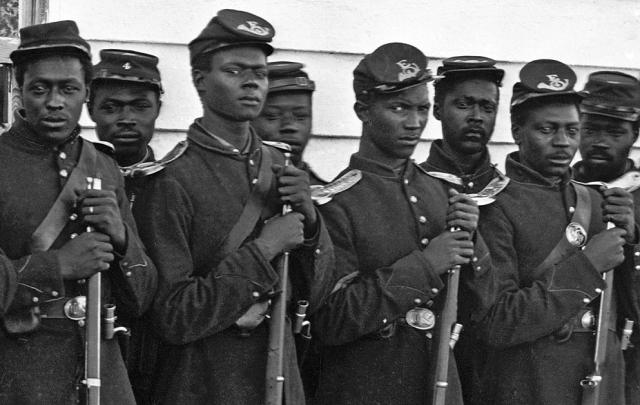
    <summary type="html"><![CDATA[<p><strong><em>When Civil War soldiers were recognized in a Grand Review march in Washington, DC, the United States Colored Troops (USCT) were excluded. The city of Harrisburg held its own Grand Review march on November 14, 1865, to recognize the struggle and participation of the Black soldiers in their fight for freedom. </em></strong></p><img src="https://harrisburghistorical.org/files/fullsize/b48402a41d588662aaed976bb2e7e0b3.jpg" alt="Company E, 4th USCT" /><br/><p>On the morning of November 14, 1865, the streets of Harrisburg echoed with the footsteps of regiments from the United States Colored Troops (USCT). Beginning at 10 a.m., the soldiers marched from Filbert and State Street (now Soldier’s Grove), through the Eighth Ward, up Market Street, and along Front Street past Simon Cameron’s home. Cameron, Lincoln’s former Secretary of War, watched approvingly from his porch. His remarks, reprinted in the <em>North American and United States Gazette </em>in Philadelphia on November 15, 1865, honored the troops: “I cannot let this opportunity pass without thanking the African soldiers . . . for the great service which they have been to their country in the terrible rebellion.” </p><p>These soldiers marched in the Harrisburg Grand Review, a historic event planned to honor the thousands of Black soldiers who fought in the United States Civil War for the Union Army. The Garnett League, Harrisburg’s chapter of the Pennsylvania State Equal Rights League, determined that the USCT deserved recognition for their contributions to the Northern victory and, alongside Harrisburg community members and political figures, organized the Grand Review. Thomas Morris Chester, who served as both Chief Marshall and Chairman of the Committee of Arrangements, led the march. A Harrisburg native himself, Chester served in the USCT and was the United States’s first Black war correspondent. </p><p>Many festivities marked the reception, including live music, speeches, and a dinner for the soldiers. Thousands of Harrisburg citizens, white and Black, lined the streets, showing their support and gratitude to the men who fought for their own freedom in the United States Civil War. Railroads into the city even cut their rates by half to encourage turnout. After the procession, William Howard Day, Orator of the Review, delivered a long address on the steps of the Capitol Building, and a letter from Generals George Meade and Benjamin Butler was read to the attendees.</p><p>The controversial decision to permit Black Americans into the United States Army was made in the midst of the Civil War. Toward the beginning of the conflict, the Northern armies still followed the Militia Act of 1792, allowing only white male citizens to participate in militias. The Northern armies attempted to abide by this act, but midway through the war, states struggled to meet their volunteer quotas and sought a new way to recruit soldiers. Then came the Militia Act of 1862. Enacted on July 17, 1862, the new act authorized a state militia draft when volunteer quotas were not met, and for the first time, allowed African Americans to serve in militias as soldiers or laborers. Abolitionists in the North praised this controversial decision as a step toward equality. </p><p>Many Black residents of Harrisburg served in the Civil War through the USCT. One such man was Henry C. Keith, who enlisted in September 1863. Keith enlisted in the 8th USCT Company B, which underwent rigorous training at Camp William Penn near Philadelphia before deployment to the Easter Theater. Company B fought in significant combat, particularly during the Battle of Olustee on February 20, 1864, which ended in a Confederate victory. Keith survived the intense combat that characterized the Civil War and eventually started a family and became a policeman in 1885. </p><p>Ephraim Slaughter was another USCT soldier with ties to Harrisburg. In 1863, he escaped slavery in North Carolina and joined Company B of the 3rd North Carolina Colored Infantry (later the 37th USCT) in January of 1864. After the war, Slaughter settled in Harrisburg’s Old Eighth Ward, where he was a real estate investor and active member of Bethel African Methodist Episcopal Church. When he died in 1943, Slaughter was Harrisburg’s last surviving Civil War veteran. </p><p>Roughly 179,000 Black men served as soldiers in the United States Army, while 19,000 more served in the United States Navy. By the end of the Civil War, almost 40,000 Black soldiers died, of those, 30,000 as a result of infection or disease. They served in artillery and infantry while also performing all the non-combat functions that supported and sustained the armies. According to the National Archives, Black carpenters, guards, laborers, nurses, spies, scouts, and surgeons contributed to the war. There were almost eighty Black commissioned officers. Confederate troops often targeted Black soldiers, who faced crueler conditions if captured. Black Americans proceeded to enlist anyway, a testament to their bravery and sacrifice. </p><p>After four years of intense fighting and high casualty numbers, the Confederacy surrendered. A month later, on May 23–24, 1865, the Northern Armies completed their final military march, the Grand Review, which moved from the U.S. Capitol toward the White House. Secretary of War Edwin Stanton was quoted, “You see in these armies, the foundation of the Republic: our future railroad managers, congressmen, bank presidents, manufacturers, judges, governors, and diplomats; yes and not less than a half dozen presidents.” </p><p>But not a single Black American who had bravely fought in the Civil War was represented in May’s Grand Review in Washington D.C. </p><p>The Militia Act of 1862 was perhaps the governmental change that enabled the Union to defeat the Confederacy in a war fought primarily over the future of Black Americans. Even so, the members of the USCT were intentionally excluded from the Grand Review march in Washington, D.C. In response, Harrisburg organized its own Review. This distinctive move towards equality was supported by formal committees and citizens alike, with a great number of citizens, white and Black, coming to pay respect to the soldiers of the USCT and their role in the Union Army victory. </p><p>According to the November 15, 1865, edition of the <em>North American and United States Gazette</em>, “The reception of these troops was, as it should be, respectful and honorable by the mass of the people of Harrisburg, and many a fair white hand did not shrink from waving a kerchief in welcome of those who escaped the perils of a contest in which they risked their lives, in defense of the national honor and support of the constitutional authorities.” </p><p>Orator William Howard Day believed the Union victory in the American Civil War represented a future of “improvement, social elevation, and the acquirement of political rights.” </p><p>134 Black Civil War veterans, including Chester, Keith, and Slaughter, are buried at Harrisburg’s Lincoln Cemetery. The city’s oldest surviving African American burial ground, Lincoln Cemetery was established in January 1876. In the words of Rachael Williams, Executive Director of Saving Our Ancestors' Legacy (SOAL), an organization working to restore and preserve Lincoln Cemetery, it “stands as a symbol of resilience and unity within the community.” Other notable Black veterans buried there include Aquila H. Amos, James M. Auter, and Harry F. Flowers. Their memories—and the memories of the thousands of other Black Americans who served in the USCT—are honored through the retelling of their stories and the significant role they played in the fight for freedom and equality during the American Civil War.</p><p>A full list of the resources used in this story can be found <a href="https://www.zotero.org/groups/5114087/harrisburg_historical/collections/P97IUEEE">here</a>.</p><p><strong>Related Stories</strong></p><p><a href="https://harrisburghistorical.org/items/show/9">Men of Muscle</a></p><p><a href="https://harrisburghistorical.org/items/show/12">It's a Family Business</a></p><p><a href="https://harrisburghistorical.org/items/show/13">Lincoln's Close Call</a></p><p><em><strong><a href="https://harrisburghistorical.org/items/show/11">For more (including 6 images&#32;&amp;&#32;2 audio files) view the original article</a></strong></em></p>]]></summary>
    <published>2024-06-29T18:06:03+00:00</published>
    <updated>2026-04-17T19:49:02+00:00</updated>
    <link rel="alternate" type="text/html" href="https://harrisburghistorical.org/items/show/11"/>
    <id>https://harrisburghistorical.org/items/show/11</id>
    <author>
      <name>Elizabeth Movinsky</name>
    </author>
  </entry>
  <entry>
    <title type="html"><![CDATA[Fort Couch, Fort Washington, and the Defense of Harrisburg: How Black Civilians, Laborers and Soldiers Helped Defend Pennsylvania&#039;s Capital]]></title>
    <summary type="html"><![CDATA[<p><strong><em>In June 1863, Black and white Union troops and civilians constructed two forts on Hummel Heights, an elevated point on the western bank of the Susquehanna River, to defend against the approaching Confederate troops. Today, the remnants of Fort Couch stand as a testament to the importance of Black soldiers and civilians in the Union’s defense of Pennsylvania.</em></strong></p><img src="https://harrisburghistorical.org/files/fullsize/450039cc3940606c15b28a448bed97d8.jpg" alt="Pennsylvania civilians digging of earthworks on Hummel Heights" /><br/><p><span style="font-weight:400;">In 1863, a fierce Confederate invasion threatened the Pennsylvania capital of Harrisburg. The hot summer sun, frequent rains, and low morale plagued Union forces. Thanks in part to the construction of Fort Couch and Fort Washington, built largely by Black laborers, the rebel invasion was halted, a crucial part of turning the tide against the Confederacy during the Civil War. Equally significant, the inclusion of local Black men in the northern war efforts illustrated substantial progress toward a truly integrated military.</span>
<span style="font-weight:400;">Intending to strike a devastating blow to Union forces, Confederate General Robert E. Lee launched an invasion into northern territory in the summer of 1863. As Lee’s army rapidly approached Harrisburg, the Pennsylvania Capital’s fortifications and Union Militia along the Susquehanna River helped turn the rebels toward Gettysburg. The Confederates’ defeat there resulted in their retreat southward and eventual surrender to Union General Ulysses S. Grant in 1865, marking the end of the Civil War.</span>
<span style="font-weight:400;">But in June 1863, the South’s defeat was far from inevitable. Harrisburg, a vulnerable point in Union defenses, stood as an ideal gateway northward. Capturing the city would give the rebels control over the ports of the Susquehanna River, the railroads, and the defensive points along the River. As the Confederate forces approached, mass evacuations took place leaving the typically busy state capital nearly empty. </span>
<span style="font-weight:400;">To fend off incoming Confederate forces, Union Major General Darius N. Couch ordered the construction of fortifications overlooking the river on Hummel Heights, an elevated point on the west bank of the Susquehanna. He was assisted by Major James Brady, of the Pennsylvania Volunteer Artillery, and Engineer John A. Wilson. The first fortification, named Fort Washington, was built on the bluffs of what is today Lemoyne’s Negley Park. However, as this position was vulnerable to attack from a nearby high point, General Couch called for another fortification half a mile to the west. The second location was the site of Fort Couch, which occupied a higher, more tactically advantageous position.</span>
<span style="font-weight:400;">Construction of Fort Washington began on June 15, 1863. Volunteers eagerly started digging the earthworks, swinging their pickaxes into the topsoil. As the soft ground soon gave way to hard shale, the men began to weary and morale plummeted. By the next morning, after digging through the night by the light of bonfires, many volunteers had quit. In response, William T. Hildrup, superintendent of the Hummel Heights fortifications, placed advertisements in </span><i><span style="font-weight:400;">The Patriot and Union</span></i><span style="font-weight:400;"> directed to white and Black residents. Significantly, he offered equal pay — $1.25 per day — to Blacks. Finding extra men to work on the fortifications was a priority regardless of race. The Pennsylvania Railroad also sent workers, many of whom were African Americans, to complete some of the hardest work. Over six hundred citizens and railroad workers helped build the fortifications.</span>
<span style="font-weight:400;">As the fortifications were being constructed, Pennsylvania Governor Andrew Curtin called for Pennsylvanians to defend their state, issuing an emergency call for volunteer troops on June 15. Men quickly signed up, including a full company of ninety African American men who departed from Philadelphia under white officers just twelve hours after the Governor’s call. But upon arriving in Harrisburg, Major General Couch turned them away, citing that Congress had authorized the enlistment of Black troops only if they were signed up for at least three years — not for emergency militia service. Word of their refusal reached Secretary of War Edwin Stanton, who then ordered Couch, "You are authorized to receive into the service any volunteer troops that may be offered, without regard to color." Privately, however, Stanton told noted abolitionist George Stearns not to send any more Black companies, probably because he feared disharmony at a crucial moment in the city's defense. </span>
<span style="font-weight:400;">In response to the Philadelphian troops’ rejection, Harrisburg's African American community convened a meeting "for the purpose of organizing and offering their services to the Governor." Days later, Harrisburg's first Black company was formed by Henry Bradley, a forty-one-year-old local Black barber. T. Morris Chester, who became the only Black war correspondent during the Civil War, quickly formed a second company, raising their numbers to 120.</span>
<span style="font-weight:400;">On June 26, as Confederate lines spread out across the state, Governor’s General Orders No. 44 was issued. The order, which made no racial distinction, called for “sixty thousand men for the defense of the State, to be mustered into the service of the State, for the period of ninety days, unless sooner discharged.” Bradley’s and Chester’s companies were then equipped with uniforms and equipment, but Harrisburg’s military authorities refused to provide them rifles, even as the Adjutant General ordered that all citizens could be furnished weapons at the city arsenal. The companies nonetheless continued to drill in the streets around the Capitol, patiently waiting for their time to come.</span>
<span style="font-weight:400;">As the troops drilled, construction of the city’s fortifications on Hummel Heights continued steadily. When Couch called Fort Washington complete on June 19, he feared it was threatened by a higher bluff to the west. In response, he ordered the construction of another fort, called Fort Couch in his honor, on the higher ground. Alongside Union troops from Pennsylvania and New York, African American civilians, refugees, and railroad workers once again completed most of the work. They dug day in and day out in heavy rain at the tough clay ground. Though it is unclear if Fort Couch was ever finished, it was nevertheless armed with cannons.</span>
<span style="font-weight:400;">On June 28, with artillery booming in the distance, the crisis reached its apex. Probably owing to false intelligence that the rebels were preparing to cross the river, the two Black companies, who had continued to drill in the streets, were finally permitted to carry arms. They promptly joined the other troops at the fortifications on Hummel Heights to await the Confederate attack.</span>
<span style="font-weight:400;">That attack, however, never came. Though rebels led by General Albert G. Jenkins and his cavalry took Mechanicsburg by June 28 and divisions were ordered towards Harrisburg, advancing Union forces caused Lee to concentrate his troops at Gettysburg. </span>
<span style="font-weight:400;">The defense of Harrisburg is an important event in the city’s African American history, for it marks a moment in which Harrisburg’s African Americans volunteered to defend their home even as they faced discrimination. After Captain Bradley’s company received their weapons from the arsenal, they marched through the Capitol grounds to the admiration of white and Black onlookers. Drilling unarmed in the streets for days, these soldiers, now armed with rifles issued by the State of Pennsylvania, evoked an image of resilience, determination, and agency. During a war in which this agency was threatened, Harrisburg’s African Americans contributed to the fight for their freedom in a variety of ways. From taking up arms to taking up a pickaxe, their actions represented one more step towards equality.</span>
<span style="font-weight:400;">After the war, Fort Washington and Fort Couch fell into neglect and were largely forgotten. Today, nothing remains of them except traces of dug-out breastworks — indications of the people of Harrisburg’s readiness to defend their city.</span>
A full list of the resources used in this story can be found <a href="https://www.zotero.org/groups/5114087/harrisburg_historical/collections/KG5ITEGZ">here</a>.</p><p><strong>Related Stories</strong></p><p><a href="https://harrisburghistorical.org/items/show/11">Welcome Home USCT</a></p><p><em><strong><a href="https://harrisburghistorical.org/items/show/9">For more (including 4 images&#32;&amp;&#32;2 audio files) view the original article</a></strong></em></p>]]></summary>
    <published>2024-02-12T20:31:55+00:00</published>
    <updated>2026-04-17T19:49:02+00:00</updated>
    <link rel="alternate" type="text/html" href="https://harrisburghistorical.org/items/show/9"/>
    <id>https://harrisburghistorical.org/items/show/9</id>
    <author>
      <name>Dominic Gomez</name>
    </author>
  </entry>
  <entry>
    <title type="html"><![CDATA[A Gathering at the Crossroads: The Story of the Commonwealth Monument]]></title>
    <summary type="html"><![CDATA[<p><strong><em>In 2020, as communities around the nation took down monuments symbolizing the legacies of American slavery, Harrisburg residents set up a monument to African American history and the power of the vote. </em></strong></p><img src="https://harrisburghistorical.org/files/fullsize/deaad0b9295abae0a1dfa266d3e54656.jpg" alt="A Gathering at the Crossroads" /><br/><p>On August 26, 2020, <em>A Gathering at the Crossroads</em> commemorated the anniversaries of the Fifteenth and Nineteenth  Amendments through the installation of a monument to Harrisburg’s Black history. 150 years after the right to universal male suffrage was granted to the people of the United States, and 100 years after women's suffrage was established, 2020 marked the intersection of the legacies of past achievements, and the inconsistencies and obstacles of the present. Beginning in the Spring of 2020, protests against police brutality toward Black Americans swept the nation, calling attention to continued injustices in American society. </p><p>At the height of this racial reckoning, a new bronze monument was placed on the Irvis Equality Circle, which marks the south <span>lawn of the Speaker K. Leroy Irvis Office Building </span>in Harrisburg’s Capitol Complex. A little more than a century ago, neither the Circle nor the expansive Capitol building existed. The area where this monument now stands was once a part of the Old Eighth Ward known as Tanner’s Alley, a predominantly African American neighborhood. Instead of lush green spaces and domed ceilings, this part of Harrisburg was filled with thriving churches, schools, businesses, and private residences. In the early twentieth century, however, these spaces were torn down and families were forced out of their homes due to the Capitol expansion project. The City Beautiful movement started as a push to create new green spaces and waste disposal measures that would benefit the entire community, but by the 1910s, it had morphed into a drive to complete the Capitol Complex that stands today. The Old Eighth, home to significant Black, Jewish, and immigrant populations, was demolished and residents were forced to relocate. For many years, their names and stories were forgotten. </p><p>The monument at Irvis Equality Circle is, to date, the only monument on the Capitol grounds honoring Harrisburg's Black community. The Commonwealth Monument Project is an initiative of the the International Institute for Peace through Tourism and was led by Lenwood Sloan (Executive Director), Jeb Stuart (Secretary of Logistics and Installation), Kelly Summerford (Treasurer), Phyllis Bennett (Government and Business Liaison), and Valerie Leblanc (Planning and Development). It enjoyed bipartisan support from both the Pennsylvania House of Representatives and Senate, along with major financial contributions from the City of Harrisburg, the Foundation for Enhancing Communities, Peggy Grove, Dauphin County Commissioners, Messiah University, Senator Sharif Street, and many other generous donors. </p><p>Artist Becky Ault and Art Design Group crafted four life-sized bronze statues of African American orators, each of whom made major contributions to the quest for racial justice in America and have a meaningful connection to the city of Harrisburg. These include, from left to right: </p><p>Thomas Morris Chester (1834–1892), a Civil War correspondent and Harrisburg native. In 1863, he became the captain of one of Harrisburg’s Union companies. Through 1864, Chester reported on the war effort, particularly the contributions of African American troops. Most newspapers completely overlooked the African American soldiers, but through Chester’s journalism, papers such as the <em>Philadelphia Press</em> printed information about them. After the war, Chester returned to Harrisburg where he became the secretary of the newly founded Garnet Equal Rights League, which advocated for Black rights and freedoms. This section of Walnut Street is named the "T. Morris Chester Way" in his honor.</p><p>Jacob T. Compton (1836–1905), sergeant in Company D of the 24th United States Colored Infantry (USCT) and local musician. In the Harrisburg community, Compton was known for leading the choirs of both African Methodist Episcopal and African Methodist Episcopal Zion churches, and for founding the Excelsior Band. Compton was also a carriage driver. Among the ranks of his passengers was Abraham Lincoln, soon to be the sixteenth president of the United States. In February 1861, before his inauguration, president-elect Abraham Lincoln visited Harrisburg. When an assassination plot was uncovered, it was Compton who <span>drove the getaway carriage.</span></p><p>The third figure, Reverend William Howard Day (1825–1900), was a prominent educator and orator, and one of America’s most renowned civil rights activists of his time. His contributions to Harrisburg were plentiful. In the 1870s, Day was appointed to the Harrisburg School Board of Directors. He successfully led the board in allocating funds to public schools for new textbooks and blackboards. Day fought for better education for African Americans both by improving the schools that existed for African American students and by beginning the process of integration at Harrisburg’s all-white Boys High School. Day was also an active community leader at the Wesley Union African Methodist Episcopal Zion Church on South Street. </p><p>The final figure on the right is Francis Ellen Watkins Harper (1825–1911), who fought for the abolition of slavery, women’s suffrage, and temperance. This statue of Francis holds the Fifteenth Amendment, which guaranteed universal male suffrage. She is depicted passing the document back to Day, demonstrating that there was still more to do: women were not yet enfranchised. Harper was a renowned antislavery journalist, poet, and public speaker, who gave lectures in cities across the United States, including Harrisburg. One of her most famous speeches, “We Are All Bound Up Together,” expressed the frustrations of Black women at being largely excluded from the women’s suffrage movement and called for universal voting rights.</p><p>These four visionaries surround a pedestal at the center of the monument. A model of the Old Eighth Ward sits on top. A blue star indicates the location of the monument relative to the vanished landscape of the Old Eighth Ward. The sides of the pedestal bear the names of one hundred influential Black residents of Harrisburg. These individuals were freedom seekers, abolitionists, suffragists, church leaders, doctors, businesspeople, poets, and more. All called Harrisburg home, and all fought for a better, more equitable city. </p><p>The impact of the many Black Americans honored by <em>A Gathering at the Crossroads</em> is not confined to this space on Walnut Street. Their legacies are everywhere: in Harrisburg’s school system, churches, cemeteries, and homes. Some of their stories have been explored throughout the “Chester Way” tour. Each location highlights a moment in time when Harrisburg’s residents spoke out against oppressive structures and ushered in radical change in areas of education, politics, and social life. As you reflect on each stop on the tour, you may discover something new about the capital city’s history and find yourself at a different kind of “crossroads,” as the struggles, hopes, and triumphs of the past intersect with the aspirations of the present. </p><p>A full list of the resources used in this story can be found <a href="https://www.zotero.org/groups/5114087/harrisburg_historical/collections/3WI8N8R7/items/7RE3X2J3/collection">here</a>.</p><p><strong>Related Stories:</strong></p><p><a href="https://harrisburghistorical.org/items/show/10">The Second Capitol Extension of Harrisburg, Pennsylvania</a></p><p><a href="https://harrisburghistorical.org/items/show/4">The Lincoln Street School</a></p><p><a href="https://harrisburghistorical.org/items/show/13">Lincoln's Close Call</a></p><p><a href="https://harrisburghistorical.org/items/show/12">It's a Family Business</a></p><p><a href="https://harrisburghistorical.org/items/show/18">Taking the Moose Lodge to Court</a></p><p><em><strong><a href="https://harrisburghistorical.org/items/show/6">For more (including 6 images, 2 audio files,&#32;&amp;&#32;1 video) view the original article</a></strong></em></p>]]></summary>
    <published>2023-11-01T15:40:47+00:00</published>
    <updated>2026-04-17T19:49:02+00:00</updated>
    <link rel="alternate" type="text/html" href="https://harrisburghistorical.org/items/show/6"/>
    <id>https://harrisburghistorical.org/items/show/6</id>
    <author>
      <name>Alexandra Shehigian</name>
    </author>
  </entry>
  <entry>
    <title type="html"><![CDATA[Harrisburg&#039;s Lincoln Cemetery : Restoring Dignity in Death ]]></title>
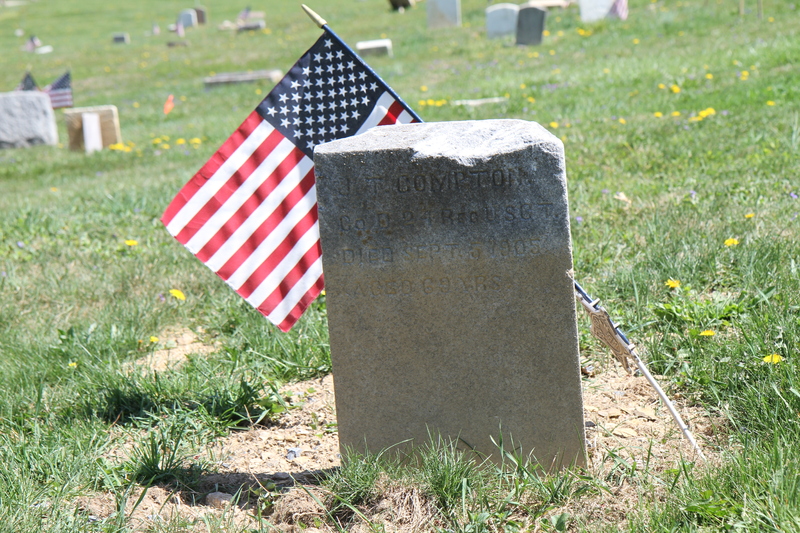
    <summary type="html"><![CDATA[<p><strong><em>The Lincoln Cemetery in Penbrook, Pennsylvania, features the largest burial ground for African Americans in the Harrisburg region. Founded in the 1870s, the cemetery is the final resting place for some of the Commonwealth's most influential Black citizens.</em></strong></p><img src="https://harrisburghistorical.org/files/fullsize/b8b82bc1c928e9652b68a56805032bf4.jpg" alt="Jacob T. Compton Headstone" /><br/><p><span style="font-weight:400;">Harrisburg, Carlisle, Chambersburg, and Gettysburg: four communities in south-central Pennsylvania with their own rich histories. However, one rather surprising fact unites them all: each contains a burial ground called the Lincoln Cemetery. Following the Civil War, this name became common for Black cemeteries nationwide, many of which were founded in response to discriminatory policies that barred African Americans from decent burials elsewhere. Black Americans achieved dignity in death despite discriminatory policies, as exemplified by Harrisburg's Lincoln Cemetery on South Thirtieth Street in Penbrook. Through the dedication of its founders, church, and volunteer caretakers, this cemetery has persevered through challenges to serve the local community and remains an essential landmark of Harrisburg's Black history.</span>
<span style="font-weight:400;">The plot of land that would become the Lincoln Cemetery officially fell under the ownership of the Wesley Union Church on November 17, 1877. The church, together with solicitor David Mumma, had widely advertised their plans for a new cemetery the previous year. Their proactive efforts in alerting the Black community led to well over one thousand bodies to be disinterred from other cemeteries across the city and reinterred in Lincoln Cemetery. By some estimates, the majority of the Black burials of Harrisburg's preexisting cemeteries — at the <span>African Burying Ground, Wesleyan Church Cemetery, and Harris Free Cemetery — were moved to Lincoln Cemetery at this time.</span></p><p>Both white and Black citizens attended the cemetery's dedication ceremony on a windy Sunday afternoon, enjoying music provided by the church, as well as addresses from speakers such as William Howard Day, who also read aloud the deed transferring ownership to the church trustees. In the few years following the opening of the Lincoln Cemetery, all appeared well; the Wesley Union African Methodist Episcopal (AME) Church was praised for owning all of its properties, including Lincoln, with no debt, and one April 1882 article of <em>The</em> </span><i><span style="font-weight:400;">Patriot </span></i><span style="font-weight:400;">described it as being “in a most flourishing condition.”</p><p>Lincoln Cemetery was segregated, as was common to all nineteenth-century cemeteries in the city. Though segregation is often associated with the South, it was prevalent in northern cities as well. In Harrisburg, the dilapidated condition of Wesley Union’s older burial ground reflected the cards that Black residents had been dealt in this regard. The realities of segregation made the Lincoln Cemetery necessary to provide African Americans with proper, dignified burials. Thanks to the actions of the Wesley Union AME Church, Harrisburg gained an essential new center for Black burials.</span>
<span style="font-weight:400;">In fact, the Lincoln Cemetery is so significant that numerous influential members of Harrisburg's African American community have made it their final resting place. One of these is none other than William Howard Day, who had delivered a speech at the cemetery’s opening about twenty years before his death in 1900. His funeral was the first to be held in Wesley Union’s auditorium, and hundreds of guests came to pay tribute to this highly influential Black school board president, scholar, and activist. Another notable figure buried in the cemetery is T. Morris Chester, the famed Black Civil War correspondent and lawyer whose successes began at his family’s oyster house in Harrisburg before expanding internationally. Harriet McClintock Marshall, Wesley Union Church member and Underground Railroad conductor, is not only buried there, but she contributed to a monument for African American Civil War veterans in the cemetery as well. Those veterans include Ephraim Slaughter, who was the city’s last living Civil War veteran and namesake of American Legion Post 733. The gravesites for four of these figures can still be visited in the Lincoln Cemetery alongside thousands of others. </span>
<span style="font-weight:400;">However, dignity was not always accessible to African Americans, even in death. While Black cemeteries elsewhere in Harrisburg attracted attention for their extreme states of neglect in the latter half of the nineteenth century, the Lincoln Cemetery faced its own troubles well into the twentieth century, demonstrating how the effects of segregation persisted long after these harmful policies were supposedly abolished. Even as recently as the early 1990s, vandals and motorbike riders toppled around two hundred gravestones, causing an estimated $20,000 to $25,000 in damage. Jeanne E. Jones, chairwoman of the church’s cemetery committee, did what she and other volunteers could to restore as much as possible, but the Wesley Union AME Zion Church struggled with a lack of adequate funding for the job. Today, Saving Our Ancestors' Legacy (SOAL) plays the important role of safeguarding the cemetery. </span>
<span style="font-weight:400;">The 1990s saw an increase in recognition of the Lincoln Cemetery as an essential part of Harrisburg’s history as well. Amid the cleanup efforts following vandalism, the Lincoln Cemetery was chosen as a recipient of the 1991 Historical Preservation Award by the Historic Harrisburg Association. Then, during the summer of 1994, the cemetery received its historical marker in a dedication ceremony sponsored by the Pennsylvania Historical and Museum Commission and the Wesley Union AME Zion Church. Nevertheless, a lack of adequate funding and other resources for maintenance still haunted the Lincoln Cemetery for years, even after receiving its honors, leaving it in an “extreme state of neglect” as of June 2021. </span>
<span style="font-weight:400;">Today, restoration of the Lincoln Cemetery is overseen by SOAL, a grassroots volunteer organization founded by the descendants of those buried there. SOAL has conducted a regular program of physical restoration, including cleaning and repairing grave markers, groundskeeping efforts, uncovering lost graves, restoring the landscape, and protecting against ongoing vandalism. SOAL has also collaborated with a range of institutions, including Messiah University and the Harrisburg University of Science and Technology, to document and share the cemetery’s story with wider audiences. SOAL is committed to restoring and preserving “Harrisburg’s Oldest Black Cemetery” both in the physical world and in the digital one, helping ensure that the stories of the people buried there — as well as those of the cemetery as a whole — will be honored for generations to come, bringing some much-deserved dignity to one of the city’s most significant unsung landmarks. </span>
<span style="font-weight:400;">A full list of the resources used in this story can be found </span><a href="https://www.zotero.org/groups/5114087/harrisburg_historical/collections/E6U94JF8"><span style="font-weight:400;">here</span></a><span style="font-weight:400;">.</p><p><strong>Related Stories</p><a href="https://harrisburghistorical.org/items/show/13">Lincoln's Close Call</a></p><p><a href="https://harrisburghistorical.org/items/show/8">Harrisburg's Role in the Underground Railroad</a></p><p><a href="https://harrisburghistorical.org/items/show/3">Men of God</a></span></p><p><em><strong><a href="https://harrisburghistorical.org/items/show/2">For more (including 2 images, 2 audio files,&#32;&amp;&#32;2 videos) view the original article</a></strong></em></p>]]></summary>
    <published>2023-10-09T17:20:17+00:00</published>
    <updated>2026-04-17T19:49:02+00:00</updated>
    <link rel="alternate" type="text/html" href="https://harrisburghistorical.org/items/show/2"/>
    <id>https://harrisburghistorical.org/items/show/2</id>
    <author>
      <name>Rachel Petroziello</name>
    </author>
  </entry>
</feed>