<?xml version="1.0" encoding="UTF-8"?>
<feed xmlns="http://www.w3.org/2005/Atom">
  <title type="text">Harrisburg Historical</title>
  <updated>2026-09-25T22:04:18+00:00</updated>
  <generator uri="http://framework.zend.com" version="1.12.20">Zend_Feed_Writer</generator>
  <link rel="alternate" type="text/html" href="https://harrisburghistorical.org/"/>
  <link rel="self" type="application/atom+xml" href="https://harrisburghistorical.org/items/browse?output=rss2"/>
  <id>https://harrisburghistorical.org/</id>
  <author>
    <name>Harrisburg Historical</name>
    <uri>https://harrisburghistorical.org</uri>
  </author>
  <link rel="hub" href="https://pubsubhubbub.appspot.com/"/>
  <entry>
    <title type="html"><![CDATA[Lafayette Comes to Harrisburg: How Pennsylvania&#039;s Capital Welcomed the Nation&#039;s Guest in 1825]]></title>
    <summary type="html"><![CDATA[<p><strong><em>During the Marquis de Lafayette's tour of the United States in 1824 and 1825, he made a short stop in Harrisburg. Adored by the city, his presence evoked in Harrisburg the patriotic pride of a nation celebrating its fiftieth birthday.</em></strong></p><img src="https://harrisburghistorical.org/files/fullsize/ba8ef8ff49670ef91ab5b5dae5fab11e.jpg" alt="Lafayette in 1825" /><br/><p>Early on Sunday morning, January 30, 1825, Pennsylvania Governor John Andrew Shulze received a crisp three-word message: “Here we come!” The note’s purpose was, in effect, to tell Harrisburg to brace for what was next. As the governor read the words, a cavalcade was rumbling up from York bearing the “Nation’s Guest.” Although it was Sunday, crowds nevertheless filled the streets in anxious expectation. They had been alerted earlier by the ringing of bells, which announced, in clear, distinct tones, the coming of the Marquis de Lafayette to Harrisburg.
Lafayette entered the Pennsylvania capital as part of his grand tour of the country. Invited by President James Monroe to celebrate the nation’s fiftieth anniversary, Lafayette left France for New York in 1824. Accompanied by his son, he would visit all twenty-four states in thirteen months. The last surviving major general of the American Revolution, the country gave the sixty-six-year-old Lafayette a hero’s welcome. Forty-seven years earlier, the young Lafayette, spurred by emerging Enlightenment ideals of liberty and democracy, bought and outfitted his own ship, crossed the Atlantic, and offered his military services to the Continental Congress without pay in 1777. Appointed a major general at just twenty years of age, Lafayette fostered a close relationship with George Washington and commanded troops at several important battles. Now, the country was eager to celebrate his return with pomp and ceremony.
By the time Lafayette arrived in Harrisburg on January 30, the city had had little time to prepare. Lafayette was visiting the Virginia state legislature in Richmond when Harrisburg residents were startled to read in the January 25 edition of the <i>Richmond Enquirer</i> that the Frenchman would be leaving for Harrisburg the next day. Lawmakers in Harrisburg quickly passed a resolution authorizing Governor Shulze to draw funds from the treasury for Lafayette’s reception and accommodation. The legislature established a committee of arrangement to oversee his stay. There was also the matter, made more difficult by the short notice, of where Lafayette would lodge. Although some lawmakers contemplated renting out a suite of rooms in the city, the Assembly ultimately accepted Governor Shulze’s request to host their guests at his residence on 27 N. Front Street. </p><p>Shulze first met Lafayette in Philadelphia in 1824 and invited him to visit Harrisburg to tour the new Capitol building, which had been completed in 1822. After being elected, Shulze leased part of the residence on Front Street from architect Stephen Hills, who had built the home as his personal residence in 1812 but was forced to sell it to businessman Jacob Haldeman around 1825 because of financial trouble. When Lafayette arrived, the Shulze, Hills, and Haldeman families occupied the residence. Later known as the Haldeman-Haly House, it is today part of the McCormick Riverfront Library complex.
Lafayette entered Harrisburg from York at 5:00 p.m. on Sunday, and was escorted amid cheering crowds to the Front Street residence. There, he dined with the speakers of both houses, the committee of arrangement, and other government officials. Members of the legislature streamed through the house throughout the night to meet him.
The next morning, Lafayette was welcomed by a Mr. Hawkins, a member of the committee of arrangement, with the high-flying oratory that characterized his visit. “After an absence of more than forty years,” Hawkins announced, “we behold you as if rising from your tomb, casting your eyes about upon the nation in whose cause you unsheathed your sword at an early age, without incentive other than that fire for liberty, which jeopardized your life, rank, and fortune.” Now, Lafayette was “an object of universal wonder and admiration.” 
Lafayette then endured another day of introductions. Arriving at the Capitol at 11:00 a.m., he greeted lawmakers, lawyers, government officials, and ordinary citizens who wished to meet the famous man. During his four hours at the Capitol, he shook upwards of a thousand hands. Later that evening, Lafayette, a prominent member of the Masons, visited the Perseverance Masonic Lodge #21.
At 10:00 a.m. the next day, Lafayette’s last full day in Harrisburg, cavalry in complete uniform paraded through the streets. Once again, the schedule was packed with introductions. Escorted by a volunteer battalion, he arrived at the Capitol at noon, and a cannon fired thirteen times in his honor as he stepped down from his carriage. He was then formally introduced to the House and Senate and exchanged speeches with the respective speakers of the chambers. 
In his speech, Senate leader William Marks recalled the revolutionary days. “You will, no doubt,” he told Lafayette, “be gratified to behold . . . a relic of the revolutionary times.” Hanging in the Senate Chamber was, Marks said, the first American flag to be flown in the English Channel, created under the direction of Benjamin Franklin. In response, Lafayette said he was grateful to remember those “remote times” under “our beloved George Washington.” 
At about 2:00 p.m., students from Dickinson College greeted him. The<i> Pennsylvania Intelligencer</i> noted the honed aristocratic patience and charm that Lafayette showed the students. “The cordiality with which every person was received was peculiar—was indescribable, and as such filled the crowd with the highest enthusiasm.”
The final event commemorating Lafayette’s visit was a dinner held at the State Capitol hotel that night. 120 men attended the dinner, including the governor, lawmakers, judges, and Revolutionary War veterans. Dozens of attendees gave a dizzying array of toasts. Lafayette toasted to thirteen items. A defender and advocate for women’s rights, he gave his final toast to women: “‘Tis our delight, to love, our pride to defend, our ambition to deserve her.” After the toasts—and much drinking—the whole room stood up and belted a rendition of “Hail Columbia.” At 8:00 p.m., Lafayette and the governor went home. With the man of the hour gone, the party ended shortly afterwards.
The next morning, on Wednesday, volunteer troops paraded in market square and saluted Lafayette at the governor’s mansion. At 11:00, he departed, beginning his journey to the Deep South. 
Amid the patriotic speeches and remembrances that looked back to the nation’s birth, Lafayette’s language also looked forward. At his farewell dinner, he toasted to the soil of the United States. “Trod by freemen alone,” declared the ardent opponent of slavery, “it shall never want freemen to defend it.” As Lafayette headed south into the heart of slavery, he could hardly have missed the contradiction between the nation’s ideals and its institutions. The question of freedom would have to be answered by future generations. “Upon the youth of the United States," he told the students of Dickinson College, “we depend for the preservation of the free institutions and republican spirit.”
A full list of resources used in this story can be found <a href="https://www.zotero.org/groups/5114087/harrisburg_historical/collections/D6V8ZG3R/items/8NHNEGEH/collection">here</a>.</p><p><em><strong><a href="https://harrisburghistorical.org/items/show/36">For more (including 3 images) view the original article</a></strong></em></p>]]></summary>
    <published>2026-06-07T02:49:27+00:00</published>
    <updated>2026-07-31T21:22:14+00:00</updated>
    <link rel="alternate" type="text/html" href="https://harrisburghistorical.org/items/show/36"/>
    <id>https://harrisburghistorical.org/items/show/36</id>
    <author>
      <name>J.T. Crocenzi</name>
    </author>
  </entry>
  <entry>
    <title type="html"><![CDATA[Restrictions on Locust Street: Building Homes to Build Fences]]></title>
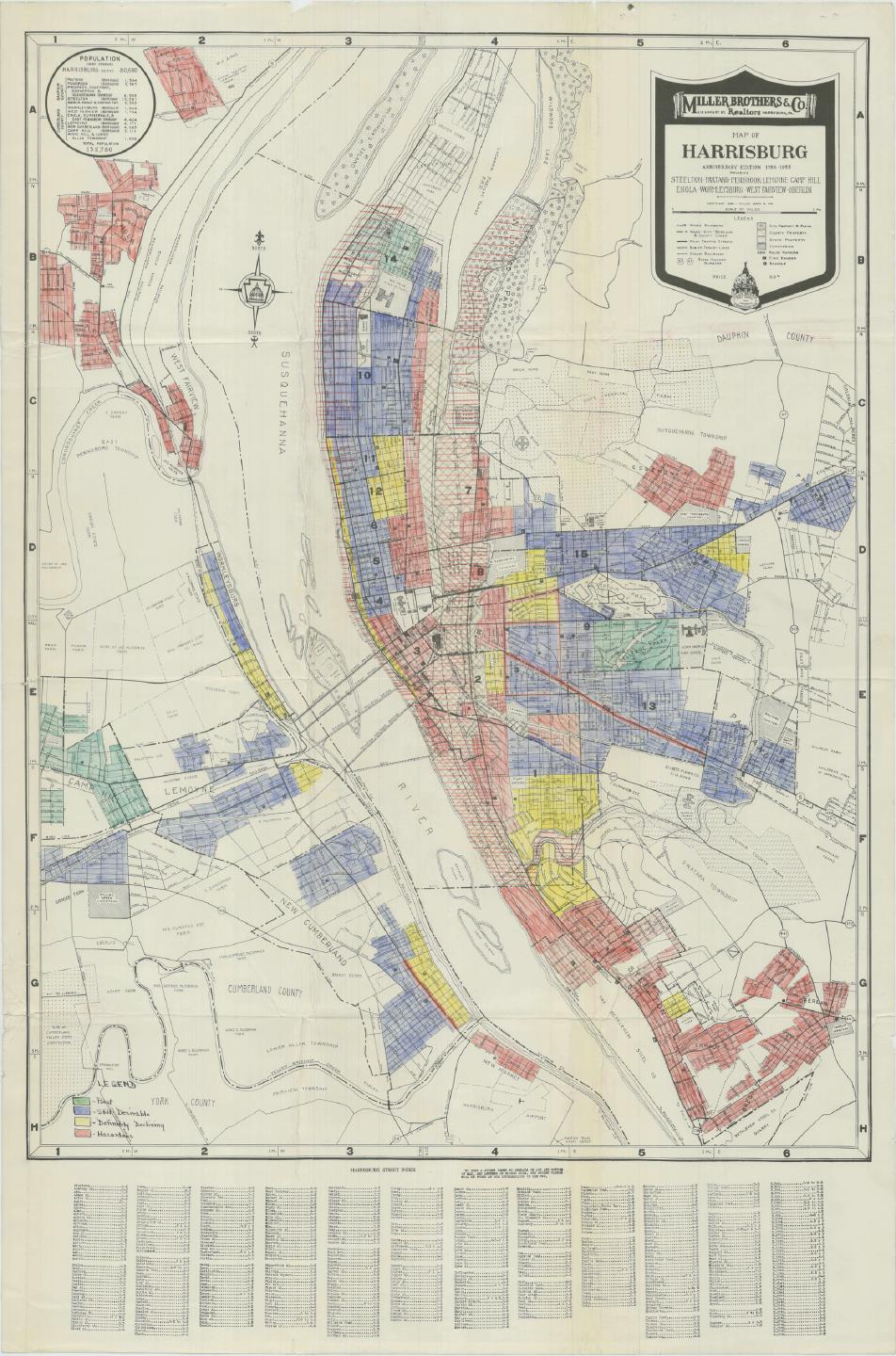
    <summary type="html"><![CDATA[<p><strong><em>In the 1920s and 1930s, communities of Harrisburg and its surrounding boroughs and townships increasingly limited access of African American and immigrant residents to settle in specific neighborhoods. These restrictive covenants, common throughout the capital region, created channels of segregation with long legacies.</em></strong></p><img src="https://harrisburghistorical.org/files/fullsize/df2ef035724adb6db6f753aef8a470de.jpg" alt="HOLC Zoning Map of Harrisburg" /><br/><p>"It is a part of the consideration hereof, that the grantee, his heirs, executors, administrators or assigns, or his successors in title, shall not sell or lease to any but the Caucasian race." So stated the housing contract made between two Harrisburg citizens in November of 1926 concerning a property on Locust Street south of the capitol. As part of an official sale, this clause contains a restriction that limits the occupants of said property indefinitely to white buyers only. Racially restrictive covenants like this began to appear in Harrisburg and surrounding suburbs during the 1920s and, by the late 1930s, were common in cities across the nation. At a time when pre-existing racial divisions drew distinctive lines between neighborhoods, restrictive housing covenants of this kind were employed to ensure these lines were impassable for non-whites.
Restrictions in the deeds of sale of American homes and property were nothing new in the 1930s. Dating back at least to the early 19th century, property owners and developers used restrictive covenants—legal provisions in deeds that limited how property could be used, developed, or transferred—to bind buyers and even future owners to certain conditions of property usage. A deed might regulate fences, building setbacks, construction materials, or allowable uses of the property. Racial restrictions were a later form of this legal mechanism that worked to regulate the race of those who could own, lease, or occupy a property.
The Locust Street covenant was located in Harrisburg’s Third Ward near the riverfront on a brief stretch of road connecting Front Street to Third Street. In the 1920s, this area included mixed residential housing, businesses, churches, and community centers such as the Young Men’s Christian Association. However, it also lay in close proximity to the railroad and other industrial factories. Ward Three had a population of 88.5% white and 5.7% Black in 1920, but by 1935 had only 68% native white and 8.9% Black. That same year the population was described as “Capitol employees and transients in rooming houses.” With a slowly growing population of immigrants, industrial workers, and other non-whites pressing up against wealthier Front Street residents, Locust Street became a connector between two worlds: one predominantly white upper-middle class and the other an increasingly non-white working class of Wards Three and Four.
The Locust Street property was on the very edge of the white area and had been sold with a racially restrictive covenant in 1923. In other examples of racially restrictive covenants from this time, the restriction appears in a list with other stipulations such as fence length, size of yard, and types of trees allowed to be planted. When this property was resold in 1926, however, the racial clause was the only restriction in the contract. Since it sat on the border between white and Black neighborhoods, this property acted as a fence. The Locust Street deed is an early example of how racial restrictions were utilized in individual contracts as an obstacle to African Americans who wished to cross color lines. This contract, in fact, predates by roughly nine years a nationwide movement to create similar long-lasting barriers for African American home buyers, suggesting that local property owners and real-estate actors were already constructing racial barriers before federal housing policy systematized these practices in the 1930s
Restrictive covenantal language increased after 1935 when, under President Franklin Roosevelt’s New Deal, the Home Owners Loan Corporation (HOLC) was created (Rothstein, <i>The Color of Law</i>, 2017). In conjunction with the Federal Housing Association (FHA), the HOLC evaluated insurable zones in cities across the country and issued mortgages that included both principal and interest in payments. This enabled poorer Americans in areas of low insurance risk to purchase housing and accrue equity.
The HOLC outsourced its loan risk evaluations to local real estate agents who surveyed their home city and created a risk map for each neighborhood. Color ratings were given to each area based on factors such as population type, amount of commercial and industry areas, home conditions, possibility of new construction, and “detrimental influences” such as “less desirable elements of the population.” These less desirable elements were usually cited as, but not limited to, “foreigners,” “negro and alien,” and “less desirable native whites.” Grades of risk included green (“best”), blue (“static”), yellow (“definitely declining”), and red (“hazardous”). Given authority to determine which neighborhoods were worthy of investment, these local agents had legal power to devalue existing non-white neighborhoods that they deemed “undesirable.” This process is now known as “redlining,” referring to the red color given to “hazardous” neighborhoods on the HOLC maps.
In Harrisburg, the work of assigning HOLC risk grades was carried out by five local real-estate professionals who were themselves active participants in the city’s housing market. Some of them clearly stood to benefit from redlining. William Nelson and William Hollinger, for example, had been in the process of creating new suburban developments just outside of the central city in the mid-1930s. Even as their surveys devalued the neighborhoods in the heart of Harrisburg, they attracted white citizens to their more expensive developments, which excluded Black buyers and sometimes non-native whites. They achieved this in two ways: high pricing and restrictive covenants. An advertisement for Hollinger’s development in Woodland Park in Paxton township lists house prices starting at $8000 ($188,420.90 today)—a sharp contrast with the housing costs of redlined working-class neighborhoods such as Wards Seven and Eight, which were $800–$2,500 ($18,842.09–$58,881.53 today). The advertisement for this development emphasizes that buyers could easily apply for FHA loans to finance a property. Residents of redlined, high-risk wards such as Seven and Eight, however, were unlikely to receive comparable loans.
Although the price of housing was not itself a direct deterrent to African American home buyers, restrictive housing covenants effectively segregated new communities from the rest of the city. Hollinger Realty Co. and Nelson Investment and Development Corporation marketed suburban developments as a haven for middle and upper-class whites; through carefully placed racial restrictions, they were able to ensure this exclusivity. Colonial Park in Susquehanna, which began construction in 1936, has twelve (known) restrictive covenants. Nelson’s company issued nine known covenants and Hollinger’s issued at least twenty, all in new suburban communities or on borders between higher-rated communities and their redlined neighbors.
Some sixty discovered covenants in Harrisburg seem to lie on borders between a higher and lower-ranked neighborhood or in clusters within suburban developments. For example, there were at least four covenants in the central city that sit on borders between majority white (shown in blue/yellow) and majority African American (shown in red) communities. Suburban neighborhoods surrounding the city tended to have large clusters of restrictive covenants: dense clusters existed in areas like Lower Paxton Township, Progress Township, and Camp Hill. In this way, racially restrictive covenants became a border surrounding white suburbia that was nearly impassable to African Americans and non-native whites living in lower-income areas.
Racially restrictive covenants became unenforceable after the Supreme Court's Shelley vs. Kraemer decision (1948), and the Fair Housing Act of 1968 made racially restrictive covenants illegal more broadly. These acts, however, did nothing to retroactively repair the divisions covenants created. Maude Coleman, an Interracial Board and Pennsylvania Department of Welfare member, had been displaced twice because of Capitol extension projects, and her community north of the Capitol Park was at risk of being destroyed again. She <a href="https://harrisburghistorical.org/files/show/28">wrote to the Pennsylvania governor</a> in 1950 saying, “Our position, Governor Duff, is not like that of other groups. It is absolutely impossible for us to rent or buy property in Harrisburg in any decent neighborhood because of all kinds of restrictions. Certain districts are designated zones for Negroes, and there seems to be an unwritten law against them living anywhere else.” Though people such as Coleman lobbied for more equal treatment within the housing market, Harrisburg’s opportunities for home ownership continued to bleed into the outskirts while barricading the center.
The selling party on Locust Street in this case may not have been aware of the greater movement they participated in, but racially restrictive housing covenants like theirs perpetuated a systemic gap in access to decent housing and, by extension, generational wealth between white and Black residents. As recently as 2002, African American residents in the capital area reported that realtors discouraged them from purchasing property on the western shore of the Susquehanna, which historically hosted several racially restrictive neighborhoods (Loewen, <i>Sundown Towns,</i> 2018). At the same time, the most impoverished areas of the city align with the same areas deemed “undesirable” nearly 100 years ago by the HOLC maps. Restrictive covenants were not the sole factor that limited African American movement within and outside of Harrisburg, but clearly acted as legal fences, inhibiting Black social and physical advancement.
A full list of resources used in this story can be found <a href="https://www.zotero.org/groups/5114087/harrisburg_historical/collections/5CNEH4GC/collection">here</a>.</p><p><em><strong><a href="https://harrisburghistorical.org/items/show/35">For more (including 5 images) view the original article</a></strong></em></p>]]></summary>
    <published>2026-04-19T02:31:38+00:00</published>
    <updated>2026-09-25T22:02:52+00:00</updated>
    <link rel="alternate" type="text/html" href="https://harrisburghistorical.org/items/show/35"/>
    <id>https://harrisburghistorical.org/items/show/35</id>
    <author>
      <name>Molly Elspas</name>
    </author>
  </entry>
  <entry>
    <title type="html"><![CDATA[Violence at the Jailhouse : A Fugitive Slave Case in Harrisburg]]></title>
    <summary type="html"><![CDATA[<p><strong><em>When a Virginia planter arrived in Harrisburg in 1850, he claimed two Black men were fugitive slaves who belonged to him. After having them arrested, he and several other whites carried out a brutal attempt to seize the prisoners in the Dauphin County jail’s vestibule, in full view of a largely African American crowd, sparking some in the crowd to resist.</em></strong></p><img src="https://harrisburghistorical.org/files/fullsize/784143de1beda5125feb55f4db17e727.jpg" alt="Dauphin County Prison in the Late 19th-Century" /><br/><p>On August 17, 1850, William Taylor and George H. Isler, two planters from Clarke County, Virginia, stepped into the office of Henry Beader, a Harrisburg magistrate. The southerners asked Beader to order the arrests of George Wilson, Samuel Brooks, and a man named Billy, three Black men they had spotted earlier in Market Square. Wilson and Brooks, Taylor said, were his slaves who had escaped from Virginia on his horses a few weeks earlier. Billy belonged to a “Mr. Page,” another Virginian who was not present. Beader then issued warrants for the men’s arrest on charges of horse theft.
The one-armed constable Solomon Snyder dutifully carried out the warrants, and the three men were committed to the jailhouse at the corner of Walnut Street and Court Street. Three days later, on August 20, a writ of habeas corpus was issued on their behalf. William M. Jones, whose home served as an important station on the Underground Railroad, and Edward Thompson, a thirty-four-year-old “mulatto,” hired anti-slavery Harrisburg attorneys Charles C. Rawn and Mordecai McKinney to represent the alleged slaves.
Although framed as horse theft, Taylor likely used the charge to detain the men while he secured court authorization to return them to Virginia. Only after Beader, the magistrate, refused to arrest them as fugitive slaves, probably due to an 1847 Pennsylvania law that barred state officials from assisting in the return of fugitives, did Taylor pursue theft charges instead.
On August 23, Judge John James Pearson heard testimony from both parties. Taylor said Wilson, Brooks, and two brown mares went missing on the night of July 21, a claim the defendants disputed by presenting witnesses who testified that the three men were already in Harrisburg before the date they purportedly fled Virginia. Nevertheless, Judge Pearson ruled the next day that Wilson, Brooks, and Billy were indeed slaves who had taken the horses to aid their escape. But the judge reasoned that because the mares were left where Taylor could retrieve them, the men had only intended to use them temporarily to aid their escape. Hence, they were not guilty of larceny, and Pearson ordered them released. The judge, however, affirmed Taylor’s right to capture them, though he prohibited him from doing so in court.
Taylor didn’t miss a beat. As the prison’s underkeeper was still preparing the discharge, Taylor and a half-dozen white men he had brought to assist him waited for the prisoners in the jail’s vestibule. At the same time, knowing what was about to happen, a large crowd, mostly African Americans, had gathered outside the jail. “All the avenues leading to the prison were filled with men, women, and boys, of all colors,” wrote the <i>Philadelphia North American</i>. 
As the jail door leading into the vestibule opened, one of the white men shouted, “They are coming.” John T. Wilson, the prison keeper, swept the prisoners towards the enslavers and promptly shut the door. “Did not wish to see anything,” he later said. When Taylor’s group grabbed the men, one resisted. Then the beating started. Striking blow after blow, the enslavers viciously caned the prisoners to the ground until one cried out that he was being murdered.
The crowd, watching the brutal beating unfold through the vestibule’s outer iron gate, grew frenzied. Some picked up stones and bricks and lobbed them towards the prison. A woman named Ann Pool threw an old bowl, which severely injured a man’s eye when she accidentally struck him in the face. 
Help for the three men inside the vestibule, however, would come from a thirty-one-year-old Black man named Joseph Popel. Sprinting up the prison’s stone steps, he pried open the iron gate and launched himself into the fray. Although Popel fought tenaciously—one newspaper said that had there been three more like him, they all would have escaped—the enslavers’ superior numbers soon overpowered him. He received a “tremendous beating,” and emerged from the vestibule “bloody as a butcher.” Popel’s entrance, however, diverted the enslavers’ attention long enough for Billy to slip out into the street. Running like a “deer,” Billy was followed by twenty Black men who, shouting encouragement, pushed him up Walnut Street and over Capitol Hill, where he disappeared.
As the crowd pressed towards the prison and threatened to erupt into disorder, the deputy sheriff called for a company of militia. Fifty men received arms at the arsenal and marched in double rank to the jail. Meanwhile, the court instructed the constables to lock the prison gate to prevent anyone else from getting inside. Wilson and Brooks struggled against their enslavers for fifteen to twenty minutes before succumbing. Lying on the ground in handcuffs, “left bleeding and almost senseless,” the two were in Taylor’s possession. 
Taylor’s triumph did not last long. The court ordered the arrest of everybody inside the prison, Black and white, for assault and battery and intent to incite a riot. The court also ordered the arrests of five Black members of the crowd, including William M. Jones and Joseph Popel. As for Wilson and Brooks, their situation would alter for the worse with the passage of the Fugitive Slave Act on September 18. 
The new law empowered federal commissioners to hear cases involving fugitives. Commissioners often found that a claimant’s testimony was sufficient proof of ownership. The commissioner in Harrisburg was Richard McAllister, who once bragged that “more fugitives have been remanded by me than any other U.S. Com[missioner].”
On September 30, the first day of McAllister’s appointment, Taylor brought Wilson and Brooks before the new commissioner for a hearing. Along with a witness, he swore these men were his slaves. This oath was sufficient for McAllister to send the prisoners to slavery. Charles Rawn, the attorney who represented them, was powerless. “The law is an <i>abomination</i>, and the hearing a <i>farce</i>,” he wrote in his journal. To prevent a repeat of the unrest that had occurred a month earlier, McAllister ordered a posse, funded by the federal government, to see the men back to Virginia. 
In November, a jury found Taylor and the other white men innocent of all charges. After a group of leading citizens submitted a petition asking for leniency, the charges against the Black men involved in the unrest were also dropped. 
The case of Samuel Wilson and George Brooks was one of the first in the country to be tried under the Fugitive Slave Act. As they headed south as enslaved men, their fate was an early example of the law’s unjust treatment of African Americans, and the battle that would be waged against it. </p><p>In an article titled "Flagrant Defiance of the Fugitive Slave Law of 1850," Esther Popel Shaw, daughter of Joseph Popel, remembered her father's efforts to assist the three Black men at the prison. Describing her father as "a peaceful, inoffensive citizen, worked up . . . to a perfect frenzy of excitement by his desire to rescue these slaves," Shaw's account is a reminder of the immense courage of Harrisburg's ordinary citizens to contest oppression and protect the enslaved.</p><p>A full list of resources used in this story can be found <a href="https://www.zotero.org/groups/5114087/harrisburg_historical/collections/GFMG3K6J/items/USUQDHSQ/collection">here</a>.</p><p><em><strong><a href="https://harrisburghistorical.org/items/show/34">For more (including 3 images) view the original article</a></strong></em></p>]]></summary>
    <published>2026-04-05T02:32:36+00:00</published>
    <updated>2026-07-24T23:59:44+00:00</updated>
    <link rel="alternate" type="text/html" href="https://harrisburghistorical.org/items/show/34"/>
    <id>https://harrisburghistorical.org/items/show/34</id>
    <author>
      <name>J.T. Crocenzi</name>
    </author>
  </entry>
  <entry>
    <title type="html"><![CDATA[The Wagner Family Bakery: Bakeries, Confectioneries, and Immigrant Life in Harrisburg ]]></title>
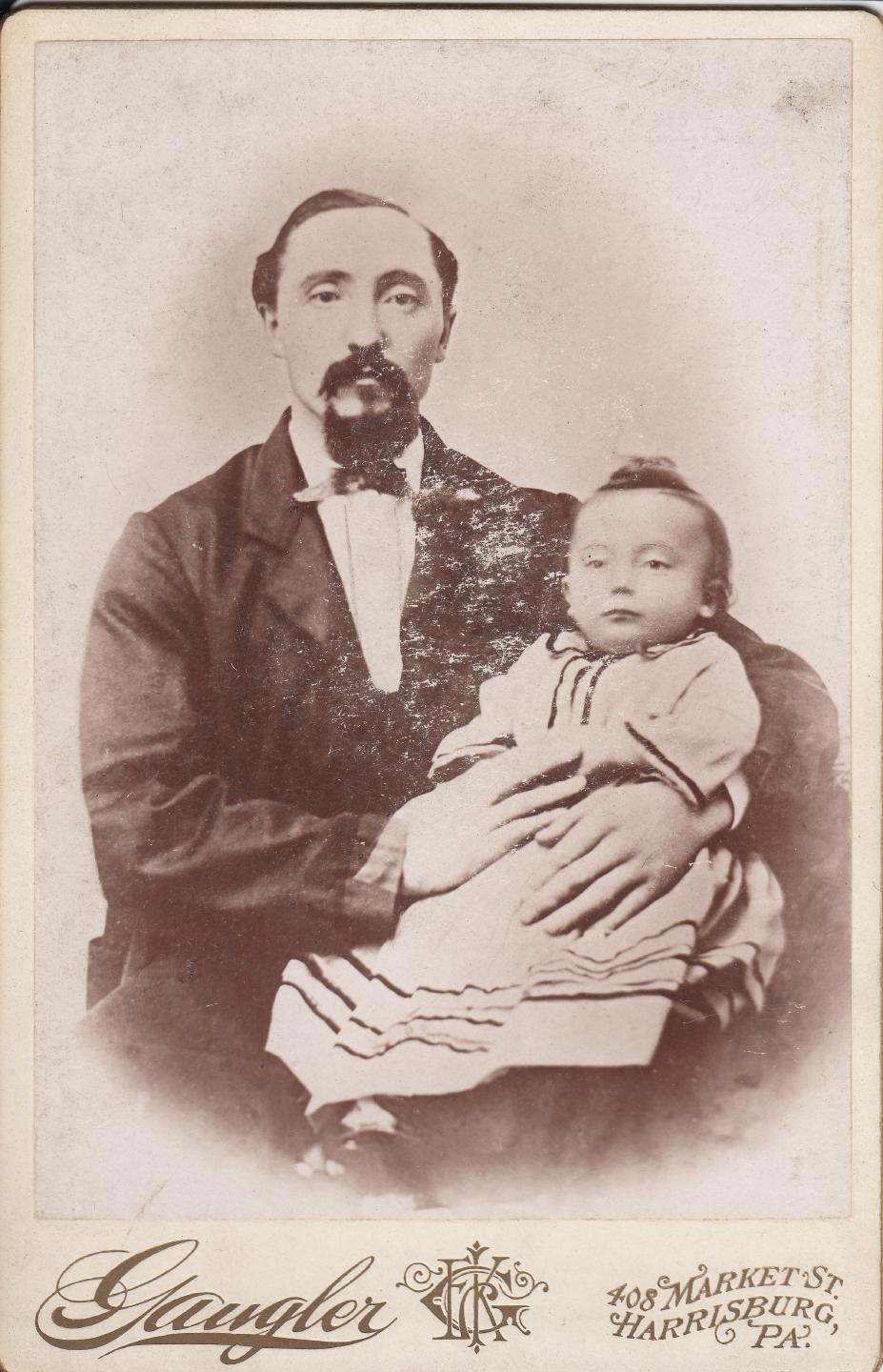
    <summary type="html"><![CDATA[<p><strong><em>Bakeries and confectioneries came and went throughout the Old Eighth Ward’s history, but a few served the people for decades. Among the longest-lasting was the bakery owned by the German immigrant Frederick Wagner.</em></strong></p><img src="https://harrisburghistorical.org/files/fullsize/8a27046bd496313b0e90a8c31c9199c4.jpg" alt="Frederick Wagner" /><br/><p>In the early twentieth century, confectioneries and bakeries were the heart of the community, much like coffee shops are today. People enjoyed the candies of confectioneries and purchased essential goods from bakeries while sharing neighborhood news. In the Eighth Ward, there were ten bakeries owned by sixteen bakers and eleven confectioneries owned by thirteen confectioners between the years 1890 and 1917. Among these was Frederick Wagner’s bakery, located on the corner of State and Cowden Streets, which served Harrisburg for forty-four years. </p><p>Immigrants often operated bakeries and confectioneries, reflecting their crucial role in Harrisburg’s economic and social life. German immigrants and their children ran many of the Eighth Ward’s bakeries. However, by the early twentieth century, Lithuanian Jews and Italians also owned and operated bakeries. Confectioners’ ethnicities were more diverse than those of bakers. African Americans, Greeks, Lithuanian Jews, and Italians maintained confectioneries in Harrisburg. Notably, at least four women owned confectioneries, highlighting this profession’s diversity. </p><p>While bakeries and confectioneries were relatively easy for immigrants to establish, they turned over frequently. The historian Stephanie Patternson Gilbert determined that bakeries and confectioneries in the Eighth Ward were open for an average of 6.3 and 5.3 years, respectively. Operating a bakery or confectionery was often a matter of survival because immigrants faced restricted access to professional and industrial jobs, forcing many into family-run food businesses where they could forge a living and support one another. </p><p>Within this world of immigrant entrepreneurship, confectioneries stood out as particularly accessible. More affordable equipment and available literature about confectioneries encouraged immigrants, freedmen, and women to join this profession because they could teach themselves how to do it. These businesses were also commonly family-owned, run by pairs of brothers, such as the Greek Rolles family, or parents and their children. However, the low barrier to entry also meant high competition, leading some businesses to fail quickly. The most successful establishments, such as Frederick Wagner’s bakery, thrived due to individual talent, strong community support, and, perhaps, good fortune. </p><p>Frederick Wagner’s personal journey demonstrates how immigrant entrepreneurs could establish themselves in Harrisburg over several decades. Born in Wittenberg, Germany in 1834, he immigrated to the United States in 1855. He began his baking career on the street corner of State and Cowden in 1863. When called to serve in the Civil War several months later, he paid for a substitute. That decision probably saved the business, as no one else would have been available to run it in his absence. Two years later, he married Maragareth, a native of Alsace-Lorraine. They had four children, twins Henry and Maggie, and two other daughters, Minnie and Annie. The eldest and only son, Henry, served as a baker’s apprentice for his father for several years. Frederick also helped mentor numerous other immigrants and young people. He had at least one other baker or apprentice in the household continually, fostering the next generation of skilled tradespeople. </p><p>Wagner’s deep roots in the local German-American community helped his business thrive. The German immigrants in Harrisburg were a very tight-knit community. This community prospered through marriages between German families and German-speaking institutions such as the church the Wagners attended. The German Evangelical Zion Church in Old Verbecktown (today’s Midtown) was an offshoot of St. Michael’s German Lutheran Church on State Street. Speaking in their native language was part of their heritage and was one way they kept their culture alive. The Wagners were also able to achieve some social stability within their community, as is evident in Frederick and his daughter Maggie leading the grand march for the Concordia Ball on New Year’s Eve at Shakespeare Hall in 1885. The Wagners also brought German bakers to work at their bakery and would hire apprentices from German families. It would not be a stretch to consider that the German families of the Eighth Ward helped Wagner’s bakery to thrive by purchasing their goods there, much as families today support businesses that they feel connected to. </p><p>The Wagner family, like many immigrant families, maintained their business despite personal and professional challenges. A fire in 1887, for example, damaged the bakery and forced Frederick to close his business for a time; he was able to reopen a couple of weeks later. In 1894, a personal tragedy befell him: Frederick’s oldest son, Henry, the heir apparent to the bakery, died at age thirty-one of a cerebral hemorrhage while working in the bakery, depriving the family of a future owner. Frederick’s bakery closed in 1907 due to Frederick advancing in years. Even if a family member had taken over the business at this point, the new owner would have had to move to a different location due to the Eighth Ward’s demolition a few years later, and would have had to compete with emerging industrialized bread factories. Frederick’s wife, Maragareth, passed away in 1907, two years before Frederick himself died after falling from a second-story window, evidently having suffered illness for several months prior. The Wagner story underscores both the resilience and fragility of family businesses during this period. </p><p>By providing a space to buy food, share news, and connect with others, bakeries were essential to life in the early twentieth century. Bakers in the Eighth Ward had to survive through difficult circumstances, such as the demolition of the Eighth Ward and the industrialization of bread factories, which made bread cheaper and more easily available. Yet, despite all these challenging circumstances, bakers like Frederick Wagner continued to thrive. He and his family operated a successful bakery for forty-four years, thanks in part to the support of the local German community. </p><p>A full list of resources for this story can be found <a href="https://www.zotero.org/groups/5114087/harrisburg_historical/collections/YW4733U6">here</a>.</p><p><em><strong><a href="https://harrisburghistorical.org/items/show/31">For more (including 4 images&#32;&amp;&#32;4 audio files) view the original article</a></strong></em></p>]]></summary>
    <published>2025-07-31T14:43:37+00:00</published>
    <updated>2026-09-25T22:04:18+00:00</updated>
    <link rel="alternate" type="text/html" href="https://harrisburghistorical.org/items/show/31"/>
    <id>https://harrisburghistorical.org/items/show/31</id>
    <author>
      <name>Emmy Fogle</name>
    </author>
  </entry>
  <entry>
    <title type="html"><![CDATA[Sister Mary Clare Grace and the St. Clare Infirmary: A Story of Care and Compassion in Harrisburg&#039;s Eighth Ward]]></title>
    <summary type="html"><![CDATA[<p><strong><em>After Sister Mary Clare Grace arrived in Harrisburg in 1869, she overcame anti-Catholic prejudice to become known as a woman of great service in her community. Among her many accomplishments was the establishment of an infirmary that treated troops during the Spanish-American War.</em></strong></p><img src="https://harrisburghistorical.org/files/fullsize/fc46f64c38ae11e19fb51f9f24444ec5.jpg" alt="Mother Mary Clare Grace" /><br/><p>On September 1, 1869, six sisters from the Convent of Mercy in Chicago arrived in Harrisburg. Their mission was to help the founder of the Harrisburg Diocese, Bishop Jeremiah Shanahan, strengthen the Catholic presence within the city. There was no convent available for them upon their arrival, so the sisters stayed at the residence of Reverend Shanahan at 214 State Street.Shanahan detailed that the labor the sisters would do would be difficult and strenuous; however, he felt that their passion for service would overcome such hardships. 
The sisters arrived with the understanding that they could return to Chicago if their work in Harrisburg proved undesirable. Within a year, two sisters departed for Chicago, while a third left the community altogether, returning to life as a layperson. This left three sisters, including Sister Mary Clare Grace, as the only remaining members in Harrisburg. Sister Grace was soon appointed as Superior by Mother Scholastica, the Mother Superior of St. Xavier’s Convent in Chicago, who believed that God had appointed Sister Mary Clare Grace to this position.
Sister Mary Clare Grace was born Mary Ellen Grace in County Waterford, Ireland, in 1833 into a devout and prosperous family. Her father, Thomas Grace, was the nephew of Thomas L. Grace, Archbishop of St. Paul’s Church in Dublin. Despite her wealthy upbringing, Mother Clare dedicated herself to a life of holy poverty, seeking to embody the example of Jesus Christ. Before moving to Harrisburg, she taught as a sister at St. Xavier Academy, a private school in Chicago for nine years. After being appointed by Mother Scholastica as Superior of the Harrisburg Foundation, she devoted herself to training aspiring young women and girls to become Catholic nuns.
During her time at the Harrisburg Foundation, Mother Clare was known for her deep humility and compassion, as well as her strict religious discipline. Some women chafed at her strong expectations and left the Harrisburg Foundation program. As one of the Sisters’ later biographers noted, “To many, Mother Clare seemed too rigid, too severe in the enforcement of religious discipline…many aspirants who entered the program did not remain.” Those who stayed “entered for the sole purpose of seeking their own perfection to make themselves worthy instruments of God.” Mother Clare was uncompromising in her belief that a holy life should include strict discipline, humility, selflessness, and a service to one’s community.
Her strict religious stance also made her a successful institutional leader. She established and led institutions such as St. Genevieve’s Academy on McClay Street, which was known as the Motherhouse and a main revenue source of the diocese. Here, she worked closely with Very Reverend John Vincent O’Reilly to set up a boarding school for women that would educate in religion and the arts. She also founded the Mercy Home residence on the corner of Second and Liberty streets, which provided low-income housing to girls and women. Next, she spearheaded the Sylvan Heights Orphanage on the corner of Twelfth and Derry streets to serve as an orphanage for girls from infancy to age seventeen. 
A central building used by Mother Clare and the Sisters of Mercy was the James Russ House, located at the corner of North and Fourth Streets. The largest mansion in the Eighth Ward, the James Russ House contained the Keeley Institute, which was known at the time for its pioneering treatment for alcohol addiction and drug use, serving as a place for patients to receive care during their recovery. The Keeley Institute operated in the James Russ House from 1892 to 1896 and again from 1901 to around 1908. After the Keeley Institute temporarily relocated to a property at the corner of North and Capitol streets, the Russ House served as St. Clare’s Infirmary. Founded in 1897, the Infirmary provided medical care, particularly to soldiers during the Spanish-American War, and was highly regarded by the local community. 
The layout of the infirmary included the kitchen, refectory, and offices on the first floor, while the second and third floors contained twelve private rooms and an operating room. The fourth floor contained two large rooms used for wards. There was, however, no room for a chapel in the building. 
Due to a desperate need for nurses and overflowing hospitals during the Spanish-American War, many soldiers from nearby Camp Meade were treated at the infirmary until financial trouble forced it to close in 1899. The sisters were known for their hospitality and compassion. Addressing the family of John Sholly, a Civil War veteran and patient at the Infirmary, Sister Pauline said, “We will take the poor man gladly and do all in our power to make him comfortable.” Indeed, the infirmary left a positive legacy in treating 260 civilians and 70 soldiers from nearby Camp Meade. The War Department recognized their excellent hospitality by paying the institution a sum of three hundred and four dollars. 
After the Infirmary’s closing in 1899, the Keeley Institute moved back into the James Russ House in 1901, where it likely remained until about 1908. The James Russ House then served as a boarding house until the building’s destruction around 1913 as part of the demolition of the Eighth Ward and the creation of the new Capitol grounds.
Despite the infirmary’s closure, the sisters continued their work at the Mercy Home and St. Genevieve’s Academy, where they provided low-income housing to women and children in the community. Mother Clare retired as Superior of the Harrisburg Foundation in 1902, but continued to serve in the Mercy Home and St. Genevieve’s Academy until her death on June 16, 1911. Although the infirmary and the community no longer exist today, the compassion of Mother Clare and the Sisters of Mercy added to the positive reputation of the infirmary and created a space of unity and care in Harrisburg. Mother Clare’s strong religious beliefs, combined with her emphasis on helping the poor, established a notable Catholic presence in the city that remains to this day. 
J. Howard Wert, a well-known columnist for the <i>Harrisburg Patriot</i>, described the Infirmary’s excellent service:</p><p><blockquote style="margin-left:40px;padding-left:20px;border-left:3px solid #ccc;">During the Spanish-American war . . . the work of this St. Clare Infirmary became especially conspicuous. Many a stricken soldier had reason to bless its shelter and thank God for the ministering care of those devoted Sisters of Mercy. Mother Clare now rests beneath the low green tent toward which we are all trending, but I would be recreant in my duty, if, in this connection, I did not place a wreath of recognition and laudation on her tomb.</blockquote>
</p><p>A full list of the resources used in this story can be found<a href="https://www.zotero.org/groups/5114087/harrisburg_historical/collections/743XH4ZJ"> here.</a></p><p><em><strong><a href="https://harrisburghistorical.org/items/show/30">For more (including 4 images) view the original article</a></strong></em></p>]]></summary>
    <published>2025-07-09T20:28:37+00:00</published>
    <updated>2026-09-01T20:23:50+00:00</updated>
    <link rel="alternate" type="text/html" href="https://harrisburghistorical.org/items/show/30"/>
    <id>https://harrisburghistorical.org/items/show/30</id>
    <author>
      <name>Hannah Boes</name>
    </author>
  </entry>
  <entry>
    <title type="html"><![CDATA[Harrisburg&#039;s Zoo: A History of the Wildwood Zoological Park]]></title>
    <summary type="html"><![CDATA[<p><strong><em>Harrisburg's Wildwood Park was formerly home to the Wildwood Zoological Park, a recreational space that housed a relatively large collection of wild animals. During the 1940s, the zoo disappeared, with only a few traces of it left today.</em></strong></p><img src="https://harrisburghistorical.org/files/fullsize/fb8687339cf858cb6d6421ad77ea70a3.jpg" alt="Municipal Zoo Entrance" /><br/><p>In the early twentieth century, greater amounts of leisure time encouraged Americans to pursue new recreational activities. One such activity was visiting zoos. Many cities prided themselves on having impressive animal collections for the public to view. Harrisburg was no different, and in the late 1920s plans for a zoo were underway in an unlikely location—a swamp. </p><p>Before the new zoo, the area formerly known as Wetzel’s Swamp was home to Harrisburg’s Wildwood Park. This was a recreational space where residents could host picnics, attend camps, and enjoy boating. Service clubs first proposed the zoo at a joint meeting. There, community leaders wondered whether Harrisburg residents, especially the children, would patronize a zoo. This concern proved unfounded almost immediately. Children eagerly donated their pocket money to the establishment of the zoo, being awarded with “Junior Founder’s Certificates.” </p><p>Before construction on Wildwood Zoo began, Park Superintendent Herman A. Earley and Assistant Superintendent V. Grant Forrer visited the Washington and Philadelphia Zoos to gather ideas for Wildwood Zoo, whose construction was scheduled to begin in July 1928. Carving out a 10-acre, rectangular plot in Wildwood Park, the zoo would house numerous paddocks, cages, and shelters accessible by a roadway. In addition, plans were made to construct a Keeper Lodge, a house at the zoo where the zookeeper could see all the animals and birds from his home. Although the zoo was supposed to open during Labor Day weekend, it officially opened on June 7, 1929. The delays in opening only seemed to heighten excitement, and the local media continued to cover its development with considerable fanfare. </p><p>The stars of the new Wildwood Zoological Park were the animals themselves. Over the years, the zoo housed numerous species, from local wildlife such as deer and bears to exotic animals like lions and monkeys. Local newspapers frequently featured articles about baby animal births, additions to the collection, and even April Fool's Day pranks featuring the animals. Animals had various amenities, including a bear bathtub that earned an article in the May 24, 1929, edition of <i>The Patriot</i>. While zoos have sometimes had a negative reputation for not treating their animals well, Harrisburg’s residents apparently valued animal welfare. One newspaper story notified residents that the animals “Think the Zoo is More Than All Right,” and were enjoying proper meals delivered on tight schedules. </p><p>The growing zoo moved to add more species. In 1930, a lynx and an ant bear (now more commonly known as an aardvark) appeared, as well as multiple American bison. Two particular bison, Napoleon and Nancy, were featured in an “interview” in the <i>Harrisburg Telegraph,</i> in which they allegedly claimed that their ancestors were hunted by Buffalo Bill and Kit Carson, and that they “like it here” at the zoo. Elk, groundhogs, white ferrets, and more were added until the Wildwood Zoo collection was teeming with creatures great and small. Local newspapers covered the animals extensively, from the birth of a doe named Fannie Fawn to an elk struggling with indigestion. </p><p>Nevertheless, even caring zookeepers could not keep the animals safe during trouble. Shortly after opening, three unlicensed dogs reportedly scared white-tailed deer so severely that one deer died after crashing into a fence during a panic attack. A campaign to track down the offending dogs resulted in orders to kill them. Love for the zoo animals led to hatred for stray dogs and cats, and game wardens went on a warpath to dispatch any stray pet that might have scared or killed zoo animals. Not long after the crusade against stray animals, owls and hawks began fighting each other within their enclosures, resulting in the death of one Great Horned Owl. In 1932, two local boys were charged with shooting the zoo’s rabbits, and indigestion proved fatal to a resident male bison. </p><p>In early 1934, disaster struck when a fire broke out, causing significant damage to the zoo. The emotional distress shook the animals. News articles repeatedly noted the distressing noise of frightened animals, especially the nearby coyotes, crying out in fear while firefighters worked. Thankfully, insurance covered much of the damage. The damages cost about $1,500 in city funds, about $28,724 today. The fortunate aspect of the zoo fire was that no animals died. But the troubles at Wildwood Zoo were far from over. </p><p>The Great Depression and World War II made operating the zoo financially difficult. Lions, wolves, and other species that required intensely meat-heavy diets suffered greatly as the cost of meat soared during the Depression. When the US entered World War II in 1941, meat rationing made it even more difficult for the zookeepers to feed their charges. In the event of an air raid on Harrisburg, officials planned to kill some of the more dangerous species to prevent their escape. </p><p>Ultimately, facing high operating costs, the city decided to close the zoo. On December 18, 1945, City Councilman and Park Director Robert C. Leitner announced that Wildwood Zoo would close, effective immediately. Estimating that the zoo's closure would save the city at least $6,500 in 1946, Leitner outlined what would happen to the animals. Dangerous animals and reptiles would be killed, while harmless wildlife would be released. Bears and bison would be "cut up into steaks and roasts" and given to local institutions, and the monkeys were to be donated to a medical institution in Philadelphia for experimentation. Leitner quickly received requests for various animals, including raccoons, from people who wanted them as pets. </p><p>After the zoo closed, the discussion centered on what to do with the land. Empty animal runs were briefly dog shelter pens, and ideas of turning the land into veteran housing were also considered. Nowadays, the Wildwood land is home to a nature center and preserve. Wildlife roam freely through the park, benefiting from the safe habitat and abundant food away from the urban center. The exotic animals may have passed, but populations of native Pennsylvania species are thriving. Some of the animals of the Wildwood Zoological Park may have died at the hands of those who loved them most, but their importance should not be understated. It was unquestionably an influential yet fleeting moment in local history. </p><p>A full list of resources used in this story can be found <a href="https://www.zotero.org/groups/5114087/harrisburg_historical/collections/5C5PDHDI" target="_blank" title="Citations" rel="noreferrer noopener">here.</a></p><p>Special thanks to the Oweline Nature Center and Dauphin County Parks and Recreation for generously providing access to their archived collections.</p><p><em><strong><a href="https://harrisburghistorical.org/items/show/28">For more (including 9 images&#32;&amp;&#32;1 audio file) view the original article</a></strong></em></p>]]></summary>
    <published>2024-12-17T15:06:26+00:00</published>
    <updated>2026-06-17T13:42:53+00:00</updated>
    <link rel="alternate" type="text/html" href="https://harrisburghistorical.org/items/show/28"/>
    <id>https://harrisburghistorical.org/items/show/28</id>
    <author>
      <name>Kylie Smith</name>
    </author>
  </entry>
  <entry>
    <title type="html"><![CDATA[Harrisburg&#039;s Once &quot;Lunatic Hospital&quot; : The Beginnings of the Pennsylvania State Lunatic Hospital]]></title>
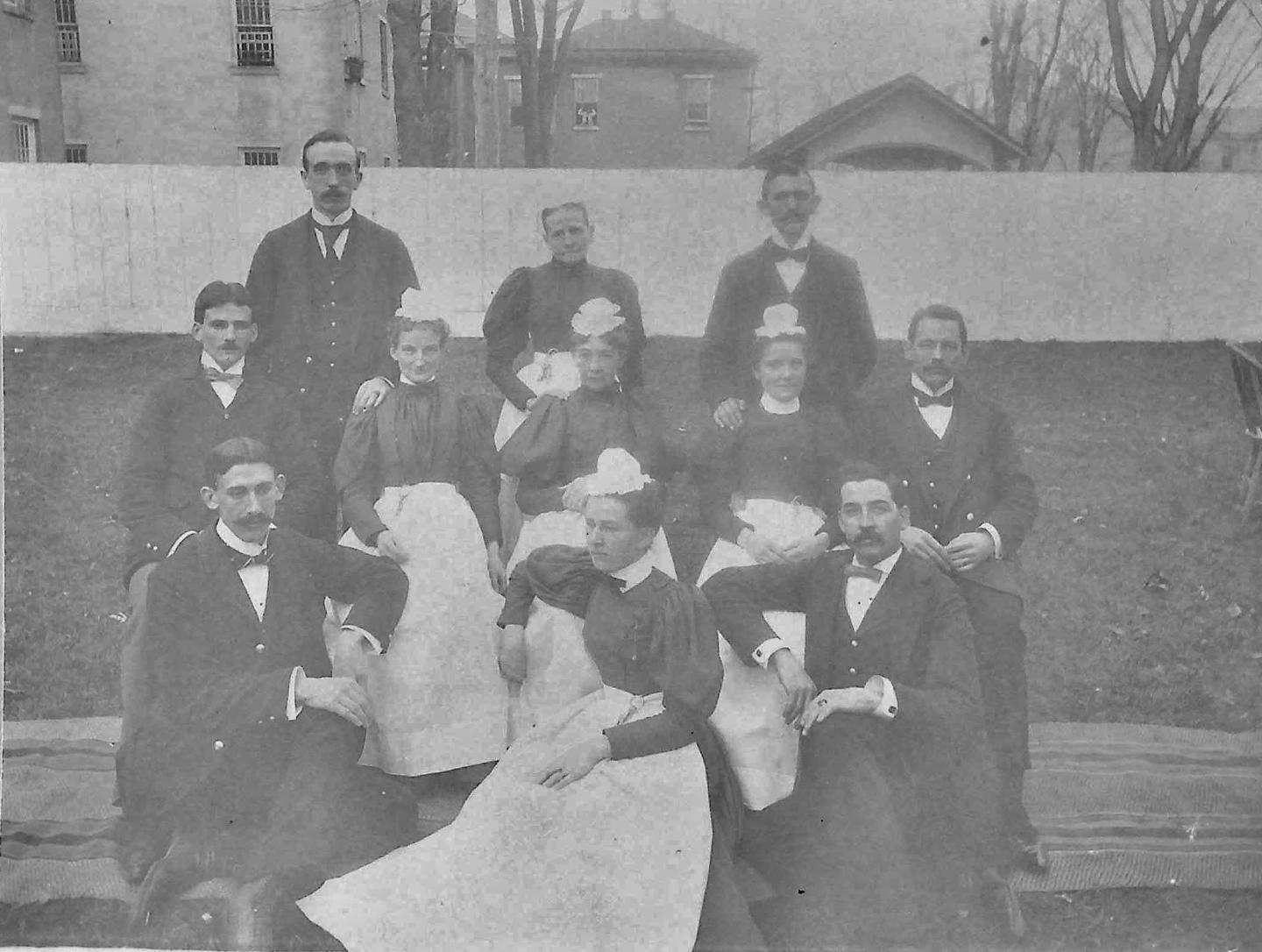
    <summary type="html"><![CDATA[<p><strong><em>As the Pennsylvania State Lunatic Asylum developed out of emerging ideas of moral treatment in the mid-nineteenth century, it welcomed mentally ill patients and sought to create a home for Harrisburg's "insane poor."</em></strong></p><img src="https://harrisburghistorical.org/files/fullsize/6e6fe72ff611bf594e943d38c424a000.jpg" alt="Mixed group about 1900" /><br/><p><p style="font-weight:400;">In 1851, the Pennsylvania State Lunatic Asylum emerged as the region’s first mental health institution, embodying a "moral treatment" approach to mental health care. Moral treatment challenged negative views of mental illness as unrepairable and evil and instead encouraged compassionate approaches that transformed treatment. Throughout the late nineteenth century, the hospital’s design and care were organized according to ideas of moral treatment, seeking ways to improve the mental condition of the ill. <span> </p>On February 3, 1845, Dorothea Dix’s “Memorial” was read to the Pennsylvania State Legislature. Dix argued against the inhumane practice of confining mentally ill patients in poorhouses and jails, advocating for a mental hospital to intentionally care for them. Through her advocacy, the foundations for the Pennsylvania State Lunatic Asylum were established. By 1849, Governor Johnston declared that "a home" was "being made for the insane poor” at the institute’s cornerstone. In 1851, the hospital was built and opened for patients.
<p style="font-weight:400;">The Main Building of the hospital was designed to maximize sunlight and fresh air for patients, with separate wings for male and female patients. In 1888, the North and South Branches were built to house patients when the Main Building grew overcrowded. Male patients were housed in the North Branch (Male nine and ten), while female patients stayed in the South Branch (Female nine and ten). The Administration Building opened in 1895 after demolishing the Main Building, and by 1913, the hospital included a chapel building that hosted weekly Sunday services and frequent prayer meetings. The chapel highlighted the role of faith in moral treatment and patient care in the institution, demonstrating its commitment to improving patient experiences and shaping their “moral faculties.”
<p style="font-weight:400;">Patients from various backgrounds filled the hospital, including blacksmiths, carpenters, lawyers, and teachers. A register of female patients from 1852 to 1884 records their admission into the hospital, their illnesses, and their health status, revealing various ailments such as grief, anxiety, trouble, disappointment, exertion, and poverty.
<p style="font-weight:400;">Two male patients, William Smith (undated) and Sigmund Purist (1865), provide glimpses into their experiences at the hospital. William Smith penned his letter to a minister, Dr. Robinson, expressing his joy in hearing his sermon and submitting his pieces of scriptural reflection to see if they had any “literary merit.” On the other hand, Purist’s letter in 1865 grimly expresses his objection to being wrongfully confined in the asylum and petitions for discharge from the hospital. He argued that he was confined through “heinous false preference” and instead wished to enjoy the free condition that “millions the majority enjoy.” While Purist’s letter provides insight into patients' experiences at the hospital, it may not reflect all of their stories. Comparatively, William Smith expressed no negative emotion and instead shared his delight over the minister’s sermon, insisting that he should read his reflections and consider publishing them.
<p style="font-weight:400;">The hospital’s development and founding principles of “moral treatment” shaped its growth, intentionality, and approach to patient care. In 1921, the Pennsylvania State Lunatic Hospital was renamed “Harrisburg State Hospital.” It had successfully created a home for the mentally ill.<span>   </span>
A full list of resources used in this story can be found <a href="https://www.zotero.org/groups/5114087/harrisburg_historical/collections/6TH6HWA6" target="_blank" rel="noreferrer noopener">here</a>.</p><p><em><strong><a href="https://harrisburghistorical.org/items/show/27">For more (including 5 images&#32;&amp;&#32;1 audio file) view the original article</a></strong></em></p>]]></summary>
    <published>2024-12-12T20:40:30+00:00</published>
    <updated>2026-04-17T19:49:02+00:00</updated>
    <link rel="alternate" type="text/html" href="https://harrisburghistorical.org/items/show/27"/>
    <id>https://harrisburghistorical.org/items/show/27</id>
    <author>
      <name>Sophia Snyder</name>
    </author>
  </entry>
  <entry>
    <title type="html"><![CDATA[Mira Dock’s Impact on Riverfront Renewal: Dock&#039;s Environmental Legacy]]></title>
    <summary type="html"><![CDATA[<p><strong><em>One woman's campaigning created a mass movement and vision for a cleaner and healthier city, resulting in beautiful green space and improved quality of life within Harrisburg.</em></strong></p><img src="https://harrisburghistorical.org/files/fullsize/0e40530119adff1b3c7f75b207b231e7.jpg" alt="Mira Lloyd Dock" /><br/><p><em>We need not only play-grounds and parks, but we need woods . . . [where] the strong gain greater strength and clearer purpose; the weary soul achieves serenity.</em> </p><p>—Mira Lloyd Dock
Mira Lloyd Dock, a native of Harrisburg, was born on December 25, 1853, and died on July 11, 1945. She was a trailblazer for the City Beautiful Movement, leaving behind a legacy of urban beautification and environmental preservation. She also found help and empowerment from J. Horace McFarland, who was a fellow Harrisburg citizen and urban reformer. McFarland found Dock to be an appropriate person to partner with in his endeavors as she had contacts scattered throughout the city due to her volunteering and advocacy. On December 20, 1900, McFarland convinced Mira Lloyd Dock to give a presentation to the Board of Trade, a group composed of<span> Harrisburg’s elite or middle class</span>. By showcasing potential improvements through her lantern slides and embracing civic action in Harrisburg, Mira Lloyd Dock and the Civic Club helped gain support for the city's campaign for improvement. Her speech ultimately sparked Harrisburg’s desire to incorporate more trees and parks within the city, to improve public health, and to beautify the urban space.
The Harrisburg Improvement Movement was an urban reform initiative that aimed to enhance aesthetics, expand green space, and improve public health. While other cities in the United States pursued beautification programs, Harrisburg was among the most successful in implementing reform ideals. Future initiatives in cities across the nation aimed to model their movements after the success of the Harrisburg campaign.
Her goals for the movement were not limited to beautification but also improving the health of Harrisburg citizens by enhancing water quality. One way she achieved this was by working to improve the waterways of the Susquehanna River, drastically benefiting both environmental and public health. Her campaign garnered immense support, as she emphasized not only the preservation of green space but also the health benefits for Harrisburg residents.
Dock had good reason to be concerned about the waterways surrounding the city. Many citizens were treating the Susquehanna as a dumping ground for trash and sewage, leading to poor water quality. She repeatedly addressed issues with sewage and water purity, often speaking to children benefiting from the playground program completed by the Women’s Civic Club. The members of that club visited schools to discuss proposals from the improvement campaign aimed at ensuring pure water. Dock hoped to inspire voting fathers to see the benefits of the campaign by emphasizing better sanitary conditions for both current and future residents.
Before Dock’s involvement, the Susquehanna River was polluted, treated as a dumping ground for trash and sewage. Recognizing the relationship between urban spaces and nature, Dock actively worked to address the river’s impact on community health. As a passionate advocate for clean water and urban reform, she made the preservation and beautification of Harrisburg’s waterways central to her work. She knew that improving the riverfront would not only enhance the city's aesthetics but also promote public health by addressing pollution and ensuring clean water.
Dock’s efforts to improve the riverfront began with public outreach. One of her key strategies for promoting the improvement movement was engaging the public, especially working-class citizens. She often spoke to community groups, including children, about the importance of maintaining clean streets and preserving natural resources like the river. Dock understood that educating the public was essential to gaining support for environmental and urban reform. By emphasizing the health benefits of a clean and accessible riverfront, she made a compelling case for preservation and beautification, encouraging citizens to take ownership of the city’s environmental future.
Dock’s campaigning also involved practical projects for cleaning and improving the surrounding areas. She advocated for proper sewage systems to prevent contamination of the river and promoted urban planning initiatives prioritizing sanitation. Her involvement with the Harrisburg Civic Club, which she co-founded, furthered these goals. She convinced the group to plant trees along the streets in 1898 and set up a summer playground program in 1900. Additionally, she organized a contest for window flower boxes and backyard gardens to spark public interest in beautifying their neighborhoods. This initiative promoted both cleanliness and awareness of the improvement campaign. Her efforts demonstrated how the movement could create not only an aesthetically pleasing environment but also a higher quality of life. Her actions created a renewed sense of pride within Harrisburg citizens as they could see their contributions come to fruition in the city’s transformations.
After propelling the improvement movement in Harrisburg, Dock began to advocate for clean water and improvement projects elsewhere. Through her role in the Conservation Department for the General Federation of Women’s Clubs, she helped pass the federal National Parks Bill in 1916. As a result of Dock's campaigning, Harrisburg gained designated spaces for sewage, flood control measures, and riverfront steps that beautified the waterways.
Victorian societal norms about what women could and could not do did not stop Mira Lloyd Dock from fulfilling her desires for a stronger, more visually appealing community in Harrisburg. Her work has forever influenced the beauty of not only the Harrisburg area, but other states that followed in Harrisburg’s footsteps. While her goals seemed bold at the time, her convincing lectures, volunteering, and public outreach all resulted in creating support for the improvement campaign. Much of Mira Lloyd Dock’s work has resulted in the beautification of the city, but it also offered practical health, economic, and political improvements and led to the creation of Riverfront Park. Mira Lloyd Dock was later accepted into the Pennsylvania Forestry Reservation Commission and continued to aid organizations with their beautification endeavors. Mira Lloyd Dock’s successes in Harrisburg expanded to a national scale as her campaigning inspired broader environmental reforms.
<span>A full list of the resources used in this story can be found <a href="http://www.zotero.org/groups/5114087/harrisburg_historical/collections/4VI2IZTC" target="_blank" rel="noreferrer noopener">here</a>.</p></p><p><em><strong><a href="https://harrisburghistorical.org/items/show/24">For more (including 4 images&#32;&amp;&#32;2 audio files) view the original article</a></strong></em></p>]]></summary>
    <published>2024-12-12T19:59:15+00:00</published>
    <updated>2026-04-17T19:49:02+00:00</updated>
    <link rel="alternate" type="text/html" href="https://harrisburghistorical.org/items/show/24"/>
    <id>https://harrisburghistorical.org/items/show/24</id>
    <author>
      <name>Phoebe Lemin</name>
    </author>
  </entry>
  <entry>
    <title type="html"><![CDATA[K. Leroy Irvis vs. the Moose Lodge: A Legal Battle against Segregation in Harrisburg]]></title>
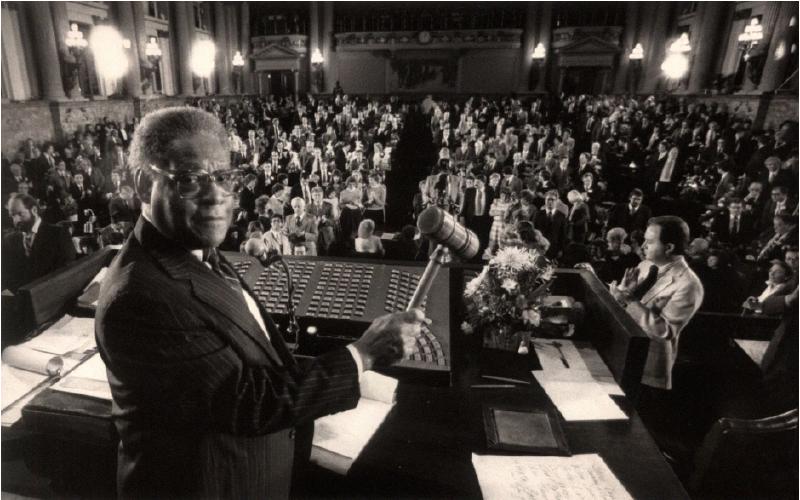
    <summary type="html"><![CDATA[<p><strong><em>Five years after the passage of the Civil Rights Act of 1964, an act that outlawed racial segregation and discrimination across the country, an African American legislator was denied service at a restaurant on the banks of the Susquehanna River. This account, an all too common one in the twentieth century, is the story of K. Leroy Irvis, a native Pittsburgher, once a member of the Pennsylvania House of Representatives and now, a man remembered as a key figure in Pennsylvania's civil rights history.</em></strong></p><img src="https://harrisburghistorical.org/files/fullsize/5795db4286d3b9d6c80dda39c1293001.jpg" alt="K. Leroy Irvis as Pennsylvania Speaker of the House" /><br/><p>On 225 State Street in Harrisburg, Pennsylvania, less than five hundred feet from the Capitol building, the Moose Lodge no. 107 sat as the local branch of an international organization called The Loyal Order of Moose. Founded in Louisville, Kentucky, in 1888, the purpose of this fraternal order was “to serve a modest goal of offering men an opportunity to gather socially, to care for one another’s needs and celebrate life together.” The Order was headquartered in Mooseheart, Illinois, a strictly segregated unincorporated community. Sadly, the discriminatory practices of the headquarters were passed down to all the Lodges that fell under their jurisdiction. </p><p>Traveling for a late dinner with fellow democrat and Pennsylvania Speaker of the House-designate Herbert Fineman, as well as another unidentified gentleman, House Majority Leader K. Leroy Irvis and his group decided to scout out Harrisburg’s local branch of the Moose Lodge as a potential venue for a larger dinner later in the year. One of their trio was already a member, and according to the club’s rules, two guests were permitted to follow him in for a visit. However, upon arriving, Mr. Irvis and his retinue were denied dinner menus, being told “there was no food in the place,” despite seeing numerous white patrons dining all around them, according to <em>The Pittsburgh Press</em>. No stranger to the effects of segregation, Irvis told the <em>Press</em> this wasn’t the first time he’d been denied service because of his race, but he added that he later realized, “it was more important to my people than just to myself that we be treated fairly. I have decided I will do something about this.” </p><p>Three years later in 1972, Irvis brought the issue to the courts. Harrisburg journalist Paul Beers recounted Irvis’s tale: “before he was finished, Attorney Irvis had the Moose before the U.S. Supreme Court.” In Moose Lodge no. 107 v. Irvis, he leaned on the Equal Protection Clause of the Fourteenth Amendment, which states that no state may “deny to any person within its jurisdiction the equal protection of the laws.” Irvis argued that since the Moose Lodge’s state-granted right to a liquor license made the Lodge a state-governed entity, it was subject to the Equal Protection Clause and thus could no longer maintain racially discriminatory bylaws. The District Court agreed with Irvis’s motion, but his opponent took the issue to the highest court in the land. </p><p>The Supreme Court utilized a 1961 case from Delaware to compare with Irvis’s claim: Burton v. Wilmington Parking Authority. In that case, a failed sit-in by seven African American workers at the Eagle Coffee Shoppe led to an immense legal dispute, in which a city councilman, William H. Burton, leaned on the Equal Protection Clause to attack the business for refusing him service. The Eagle Coffee Shoppe was found to be closely intertwined with the city’s Parking Authority, which was financing the parking space outside its walls. In this way, they were a “state actor” and subject to the consequences of the Equal Protection Clause.</p><p>The Moose Lodge had no such connection with any state-operated groups, however, and though their practices were discriminatory in nature, they remained private and untouchable by the legal power of the clause. The Supreme Court ruled in favor of the Lodge, and Irvis lost the case. Nevertheless, Irvis’s case against the Moose would have a lasting impact. His efforts marked the beginning of the end of racial discrimination in private clubs across the nation. Just one year later in Brunswick, Maine, the Elks Lodge had its liquor license revoked for racial discrimination by the state Supreme Judicial Court on December 11, 1972. </p><p>In time, even after clubs like the Moose or the Elks Lodge opened their membership to non-whites, membership within these groups began to fall. In 1994, the Order came under fire once again after a Maryland branch of the Lodge in Hagerstown denied membership to an African American car dealership worker because of his race. Just over one week later, the governing Moose International would revoke the Lodge’s charter and close the location permanently, displacing eight thousand members—a loss of the Order’s largest branch in the world. </p><p>The changing social pressures of passing generations eventually did what the law could not—and economic discrimination in all organized forms was eradicated across the nation. Years later, Irvis continued to serve as a statesman, notching two terms as Speaker of the House in 1977 and 1983 in the Pennsylvania House of Representatives. </p><p>Today, Irvis is honored as a speaker, a leader, and a Pennsylvania native who stood up to discrimination within the borders of his home state, and his story was the catalyst for a wave of social changes across the nation. In Harrisburg, The Commonwealth Monument Project has sought to honor Irvis’s name by christening the grounds on which “A Gathering at the Crossroads” monument stands as the K. Leroy Irvis Equality Circle, a testament to the life and legacy of a voice for equality, unity, and progress in the name of justice for all.</p><p>A full list of the resources used in this story can be found <a href="https://www.zotero.org/groups/5114087/harrisburg_historical/collections/9986ER5C">here</a>.</p><p><strong>Related Stories</p><a href="https://harrisburghistorical.org/items/show/6">A Gathering at the Crossroads</a></p><p><em><strong><a href="https://harrisburghistorical.org/items/show/18">For more (including 3 images&#32;&amp;&#32;2 audio files) view the original article</a></strong></em></p>]]></summary>
    <published>2024-07-20T13:56:19+00:00</published>
    <updated>2026-04-17T19:49:02+00:00</updated>
    <link rel="alternate" type="text/html" href="https://harrisburghistorical.org/items/show/18"/>
    <id>https://harrisburghistorical.org/items/show/18</id>
    <author>
      <name>Nik Lego</name>
    </author>
  </entry>
  <entry>
    <title type="html"><![CDATA[Hercules, Harris, and the Mulberry Tree: History and Memory in the Founding of Harrisburg]]></title>
    <summary type="html"><![CDATA[<p><strong><em>Among the folk tales recounting the early days of the settlement of Harrisburg, Pennsylvania, none is more dramatic than the story of Hercules rescuing John Harris, Sr. from almost certain death at a mulberry tree. Passed down by Harris’s descendants, the story positions Black individuals at the forefront of the capital area’s history and raises critical questions about the complex relationship between history, memory, and race. </em></strong></p><img src="https://harrisburghistorical.org/files/fullsize/4d66a9bbd66237b4789bedc478ee20a6.jpg" alt="Hercules Rescuing John Harris" /><br/><p>Around 1720, a group of Native Americans allegedly approached the first European settler of Harrisburg, John Harris, Sr., at his settlement near the Susquehanna River, demanding rum. As later historical accounts would describe, Harris refused their request and the frustrated Native Americans tied him to a nearby mulberry tree to burn him alive. Just in time, Hercules, who was enslaved by Harris, led a different band of Native Americans to the rescue. Overwhelmed and grateful, Harris immediately released Hercules from slavery. Before he died in 1748, Harris insisted on being buried at the mulberry tree. Over generations, the people of Harrisburg would remember the names of John Harris and Hercules as they retold this narrative. Though the ultimate veracity of the incident is uncertain, and certain elements doubtful, it offers a compelling example of the intersection between memory and history—how events can, in the shared memories of a community, take on a life and power of their own, continuing to inspire, shape, and challenge a city's past. </p><p>In the retelling of John Harris’s and Hercules’s experience at the mulberry tree, John Harris’s leading figure captivated audiences. Born in 1673 in Yorkshire, England, he abandoned his profession as a brewer in London and arrived in America sometime before 1700. He first lived in Philadelphia, where he met his wife, Esther Say, and later moved to the lower bank of the Susquehanna River in what is today Harrisburg’s Riverfront Park. In 1705, Harris began trading with the Native Americans and furthered his success in agriculture. </p><p>Hercules’s role in the story has usually been small in comparison, and his person shrouded in memory. That Hercules was a real man, initially enslaved and later freed by John Harris, Sr., is clear, although "Hercules" cannot have been his original name, but one given to him by his white enslaver after his daring deed of rescue. Key details about Hercules's life and death, such as his location of burial, remain elusive. An 1858 piece from the <em>Harrisburg Daily Telegraph</em> implies that Hercules was first buried at a small graveyard that the Harris family owned, and by 1785, had been moved to another gravesite created specifically for African Americans. The cemetery was disturbed in the 1850s and was then moved to Harrisburg Cemetery on Allison Hill. Hercules’s burial site, therefore, is long lost and unknown. </p><p>The same mystery about Hercules’s whereabouts also surrounds the mulberry tree incident. Inconsistencies between Harris's descendants' accounts and a lack of recorded evidence fuel the uncertainty surrounding the narrative’s historicity. The location of the incident is unverified, although a long tradition has placed it at the Harris Burial Ground in Riverfront Park. The date of the mulberry tree incident is also uncertain. </p><p>Even the core details of the story raise questions. The presence of drunken Native Americans, for example, reflects a familiar stereotype of Indigenous peoples of colonial times. The conflict Harris had with them, if true, was probably more complex than a dispute over rum. The publication of the story in the late 1820s, a century after the incident, also raises questions about the role of Hercules, because it appeared at a time of growing abolitionism in the Commonwealth that favored stories of obedient and virtuous slaves. </p><p>On the other hand, certain details surrounding Hercules suggest that he did in fact do something significant for John Harris, Sr. Aside from his heroized name, we find credible evidence regarding Hercules's life in Harris's will of 1746, which details the distribution of his land and property between his sons John, William, Samuel, and David; his daughters Elizabeth and Esther; and his wife, Esther. Harris would “leave” two enslaved people, Tom and Cherida, with his children, but instructed that Hercules be “sett free” and “allowed to live on part of the land . . . left to my son William.” </p><p>Additionally, an account published by the <em>Harrisburg Telegraph </em>in 1900 purports to transcribe account books of John Harris, Jr., founder of Harrisburg, and notes specific instances of Hercules working for John Harris, Jr., for a year in 1754; receiving supplies (powder, shott, and hooks) in 1761; and gaining cash payment in 1773. The evident emancipation of Hercules, and continued enslavement of Cherida and Tom, may point to a significant event through which Hercules earned Harris's assent to freedom. </p><p>In the nineteenth century, however, Harris’s descendants were unable to provide credible evidence of Hercules's participation in the mulberry tree incident, which contributed to various interpretations and embellishments of the tale by Harrisburg’s authors.</p><p>In 1828, when author Samuel Breck first published an account of the incident as told by Robert Harris, great-great-grandson of John Harris Sr., Hercules was Harris’s rescuer. Contrarily, a letter by Robert Harris’s son, George Harris, published in the <em>Harrisburg Telegraph</em> in 1878, claimed that Robert Harris did not actually believe that Hercules saved John Harris. However, George Harris himself believed that Hercules was well-deserving of the credit and that his father's opinion may have been faulty. </p><p>If even the family members were divided, it is no surprise that some authors discounted Hercules altogether, while others praised him. George Morgan, for example, echoed Breck’s description in his <em>Annals of Harrisburg</em> (1858), conveying the narrative as a part of the Harris family’s traditional history that should be trusted. Hercules, Morgan wrote, was “virtuous” and should “share largely in our praise and admiration.” Similarly, William Egle emphasized in his <em>History of the County of Dauphin</em> (1883) that this narrative, including Hercules’s role, was based on accurate resources and “was no myth.” Other authors embellished the story with differing emphases, such as Marian Inglewood (1925), who described Hercules's involvement as a timely rescue, rather than a brave, faithful act. </p><p>The narrative also captivated artists. A woodcut by G. Gilbert dating to the 1840s, for example, shows Hercules leading a friendly band of Native Americans to rescue Harris from his intoxicated captors. William S. Reeder’s painting, "The Attempt to Burn John Harris," lithographed by Ralph Trembly around 1839, became a representative image of the mulberry tree incident with Harris and Hercules. Its origin and creation date are not certain, but George Harris revealed that his father, Robert Harris, and Reeder closely communicated about this painting. In 1895, Robert Harris said in a column in <em>The Harrisburg Telegraph</em> that Reeder’s painting originally depicted a Native American as Harris’s rescuer. Only later was it recreated to represent an African American figure, Hercules, rescuing Harris. </p><p>While Hercules’s complete identity remains a mystery, his figure reflects Pennsylvania’s wider colonial history of enslavement and abolitionism. Though slavery had a comparatively small presence in the colony—the institution peaking at six thousand in 1750—Pennsylvania, like other colonies, introduced slave codes that restricted enslaved people's movement and conduct. Abolitionist efforts to end slavery in the colony culminated in 1780 with "An Act of the Gradual Abolition of Slavery," which mandated that all enslaved persons born after its passing would gain freedom upon turning age twenty-eight. </p><p>Aside from Hercules, John Harris owned two other individuals, whom we know as Tom and Cherida. At the time of Harris’s written will, Cherida was pregnant with a child. Hercules’s role, then, in the fascinating tale of John Harris’s rescue at the mulberry tree is significant in such a period of growing stratification between enslaved African Americans and their white enslavers. </p><p>The story of the mulberry tree is a marked event in Harrisburg’s early history, introducing a fascinatingly dramatic tale of Harrisburg’s first European settler, Indigenous tribes, and an otherwise obscure African American named Hercules. Though records of Hercules's life remain sparse, his role in early Pennsylvania history stands out as one of the first documented instances in which an African American emerged as a central figure in Harrisburg's colonial narrative, challenging the typical erasure of Black voices from this era. While we may never find a resolution to the events at the mulberry tree or confirm Hercules's role, the dramatic yet evasive event continues to enrapture Harrisburg and capture our memory with awe and mystery.</p><p>A full list of resources used in this story can be found <a href="https://www.zotero.org/groups/5114087/harrisburg_historical/collections/X3PK2GFQ">here</a>.</p><p><em><strong><a href="https://harrisburghistorical.org/items/show/14">For more (including 6 images&#32;&amp;&#32;2 audio files) view the original article</a></strong></em></p>]]></summary>
    <published>2024-07-20T13:44:30+00:00</published>
    <updated>2026-04-17T19:49:02+00:00</updated>
    <link rel="alternate" type="text/html" href="https://harrisburghistorical.org/items/show/14"/>
    <id>https://harrisburghistorical.org/items/show/14</id>
    <author>
      <name>Sophia Snyder</name>
    </author>
  </entry>
  <entry>
    <title type="html"><![CDATA[Maude Coleman and the Case Against Harrisburg&#039;s Second Capitol Extension : The Defense of the Seventh Ward ]]></title>
    <summary type="html"><![CDATA[<p><strong><em>In 1950, the prominent Maude Coleman, Interracial Consultant for the Commonwealth of Pennsylvania, wrote a letter to Governor James Henderson Duff advocating for the rights of Black homeowners of the Seventh Ward. In it, Coleman continued her fight to combat the state's seizure of property in her neighborhood.</em></strong></p><img src="https://harrisburghistorical.org/files/fullsize/7ee4dec21fd47f765423d3bfb6630a06.jpg" alt="Walnut and Short Looking North Toward Capitol, January 4, 1918" /><br/><p>In the first half of the twentieth century, during a time of radical change and social upheaval following the Reconstruction period, urban African American communities found themselves at a crossroads of uncertainty. The multiethnic neighborhoods east and northeast of the Pennsylvania State Capitol Building had faced similar circumstances through the First and Second Capitol Extension Projects carried out by the State legislature between the 1910s and 1950s. Those living in these neighborhoods did not capitulate without a fight, with one individual in particular, a community organizer named Maude Coleman, publicly writing to the state governor to affirm the value of her home and those of her neighbors. The letter to the Second Capitol Extension project renewed awareness of the unjust seizure of property in the diverse communities within the City of Harrisburg. </p><p>The appropriation of neighborhoods for the construction of Pennsylvania government buildings took place during multiple decades, beginning in the early twentieth century. North Street formed the divider between the destruction of properties in the "First Capitol Extension" and the "Second Capitol Extension." The first extension was passed by an act of the Pennsylvania Assembly in 1911 and claimed the section of the Old Eighth Ward defined by today's Walnut Street, Seventh Street, North Street, and Commonwealth Avenue. The Capitol Park Extension Commission invested thirty-six million dollars post-1913 to demolish twenty-nine acres (and 538 buildings) east of the Capitol building to create new state government buildings and recreational land by the early 1930s. In 1941, the Capitol Grounds Extension Planning Committee led by J. Horace McFarland outlined a proposal for a second extension and the acquisition of twenty-three more acres between North Street and Forster Street, from Third to Seventh Street across the northeastern corner of the Fourth Ward, and most of what remained of the Old Eighth Ward. This area contained 334 properties with 176 specific owners and a sizable residential population, of whom 50 percent were African Americans. Further extensions in the 1950s claimed neighborhoods north of Forster Street in the southern part of Harrisburg's Seventh Ward.</p><p>It was not uncommon for local, state, or federal officials to factor in race for urban planning efforts during the early to mid-twentieth century. Often, city planners applied generalized stereotypes of poor living conditions in diverse communities to accomplish their goals. In the case of the communities outlined for the initial phase of the Second Extension, the 1935–1936 Home Owners’ Loan Corporation survey noted that the homes between Third and Sixth Street possessed “considerable new paint and good exteriors” as opposed to remaining sections of the Old Eighth Ward to the east which was “run down [and] neglected” and was occupied by “alien white, negroes, and less desirable native whites.” In the planning report, these supposedly run-down homes were labeled as fire hazards (27 percent), with around 30 percent having outdoor plumbing. The planners also outlined other reasons to justify why the location should be purchased, including the improvement and widening of roads to ease traffic and to replace substandard buildings with favorable land for future construction projects. </p><p>The report prepared by the Capitol Grounds Extension Planning Committee was expansive, covering the usability of the extension area; the status and quality of its buildings and owners; the cost factors relating to how properties were to be acquired; the ways in which their project was to be financed; external legal aspects, the block plan; and a seven-step list of ways the extension area was to be further developed. Even still, the document does not offer any specific evidence regarding the social, cultural, or genealogical characteristics of those who lived in the second extension properties. There is, however, a blueprint of the area with a corresponding list of all the property owners as of 1930 (see Plan of Properties, below).</p><p>The Second Capitol Extension began in early 1942, one year after the report’s publication and twelve years after the 1930 property assessment blueprint. During the next decade, the Pennsylvania government seized properties in the designated area north of the Capitol Complex, but also expanded well beyond the originally planned district into the neighborhood of the Seventh Ward north of Forster Street. When Maude Coleman received a notice that the Capitol Park Extension planned to confiscate houses on her own block to create office space for the Department of Labor and Industry, she shared her feelings with then-Pennsylvania Governor James Duff. </p><p>Coleman was born in 1879 and lived briefly in the Old Eighth Ward until the First Capitol Extension claimed her property in 1912. Later, Coleman lived on Boas Street in the Seventh Ward from 1920 to 1953. On February 20, 1950, Coleman sent a letter to Governor Duff on behalf of a friend. Coleman was familiar enough with Pennsylvania's governors because of her intermittent service as Interracial Consultant from 1924 to 1953. Coleman used her professional capacity to appeal to Duff on behalf of the predominantly African American community located in and around the Second Extension area. While not located in the area initially proposed in the 1930 report, her neighborhood on Boas Street lay just one block north of Forster Street and marked the target for new appropriations in the 1950s. Coleman’s letter to Duff argued that the conditions for African Americans to acquire (new) housing in Harrisburg were “absolutely impossible” due to unwritten restrictions within the city. Additionally, Coleman pointed out that the homes in the extension area were not slum houses as the Planning Commission labeled them. Some of the occupants of this neighborhood included “ . . . our only Negro druggist in Central Pennsylvania, a practicing physician, a mortician, the best tourist home for Negroes in the city, and State and city employees.” In her view, they numbered "among the best homes for Negroes in Harrisburg."</p><p>Maude Coleman’s plea for consideration was ignored. In the end, Coleman's home met the same fate as 500 other properties of the Fourth, Seventh, and Eighth wards removed during the execution of the First and Second Capitol Extensions. Coleman's house at 641 Boas Street became the parking lot north of the Pennsylvania Labor and Industry Building where, ironically, stands the Pennsylvania Worker Statue today — a sculpture designed to honor the state's working population. The construction of office buildings, parkland, the Pennsylvania State Museum, and the former site of the Pennsylvania State Archives has shrouded the histories of hundreds of residential properties like that of Maude Coleman beneath the administrative facilities of the state.</p><p>A full list of the resources used in this story can be found <a href="https://www.zotero.org/groups/5114087/harrisburg_historical/collections/H8H94BBI">here</a>.</p><p><strong>Related Stories</p><a href="https://harrisburghistorical.org/items/show/17">The Phyllis Wheatley YWCA</a></p><p><a href="https://harrisburghistorical.org/items/show/6">A Gathering at the Crossroads</a></p><p><a href="https://harrisburghistorical.org/items/show/15">Black Politics and City Beautiful</a></p><p><a href="https://harrisburghistorical.org/items/show/7">Green Book Harrisburg</a></p><p><em><strong><a href="https://harrisburghistorical.org/items/show/10">For more (including 5 images&#32;&amp;&#32;2 audio files) view the original article</a></strong></em></p>]]></summary>
    <published>2024-03-25T01:17:05+00:00</published>
    <updated>2026-04-17T19:49:02+00:00</updated>
    <link rel="alternate" type="text/html" href="https://harrisburghistorical.org/items/show/10"/>
    <id>https://harrisburghistorical.org/items/show/10</id>
    <author>
      <name>Kelan Amme</name>
    </author>
  </entry>
  <entry>
    <title type="html"><![CDATA[A Gathering at the Crossroads: The Story of the Commonwealth Monument]]></title>
    <summary type="html"><![CDATA[<p><strong><em>In 2020, as communities around the nation took down monuments symbolizing the legacies of American slavery, Harrisburg residents set up a monument to African American history and the power of the vote. </em></strong></p><img src="https://harrisburghistorical.org/files/fullsize/deaad0b9295abae0a1dfa266d3e54656.jpg" alt="A Gathering at the Crossroads" /><br/><p>On August 26, 2020, <em>A Gathering at the Crossroads</em> commemorated the anniversaries of the Fifteenth and Nineteenth  Amendments through the installation of a monument to Harrisburg’s Black history. 150 years after the right to universal male suffrage was granted to the people of the United States, and 100 years after women's suffrage was established, 2020 marked the intersection of the legacies of past achievements, and the inconsistencies and obstacles of the present. Beginning in the Spring of 2020, protests against police brutality toward Black Americans swept the nation, calling attention to continued injustices in American society. </p><p>At the height of this racial reckoning, a new bronze monument was placed on the Irvis Equality Circle, which marks the south <span>lawn of the Speaker K. Leroy Irvis Office Building </span>in Harrisburg’s Capitol Complex. A little more than a century ago, neither the Circle nor the expansive Capitol building existed. The area where this monument now stands was once a part of the Old Eighth Ward known as Tanner’s Alley, a predominantly African American neighborhood. Instead of lush green spaces and domed ceilings, this part of Harrisburg was filled with thriving churches, schools, businesses, and private residences. In the early twentieth century, however, these spaces were torn down and families were forced out of their homes due to the Capitol expansion project. The City Beautiful movement started as a push to create new green spaces and waste disposal measures that would benefit the entire community, but by the 1910s, it had morphed into a drive to complete the Capitol Complex that stands today. The Old Eighth, home to significant Black, Jewish, and immigrant populations, was demolished and residents were forced to relocate. For many years, their names and stories were forgotten. </p><p>The monument at Irvis Equality Circle is, to date, the only monument on the Capitol grounds honoring Harrisburg's Black community. The Commonwealth Monument Project is an initiative of the the International Institute for Peace through Tourism and was led by Lenwood Sloan (Executive Director), Jeb Stuart (Secretary of Logistics and Installation), Kelly Summerford (Treasurer), Phyllis Bennett (Government and Business Liaison), and Valerie Leblanc (Planning and Development). It enjoyed bipartisan support from both the Pennsylvania House of Representatives and Senate, along with major financial contributions from the City of Harrisburg, the Foundation for Enhancing Communities, Peggy Grove, Dauphin County Commissioners, Messiah University, Senator Sharif Street, and many other generous donors. </p><p>Artist Becky Ault and Art Design Group crafted four life-sized bronze statues of African American orators, each of whom made major contributions to the quest for racial justice in America and have a meaningful connection to the city of Harrisburg. These include, from left to right: </p><p>Thomas Morris Chester (1834–1892), a Civil War correspondent and Harrisburg native. In 1863, he became the captain of one of Harrisburg’s Union companies. Through 1864, Chester reported on the war effort, particularly the contributions of African American troops. Most newspapers completely overlooked the African American soldiers, but through Chester’s journalism, papers such as the <em>Philadelphia Press</em> printed information about them. After the war, Chester returned to Harrisburg where he became the secretary of the newly founded Garnet Equal Rights League, which advocated for Black rights and freedoms. This section of Walnut Street is named the "T. Morris Chester Way" in his honor.</p><p>Jacob T. Compton (1836–1905), sergeant in Company D of the 24th United States Colored Infantry (USCT) and local musician. In the Harrisburg community, Compton was known for leading the choirs of both African Methodist Episcopal and African Methodist Episcopal Zion churches, and for founding the Excelsior Band. Compton was also a carriage driver. Among the ranks of his passengers was Abraham Lincoln, soon to be the sixteenth president of the United States. In February 1861, before his inauguration, president-elect Abraham Lincoln visited Harrisburg. When an assassination plot was uncovered, it was Compton who <span>drove the getaway carriage.</span></p><p>The third figure, Reverend William Howard Day (1825–1900), was a prominent educator and orator, and one of America’s most renowned civil rights activists of his time. His contributions to Harrisburg were plentiful. In the 1870s, Day was appointed to the Harrisburg School Board of Directors. He successfully led the board in allocating funds to public schools for new textbooks and blackboards. Day fought for better education for African Americans both by improving the schools that existed for African American students and by beginning the process of integration at Harrisburg’s all-white Boys High School. Day was also an active community leader at the Wesley Union African Methodist Episcopal Zion Church on South Street. </p><p>The final figure on the right is Francis Ellen Watkins Harper (1825–1911), who fought for the abolition of slavery, women’s suffrage, and temperance. This statue of Francis holds the Fifteenth Amendment, which guaranteed universal male suffrage. She is depicted passing the document back to Day, demonstrating that there was still more to do: women were not yet enfranchised. Harper was a renowned antislavery journalist, poet, and public speaker, who gave lectures in cities across the United States, including Harrisburg. One of her most famous speeches, “We Are All Bound Up Together,” expressed the frustrations of Black women at being largely excluded from the women’s suffrage movement and called for universal voting rights.</p><p>These four visionaries surround a pedestal at the center of the monument. A model of the Old Eighth Ward sits on top. A blue star indicates the location of the monument relative to the vanished landscape of the Old Eighth Ward. The sides of the pedestal bear the names of one hundred influential Black residents of Harrisburg. These individuals were freedom seekers, abolitionists, suffragists, church leaders, doctors, businesspeople, poets, and more. All called Harrisburg home, and all fought for a better, more equitable city. </p><p>The impact of the many Black Americans honored by <em>A Gathering at the Crossroads</em> is not confined to this space on Walnut Street. Their legacies are everywhere: in Harrisburg’s school system, churches, cemeteries, and homes. Some of their stories have been explored throughout the “Chester Way” tour. Each location highlights a moment in time when Harrisburg’s residents spoke out against oppressive structures and ushered in radical change in areas of education, politics, and social life. As you reflect on each stop on the tour, you may discover something new about the capital city’s history and find yourself at a different kind of “crossroads,” as the struggles, hopes, and triumphs of the past intersect with the aspirations of the present. </p><p>A full list of the resources used in this story can be found <a href="https://www.zotero.org/groups/5114087/harrisburg_historical/collections/3WI8N8R7/items/7RE3X2J3/collection">here</a>.</p><p><strong>Related Stories:</strong></p><p><a href="https://harrisburghistorical.org/items/show/10">The Second Capitol Extension of Harrisburg, Pennsylvania</a></p><p><a href="https://harrisburghistorical.org/items/show/4">The Lincoln Street School</a></p><p><a href="https://harrisburghistorical.org/items/show/13">Lincoln's Close Call</a></p><p><a href="https://harrisburghistorical.org/items/show/12">It's a Family Business</a></p><p><a href="https://harrisburghistorical.org/items/show/18">Taking the Moose Lodge to Court</a></p><p><em><strong><a href="https://harrisburghistorical.org/items/show/6">For more (including 6 images, 2 audio files,&#32;&amp;&#32;1 video) view the original article</a></strong></em></p>]]></summary>
    <published>2023-11-01T15:40:47+00:00</published>
    <updated>2026-04-17T19:49:02+00:00</updated>
    <link rel="alternate" type="text/html" href="https://harrisburghistorical.org/items/show/6"/>
    <id>https://harrisburghistorical.org/items/show/6</id>
    <author>
      <name>Alexandra Shehigian</name>
    </author>
  </entry>
  <entry>
    <title type="html"><![CDATA[Harrisburg&#039;s Lincoln Cemetery : Restoring Dignity in Death ]]></title>
    <summary type="html"><![CDATA[<p><strong><em>The Lincoln Cemetery in Penbrook, Pennsylvania, features the largest burial ground for African Americans in the Harrisburg region. Founded in the 1870s, the cemetery is the final resting place for some of the Commonwealth's most influential Black citizens.</em></strong></p><img src="https://harrisburghistorical.org/files/fullsize/b8b82bc1c928e9652b68a56805032bf4.jpg" alt="Jacob T. Compton Headstone" /><br/><p><span style="font-weight:400;">Harrisburg, Carlisle, Chambersburg, and Gettysburg: four communities in south-central Pennsylvania with their own rich histories. However, one rather surprising fact unites them all: each contains a burial ground called the Lincoln Cemetery. Following the Civil War, this name became common for Black cemeteries nationwide, many of which were founded in response to discriminatory policies that barred African Americans from decent burials elsewhere. Black Americans achieved dignity in death despite discriminatory policies, as exemplified by Harrisburg's Lincoln Cemetery on South Thirtieth Street in Penbrook. Through the dedication of its founders, church, and volunteer caretakers, this cemetery has persevered through challenges to serve the local community and remains an essential landmark of Harrisburg's Black history.</span>
<span style="font-weight:400;">The plot of land that would become the Lincoln Cemetery officially fell under the ownership of the Wesley Union Church on November 17, 1877. The church, together with solicitor David Mumma, had widely advertised their plans for a new cemetery the previous year. Their proactive efforts in alerting the Black community led to well over one thousand bodies to be disinterred from other cemeteries across the city and reinterred in Lincoln Cemetery. By some estimates, the majority of the Black burials of Harrisburg's preexisting cemeteries — at the <span>African Burying Ground, Wesleyan Church Cemetery, and Harris Free Cemetery — were moved to Lincoln Cemetery at this time.</span></p><p>Both white and Black citizens attended the cemetery's dedication ceremony on a windy Sunday afternoon, enjoying music provided by the church, as well as addresses from speakers such as William Howard Day, who also read aloud the deed transferring ownership to the church trustees. In the few years following the opening of the Lincoln Cemetery, all appeared well; the Wesley Union African Methodist Episcopal (AME) Church was praised for owning all of its properties, including Lincoln, with no debt, and one April 1882 article of <em>The</em> </span><i><span style="font-weight:400;">Patriot </span></i><span style="font-weight:400;">described it as being “in a most flourishing condition.”</p><p>Lincoln Cemetery was segregated, as was common to all nineteenth-century cemeteries in the city. Though segregation is often associated with the South, it was prevalent in northern cities as well. In Harrisburg, the dilapidated condition of Wesley Union’s older burial ground reflected the cards that Black residents had been dealt in this regard. The realities of segregation made the Lincoln Cemetery necessary to provide African Americans with proper, dignified burials. Thanks to the actions of the Wesley Union AME Church, Harrisburg gained an essential new center for Black burials.</span>
<span style="font-weight:400;">In fact, the Lincoln Cemetery is so significant that numerous influential members of Harrisburg's African American community have made it their final resting place. One of these is none other than William Howard Day, who had delivered a speech at the cemetery’s opening about twenty years before his death in 1900. His funeral was the first to be held in Wesley Union’s auditorium, and hundreds of guests came to pay tribute to this highly influential Black school board president, scholar, and activist. Another notable figure buried in the cemetery is T. Morris Chester, the famed Black Civil War correspondent and lawyer whose successes began at his family’s oyster house in Harrisburg before expanding internationally. Harriet McClintock Marshall, Wesley Union Church member and Underground Railroad conductor, is not only buried there, but she contributed to a monument for African American Civil War veterans in the cemetery as well. Those veterans include Ephraim Slaughter, who was the city’s last living Civil War veteran and namesake of American Legion Post 733. The gravesites for four of these figures can still be visited in the Lincoln Cemetery alongside thousands of others. </span>
<span style="font-weight:400;">However, dignity was not always accessible to African Americans, even in death. While Black cemeteries elsewhere in Harrisburg attracted attention for their extreme states of neglect in the latter half of the nineteenth century, the Lincoln Cemetery faced its own troubles well into the twentieth century, demonstrating how the effects of segregation persisted long after these harmful policies were supposedly abolished. Even as recently as the early 1990s, vandals and motorbike riders toppled around two hundred gravestones, causing an estimated $20,000 to $25,000 in damage. Jeanne E. Jones, chairwoman of the church’s cemetery committee, did what she and other volunteers could to restore as much as possible, but the Wesley Union AME Zion Church struggled with a lack of adequate funding for the job. Today, Saving Our Ancestors' Legacy (SOAL) plays the important role of safeguarding the cemetery. </span>
<span style="font-weight:400;">The 1990s saw an increase in recognition of the Lincoln Cemetery as an essential part of Harrisburg’s history as well. Amid the cleanup efforts following vandalism, the Lincoln Cemetery was chosen as a recipient of the 1991 Historical Preservation Award by the Historic Harrisburg Association. Then, during the summer of 1994, the cemetery received its historical marker in a dedication ceremony sponsored by the Pennsylvania Historical and Museum Commission and the Wesley Union AME Zion Church. Nevertheless, a lack of adequate funding and other resources for maintenance still haunted the Lincoln Cemetery for years, even after receiving its honors, leaving it in an “extreme state of neglect” as of June 2021. </span>
<span style="font-weight:400;">Today, restoration of the Lincoln Cemetery is overseen by SOAL, a grassroots volunteer organization founded by the descendants of those buried there. SOAL has conducted a regular program of physical restoration, including cleaning and repairing grave markers, groundskeeping efforts, uncovering lost graves, restoring the landscape, and protecting against ongoing vandalism. SOAL has also collaborated with a range of institutions, including Messiah University and the Harrisburg University of Science and Technology, to document and share the cemetery’s story with wider audiences. SOAL is committed to restoring and preserving “Harrisburg’s Oldest Black Cemetery” both in the physical world and in the digital one, helping ensure that the stories of the people buried there — as well as those of the cemetery as a whole — will be honored for generations to come, bringing some much-deserved dignity to one of the city’s most significant unsung landmarks. </span>
<span style="font-weight:400;">A full list of the resources used in this story can be found </span><a href="https://www.zotero.org/groups/5114087/harrisburg_historical/collections/E6U94JF8"><span style="font-weight:400;">here</span></a><span style="font-weight:400;">.</p><p><strong>Related Stories</p><a href="https://harrisburghistorical.org/items/show/13">Lincoln's Close Call</a></p><p><a href="https://harrisburghistorical.org/items/show/8">Harrisburg's Role in the Underground Railroad</a></p><p><a href="https://harrisburghistorical.org/items/show/3">Men of God</a></span></p><p><em><strong><a href="https://harrisburghistorical.org/items/show/2">For more (including 2 images, 2 audio files,&#32;&amp;&#32;2 videos) view the original article</a></strong></em></p>]]></summary>
    <published>2023-10-09T17:20:17+00:00</published>
    <updated>2026-04-17T19:49:02+00:00</updated>
    <link rel="alternate" type="text/html" href="https://harrisburghistorical.org/items/show/2"/>
    <id>https://harrisburghistorical.org/items/show/2</id>
    <author>
      <name>Rachel Petroziello</name>
    </author>
  </entry>
</feed>