<?xml version="1.0" encoding="UTF-8"?>
<feed xmlns="http://www.w3.org/2005/Atom">
  <title type="text">Harrisburg Historical</title>
  <updated>2026-04-17T19:49:02+00:00</updated>
  <generator uri="http://framework.zend.com" version="1.12.20">Zend_Feed_Writer</generator>
  <link rel="alternate" type="text/html" href="https://harrisburghistorical.org/"/>
  <link rel="self" type="application/atom+xml" href="https://harrisburghistorical.org/items/browse?output=rss2"/>
  <id>https://harrisburghistorical.org/</id>
  <author>
    <name>Harrisburg Historical</name>
    <uri>https://harrisburghistorical.org</uri>
  </author>
  <link rel="hub" href="https://pubsubhubbub.appspot.com/"/>
  <entry>
    <title type="html"><![CDATA[The Rowland Beauty School: Mentoring Young African American Women]]></title>
    <summary type="html"><![CDATA[<p><strong><em>With her beauty school, Ruth Rowland Reed empowered young African American women to learn competitive vocational skills at a time when barriers of race and sex limited their opportunities.</em></strong></p><img src="https://harrisburghistorical.org/files/fullsize/1991a8bbebe961d02890853ac6df9158.jpg" alt="Open House" /><br/><p><i>Together we rise to greater prosperity and strength; apart we are sure to lay by the wayside.</i>
Those are the words of Ruth Rowland Reed, a young African American entrepreneur who mentored Black women in Harrisburg. After receiving cosmetology training, Reed opened the Rowland School of Scientific Beauty Culture to empower young Black women through education and leadership. Born in 1915 to William H. Rowland and Mammie M. (Goodwin) Rowland, Reed spent her early childhood in Tennessee before moving to Steelton, Pennsylvania. After attending Steelton High School, she continued her education at West Virginia State College, where she was involved in the Alpha Kappa Alpha Sorority. After graduating, Reed moved back to Harrisburg and attended the Harrisburg School of Beauty Culture. In 1939, at age twenty-four, she opened the Rowland's Beauty Shop in her family home at 644 Verbeke Street.
Ruth Rowland's business venture expanded two years later (December 3, 1941) when she opened the Rowland Beauty School, which quickly gained traction, with highly qualified teachers and the most up-to-date equipment in cosmetology. Endorsed by influential people such as Maude B. Coleman, Pennsylvania's first interracial consultant who worked to ensure safe working environments for African Americans, the school flourished as a positive environment for young women.
The first class consisted of fifteen girls, mostly from Harrisburg and the surrounding areas. In just a few years, though, the school started gaining a positive reputation, and students arrived from states as far away as Kentucky, Alabama, Georgia, and Ohio. At least one World War II female veteran studied there under the Veterans Administration’s rehabilitation training program. In 1945, 98 percent of the graduating class successfully passed the State Board Examination.
Located at 1321 North 6th Street in Harrisburg’s Seventh Ward, the school served the community in a number of important ways. One of the school's most notable events was its annual fashion show, which was open to the public. These shows featured themes such as “parade of stars” and “the hour of relaxation,” two themes used in the school’s fourth year.
In 1942, the school's students and alumni started a yearbook titled <i>The Cosmetise</i>. It was a space where students could express their gratitude for the school and share their experiences. Many students looked up to Ruth Reed, grateful for the opportunities she provided for them. In one section called “What My School Means to Me,” student Marion Scott wrote about Reed, saying:
First of all, our teacher deserves enthusiastic praise. She has worked very hard to impress upon our minds the importance of beauty culture. In our school we are taught not only how to dress hair; but the importance of clean lives, bodies and homes. We are being prepared to meet competition with all workers. We do appreciate being given the opportunity to go to one of the most beautiful, modern, and up-to-date beauty schools in Pennsylvania.<b>
These admiring words reflect the respect Reed gained only a year after the school opened. </p><p>Her legacy of service extended beyond her beauty school to wider work in the community. Reed was active in churches and civic organizations that were dedicated to advancing education, economic opportunities, and civil rights in Harrisburg. She organized Harrisburg’s branch of the National Negro Business and Professional Women’s Club—an organization composed of African American female business owners and certified, licensed, and degreed professionals. Founded in 1935 and still active across the U.S. today, their mission is to encourage and develop professional opportunities for Black women and to serve as advisors for young people seeking to enter professional fields. Additionally, she served as the treasurer of the Harrisburg-Steelton branch of the NAACP, advocating for the civil rights of African Americans in her local community. She also regularly volunteered with the Phyllis Wheatley Branch of the Young Women's Christian Association and area churches, such as the Capital Street Presbyterian and Wesley Union AME Zion. Harrisburg newspapers record her singing soprano, performing in plays—including "Wisdom's Quest," a dramatic play about Black history by W. Justin Carter—and working with civilian defense organizations to make soldier kits for the Red Cross during World War II.</p><p>In the 1945 issue of <i>The </i><i>Cosmetise</i>, Reed advanced the important connection between vocation, hard work, and improvement of the citizen: Among my most prized ambitions exists the ultimate desire that each student who shall cross the threshold of our institution will find within its walls peace and contentment compared with the fact that he has found at last the precise vocation which he has been seeking. That he will immediately put forward the necessary effort to make his chosen profession bigger and better. That as a result of his attendance here that he will go forth a better citizen, better business character, and a more valued American.
Reed herself embodied this view by dedicating her life to enriching the lives of Black youth in her community. </p><p>Even with her focus on community service, Reed still had time to start a family. On July 15, 1943, almost two years after the opening of her beauty school, Ruth Rowland married Samuel Reed in Detroit, Michigan. Samuel Reed served in the Army during World War II from November 1943 to October 1945. When he returned to Harrisburg, he worked as a truck driver and chauffeur. Ruth and Samuel had two daughters, Patti Jo Anna and Ginger Alice Reed, and a son, Rowland Reed.
Reed eventually moved to Philadelphia, where she opened another beauty salon. She died there on June 11, 1958, at the age of forty-four, leaving behind her husband and three children. Her funeral service was held on June 16 at the First Baptist Church, her home congregation in Steelton, Pennsylvania. Reed’s pastor, the Reverend E.L. Green, officiated at her burial in Steelton’s William Howard Day Cemetery. Ruth Rowland Reed was a strong leader for young Black men and women, aiding them in finding their passion and confidence through her beauty school. She contributed significantly to Harrisburg’s community by working with local and national organizations. Her ability to create a place where women could learn, despite the racial and gender barriers of her time, is a testament to her leadership and dedication to her community. Thanks to Reed’s commitment to bettering others, her school served as a safe space not only for its students but also for the surrounding community.
A full list of the resources used in this story can be found <a href="https://www.zotero.org/groups/5114087/harrisburg_historical/collections/7PJDVWHM">here</a>.</p><p><strong>Related Stories</p><a href="https://harrisburghistorical.org/items/show/7">Jack's Hotel and the Jackson House</a><a href="https://harrisburghistorical.org/items/show/17" target="_blank" rel="noreferrer noopener">The Phyllis Wheatley YWCA</a></p><p><em><strong><a href="https://harrisburghistorical.org/items/show/19">For more (including 6 images&#32;&amp;&#32;2 audio files) view the original article</a></strong></em></p>]]></summary>
    <published>2024-07-20T14:00:44+00:00</published>
    <updated>2026-04-17T19:49:02+00:00</updated>
    <link rel="alternate" type="text/html" href="https://harrisburghistorical.org/items/show/19"/>
    <id>https://harrisburghistorical.org/items/show/19</id>
    <author>
      <name>Tessa Spinosa&amp;#32;&amp;amp;&amp;#32;Elyse Acosta</name>
    </author>
  </entry>
  <entry>
    <title type="html"><![CDATA[The Phyllis Wheatley YWCA : Black Women Activists of Twentieth-Century Harrisburg]]></title>
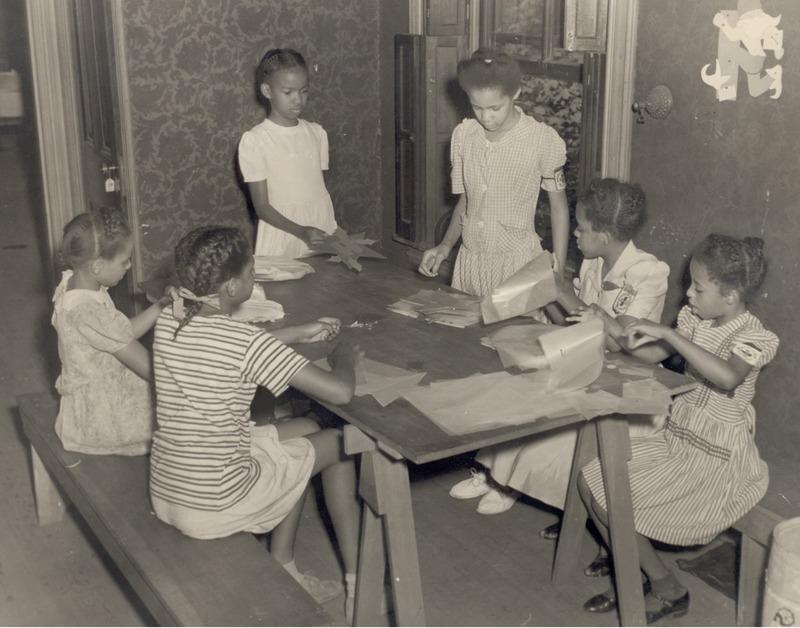
    <summary type="html"><![CDATA[<p><strong><em>The Young Women’s Christian Association, or YWCA, has been active in Harrisburg since 1894. The organization offered language and dance classes, as well as affordable housing, to local (white) women. In 1920, the Phyllis Wheatley branch of the YWCA was opened in Harrisburg. Named after the famous African American poet, the Phyllis Wheatley branch was dedicated specifically to addressing the needs of Harrisburg’s Black women.</em></strong></p><img src="https://harrisburghistorical.org/files/fullsize/ef1615c4569c9fb0dc6ae34487fc9610.jpg" alt="Children at Harrisburg YWCA&#039;s Phyllis Wheatley Branch" /><br/><p>On Cowden and Briggs, a street corner that no longer exists, stood the Odd Fellows building, owned by the Odd Fellows Fraternal Order, with a large room that served as the Phyllis Wheatley branch of the Young Women’s Christian Association. Next door sat a house owned by the YWCA with sleeping facilities available for the women. The YWCA, and nearby YMCA, represented a primary social center of the Black community in the 1920s and 1930s, hosting concerts, clubs, and events available to the local children and adults. <p>The Phyllis Wheatley Branch of the nationwide YWCA was organized in Harrisburg, Pennsylvania, on April 1, 1920, at a time when the social and civic lives of Black and white residents were sharply divided and segregated. The Phyllis Wheatley branch began with 123 members, a number that would flourish as the community took advantage of the resources and programs offered. The Phyllis Wheatley branch, alongside the Forster Street YMCA, was formed from the War Camp Community Service that had provided for World War I soldiers. According to news editor Joe McClure, the Harrisburg YWCA was dedicated to the “recreational, educational, social and religious development of Black women and girls.” The Phyllis Wheatley YWCA branch was a center for solidarity and camaraderie, serving as a safe haven for many Black women. The YWCA helped the region’s Black community combat white nationalism, promote activism, and provide a place for youth through its after-school programs. </p><p>The Phyllis Wheatley YWCA was a refuge with educational programs, home assistance, and spaces for women to be cared for and respected. The branch was named after Phyllis Wheatley, the famous Black poet (1753–1784) who wrote of the challenges she faced during her enslavement. The Phyllis Wheatley branch was named in her honor due to her inspiration for the Black community and the YWCA’s mission of empowerment.</p><p>The Phyllis Wheatley branch developed under the direction of numerous influential leaders throughout the twentieth century, the primary being Mrs. Maude Coleman (1882–1954). Maude B. Deering Coleman, married to John W. Coleman, was born in Virginia but fled the South, becoming a waitress in Harrisburg before the couple moved to Seattle, from 1911 to 1919. During her time in Seattle, Coleman gained significant experience with the YWCA and its role in political and social service. She reportedly received social work training from the University of Washington before they returned to Pennsylvania. According to historian Carrie Streeter, Coleman’s experience and training in Seattle allowed her “to secure a position as the first executive secretary of Harrisburg’s newly opened Phyllis Wheatley YWCA." Once there, she created basketball teams and gymnastics classes for young girls, formed a storytelling club, and, Streeter notes, “arranged for a local lawyer to teach classes in citizenship, a move that coincided with women’s newly ratified right to vote." Coleman wanted to provide safety to women within the Harrisburg community and fought to combat racial discrimination and promote resilience. Coleman was recognized for her service through her appointment as a special representative of the Pennsylvania Department of Welfare in 1924 by Governor Gifford Pinchot (s. 1923–1927; 1931–1935). </p><p>Another influential woman, Ella Frazier (1886–1977), came to Harrisburg in 1923 and became the second executive director of the YWCA Phyllis Wheatley branch. Frazier entered neighboring communities, promoting the YWCA to any young woman she could find. She encouraged young women to become involved in “productive activities” emphasizing etiquette and skills that would provide employment opportunities for women. Mr. Quann, a member of the YMCA, remembered Ella Frazier as “the driving force behind the YWCA” and said, “she kept that organization going and going and going." Ella Frazier was an impactful member of the YWCA, driven to support and assist as many young women in the community as possible, dedicating thirty-two years to the YWCA mission before retiring in 1955. </p><p>The Phyllis Wheatley YWCA was a prominent feature in the Harrisburg community that impacted its members through the attention given to educational, social, and political aspects of life. An announcement published on January 14, 1930, in <i>The Evening News</i>, a local newspaper, lists classes the YWCA offered to the community including sewing, gymnasium, glee club, piano class, arts and crafts, Bible study class, and home nursing. Additionally, the YWCA hosted events throughout the year including an annual Christmas dinner and program and a “Hanging of the Greens” for younger groups to celebrate the Christmas season. One highlight of the social events was the formal dance hosted by the Phyllis Wheatley YWCA and the Forster Street YMCA. Mr. Robert Quann, a Harrisburg resident in the 1920s, reflected on the formal dances where “you always gave your girl a corsage, you just had to do that and you had to wear a boutonniere . . . and you just couldn’t be dressed wrong, not for that.” The YWCA and YMCA were committed to supporting the lives of their community and providing opportunities for people to improve all aspects of their lives.</p><p>Frazier’s retirement coincided with the relocation of the Phyllis Wheatley branch to the main branch, after the original building was demolished in 1954 along with Maude Coleman’s home as part of the Second Capitol Extension. In an effort to make more space for the Capitol Complex, the state government repossessed buildings, including residences and community centers, against the protests of Harrisburg citizens and organizations. The Health and Welfare building was added in the 1950s where the Odd Fellows Hall once stood after its forced seizure. </p><p>Today, the YWCA serves the area with a focus on “economic development, veterans services and violence prevention,” and committed itself to a core mission “to empower women and eliminate racism.” Additionally, the YWCA aims to help victims of human trafficking through grant funding from the United States Department of Justice. U.S. Attorney David J. Freed wrote about the YWCA: </p><p>“Over the course of my career in public service, I have had the opportunity to work together with the dedicated staff at the YWCA of Harrisburg on behalf of victims of Domestic Violence, Sexual Assault, Human Trafficking and Stalking . . . With a small staff and a limited budget, the YWCA provides direct services and advocacy to some of our most vulnerable citizens.”</p><p>Because of the dedication and hard work of the founders, leaders, and organization members, the YWCA of Greater Harrisburg has created a lasting impact on the Pennsylvania community and continues to honor Phyllis Wheatley and her inspiring legacy. </p><p>A full list of the resources used in this story can be found <a href="https://www.zotero.org/groups/5114087/harrisburg_historical/collections/7WPRB7FC">here</a>.</p><p><strong>Related Stories</b></p><p><a href="https://harrisburghistorical.org/items/show/10">The Second Capitol Extension of Harrisburg, Pennsylvania</a></p><p><a href="https://harrisburghistorical.org/items/show/19" target="_blank" rel="noreferrer noopener">The Rowland Beauty School</a></p><p><em><strong><a href="https://harrisburghistorical.org/items/show/17">For more (including 5 images&#32;&amp;&#32;2 audio files) view the original article</a></strong></em></p>]]></summary>
    <published>2024-07-20T13:54:54+00:00</published>
    <updated>2026-04-17T19:49:02+00:00</updated>
    <link rel="alternate" type="text/html" href="https://harrisburghistorical.org/items/show/17"/>
    <id>https://harrisburghistorical.org/items/show/17</id>
    <author>
      <name>Elizabeth Movinsky&amp;#32;&amp;amp;&amp;#32;Sarah Meeks</name>
    </author>
  </entry>
  <entry>
    <title type="html"><![CDATA[KKK Labor Day Rally: The Rise and Fall of the Klan in Harrisburg]]></title>
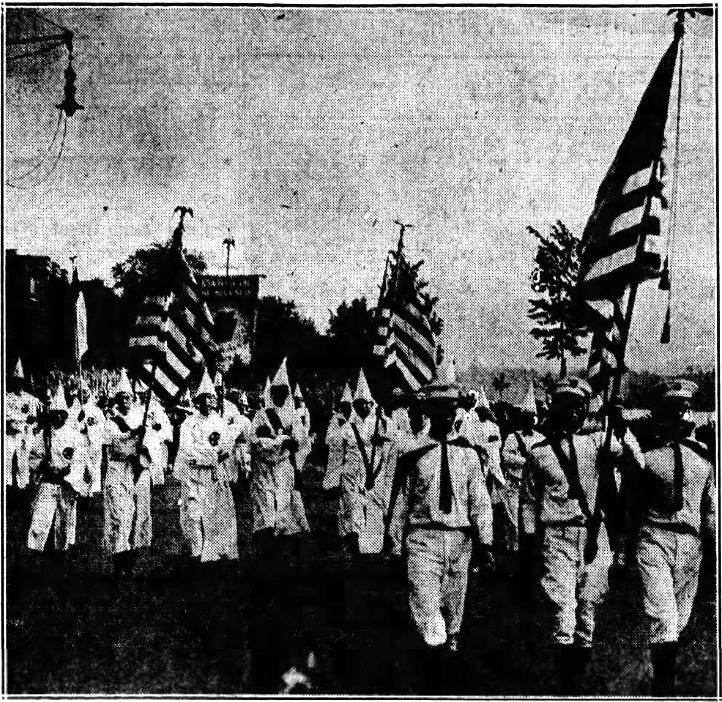
    <summary type="html"><![CDATA[<p><strong><em>On September 7, 1925, the Ku Klux Klan held a rally at Island Park in Harrisburg. With fireworks, a live band, and thousands of attendees, the rally showcased the strength of the Klan and its white supremacist messaging in Central Pennsylvania. </em></strong></p><img src="https://harrisburghistorical.org/files/fullsize/51e58c599c2ceb9603c4cb2e9098e481.jpg" alt="Flags are Massed at Head of Klan Parade" /><br/><p>Picture the landscapes and sounds of Harrisburg’s own City Island, nestled in the middle of the Susquehanna River. Perhaps you hear the ambient roar of a Senators game, the rush of a passing steamboat, or the lively conversations of pedestrians rounding the trail. Find yourself in the same place nearly a century ago, and a drastically different scene would stretch out before you.  </p><p>On September 7, 1925, the Ku Klux Klan organized a Labor Day parade that featured more than five thousand Klansmen and women. Clad in bright robes and displaying banners emblazoned with the Klan’s red, black, and white emblem, the marchers started north on Front Street up to Hamilton Street, then wound through downtown, passing the Capitol building and crossing the Market Street bridge to City Island. This “Great Demonstration” garnered large crowds, whose vehicles backed up streets and bridges amid the Labor Day traffic. </p><p>This bold show of Klan power in 1925 is just one peak in a long cycle of racial tensions in America. These tensions ebbed and flowed over time, as did the responses of African American and European American communities. Racial inequality was prevalent, but it was not a constant—there were many who fought against it. Though the Civil War had ended, the effects of slavery still permeated both the South and the North. </p><p>While the original Klan met its end in 1871, a 1915 Klan revival in Tennessee soon made the Keystone State an important bastion for the organization. With a state-wide membership numbering in the tens of thousands, the Klan garnered increasing popularity not by white supremacist doctrine alone, but also through an emphasis on nationalism and patriotic brotherhood. This new wave of the Klan was anti-Catholic, anti-Semitic, and anti-immigrant, appealing to a belief that true American values were white and Protestant. Many white, working-class, native-born Americans bought into this narrative, and the Klan increased in numbers and power. </p><p>This growth culminated in the 1925 rally—a massive effort that bolstered the Klan’s grip on Pennsylvania. The Klan used the rally to paint itself as a benevolent, family-focused organization, further softening public opinion in the capital region. <i>The Telegraph </i>touted the Klan as a “great organization,” citing their remarkable differences from the “masked, night raiding organization it had been so often pictured.” Advertisements for the rally itself promised “fun all day” with attractions such as live bands, food, and a major fireworks display. The parade featured thousands of hooded Klansmen from multiple counties, led by one Sam D. Rich of Pittsburgh, one of the Order’s “Grand Dragons.” </p><p>Women, too, were given bold representation, with groups like the “Altoona Kitchenettes” performing music for their fellow marchers. Speeches by Klan-affiliated doctors and officers at City Island’s baseball stadium enhanced perceptions of the organization’s credibility and attracted an “impressive throng.” These orators explained the history, purpose, and supposed righteousness of the Klan, with one speaker even offering rewards for those who could “prove the Klan guilty of a crime.” </p><p>However, the final scene of this rally is the most striking. In keeping with the older Ku Klux Klan’s traditions, a “large fiery cross was burned” during a mass initiation ceremony. Kneeling beneath the flames before thousands of their brethren, two hundred new Klansmen were inducted into the Dauphin County branch of the Order that day. According to <i>The Evening News: </i>“The speakers last night referred to the mask . . . and said that the day will soon come when the Klan will wear the mask and will rid the country of crime.” </p><p>In time, however, internal strife tore the once-brimming order to shreds, eventually consumed by its own grandiosity. As is often the case, money was a significant contributor to the Pennsylvania Klan’s downfall—with disagreements about spending, taxation, and funding sparking revolts by inside leaders. Intense factionalism arose, and recruiting all but ceased. Membership was more than cut in half between 1926 and 1927, dropping from more than seventy thousand to just over thirty thousand in a single year. By 1930, this figure had plummeted to a relatively meager four thousand Klansmen.</p><p>Perhaps more importantly, societal sentiments changed with the times. In the years following the Klan’s 1925 peak, the idea of multiculturalism as a threat to American life was declining, and feelings of “cultural insecurity” began to fall with it. The sense of nationalism that the Klan had leaned on for so long also saw trying times as Pennsylvania Protestants began to find themselves on two sides of a cold war, between church officials in support of the Order, and those who stood firmly against it. </p><p>Though the Klan’s considerable presence made the streets of Harrisburg a space of fear, leaders in the African American community found ways to foster unity and support for one another. The Phyllis Wheatley branch of the YWCA, for example, was founded in 1919 as a welcoming space for African American women, while the local chapter of the NAACP grew rapidly during this same period. </p><p>The Klan, on the other hand, was resigned to a slow death. City Island would never again see demonstrators such as the one it hosted in 1925—the streets would never bear the manifold banners of the Klan again. While Pennsylvania was certainly no postwar South, it was once a bastion of fear—but today, no longer.</p><p>A full list of the resources used in this story can be found <a href="https://www.zotero.org/groups/5114087/harrisburg_historical/collections/WK7ECR9E">here</a>.</p><p>Related Stories</p><p><a href="https://harrisburghistorical.org/items/show/17">The Phyllis Wheatley YWCA</a></p><p><em><strong><a href="https://harrisburghistorical.org/items/show/16">For more (including 5 images&#32;&amp;&#32;2 audio files) view the original article</a></strong></em></p>]]></summary>
    <published>2024-07-20T13:52:31+00:00</published>
    <updated>2026-04-17T19:49:02+00:00</updated>
    <link rel="alternate" type="text/html" href="https://harrisburghistorical.org/items/show/16"/>
    <id>https://harrisburghistorical.org/items/show/16</id>
    <author>
      <name>Nik Lego</name>
    </author>
  </entry>
</feed>