<?xml version="1.0" encoding="UTF-8"?>
<feed xmlns="http://www.w3.org/2005/Atom">
  <title type="text">Harrisburg Historical</title>
  <updated>2026-04-17T19:49:02+00:00</updated>
  <generator uri="http://framework.zend.com" version="1.12.20">Zend_Feed_Writer</generator>
  <link rel="alternate" type="text/html" href="https://harrisburghistorical.org/"/>
  <link rel="self" type="application/atom+xml" href="https://harrisburghistorical.org/items/browse?output=rss2"/>
  <id>https://harrisburghistorical.org/</id>
  <author>
    <name>Harrisburg Historical</name>
    <uri>https://harrisburghistorical.org</uri>
  </author>
  <link rel="hub" href="https://pubsubhubbub.appspot.com/"/>
  <entry>
    <title type="html"><![CDATA[Mira Dock’s Impact on Riverfront Renewal: Dock&#039;s Environmental Legacy]]></title>
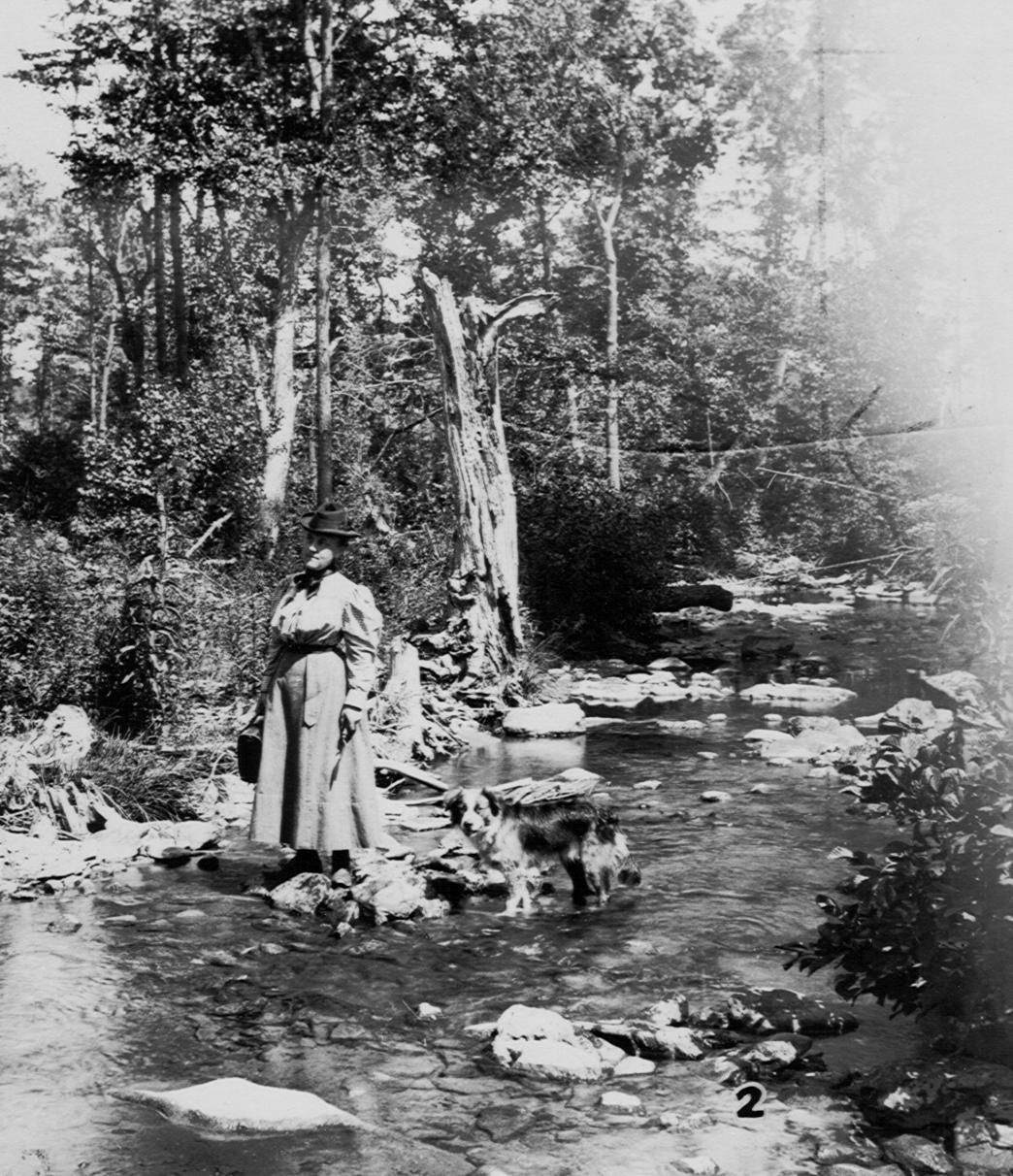
    <summary type="html"><![CDATA[<p><strong><em>One woman's campaigning created a mass movement and vision for a cleaner and healthier city, resulting in beautiful green space and improved quality of life within Harrisburg.</em></strong></p><img src="https://harrisburghistorical.org/files/fullsize/0e40530119adff1b3c7f75b207b231e7.jpg" alt="Mira Lloyd Dock" /><br/><p><em>We need not only play-grounds and parks, but we need woods . . . [where] the strong gain greater strength and clearer purpose; the weary soul achieves serenity.</em> </p><p>—Mira Lloyd Dock
Mira Lloyd Dock, a native of Harrisburg, was born on December 25, 1853, and died on July 11, 1945. She was a trailblazer for the City Beautiful Movement, leaving behind a legacy of urban beautification and environmental preservation. She also found help and empowerment from J. Horace McFarland, who was a fellow Harrisburg citizen and urban reformer. McFarland found Dock to be an appropriate person to partner with in his endeavors as she had contacts scattered throughout the city due to her volunteering and advocacy. On December 20, 1900, McFarland convinced Mira Lloyd Dock to give a presentation to the Board of Trade, a group composed of<span> Harrisburg’s elite or middle class</span>. By showcasing potential improvements through her lantern slides and embracing civic action in Harrisburg, Mira Lloyd Dock and the Civic Club helped gain support for the city's campaign for improvement. Her speech ultimately sparked Harrisburg’s desire to incorporate more trees and parks within the city, to improve public health, and to beautify the urban space.
The Harrisburg Improvement Movement was an urban reform initiative that aimed to enhance aesthetics, expand green space, and improve public health. While other cities in the United States pursued beautification programs, Harrisburg was among the most successful in implementing reform ideals. Future initiatives in cities across the nation aimed to model their movements after the success of the Harrisburg campaign.
Her goals for the movement were not limited to beautification but also improving the health of Harrisburg citizens by enhancing water quality. One way she achieved this was by working to improve the waterways of the Susquehanna River, drastically benefiting both environmental and public health. Her campaign garnered immense support, as she emphasized not only the preservation of green space but also the health benefits for Harrisburg residents.
Dock had good reason to be concerned about the waterways surrounding the city. Many citizens were treating the Susquehanna as a dumping ground for trash and sewage, leading to poor water quality. She repeatedly addressed issues with sewage and water purity, often speaking to children benefiting from the playground program completed by the Women’s Civic Club. The members of that club visited schools to discuss proposals from the improvement campaign aimed at ensuring pure water. Dock hoped to inspire voting fathers to see the benefits of the campaign by emphasizing better sanitary conditions for both current and future residents.
Before Dock’s involvement, the Susquehanna River was polluted, treated as a dumping ground for trash and sewage. Recognizing the relationship between urban spaces and nature, Dock actively worked to address the river’s impact on community health. As a passionate advocate for clean water and urban reform, she made the preservation and beautification of Harrisburg’s waterways central to her work. She knew that improving the riverfront would not only enhance the city's aesthetics but also promote public health by addressing pollution and ensuring clean water.
Dock’s efforts to improve the riverfront began with public outreach. One of her key strategies for promoting the improvement movement was engaging the public, especially working-class citizens. She often spoke to community groups, including children, about the importance of maintaining clean streets and preserving natural resources like the river. Dock understood that educating the public was essential to gaining support for environmental and urban reform. By emphasizing the health benefits of a clean and accessible riverfront, she made a compelling case for preservation and beautification, encouraging citizens to take ownership of the city’s environmental future.
Dock’s campaigning also involved practical projects for cleaning and improving the surrounding areas. She advocated for proper sewage systems to prevent contamination of the river and promoted urban planning initiatives prioritizing sanitation. Her involvement with the Harrisburg Civic Club, which she co-founded, furthered these goals. She convinced the group to plant trees along the streets in 1898 and set up a summer playground program in 1900. Additionally, she organized a contest for window flower boxes and backyard gardens to spark public interest in beautifying their neighborhoods. This initiative promoted both cleanliness and awareness of the improvement campaign. Her efforts demonstrated how the movement could create not only an aesthetically pleasing environment but also a higher quality of life. Her actions created a renewed sense of pride within Harrisburg citizens as they could see their contributions come to fruition in the city’s transformations.
After propelling the improvement movement in Harrisburg, Dock began to advocate for clean water and improvement projects elsewhere. Through her role in the Conservation Department for the General Federation of Women’s Clubs, she helped pass the federal National Parks Bill in 1916. As a result of Dock's campaigning, Harrisburg gained designated spaces for sewage, flood control measures, and riverfront steps that beautified the waterways.
Victorian societal norms about what women could and could not do did not stop Mira Lloyd Dock from fulfilling her desires for a stronger, more visually appealing community in Harrisburg. Her work has forever influenced the beauty of not only the Harrisburg area, but other states that followed in Harrisburg’s footsteps. While her goals seemed bold at the time, her convincing lectures, volunteering, and public outreach all resulted in creating support for the improvement campaign. Much of Mira Lloyd Dock’s work has resulted in the beautification of the city, but it also offered practical health, economic, and political improvements and led to the creation of Riverfront Park. Mira Lloyd Dock was later accepted into the Pennsylvania Forestry Reservation Commission and continued to aid organizations with their beautification endeavors. Mira Lloyd Dock’s successes in Harrisburg expanded to a national scale as her campaigning inspired broader environmental reforms.
<span>A full list of the resources used in this story can be found <a href="http://www.zotero.org/groups/5114087/harrisburg_historical/collections/4VI2IZTC" target="_blank" rel="noreferrer noopener">here</a>.</p></p><p><em><strong><a href="https://harrisburghistorical.org/items/show/24">For more (including 4 images&#32;&amp;&#32;2 audio files) view the original article</a></strong></em></p>]]></summary>
    <published>2024-12-12T19:59:15+00:00</published>
    <updated>2026-04-17T19:49:02+00:00</updated>
    <link rel="alternate" type="text/html" href="https://harrisburghistorical.org/items/show/24"/>
    <id>https://harrisburghistorical.org/items/show/24</id>
    <author>
      <name>Phoebe Lemin</name>
    </author>
  </entry>
  <entry>
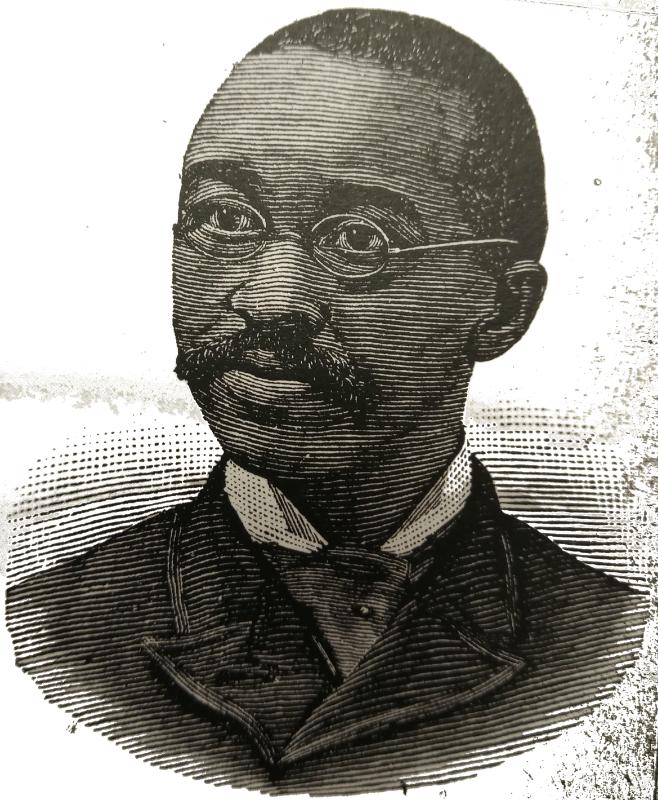
    <title type="html"><![CDATA[Black Politics and City Beautiful: Dr. William H.C. Jones and the Eighth Ward]]></title>
    <summary type="html"><![CDATA[<p><strong><em>During a time when African American voices were rarely heard, Dr. Jones convinced Black residents of Harrisburg to offer their needed support to the City Beautiful movement.</em></strong></p><img src="https://harrisburghistorical.org/files/fullsize/e4b3b21d149e137327393a2c9dd00a8a.jpg" alt="Dr. William H.C. Jones" /><br/><p>On December 20, 1900, Mira Lloyd Dock gave a presentation before the Harrisburg Board of Trade with nearly one hundred slides comparing Harrisburg’s badly maintained riverfront with those of some well-kept cities in Europe. She argued that Harrisburg had the space and natural resources to be sanitary and beautiful if the city put in the effort. Her speech sparked the City Beautiful movement that spanned 1901 to 1915 and resulted in a new capitol building, street and sewage improvements, and additional parks and playgrounds. To do all that, Dock needed support from the Board and Harrisburg’s communities. As a member of the Board of Trade, Dr. William H.C. Jones, Jr. was at Dock’s speech and became the only Black member of the Municipal League for Civic Improvement, a group organized in May 1901 to drive the movement. The League needed the support of the Eighth Ward where Jones lived, so he used his respectability to influence the large African American and immigrant populations there to endorse the beautification of Harrisburg.<p>Dr. William H.C. Jones, Jr. was born in 1860 in Snow Hill, Maryland, to William H. and Esther Jones. He studied medicine at Howard University and the New York Polyclinic Institute before moving to the Eighth Ward of Harrisburg in September 1887. He was a highly respected medical professional and played an active role in a variety of Harrisburg communities with both Black and white residents, especially those in the Eighth Ward. A generous man, he donated to poor houses, flood survivors, and John Harris’s Memorial.</p><p>One of his obituaries described him as someone who was “active in the advancement of Harrisburg, and [prominent] in professional and business life.” Indeed, he was appointed to a juvenile court board of inquiry in 1902 and elected as a School Board Director representing the Eighth Ward from 1902 to 1904. He was president of the Baker Building and Loan Association and a member of the John Harris Memorial Committee. He served as a common councilman for the Eighth Ward and the medical examiner of Brotherly Love Lodge, No. 896, Grand United Order of Odd Fellows. Professionally, he was a member of the American Medical Association and the Pennsylvania State Medical Society, a charter member of the Harrisburg Academy of Medicine, and the only Black man to serve as president of the Dauphin County Medical Society.</p><p>Deeply involved in the communities of Harrisburg, Jones championed the City Beautiful movement from 1901 until his death on January 19, 1905. He wanted to convince the African American community in the Eighth Ward that improving the city would bring much-needed changes to the city. The Eighth Ward was not only one of the most densely populated areas of the city, but the primary neighborhood for African American residents; white populations of lower socio-economic status; and immigrants from Hungary, Italy, Greece, and the Russian-occupied territories, among others. Jones, along with several others in the ward, pushed the neighborhood to support the improvements. Due to his strong relationships and influence in the community, he was able to use his medical knowledge and leadership to help gather support for the city improvement project.</p><p>The committee appointed by the Board of Trade in 1901 was tasked with organizing a mass meeting of citizens to discuss how to improve Harrisburg. As an original member of this group, Jones presided over meetings within the Eighth Ward. He led the first meeting that occurred at the Wesleyan African Methodist Episcopal Church on January 31, 1902, just before the city-wide vote to decide on the changes proposed by the Harrisburg City Municipal League. Newspapers, including the <i>Harrisburg Patriot</i>, noted hundreds in attendance. Jones and other notable leaders spoke at the gathering, including Reverend F. H. Hill, the pastor of the church; Spencer C. Gilbert, a board member for Public Works; and J. Horace McFarland, a key architect of the City Beautiful movement. All of these speakers emphasized their desire for change, progress, and overall beautification of the city. They also included demonstrations emphasizing health benefits and plans for cleanliness, two major driving forces for the movement.</p><p>Since companies had been dumping sewage waste into the Susquehanna River for several years, Jones was convinced that informing residents about its connection with disease would help gather support to clean it up. By conserving Paxton Creek and the banks of the Susquehanna River, Jones believed that residents of the whole city would benefit physically from the sanitized water. Similarly, parks would beautify the city while providing clean places to be outside. During the time that Jones served as president of the Dauphin County Medical Society, the organization recommended specific quarantine periods for diphtheria and scarlet fever to the sanitary committee. At the same meeting, other groups addressed sites for parks, the installation of sewers, and the addition of more telephone lines in the city. Jones continually argued for better sanitation, while he worked to gather support and money for the movement in the Eighth Ward. As a resident of the ward and the only Black member of the Municipal League for Civic Improvement, Jones had a unique opportunity to shape conversations surrounding the ward and the movement.</p><p>The neighborhood of the Eighth Ward was an ethnically diverse community within Harrisburg City. While representation was poor and many voices of the African American community were left out of the decision-making process, prominent leaders like Jones led the community to support the movement. Jones’s main influence was in the first precinct of the Eighth Ward, the southernmost district where many African Americans resided. This precinct voted overwhelmingly in favor of improvements in 1902. Of the 272 votes recorded for the bond issue that year, 261 voted in favor of improvement. This 96 percent acceptance rate was the highest of any of Harrisburg’s precincts. Jones’s efforts created a tentative bond of trust between residents of the Eighth Ward and city leadership looking to build a stronger capital city.</p><p>On the morning of January 19, 1905, Dr. William Harrison Jones, Jr. tragically died, at age forty-four, from double pneumonia after a fall down the Capitol building's steps weakened his body. His fiancé, Margaret Lewis, was at his side when he passed away. Many prominent citizens spoke at his funeral, including Dr. Charles H. Crampton, the future deputy secretary of the State Health Department; Thomas McDowell Jones, an associate editor of the <i>Harrisburg Daily Telegraph;</i> and Benjamin Matthias Nead, a lawyer and politician. The eulogies they gave commended Jones as a businessman, physician, Christian, citizen, philanthropist, and educator. After this untimely loss, the community commemorated his life with the Dr. William Harrison Jones Memorial Entrance and Fountain to a 12th Street playground in 1915. An automobile parade celebrating fifteen years of public improvements in Harrisburg included the dedication of the memorial entrance. This allowed people to formally recognize Jones’s contributions to the City Beautiful movement as a talented doctor and dedicated leader.</p><p>A full list of the resources used in this story can be found <a href="https://www.zotero.org/groups/5114087/harrisburg_historical/collections/P2BGENTE">here</a>.</p><p><strong>Related Stories</b></p><p><a href="https://harrisburghistorical.org/items/show/10">The Second Capitol Extension of Harrisburg, Pennsylvania</a></p><p><em><strong><a href="https://harrisburghistorical.org/items/show/15">For more (including 7 images&#32;&amp;&#32;2 audio files) view the original article</a></strong></em></p>]]></summary>
    <published>2024-07-20T13:51:08+00:00</published>
    <updated>2026-04-17T19:49:02+00:00</updated>
    <link rel="alternate" type="text/html" href="https://harrisburghistorical.org/items/show/15"/>
    <id>https://harrisburghistorical.org/items/show/15</id>
    <author>
      <name>Kyle Shively&amp;#32;&amp;amp;&amp;#32;Emmy Varner</name>
    </author>
  </entry>
  <entry>
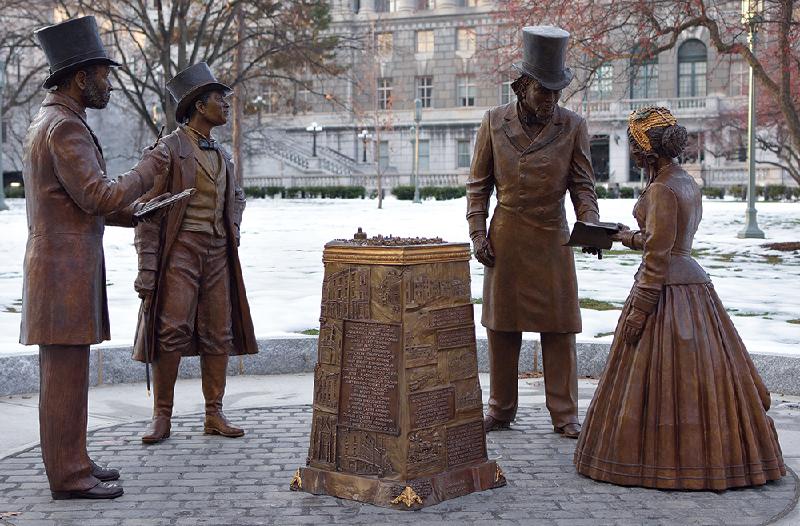
    <title type="html"><![CDATA[A Gathering at the Crossroads: The Story of the Commonwealth Monument]]></title>
    <summary type="html"><![CDATA[<p><strong><em>In 2020, as communities around the nation took down monuments symbolizing the legacies of American slavery, Harrisburg residents set up a monument to African American history and the power of the vote. </em></strong></p><img src="https://harrisburghistorical.org/files/fullsize/deaad0b9295abae0a1dfa266d3e54656.jpg" alt="A Gathering at the Crossroads" /><br/><p>On August 26, 2020, <em>A Gathering at the Crossroads</em> commemorated the anniversaries of the Fifteenth and Nineteenth  Amendments through the installation of a monument to Harrisburg’s Black history. 150 years after the right to universal male suffrage was granted to the people of the United States, and 100 years after women's suffrage was established, 2020 marked the intersection of the legacies of past achievements, and the inconsistencies and obstacles of the present. Beginning in the Spring of 2020, protests against police brutality toward Black Americans swept the nation, calling attention to continued injustices in American society. </p><p>At the height of this racial reckoning, a new bronze monument was placed on the Irvis Equality Circle, which marks the south <span>lawn of the Speaker K. Leroy Irvis Office Building </span>in Harrisburg’s Capitol Complex. A little more than a century ago, neither the Circle nor the expansive Capitol building existed. The area where this monument now stands was once a part of the Old Eighth Ward known as Tanner’s Alley, a predominantly African American neighborhood. Instead of lush green spaces and domed ceilings, this part of Harrisburg was filled with thriving churches, schools, businesses, and private residences. In the early twentieth century, however, these spaces were torn down and families were forced out of their homes due to the Capitol expansion project. The City Beautiful movement started as a push to create new green spaces and waste disposal measures that would benefit the entire community, but by the 1910s, it had morphed into a drive to complete the Capitol Complex that stands today. The Old Eighth, home to significant Black, Jewish, and immigrant populations, was demolished and residents were forced to relocate. For many years, their names and stories were forgotten. </p><p>The monument at Irvis Equality Circle is, to date, the only monument on the Capitol grounds honoring Harrisburg's Black community. The Commonwealth Monument Project is an initiative of the the International Institute for Peace through Tourism and was led by Lenwood Sloan (Executive Director), Jeb Stuart (Secretary of Logistics and Installation), Kelly Summerford (Treasurer), Phyllis Bennett (Government and Business Liaison), and Valerie Leblanc (Planning and Development). It enjoyed bipartisan support from both the Pennsylvania House of Representatives and Senate, along with major financial contributions from the City of Harrisburg, the Foundation for Enhancing Communities, Peggy Grove, Dauphin County Commissioners, Messiah University, Senator Sharif Street, and many other generous donors. </p><p>Artist Becky Ault and Art Design Group crafted four life-sized bronze statues of African American orators, each of whom made major contributions to the quest for racial justice in America and have a meaningful connection to the city of Harrisburg. These include, from left to right: </p><p>Thomas Morris Chester (1834–1892), a Civil War correspondent and Harrisburg native. In 1863, he became the captain of one of Harrisburg’s Union companies. Through 1864, Chester reported on the war effort, particularly the contributions of African American troops. Most newspapers completely overlooked the African American soldiers, but through Chester’s journalism, papers such as the <em>Philadelphia Press</em> printed information about them. After the war, Chester returned to Harrisburg where he became the secretary of the newly founded Garnet Equal Rights League, which advocated for Black rights and freedoms. This section of Walnut Street is named the "T. Morris Chester Way" in his honor.</p><p>Jacob T. Compton (1836–1905), sergeant in Company D of the 24th United States Colored Infantry (USCT) and local musician. In the Harrisburg community, Compton was known for leading the choirs of both African Methodist Episcopal and African Methodist Episcopal Zion churches, and for founding the Excelsior Band. Compton was also a carriage driver. Among the ranks of his passengers was Abraham Lincoln, soon to be the sixteenth president of the United States. In February 1861, before his inauguration, president-elect Abraham Lincoln visited Harrisburg. When an assassination plot was uncovered, it was Compton who <span>drove the getaway carriage.</span></p><p>The third figure, Reverend William Howard Day (1825–1900), was a prominent educator and orator, and one of America’s most renowned civil rights activists of his time. His contributions to Harrisburg were plentiful. In the 1870s, Day was appointed to the Harrisburg School Board of Directors. He successfully led the board in allocating funds to public schools for new textbooks and blackboards. Day fought for better education for African Americans both by improving the schools that existed for African American students and by beginning the process of integration at Harrisburg’s all-white Boys High School. Day was also an active community leader at the Wesley Union African Methodist Episcopal Zion Church on South Street. </p><p>The final figure on the right is Francis Ellen Watkins Harper (1825–1911), who fought for the abolition of slavery, women’s suffrage, and temperance. This statue of Francis holds the Fifteenth Amendment, which guaranteed universal male suffrage. She is depicted passing the document back to Day, demonstrating that there was still more to do: women were not yet enfranchised. Harper was a renowned antislavery journalist, poet, and public speaker, who gave lectures in cities across the United States, including Harrisburg. One of her most famous speeches, “We Are All Bound Up Together,” expressed the frustrations of Black women at being largely excluded from the women’s suffrage movement and called for universal voting rights.</p><p>These four visionaries surround a pedestal at the center of the monument. A model of the Old Eighth Ward sits on top. A blue star indicates the location of the monument relative to the vanished landscape of the Old Eighth Ward. The sides of the pedestal bear the names of one hundred influential Black residents of Harrisburg. These individuals were freedom seekers, abolitionists, suffragists, church leaders, doctors, businesspeople, poets, and more. All called Harrisburg home, and all fought for a better, more equitable city. </p><p>The impact of the many Black Americans honored by <em>A Gathering at the Crossroads</em> is not confined to this space on Walnut Street. Their legacies are everywhere: in Harrisburg’s school system, churches, cemeteries, and homes. Some of their stories have been explored throughout the “Chester Way” tour. Each location highlights a moment in time when Harrisburg’s residents spoke out against oppressive structures and ushered in radical change in areas of education, politics, and social life. As you reflect on each stop on the tour, you may discover something new about the capital city’s history and find yourself at a different kind of “crossroads,” as the struggles, hopes, and triumphs of the past intersect with the aspirations of the present. </p><p>A full list of the resources used in this story can be found <a href="https://www.zotero.org/groups/5114087/harrisburg_historical/collections/3WI8N8R7/items/7RE3X2J3/collection">here</a>.</p><p><strong>Related Stories:</strong></p><p><a href="https://harrisburghistorical.org/items/show/10">The Second Capitol Extension of Harrisburg, Pennsylvania</a></p><p><a href="https://harrisburghistorical.org/items/show/4">The Lincoln Street School</a></p><p><a href="https://harrisburghistorical.org/items/show/13">Lincoln's Close Call</a></p><p><a href="https://harrisburghistorical.org/items/show/12">It's a Family Business</a></p><p><a href="https://harrisburghistorical.org/items/show/18">Taking the Moose Lodge to Court</a></p><p><em><strong><a href="https://harrisburghistorical.org/items/show/6">For more (including 6 images, 2 audio files,&#32;&amp;&#32;1 video) view the original article</a></strong></em></p>]]></summary>
    <published>2023-11-01T15:40:47+00:00</published>
    <updated>2026-04-17T19:49:02+00:00</updated>
    <link rel="alternate" type="text/html" href="https://harrisburghistorical.org/items/show/6"/>
    <id>https://harrisburghistorical.org/items/show/6</id>
    <author>
      <name>Alexandra Shehigian</name>
    </author>
  </entry>
</feed>