<?xml version="1.0" encoding="UTF-8"?>
<feed xmlns="http://www.w3.org/2005/Atom">
  <title type="text">Harrisburg Historical</title>
  <updated>2026-04-17T19:49:02+00:00</updated>
  <generator uri="http://framework.zend.com" version="1.12.20">Zend_Feed_Writer</generator>
  <link rel="alternate" type="text/html" href="https://harrisburghistorical.org/"/>
  <link rel="self" type="application/atom+xml" href="https://harrisburghistorical.org/items/browse?output=rss2"/>
  <id>https://harrisburghistorical.org/</id>
  <author>
    <name>Harrisburg Historical</name>
    <uri>https://harrisburghistorical.org</uri>
  </author>
  <link rel="hub" href="https://pubsubhubbub.appspot.com/"/>
  <entry>
    <title type="html"><![CDATA[Jacob T. Compton: The Musician, Sergeant, and President&#039;s Coachman ]]></title>
    <summary type="html"><![CDATA[<p><strong><em>On a cold February night in 1861, President-elect Abraham Lincoln, en route to Washington D.C., spent an hour in a carriage with Jacob T. Compton, a notable Black coachman, musician, and liberated man. One went on to serve a contentious but impactful presidential term during the American Civil War; the other became an influential USCT sergeant, musician, activist, organizer, and minister.</em></strong></p><img src="https://harrisburghistorical.org/files/fullsize/a10de33cff77c9e0be01ebdf701e2124.jpg" alt="Jacob T. Compton Statue" /><br/><p>On the night before arriving in Harrisburg, Pennsylvania (February 20, 1861), president-elect Abraham Lincoln received word of an assassination plot planned for his expected journey through Baltimore. Harrisburg resident Simon Cameron, Lincoln's future Secretary of War, entrusted the president's safety to his coachman, Jacob Compton. In a matter of an hour, Compton swiftly escorted Lincoln and his family from their lodgings at the Jones House to a covert train bound for his inauguration in Washington, D.C. The whisking away of Abraham Lincoln was remembered for decades to come.</p><p>Lincoln's escort, Jacob Tilford Compton (Cumpton), was born on August 3, 1836, in Williamsport, Maryland, to Rebecca and Ezekiel Compton. Although his father was enslaved, his mother was free, which gave him the legal status of a Freeman. A year after his parents died of cholera in 1854, Compton left Williamsport after allegations surfaced that he had helped two men, George and John Butler, escape to Harrisburg. He reached Harrisburg, where he spent much of the rest of his life. </p><p>In Pennsylvania's capital city, Compton found employment first in a brickyard, where he once warded off an abduction attempt. Soon he met U.S. Senator Simon Cameron, who hired him as his personal coachman. It was through this connection that Compton later met the president-elect, who was journeying in 1861 from Illinois to Washington, D.C. </p><p>When Lincoln's aides learned of the plot to assassinate Lincoln in Baltimore, they made arrangements for a secret train to carry him to Washington, D.C. Lincoln agreed to the plan but only after honoring his commitment to attend the events planned by Pennsylvania Governor Andrew Curtin. Lincoln’s first stop was the Jones House, a hotel overlooking Market Square (later known as the Commonwealth Hotel), where he gave a speech to the residents of Harrisburg. He then addressed the state legislature at the Pennsylvania Capitol and returned to the Jones House. Although Lincoln had intended to spend the night at the hotel, Governor Curtin, Chicago police detective Allan Pinkerton, and Pennsylvania Senator Simon Cameron devised a plan that allowed the president-elect to make an earlier exit.</p><p>Cameron called on his personal carriage driver, Jacob Compton, to help. Compton drove one of the two carriages that secretly transported Lincoln and Colonel Ellsworth, another man traveling with Lincoln, from the Jones House to a Pennsylvania Railroad station at Second and Vine. According to the <em>Harrisburg</em> <em>Telegraph</em>, Compton would later recall that "all the way to the station Mr. Lincoln protested against the secrecy, ridiculed the idea of great danger and with difficulty was persuaded to be guided by the counsel of his escort." </p><p>Compton is best known today for spiriting the Lincolns out of Harrisburg, but his transport of the presidential family was only a short moment in an influential life that would continue for nearly half a century more. Most notably, Compton enlisted in the 100th Pennsylvania United States Colored Troops on July 18, 1864, and subsequently served as a corporal and then a sergeant for Company D of the 24th Infantry Regiment of the USCT, which guarded the nation's capital. Compton's seventeen months of military service to the Union cause demonstrated his commitment to freedom. Clearly he was proud to serve: he marched in the USCT Grand Review parade on November 13, 1865. </p><p>After the war, Compton remained an active member of Harrisburg’s community. He resided on South Street, two blocks away from the State Capitol, and operated a restaurant at the Bolton Hotel. He was extensively involved in the Bethel African Methodist Episcopal (A.M.E.) Church, a congregation that assisted new voters in registration after the passing of the Fifteenth Amendment in 1870. Compton was also an outstanding musician who played the cornet for the Harrisburg Keystone Band. He assisted with music programs at Bethel A.M.E. Zion Church and starred in Excelsior, Harrisburg’s most popular all-Black musical group. Compton also directed the choirs of the city's A.M.E. Zion churches and taught Sunday school music lessons. He was a prominent member of his local chapter of the Grand United Order of Odd Fellows Friendly Society, a fraternal group that focused on charity and community service; and he served as Trustee of Brotherly Love Lodge #896, which met on Cowden Street in the Eighth Ward.</p><p>During the final ten years of his life, Compton and his wife Lucretia lived in Wilkes-Barre, Pennsylvania, where he worked as a coachman for a local attorney and a doctor. Newspaper reports from the late nineteenth century show him serving in the Bethel A.M.E. Church, singing in the church choir, organizing the Fred Douglass Literary Society, and coordinating a parade for the Odd Fellows.</p><p>Jacob Compton passed away on September 6, 1905, at age sixty-nine. Newspaper articles about him in later years described him as friendly, gentle, curious, and well-regarded by many in Harrisburg and Wilkes-Barre. According to an obituary published in the <em>Harrisburg Telegraph</em>, Compton was one of the city’s oldest Black residents of the time. He was buried in block F of the Lincoln Cemetery, a historically African American cemetery in Harrisburg. Numerous obituaries hailed Compton as a hero who drove Lincoln’s carriage during his escape and recognized his work with musical groups, church communities, the Freemasons, and the United States Colored Troops. Compton’s commitment to civic service, civil rights, and serving his community and country makes him an important historical figure to remember. </p><p>The site of the Jones House itself serves as a living reminder of Compton’s bravery and his assistance to the Lincoln family, signifying the beginning of the escape. While a marker at the site of the Jones House memorializes Lincoln’s flight, it does not mention Compton’s role in transporting the president-elect. Compton's numerous accomplishments demonstrate both his resilience and his selfless service to Harrisburg — traits that should be remembered when memorializing the Old Eighth Ward. The new bronze statue of Jacob Compton in the monument group known as "A Gathering at the Crossroads" offers a fitting legacy to a man who made a local difference, leaving rippling effects across the country.</p><p>A full list of the resources used in this story can be found <a href="https://www.zotero.org/groups/5114087/harrisburg_historical/collections/Z2JMA7JK">here</a>.</p><p><strong>Related Stories</strong></p><p><a href="https://harrisburghistorical.org/items/show/11">Welcome Home USCT</a></p><p><a href="https://harrisburghistorical.org/items/show/6">A Gathering at the Crossroads</a></p><p><a href="https://harrisburghistorical.org/items/show/2">Harrisburg's Lincoln Cemetery</a></p><p><em><strong><a href="https://harrisburghistorical.org/items/show/13">For more (including 3 images&#32;&amp;&#32;2 audio files) view the original article</a></strong></em></p>]]></summary>
    <published>2024-07-16T00:43:45+00:00</published>
    <updated>2026-04-17T19:49:02+00:00</updated>
    <link rel="alternate" type="text/html" href="https://harrisburghistorical.org/items/show/13"/>
    <id>https://harrisburghistorical.org/items/show/13</id>
    <author>
      <name>Kylie Smith</name>
    </author>
  </entry>
  <entry>
    <title type="html"><![CDATA[The US Colored Troops Grand Review: Harrisburg Welcomes Home the Black Veterans of the Civil War]]></title>
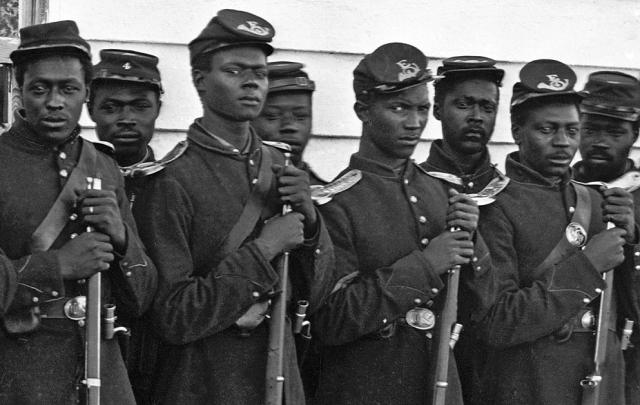
    <summary type="html"><![CDATA[<p><strong><em>When Civil War soldiers were recognized in a Grand Review march in Washington, DC, the United States Colored Troops (USCT) were excluded. The city of Harrisburg held its own Grand Review march on November 14, 1865, to recognize the struggle and participation of the Black soldiers in their fight for freedom. </em></strong></p><img src="https://harrisburghistorical.org/files/fullsize/b48402a41d588662aaed976bb2e7e0b3.jpg" alt="Company E, 4th USCT" /><br/><p>On the morning of November 14, 1865, the streets of Harrisburg echoed with the footsteps of regiments from the United States Colored Troops (USCT). Beginning at 10 a.m., the soldiers marched from Filbert and State Street (now Soldier’s Grove), through the Eighth Ward, up Market Street, and along Front Street past Simon Cameron’s home. Cameron, Lincoln’s former Secretary of War, watched approvingly from his porch. His remarks, reprinted in the <em>North American and United States Gazette </em>in Philadelphia on November 15, 1865, honored the troops: “I cannot let this opportunity pass without thanking the African soldiers . . . for the great service which they have been to their country in the terrible rebellion.” </p><p>These soldiers marched in the Harrisburg Grand Review, a historic event planned to honor the thousands of Black soldiers who fought in the United States Civil War for the Union Army. The Garnett League, Harrisburg’s chapter of the Pennsylvania State Equal Rights League, determined that the USCT deserved recognition for their contributions to the Northern victory and, alongside Harrisburg community members and political figures, organized the Grand Review. Thomas Morris Chester, who served as both Chief Marshall and Chairman of the Committee of Arrangements, led the march. A Harrisburg native himself, Chester served in the USCT and was the United States’s first Black war correspondent. </p><p>Many festivities marked the reception, including live music, speeches, and a dinner for the soldiers. Thousands of Harrisburg citizens, white and Black, lined the streets, showing their support and gratitude to the men who fought for their own freedom in the United States Civil War. Railroads into the city even cut their rates by half to encourage turnout. After the procession, William Howard Day, Orator of the Review, delivered a long address on the steps of the Capitol Building, and a letter from Generals George Meade and Benjamin Butler was read to the attendees.</p><p>The controversial decision to permit Black Americans into the United States Army was made in the midst of the Civil War. Toward the beginning of the conflict, the Northern armies still followed the Militia Act of 1792, allowing only white male citizens to participate in militias. The Northern armies attempted to abide by this act, but midway through the war, states struggled to meet their volunteer quotas and sought a new way to recruit soldiers. Then came the Militia Act of 1862. Enacted on July 17, 1862, the new act authorized a state militia draft when volunteer quotas were not met, and for the first time, allowed African Americans to serve in militias as soldiers or laborers. Abolitionists in the North praised this controversial decision as a step toward equality. </p><p>Many Black residents of Harrisburg served in the Civil War through the USCT. One such man was Henry C. Keith, who enlisted in September 1863. Keith enlisted in the 8th USCT Company B, which underwent rigorous training at Camp William Penn near Philadelphia before deployment to the Easter Theater. Company B fought in significant combat, particularly during the Battle of Olustee on February 20, 1864, which ended in a Confederate victory. Keith survived the intense combat that characterized the Civil War and eventually started a family and became a policeman in 1885. </p><p>Ephraim Slaughter was another USCT soldier with ties to Harrisburg. In 1863, he escaped slavery in North Carolina and joined Company B of the 3rd North Carolina Colored Infantry (later the 37th USCT) in January of 1864. After the war, Slaughter settled in Harrisburg’s Old Eighth Ward, where he was a real estate investor and active member of Bethel African Methodist Episcopal Church. When he died in 1943, Slaughter was Harrisburg’s last surviving Civil War veteran. </p><p>Roughly 179,000 Black men served as soldiers in the United States Army, while 19,000 more served in the United States Navy. By the end of the Civil War, almost 40,000 Black soldiers died, of those, 30,000 as a result of infection or disease. They served in artillery and infantry while also performing all the non-combat functions that supported and sustained the armies. According to the National Archives, Black carpenters, guards, laborers, nurses, spies, scouts, and surgeons contributed to the war. There were almost eighty Black commissioned officers. Confederate troops often targeted Black soldiers, who faced crueler conditions if captured. Black Americans proceeded to enlist anyway, a testament to their bravery and sacrifice. </p><p>After four years of intense fighting and high casualty numbers, the Confederacy surrendered. A month later, on May 23–24, 1865, the Northern Armies completed their final military march, the Grand Review, which moved from the U.S. Capitol toward the White House. Secretary of War Edwin Stanton was quoted, “You see in these armies, the foundation of the Republic: our future railroad managers, congressmen, bank presidents, manufacturers, judges, governors, and diplomats; yes and not less than a half dozen presidents.” </p><p>But not a single Black American who had bravely fought in the Civil War was represented in May’s Grand Review in Washington D.C. </p><p>The Militia Act of 1862 was perhaps the governmental change that enabled the Union to defeat the Confederacy in a war fought primarily over the future of Black Americans. Even so, the members of the USCT were intentionally excluded from the Grand Review march in Washington, D.C. In response, Harrisburg organized its own Review. This distinctive move towards equality was supported by formal committees and citizens alike, with a great number of citizens, white and Black, coming to pay respect to the soldiers of the USCT and their role in the Union Army victory. </p><p>According to the November 15, 1865, edition of the <em>North American and United States Gazette</em>, “The reception of these troops was, as it should be, respectful and honorable by the mass of the people of Harrisburg, and many a fair white hand did not shrink from waving a kerchief in welcome of those who escaped the perils of a contest in which they risked their lives, in defense of the national honor and support of the constitutional authorities.” </p><p>Orator William Howard Day believed the Union victory in the American Civil War represented a future of “improvement, social elevation, and the acquirement of political rights.” </p><p>134 Black Civil War veterans, including Chester, Keith, and Slaughter, are buried at Harrisburg’s Lincoln Cemetery. The city’s oldest surviving African American burial ground, Lincoln Cemetery was established in January 1876. In the words of Rachael Williams, Executive Director of Saving Our Ancestors' Legacy (SOAL), an organization working to restore and preserve Lincoln Cemetery, it “stands as a symbol of resilience and unity within the community.” Other notable Black veterans buried there include Aquila H. Amos, James M. Auter, and Harry F. Flowers. Their memories—and the memories of the thousands of other Black Americans who served in the USCT—are honored through the retelling of their stories and the significant role they played in the fight for freedom and equality during the American Civil War.</p><p>A full list of the resources used in this story can be found <a href="https://www.zotero.org/groups/5114087/harrisburg_historical/collections/P97IUEEE">here</a>.</p><p><strong>Related Stories</strong></p><p><a href="https://harrisburghistorical.org/items/show/9">Men of Muscle</a></p><p><a href="https://harrisburghistorical.org/items/show/12">It's a Family Business</a></p><p><a href="https://harrisburghistorical.org/items/show/13">Lincoln's Close Call</a></p><p><em><strong><a href="https://harrisburghistorical.org/items/show/11">For more (including 6 images&#32;&amp;&#32;2 audio files) view the original article</a></strong></em></p>]]></summary>
    <published>2024-06-29T18:06:03+00:00</published>
    <updated>2026-04-17T19:49:02+00:00</updated>
    <link rel="alternate" type="text/html" href="https://harrisburghistorical.org/items/show/11"/>
    <id>https://harrisburghistorical.org/items/show/11</id>
    <author>
      <name>Elizabeth Movinsky</name>
    </author>
  </entry>
</feed>