<?xml version="1.0" encoding="UTF-8"?>
<feed xmlns="http://www.w3.org/2005/Atom">
  <title type="text">Harrisburg Historical</title>
  <updated>2026-10-01T12:32:24+00:00</updated>
  <generator uri="http://framework.zend.com" version="1.12.20">Zend_Feed_Writer</generator>
  <link rel="alternate" type="text/html" href="https://harrisburghistorical.org/"/>
  <link rel="self" type="application/atom+xml" href="https://harrisburghistorical.org/items/browse?output=rss2"/>
  <id>https://harrisburghistorical.org/</id>
  <author>
    <name>Harrisburg Historical</name>
    <uri>https://harrisburghistorical.org</uri>
  </author>
  <link rel="hub" href="https://pubsubhubbub.appspot.com/"/>
  <entry>
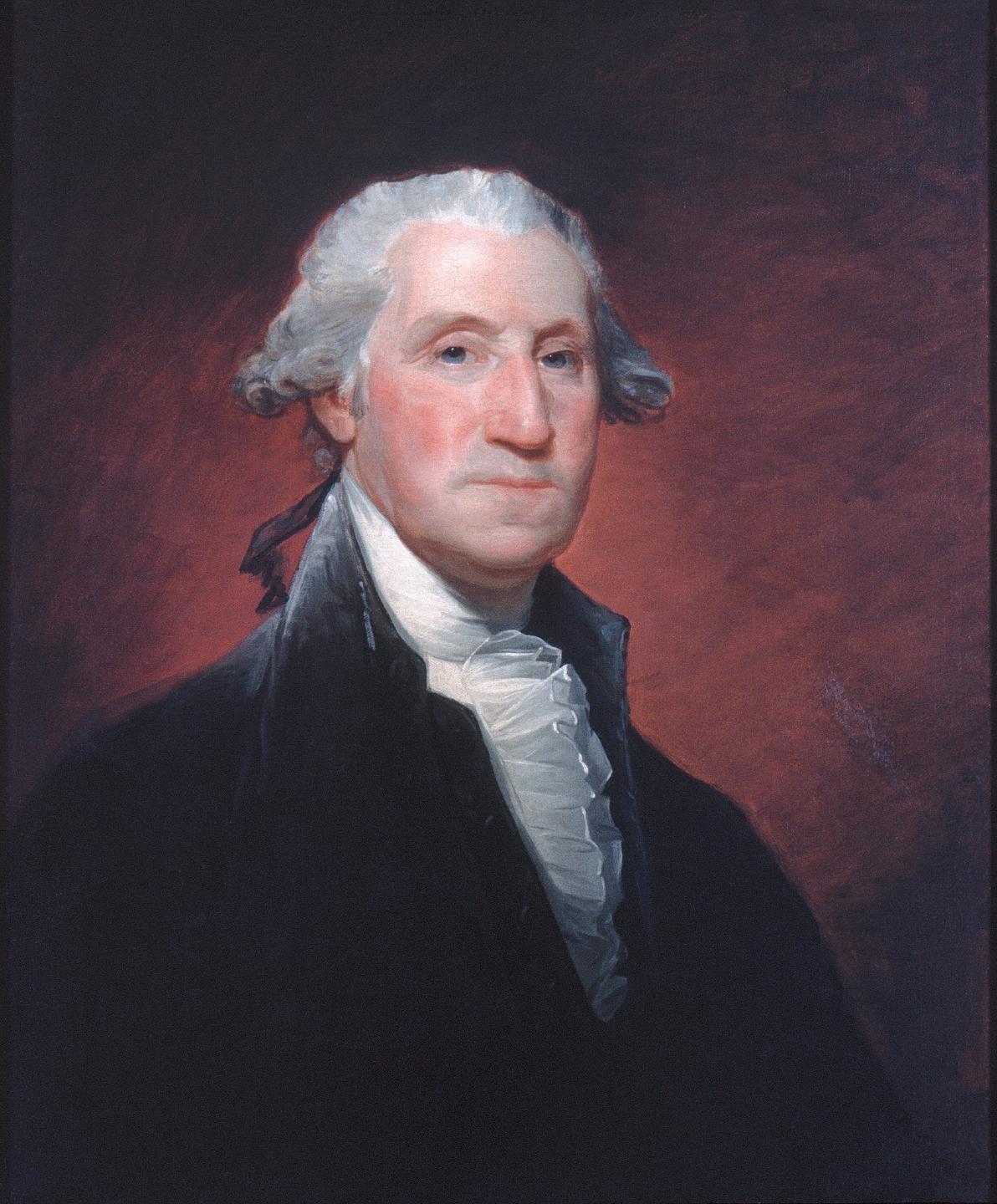
    <title type="html"><![CDATA[George Washington in Harrisburg: A Visit on the Road to the Whiskey Rebellion]]></title>
    <summary type="html"><![CDATA[<p><strong><em>As President George Washington travelled westward to quell the Whiskey Rebellion in 1794, he made a brief stop in Harrisburg, where he stayed in a log building that would later be named the Washington Inn in his honor. His diary entries record his observations about the new town—then only nine years old—as his army prepared to ford the Susquehanna River.</em></strong></p><img src="https://harrisburghistorical.org/files/fullsize/5b2c8d7c422d3c757498e09a45041c5c.jpg" alt="George Washington" /><br/><p>The newly formed United States, still celebrating its independence from Britain, faced heavy war debts. To pay off these debts, the government imposed a tax on the distillation of whiskey. Opposition to the tax was especially potent in western Pennsylvania, where the production of whiskey from surplus grain formed an important part of farmers’ livelihoods. In 1794, spurred by continued violence towards tax collectors and fears of open rebellion against the federal government, President Washington raised a large militia force to suppress the conflict and assert the new government’s authority. On his way out west, he stopped briefly in Harrisburg and recorded his observations about the Susquehanna River and the nascent town. </p><p>Washington arrived in Harrisburg on October 3, 1794. He traveled with notable figures such as Secretary of War Henry Knox, Secretary of the Treasury Alexander Hamilton, District Court Judge Richard Peters, and his secretary, Mr. Dandridge. The president met the First Regiment of New Jersey, which had arrived in Harrisburg earlier that morning in a rainstorm and consisted of about 560 men. According to David Ford, a captain in the regiment, Washington had intended to cross the Susquehanna that day because he feared the past two days of heavy rain would make crossing in the morning difficult. After some residents assured him the rain would not affect the river, he and his troops stayed overnight. Rather than pitch their tents, they relied on local hospitality, with some residents taking in upwards of twenty men. </p><p>Washington stayed in a log building on a site located now on the southeast corner of Second and Market Streets in Market Square. After dinner, he went for a walk, describing the young town, only nine years old, as “considerable for its age.” Captain Ford detailed what Washington would have seen at the time, saying Harrisburg consisted “of about 300 houses, 2 markets, court house and other public buildings, 3 churches, a number of very genteel well built brick houses.” Washington also noted in his diary the abundance of fish in the Susquehanna, describing rockfish over a foot long and salmon swimming in the water. </p><p>The citizens of Harrisburg had an overwhelmingly favorable opinion of Washington. A<i> Philadelphia Gazette</i> article from October 6, 1794, states that, “The pleasure excited, in beholding, for the first time, our beloved chief, in this borough, is not easily described.” Two burgesses, Conrad Bombach and Alex Berryhill, delivered an address to Washington on behalf of the city of Harrisburg. They expressed both joy at seeing Washington in their town and concern over the unrest caused by the Whiskey Rebellion. Their address affirms their trust that virtuous, peaceful citizens will prevail and the rebellion will not. They also show complete faith and trust in Washington to quell the conflict.</p><p>Washington responded with a gracious message of his own, which was published, alongside the burgesses’ statement, in the <i>Philadelphia Gazette</i>. He affirmed the patriotism of Harrisburg’s residents and thanked them for their support, describing his mission to end the unrest as a “defense of the laws.” Washington made plain that the Whiskey Rebellion threatened the new Constitution and that his success in quelling it would “serve to confirm the blessings of peace we enjoy, under a constitution that well deserves the confidence, attachment and support of virtuous men.” Such men, he continued, included the inhabitants of Harrisburg. </p><p>Washington departed Harrisburg the next day, on October 4. At daybreak on a chilly morning, the army began fording the Susquehanna’s cold, shallow waters. Major William Gould recorded how the men “suffered much with the cold in crossing.” Gould also noted that Washington crossed the river in a carriage, which the president drove himself. Washington then continued westward, reaching Carlisle early in the afternoon, ending his first and only stay in Harrisburg. </p><p>To commemorate the first president’s visit, Harrisburg residents christened the log building where Washington spent the night as the Washington Inn. The site of the Washington Inn would go on to have a long history in the city. It eventually became the location for the Jones House, a hotel that, sixty-seven years after Washington, President Abraham Lincoln stopped at on February 22, 1861, on his way to his inauguration. Although he intended to stay the night at the Jones House, his team caught wind of a plot to assassinate him in Baltimore, leading them to arrange for a secret train to carry the reluctant president directly to Washington, D.C. The Jones House later became the Commonwealth Hotel, and then the Dauphin Building, owned by the former Dauphin Deposit Bank. That building was demolished in 1990 to make way for the Bank’s new headquarters, now known as the Allfirst Tower. But the Washington Inn, and later the Jones House, will forever be part of Harrisburg’s history as the site of a visit from two of the country’s most consequential presidents. </p><p>A full list of the resources used in this story can be found <a href="https://www.zotero.org/groups/5114087/harrisburg_historical/collections/YHDBMJA9/items/AI9VIUE4/item-list">here</a>.</p><p><em><strong><a href="https://harrisburghistorical.org/items/show/32">For more (including 2 images) view the original article</a></strong></em></p>]]></summary>
    <published>2026-02-04T13:35:07+00:00</published>
    <updated>2026-10-01T12:32:24+00:00</updated>
    <link rel="alternate" type="text/html" href="https://harrisburghistorical.org/items/show/32"/>
    <id>https://harrisburghistorical.org/items/show/32</id>
    <author>
      <name>Kylie Smith&amp;#32;&amp;amp;&amp;#32;J.T. Crocenzi</name>
    </author>
  </entry>
  <entry>
    <title type="html"><![CDATA[Jacob T. Compton: The Musician, Sergeant, and President&#039;s Coachman ]]></title>
    <summary type="html"><![CDATA[<p><strong><em>On a cold February night in 1861, President-elect Abraham Lincoln, en route to Washington D.C., spent an hour in a carriage with Jacob T. Compton, a notable Black coachman, musician, and liberated man. One went on to serve a contentious but impactful presidential term during the American Civil War; the other became an influential USCT sergeant, musician, activist, organizer, and minister.</em></strong></p><img src="https://harrisburghistorical.org/files/fullsize/a10de33cff77c9e0be01ebdf701e2124.jpg" alt="Jacob T. Compton Statue" /><br/><p>On the night before arriving in Harrisburg, Pennsylvania (February 20, 1861), president-elect Abraham Lincoln received word of an assassination plot planned for his expected journey through Baltimore. Harrisburg resident Simon Cameron, Lincoln's future Secretary of War, entrusted the president's safety to his coachman, Jacob Compton. In a matter of an hour, Compton swiftly escorted Lincoln and his family from their lodgings at the Jones House to a covert train bound for his inauguration in Washington, D.C. The whisking away of Abraham Lincoln was remembered for decades to come.</p><p>Lincoln's escort, Jacob Tilford Compton (Cumpton), was born on August 3, 1836, in Williamsport, Maryland, to Rebecca and Ezekiel Compton. Although his father was enslaved, his mother was free, which gave him the legal status of a Freeman. A year after his parents died of cholera in 1854, Compton left Williamsport after allegations surfaced that he had helped two men, George and John Butler, escape to Harrisburg. He reached Harrisburg, where he spent much of the rest of his life. </p><p>In Pennsylvania's capital city, Compton found employment first in a brickyard, where he once warded off an abduction attempt. Soon he met U.S. Senator Simon Cameron, who hired him as his personal coachman. It was through this connection that Compton later met the president-elect, who was journeying in 1861 from Illinois to Washington, D.C. </p><p>When Lincoln's aides learned of the plot to assassinate Lincoln in Baltimore, they made arrangements for a secret train to carry him to Washington, D.C. Lincoln agreed to the plan but only after honoring his commitment to attend the events planned by Pennsylvania Governor Andrew Curtin. Lincoln’s first stop was the Jones House, a hotel overlooking Market Square (later known as the Commonwealth Hotel), where he gave a speech to the residents of Harrisburg. He then addressed the state legislature at the Pennsylvania Capitol and returned to the Jones House. Although Lincoln had intended to spend the night at the hotel, Governor Curtin, Chicago police detective Allan Pinkerton, and Pennsylvania Senator Simon Cameron devised a plan that allowed the president-elect to make an earlier exit.</p><p>Cameron called on his personal carriage driver, Jacob Compton, to help. Compton drove one of the two carriages that secretly transported Lincoln and Colonel Ellsworth, another man traveling with Lincoln, from the Jones House to a Pennsylvania Railroad station at Second and Vine. According to the <em>Harrisburg</em> <em>Telegraph</em>, Compton would later recall that "all the way to the station Mr. Lincoln protested against the secrecy, ridiculed the idea of great danger and with difficulty was persuaded to be guided by the counsel of his escort." </p><p>Compton is best known today for spiriting the Lincolns out of Harrisburg, but his transport of the presidential family was only a short moment in an influential life that would continue for nearly half a century more. Most notably, Compton enlisted in the 100th Pennsylvania United States Colored Troops on July 18, 1864, and subsequently served as a corporal and then a sergeant for Company D of the 24th Infantry Regiment of the USCT, which guarded the nation's capital. Compton's seventeen months of military service to the Union cause demonstrated his commitment to freedom. Clearly he was proud to serve: he marched in the USCT Grand Review parade on November 13, 1865. </p><p>After the war, Compton remained an active member of Harrisburg’s community. He resided on South Street, two blocks away from the State Capitol, and operated a restaurant at the Bolton Hotel. He was extensively involved in the Bethel African Methodist Episcopal (A.M.E.) Church, a congregation that assisted new voters in registration after the passing of the Fifteenth Amendment in 1870. Compton was also an outstanding musician who played the cornet for the Harrisburg Keystone Band. He assisted with music programs at Bethel A.M.E. Zion Church and starred in Excelsior, Harrisburg’s most popular all-Black musical group. Compton also directed the choirs of the city's A.M.E. Zion churches and taught Sunday school music lessons. He was a prominent member of his local chapter of the Grand United Order of Odd Fellows Friendly Society, a fraternal group that focused on charity and community service; and he served as Trustee of Brotherly Love Lodge #896, which met on Cowden Street in the Eighth Ward.</p><p>During the final ten years of his life, Compton and his wife Lucretia lived in Wilkes-Barre, Pennsylvania, where he worked as a coachman for a local attorney and a doctor. Newspaper reports from the late nineteenth century show him serving in the Bethel A.M.E. Church, singing in the church choir, organizing the Fred Douglass Literary Society, and coordinating a parade for the Odd Fellows.</p><p>Jacob Compton passed away on September 6, 1905, at age sixty-nine. Newspaper articles about him in later years described him as friendly, gentle, curious, and well-regarded by many in Harrisburg and Wilkes-Barre. According to an obituary published in the <em>Harrisburg Telegraph</em>, Compton was one of the city’s oldest Black residents of the time. He was buried in block F of the Lincoln Cemetery, a historically African American cemetery in Harrisburg. Numerous obituaries hailed Compton as a hero who drove Lincoln’s carriage during his escape and recognized his work with musical groups, church communities, the Freemasons, and the United States Colored Troops. Compton’s commitment to civic service, civil rights, and serving his community and country makes him an important historical figure to remember. </p><p>The site of the Jones House itself serves as a living reminder of Compton’s bravery and his assistance to the Lincoln family, signifying the beginning of the escape. While a marker at the site of the Jones House memorializes Lincoln’s flight, it does not mention Compton’s role in transporting the president-elect. Compton's numerous accomplishments demonstrate both his resilience and his selfless service to Harrisburg — traits that should be remembered when memorializing the Old Eighth Ward. The new bronze statue of Jacob Compton in the monument group known as "A Gathering at the Crossroads" offers a fitting legacy to a man who made a local difference, leaving rippling effects across the country.</p><p>A full list of the resources used in this story can be found <a href="https://www.zotero.org/groups/5114087/harrisburg_historical/collections/Z2JMA7JK">here</a>.</p><p><strong>Related Stories</strong></p><p><a href="https://harrisburghistorical.org/items/show/11">Welcome Home USCT</a></p><p><a href="https://harrisburghistorical.org/items/show/6">A Gathering at the Crossroads</a></p><p><a href="https://harrisburghistorical.org/items/show/2">Harrisburg's Lincoln Cemetery</a></p><p><em><strong><a href="https://harrisburghistorical.org/items/show/13">For more (including 3 images&#32;&amp;&#32;2 audio files) view the original article</a></strong></em></p>]]></summary>
    <published>2024-07-16T00:43:45+00:00</published>
    <updated>2026-04-17T19:49:02+00:00</updated>
    <link rel="alternate" type="text/html" href="https://harrisburghistorical.org/items/show/13"/>
    <id>https://harrisburghistorical.org/items/show/13</id>
    <author>
      <name>Kylie Smith</name>
    </author>
  </entry>
</feed>
