<?xml version="1.0" encoding="UTF-8"?>
<feed xmlns="http://www.w3.org/2005/Atom">
  <title type="text">Harrisburg Historical</title>
  <updated>2026-10-01T12:32:24+00:00</updated>
  <generator uri="http://framework.zend.com" version="1.12.20">Zend_Feed_Writer</generator>
  <link rel="alternate" type="text/html" href="https://harrisburghistorical.org/"/>
  <link rel="self" type="application/atom+xml" href="https://harrisburghistorical.org/items/browse?output=rss2"/>
  <id>https://harrisburghistorical.org/</id>
  <author>
    <name>Harrisburg Historical</name>
    <uri>https://harrisburghistorical.org</uri>
  </author>
  <link rel="hub" href="https://pubsubhubbub.appspot.com/"/>
  <entry>
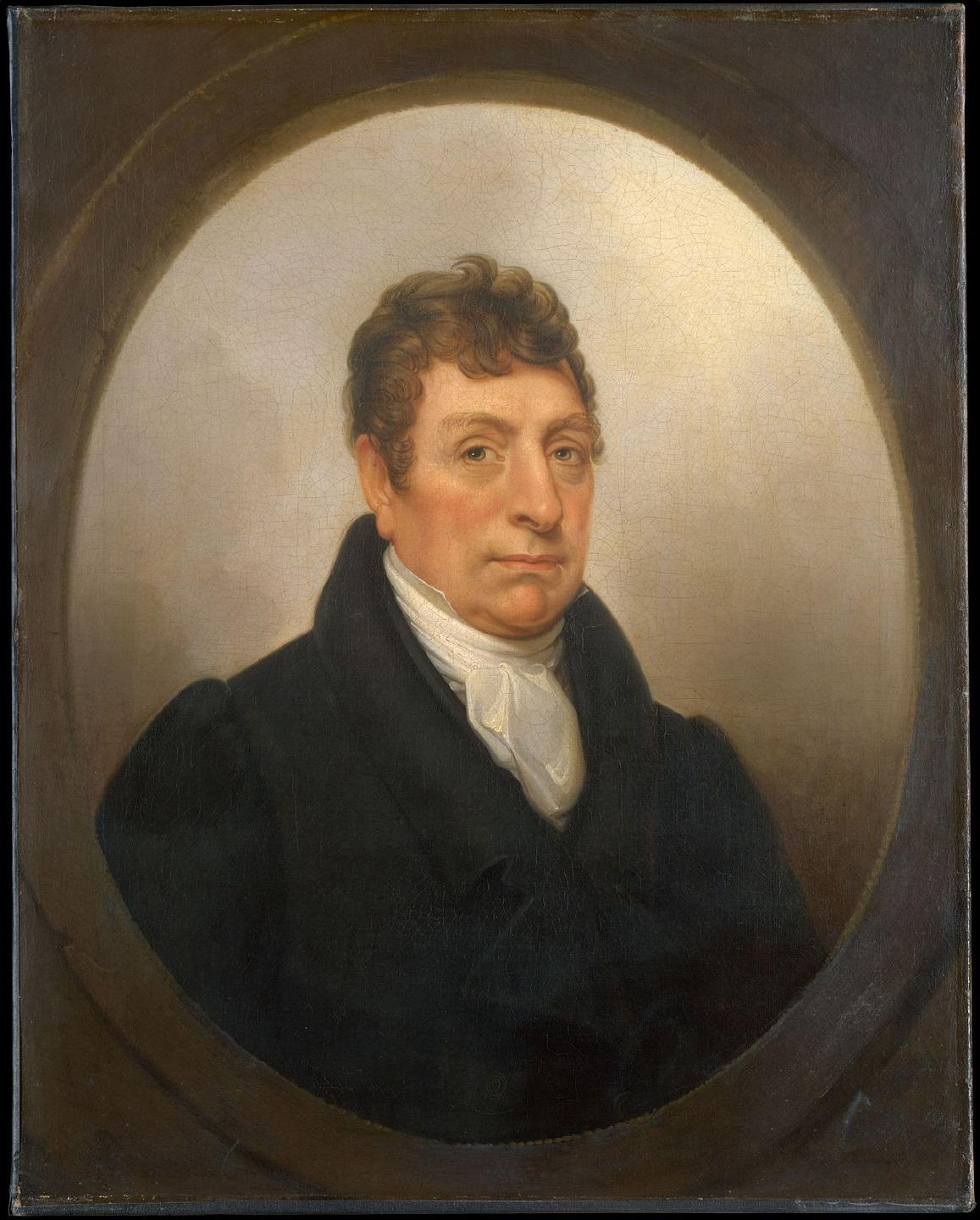
    <title type="html"><![CDATA[Lafayette Comes to Harrisburg: How Pennsylvania&#039;s Capital Welcomed the Nation&#039;s Guest in 1825]]></title>
    <summary type="html"><![CDATA[<p><strong><em>During the Marquis de Lafayette's tour of the United States in 1824 and 1825, he made a short stop in Harrisburg. Adored by the city, his presence evoked in Harrisburg the patriotic pride of a nation celebrating its fiftieth birthday.</em></strong></p><img src="https://harrisburghistorical.org/files/fullsize/ba8ef8ff49670ef91ab5b5dae5fab11e.jpg" alt="Lafayette in 1825" /><br/><p>Early on Sunday morning, January 30, 1825, Pennsylvania Governor John Andrew Shulze received a crisp three-word message: “Here we come!” The note’s purpose was, in effect, to tell Harrisburg to brace for what was next. As the governor read the words, a cavalcade was rumbling up from York bearing the “Nation’s Guest.” Although it was Sunday, crowds nevertheless filled the streets in anxious expectation. They had been alerted earlier by the ringing of bells, which announced, in clear, distinct tones, the coming of the Marquis de Lafayette to Harrisburg.
Lafayette entered the Pennsylvania capital as part of his grand tour of the country. Invited by President James Monroe to celebrate the nation’s fiftieth anniversary, Lafayette left France for New York in 1824. Accompanied by his son, he would visit all twenty-four states in thirteen months. The last surviving major general of the American Revolution, the country gave the sixty-six-year-old Lafayette a hero’s welcome. Forty-seven years earlier, the young Lafayette, spurred by emerging Enlightenment ideals of liberty and democracy, bought and outfitted his own ship, crossed the Atlantic, and offered his military services to the Continental Congress without pay in 1777. Appointed a major general at just twenty years of age, Lafayette fostered a close relationship with George Washington and commanded troops at several important battles. Now, the country was eager to celebrate his return with pomp and ceremony.
By the time Lafayette arrived in Harrisburg on January 30, the city had had little time to prepare. Lafayette was visiting the Virginia state legislature in Richmond when Harrisburg residents were startled to read in the January 25 edition of the <i>Richmond Enquirer</i> that the Frenchman would be leaving for Harrisburg the next day. Lawmakers in Harrisburg quickly passed a resolution authorizing Governor Shulze to draw funds from the treasury for Lafayette’s reception and accommodation. The legislature established a committee of arrangement to oversee his stay. There was also the matter, made more difficult by the short notice, of where Lafayette would lodge. Although some lawmakers contemplated renting out a suite of rooms in the city, the Assembly ultimately accepted Governor Shulze’s request to host their guests at his residence on 27 N. Front Street. </p><p>Shulze first met Lafayette in Philadelphia in 1824 and invited him to visit Harrisburg to tour the new Capitol building, which had been completed in 1822. After being elected, Shulze leased part of the residence on Front Street from architect Stephen Hills, who had built the home as his personal residence in 1812 but was forced to sell it to businessman Jacob Haldeman around 1825 because of financial trouble. When Lafayette arrived, the Shulze, Hills, and Haldeman families occupied the residence. Later known as the Haldeman-Haly House, it is today part of the McCormick Riverfront Library complex.
Lafayette entered Harrisburg from York at 5:00 p.m. on Sunday, and was escorted amid cheering crowds to the Front Street residence. There, he dined with the speakers of both houses, the committee of arrangement, and other government officials. Members of the legislature streamed through the house throughout the night to meet him.
The next morning, Lafayette was welcomed by a Mr. Hawkins, a member of the committee of arrangement, with the high-flying oratory that characterized his visit. “After an absence of more than forty years,” Hawkins announced, “we behold you as if rising from your tomb, casting your eyes about upon the nation in whose cause you unsheathed your sword at an early age, without incentive other than that fire for liberty, which jeopardized your life, rank, and fortune.” Now, Lafayette was “an object of universal wonder and admiration.” 
Lafayette then endured another day of introductions. Arriving at the Capitol at 11:00 a.m., he greeted lawmakers, lawyers, government officials, and ordinary citizens who wished to meet the famous man. During his four hours at the Capitol, he shook upwards of a thousand hands. Later that evening, Lafayette, a prominent member of the Masons, visited the Perseverance Masonic Lodge #21.
At 10:00 a.m. the next day, Lafayette’s last full day in Harrisburg, cavalry in complete uniform paraded through the streets. Once again, the schedule was packed with introductions. Escorted by a volunteer battalion, he arrived at the Capitol at noon, and a cannon fired thirteen times in his honor as he stepped down from his carriage. He was then formally introduced to the House and Senate and exchanged speeches with the respective speakers of the chambers. 
In his speech, Senate leader William Marks recalled the revolutionary days. “You will, no doubt,” he told Lafayette, “be gratified to behold . . . a relic of the revolutionary times.” Hanging in the Senate Chamber was, Marks said, the first American flag to be flown in the English Channel, created under the direction of Benjamin Franklin. In response, Lafayette said he was grateful to remember those “remote times” under “our beloved George Washington.” 
At about 2:00 p.m., students from Dickinson College greeted him. The<i> Pennsylvania Intelligencer</i> noted the honed aristocratic patience and charm that Lafayette showed the students. “The cordiality with which every person was received was peculiar—was indescribable, and as such filled the crowd with the highest enthusiasm.”
The final event commemorating Lafayette’s visit was a dinner held at the State Capitol hotel that night. 120 men attended the dinner, including the governor, lawmakers, judges, and Revolutionary War veterans. Dozens of attendees gave a dizzying array of toasts. Lafayette toasted to thirteen items. A defender and advocate for women’s rights, he gave his final toast to women: “‘Tis our delight, to love, our pride to defend, our ambition to deserve her.” After the toasts—and much drinking—the whole room stood up and belted a rendition of “Hail Columbia.” At 8:00 p.m., Lafayette and the governor went home. With the man of the hour gone, the party ended shortly afterwards.
The next morning, on Wednesday, volunteer troops paraded in market square and saluted Lafayette at the governor’s mansion. At 11:00, he departed, beginning his journey to the Deep South. 
Amid the patriotic speeches and remembrances that looked back to the nation’s birth, Lafayette’s language also looked forward. At his farewell dinner, he toasted to the soil of the United States. “Trod by freemen alone,” declared the ardent opponent of slavery, “it shall never want freemen to defend it.” As Lafayette headed south into the heart of slavery, he could hardly have missed the contradiction between the nation’s ideals and its institutions. The question of freedom would have to be answered by future generations. “Upon the youth of the United States," he told the students of Dickinson College, “we depend for the preservation of the free institutions and republican spirit.”
A full list of resources used in this story can be found <a href="https://www.zotero.org/groups/5114087/harrisburg_historical/collections/D6V8ZG3R/items/8NHNEGEH/collection">here</a>.</p><p><em><strong><a href="https://harrisburghistorical.org/items/show/36">For more (including 3 images) view the original article</a></strong></em></p>]]></summary>
    <published>2026-06-07T02:49:27+00:00</published>
    <updated>2026-07-31T21:22:14+00:00</updated>
    <link rel="alternate" type="text/html" href="https://harrisburghistorical.org/items/show/36"/>
    <id>https://harrisburghistorical.org/items/show/36</id>
    <author>
      <name>J.T. Crocenzi</name>
    </author>
  </entry>
  <entry>
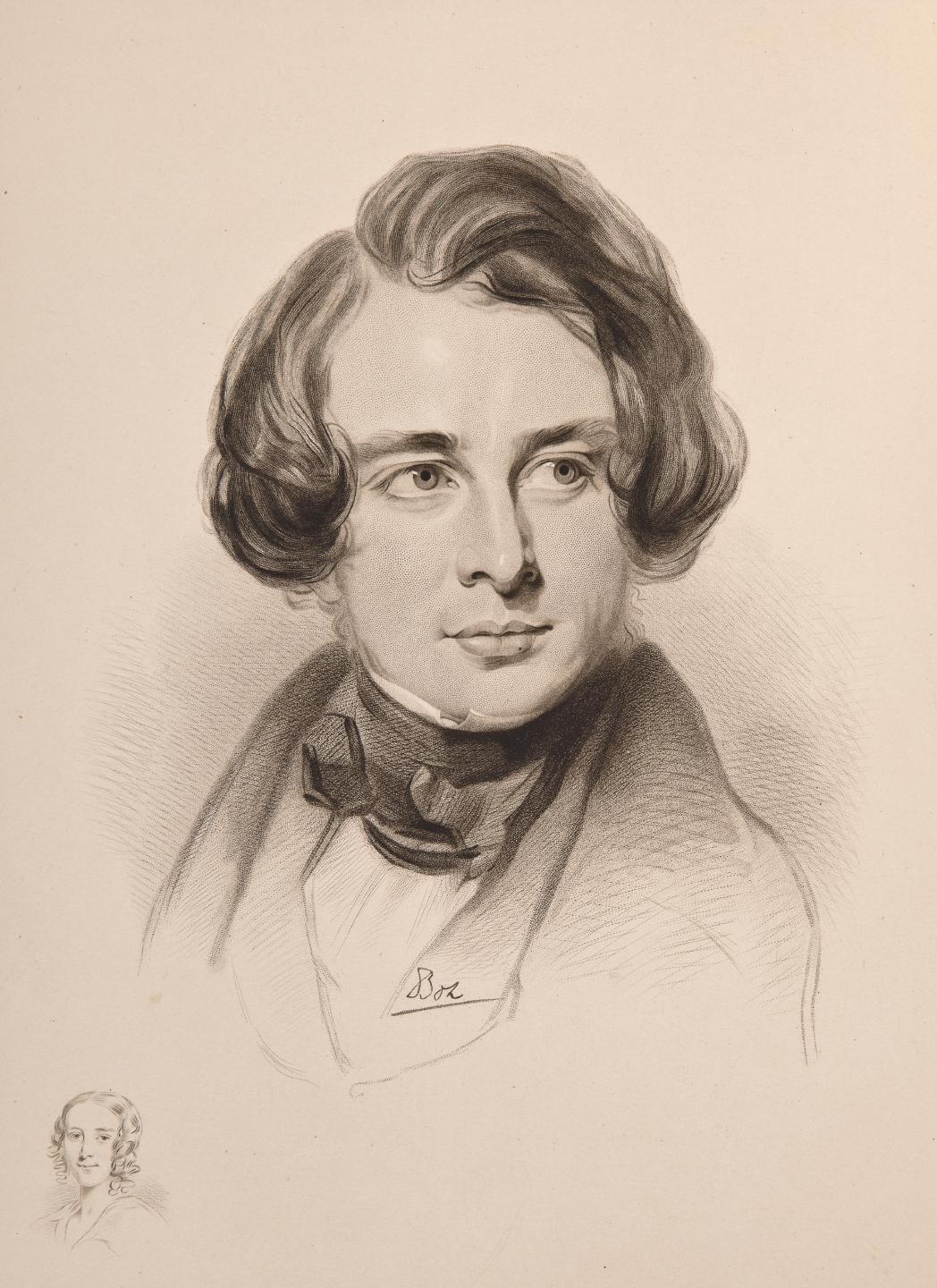
    <title type="html"><![CDATA[Charles Dickens in Harrisburg: A One-Day Visit That Left a Lasting Impression]]></title>
    <summary type="html"><![CDATA[<p><strong><em>While touring the United States in 1842, Charles Dickens briefly stopped in Harrisburg. Though largely unimpressed, he praised the hospitality he received at the Buehler Hotel, described the Susquehanna Valley in detail, and explored notable locations throughout the city, including the Capitol Building, the newly improved Dauphin County Prison, and John Harris’s gravesite.</em></strong></p><img src="https://harrisburghistorical.org/files/fullsize/f382265904397dcac6ba417b50438ac4.jpg" alt="Charles Dickens in 1842 " /><br/><p>The celebrated English writer Charles Dickens, along with his wife, Catherine, and her maid, Anne Brown, toured cities and towns across the United States in 1842 to experience America firsthand, recording his impressions in his travelogue, <i>American Notes for General Circulation</i>. One stop on his tour was Harrisburg. Although marked by discomfort and disappointment, Dickens toured important landmarks and monuments in the city, experienced firsthand American hospitality, and took pleasure in the immaculate views of the Susquehanna Valley. </p><p>After a rough ride from York, the thirty-year-old Dickens and his entourage arrived in Harrisburg on March 24, 1842, and left the very next day. He stayed in a local hotel at the northeast corner of Second and Market streets, known at the time as the Buehler House. Dickens’s fond remembrance of the modest Buehler House was owed to the hospitality of its landlord, Henry Buehler. “We were soon established in a snug hotel,” he wrote in <i>American Notes</i>, “which though smaller and far less splendid than many we put up at, it raised above them all in my remembrance, by having for its landlord the most obliging, considerate, and gentlemanly person I ever had to deal with.” Henry, who inherited the hotel from his father, George Buehler, in 1816, was known for his consideration and friendliness. Due to the hotel’s proximity to the Capitol Building, as well as Buehler’s interest in politics, the hotel became a hub for local politicians. Here, Dickens stayed in a room for legislators; however, he was not particularly fond of the room itself, expressing concern over the politicians spitting tobacco on the carpets of the hotel. </p><p>Dickens had mixed views on Harrisburg<i>. </i>Much of what he had to say about the city was negative. Still, he stated that he was fond of both the Buehler Hotel and the Susquehanna Valley. He described the Susquehanna River with the same descriptive detail he gave his fiction: </p><p>The river, dotted with innumerable green islands, lay upon our right; and on the left, a steep ascent, craggy with broken rock, and dark with pine trees. The mist, wreathing itself into a hundred fantastic shapes, moved solemnly upon the water; and the gloom of evening gave to all an air of mystery and silence which greatly enhanced its natural interest. </p><p>However, despite his interest in the surrounding nature, Dickens was not as fond of the city itself. Although Dickens wrote that he enjoyed Pennsylvania as a whole, stating that Philadelphia was “more provincial than Boston or New York,” he was not as impressed with Harrisburg. He and his wife travelled across the only bridge leading into Harrisburg at the time, the mile-long covered bridge known as the Camelback Bridge (now the Market Street Bridge). The bridge "was profoundly dark," Dickens said. "We had no lamps; and as the horses stumbled and floundered through this place, towards the distant speck of dying light, it seemed interminable." When he and his wife finally arrived, they met a wet and dark city whose gloominess disappointed them. “At length, however, we emerged upon the streets of Harrisburg, whose feeble lights, reflected dismally from the wet ground, did not shine out upon a very cheerful city.” It rained the whole trip, which only added to Dickens’s displeasure, as well as the city’s bleakness. </p><p>The next morning, Dickens set out to explore the city. He first visited the newly erected “model prison,” now known today as the Dauphin County Prison. Built in 1790, the prison was destroyed and remodeled from 1838 to 1841. Dickens’s arrival in 1842 meant he saw a brand-new prison. The prison tour showcased the then-popular “Solitary System,” which was based on isolation as punishment. Dickens strongly criticized this system, calling it inhumane. This was similar to his reaction to another prison, the Eastern State Penitentiary in Philadelphia, whose solitary system he noted was “cruel and wrong,” but also mentioned that he believed that the creators of the penitentiary did not know the full extent of this injustice. </p><p>After that, Dickens paid a visit to the gravesite of Harrisburg’s founder, John Harris, Jr. Upon viewing Harris’s grave, located under a mulberry tree on Front Street, Dickens noted the story of Harris’s capture by Native Americans at the same site in 1733. Keenly interested in interactions between settlers and Native Americans, Dickens strongly sympathized with the Native American people. He even visited the Office of the Secretary of the Commonwealth to view a variety of treaties in which the Native Peoples ceded their lands to the colony of Pennsylvania, such as the Iroquois Deed of 1736 and the Walking Purchase deed of 1737. Dickens sided with the Native Americans in <i>American Notes, </i>describing how they were misled by settlers and lied to in various treaties. This was a relatively unpopular sentiment for the time, as tensions between the two groups were especially high due to westward expansion. </p><p>Dickens then took a tour of the Capitol Building. At the Capitol, he met with Governor David Porter in the executive chamber and briefly looked at the state library. Later that day, he went down to the canal boat to scope out the conditions of the boat and the river where he would travel for the next three days on his way to Pittsburgh. Dickens and his wife left after an early dinner at the Buehler Hotel, thus concluding their trip to Harrisburg. </p><p>After reading <i>American Notes,</i> many Americans were unhappy, believing Dickens portrayed them as uncivilized and unsophisticated. As a result of this backlash, Dickens noted in the book’s preface that he did not intend to write about America with hostility, but instead to encourage Americans to reflect on their principles. He frequently praised the friendliness of the American people, as well as the country’s natural beauty. Although Dickens was not particularly fond of Harrisburg, he did enjoy his time at the Buehler Hotel, which helped shape not only his perception of the city but also contributed to his lasting impression of American hospitality.</p><p>A full list of resources used in this story can be found <a href="https://www.zotero.org/groups/5114087/harrisburg_historical/collections/MBQHUPUN/collection" target="_blank" rel="noreferrer noopener">here</a>.</p><p><em><strong><a href="https://harrisburghistorical.org/items/show/33">For more (including 4 images) view the original article</a></strong></em></p>]]></summary>
    <published>2026-03-15T00:41:54+00:00</published>
    <updated>2026-09-25T22:03:29+00:00</updated>
    <link rel="alternate" type="text/html" href="https://harrisburghistorical.org/items/show/33"/>
    <id>https://harrisburghistorical.org/items/show/33</id>
    <author>
      <name>Hannah Boes</name>
    </author>
  </entry>
  <entry>
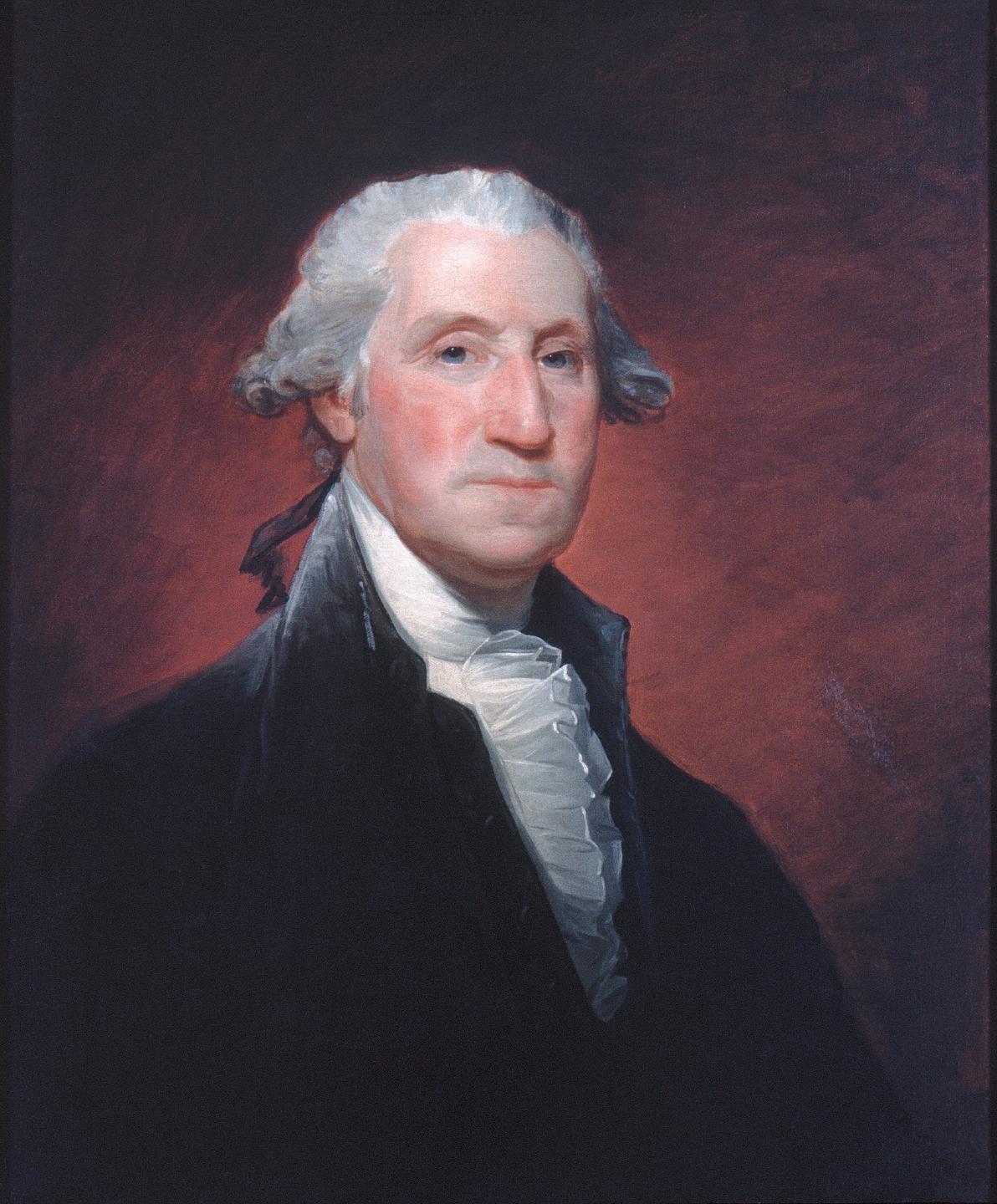
    <title type="html"><![CDATA[George Washington in Harrisburg: A Visit on the Road to the Whiskey Rebellion]]></title>
    <summary type="html"><![CDATA[<p><strong><em>As President George Washington travelled westward to quell the Whiskey Rebellion in 1794, he made a brief stop in Harrisburg, where he stayed in a log building that would later be named the Washington Inn in his honor. His diary entries record his observations about the new town—then only nine years old—as his army prepared to ford the Susquehanna River.</em></strong></p><img src="https://harrisburghistorical.org/files/fullsize/5b2c8d7c422d3c757498e09a45041c5c.jpg" alt="George Washington" /><br/><p>The newly formed United States, still celebrating its independence from Britain, faced heavy war debts. To pay off these debts, the government imposed a tax on the distillation of whiskey. Opposition to the tax was especially potent in western Pennsylvania, where the production of whiskey from surplus grain formed an important part of farmers’ livelihoods. In 1794, spurred by continued violence towards tax collectors and fears of open rebellion against the federal government, President Washington raised a large militia force to suppress the conflict and assert the new government’s authority. On his way out west, he stopped briefly in Harrisburg and recorded his observations about the Susquehanna River and the nascent town. </p><p>Washington arrived in Harrisburg on October 3, 1794. He traveled with notable figures such as Secretary of War Henry Knox, Secretary of the Treasury Alexander Hamilton, District Court Judge Richard Peters, and his secretary, Mr. Dandridge. The president met the First Regiment of New Jersey, which had arrived in Harrisburg earlier that morning in a rainstorm and consisted of about 560 men. According to David Ford, a captain in the regiment, Washington had intended to cross the Susquehanna that day because he feared the past two days of heavy rain would make crossing in the morning difficult. After some residents assured him the rain would not affect the river, he and his troops stayed overnight. Rather than pitch their tents, they relied on local hospitality, with some residents taking in upwards of twenty men. </p><p>Washington stayed in a log building on a site located now on the southeast corner of Second and Market Streets in Market Square. After dinner, he went for a walk, describing the young town, only nine years old, as “considerable for its age.” Captain Ford detailed what Washington would have seen at the time, saying Harrisburg consisted “of about 300 houses, 2 markets, court house and other public buildings, 3 churches, a number of very genteel well built brick houses.” Washington also noted in his diary the abundance of fish in the Susquehanna, describing rockfish over a foot long and salmon swimming in the water. </p><p>The citizens of Harrisburg had an overwhelmingly favorable opinion of Washington. A<i> Philadelphia Gazette</i> article from October 6, 1794, states that, “The pleasure excited, in beholding, for the first time, our beloved chief, in this borough, is not easily described.” Two burgesses, Conrad Bombach and Alex Berryhill, delivered an address to Washington on behalf of the city of Harrisburg. They expressed both joy at seeing Washington in their town and concern over the unrest caused by the Whiskey Rebellion. Their address affirms their trust that virtuous, peaceful citizens will prevail and the rebellion will not. They also show complete faith and trust in Washington to quell the conflict.</p><p>Washington responded with a gracious message of his own, which was published, alongside the burgesses’ statement, in the <i>Philadelphia Gazette</i>. He affirmed the patriotism of Harrisburg’s residents and thanked them for their support, describing his mission to end the unrest as a “defense of the laws.” Washington made plain that the Whiskey Rebellion threatened the new Constitution and that his success in quelling it would “serve to confirm the blessings of peace we enjoy, under a constitution that well deserves the confidence, attachment and support of virtuous men.” Such men, he continued, included the inhabitants of Harrisburg. </p><p>Washington departed Harrisburg the next day, on October 4. At daybreak on a chilly morning, the army began fording the Susquehanna’s cold, shallow waters. Major William Gould recorded how the men “suffered much with the cold in crossing.” Gould also noted that Washington crossed the river in a carriage, which the president drove himself. Washington then continued westward, reaching Carlisle early in the afternoon, ending his first and only stay in Harrisburg. </p><p>To commemorate the first president’s visit, Harrisburg residents christened the log building where Washington spent the night as the Washington Inn. The site of the Washington Inn would go on to have a long history in the city. It eventually became the location for the Jones House, a hotel that, sixty-seven years after Washington, President Abraham Lincoln stopped at on February 22, 1861, on his way to his inauguration. Although he intended to stay the night at the Jones House, his team caught wind of a plot to assassinate him in Baltimore, leading them to arrange for a secret train to carry the reluctant president directly to Washington, D.C. The Jones House later became the Commonwealth Hotel, and then the Dauphin Building, owned by the former Dauphin Deposit Bank. That building was demolished in 1990 to make way for the Bank’s new headquarters, now known as the Allfirst Tower. But the Washington Inn, and later the Jones House, will forever be part of Harrisburg’s history as the site of a visit from two of the country’s most consequential presidents. </p><p>A full list of the resources used in this story can be found <a href="https://www.zotero.org/groups/5114087/harrisburg_historical/collections/YHDBMJA9/items/AI9VIUE4/item-list">here</a>.</p><p><em><strong><a href="https://harrisburghistorical.org/items/show/32">For more (including 2 images) view the original article</a></strong></em></p>]]></summary>
    <published>2026-02-04T13:35:07+00:00</published>
    <updated>2026-10-01T12:32:24+00:00</updated>
    <link rel="alternate" type="text/html" href="https://harrisburghistorical.org/items/show/32"/>
    <id>https://harrisburghistorical.org/items/show/32</id>
    <author>
      <name>Kylie Smith&amp;#32;&amp;amp;&amp;#32;J.T. Crocenzi</name>
    </author>
  </entry>
</feed>