<?xml version="1.0" encoding="UTF-8"?>
<feed xmlns="http://www.w3.org/2005/Atom">
  <title type="text">Harrisburg Historical</title>
  <updated>2026-04-17T19:49:02+00:00</updated>
  <generator uri="http://framework.zend.com" version="1.12.20">Zend_Feed_Writer</generator>
  <link rel="alternate" type="text/html" href="https://harrisburghistorical.org/"/>
  <link rel="self" type="application/atom+xml" href="https://harrisburghistorical.org/items/browse?output=rss2"/>
  <id>https://harrisburghistorical.org/</id>
  <author>
    <name>Harrisburg Historical</name>
    <uri>https://harrisburghistorical.org</uri>
  </author>
  <link rel="hub" href="https://pubsubhubbub.appspot.com/"/>
  <entry>
    <title type="html"><![CDATA[Harrisburg&#039;s Once &quot;Lunatic Hospital&quot; : The Beginnings of the Pennsylvania State Lunatic Hospital]]></title>
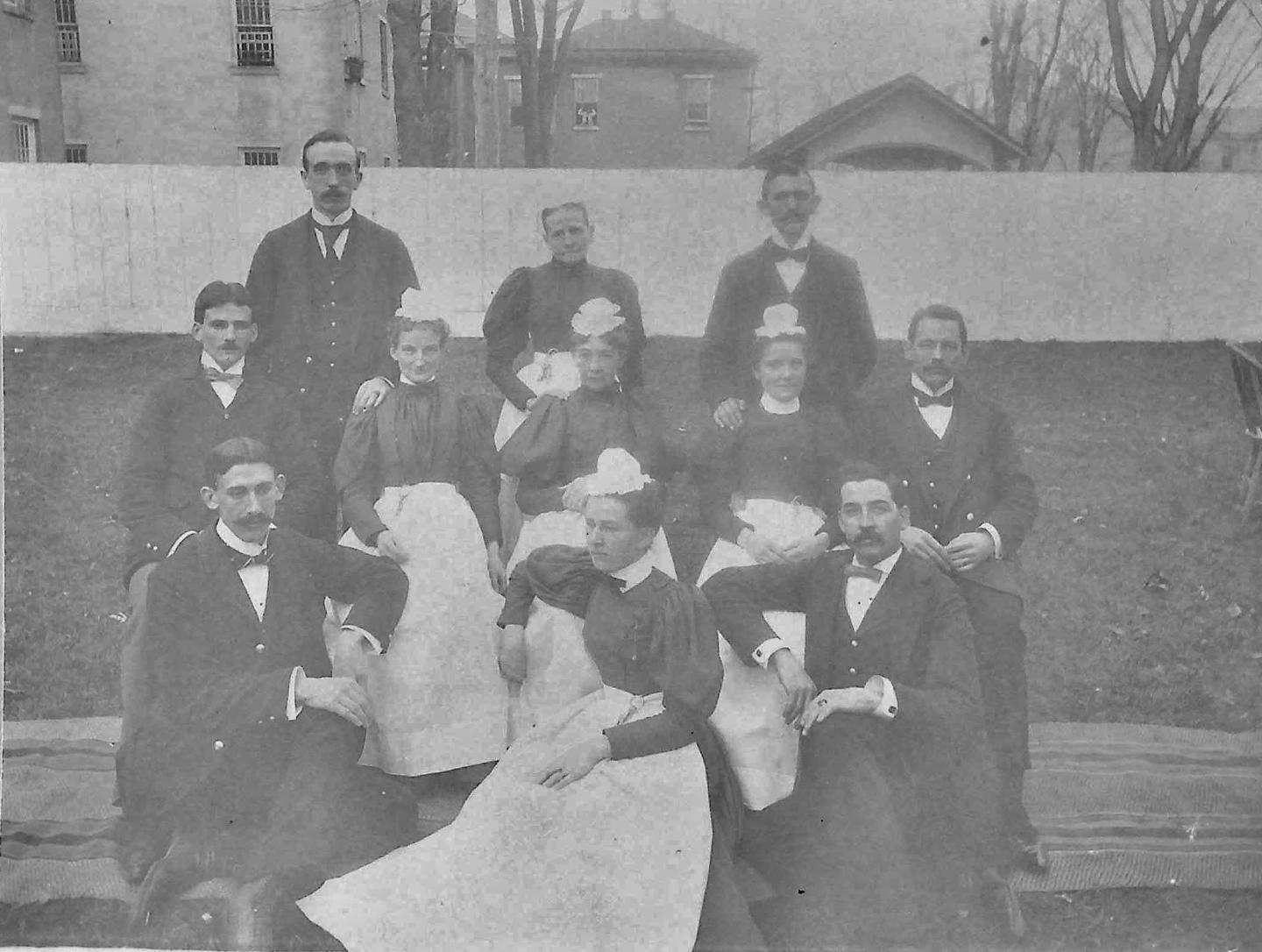
    <summary type="html"><![CDATA[<p><strong><em>As the Pennsylvania State Lunatic Asylum developed out of emerging ideas of moral treatment in the mid-nineteenth century, it welcomed mentally ill patients and sought to create a home for Harrisburg's "insane poor."</em></strong></p><img src="https://harrisburghistorical.org/files/fullsize/6e6fe72ff611bf594e943d38c424a000.jpg" alt="Mixed group about 1900" /><br/><p><p style="font-weight:400;">In 1851, the Pennsylvania State Lunatic Asylum emerged as the region’s first mental health institution, embodying a "moral treatment" approach to mental health care. Moral treatment challenged negative views of mental illness as unrepairable and evil and instead encouraged compassionate approaches that transformed treatment. Throughout the late nineteenth century, the hospital’s design and care were organized according to ideas of moral treatment, seeking ways to improve the mental condition of the ill. <span> </p>On February 3, 1845, Dorothea Dix’s “Memorial” was read to the Pennsylvania State Legislature. Dix argued against the inhumane practice of confining mentally ill patients in poorhouses and jails, advocating for a mental hospital to intentionally care for them. Through her advocacy, the foundations for the Pennsylvania State Lunatic Asylum were established. By 1849, Governor Johnston declared that "a home" was "being made for the insane poor” at the institute’s cornerstone. In 1851, the hospital was built and opened for patients.
<p style="font-weight:400;">The Main Building of the hospital was designed to maximize sunlight and fresh air for patients, with separate wings for male and female patients. In 1888, the North and South Branches were built to house patients when the Main Building grew overcrowded. Male patients were housed in the North Branch (Male nine and ten), while female patients stayed in the South Branch (Female nine and ten). The Administration Building opened in 1895 after demolishing the Main Building, and by 1913, the hospital included a chapel building that hosted weekly Sunday services and frequent prayer meetings. The chapel highlighted the role of faith in moral treatment and patient care in the institution, demonstrating its commitment to improving patient experiences and shaping their “moral faculties.”
<p style="font-weight:400;">Patients from various backgrounds filled the hospital, including blacksmiths, carpenters, lawyers, and teachers. A register of female patients from 1852 to 1884 records their admission into the hospital, their illnesses, and their health status, revealing various ailments such as grief, anxiety, trouble, disappointment, exertion, and poverty.
<p style="font-weight:400;">Two male patients, William Smith (undated) and Sigmund Purist (1865), provide glimpses into their experiences at the hospital. William Smith penned his letter to a minister, Dr. Robinson, expressing his joy in hearing his sermon and submitting his pieces of scriptural reflection to see if they had any “literary merit.” On the other hand, Purist’s letter in 1865 grimly expresses his objection to being wrongfully confined in the asylum and petitions for discharge from the hospital. He argued that he was confined through “heinous false preference” and instead wished to enjoy the free condition that “millions the majority enjoy.” While Purist’s letter provides insight into patients' experiences at the hospital, it may not reflect all of their stories. Comparatively, William Smith expressed no negative emotion and instead shared his delight over the minister’s sermon, insisting that he should read his reflections and consider publishing them.
<p style="font-weight:400;">The hospital’s development and founding principles of “moral treatment” shaped its growth, intentionality, and approach to patient care. In 1921, the Pennsylvania State Lunatic Hospital was renamed “Harrisburg State Hospital.” It had successfully created a home for the mentally ill.<span>   </span>
A full list of resources used in this story can be found <a href="https://www.zotero.org/groups/5114087/harrisburg_historical/collections/6TH6HWA6" target="_blank" rel="noreferrer noopener">here</a>.</p><p><em><strong><a href="https://harrisburghistorical.org/items/show/27">For more (including 5 images&#32;&amp;&#32;1 audio file) view the original article</a></strong></em></p>]]></summary>
    <published>2024-12-12T20:40:30+00:00</published>
    <updated>2026-04-17T19:49:02+00:00</updated>
    <link rel="alternate" type="text/html" href="https://harrisburghistorical.org/items/show/27"/>
    <id>https://harrisburghistorical.org/items/show/27</id>
    <author>
      <name>Sophia Snyder</name>
    </author>
  </entry>
  <entry>
    <title type="html"><![CDATA[Mira Dock’s Impact on Riverfront Renewal: Dock&#039;s Environmental Legacy]]></title>
    <summary type="html"><![CDATA[<p><strong><em>One woman's campaigning created a mass movement and vision for a cleaner and healthier city, resulting in beautiful green space and improved quality of life within Harrisburg.</em></strong></p><img src="https://harrisburghistorical.org/files/fullsize/0e40530119adff1b3c7f75b207b231e7.jpg" alt="Mira Lloyd Dock" /><br/><p><em>We need not only play-grounds and parks, but we need woods . . . [where] the strong gain greater strength and clearer purpose; the weary soul achieves serenity.</em> </p><p>—Mira Lloyd Dock
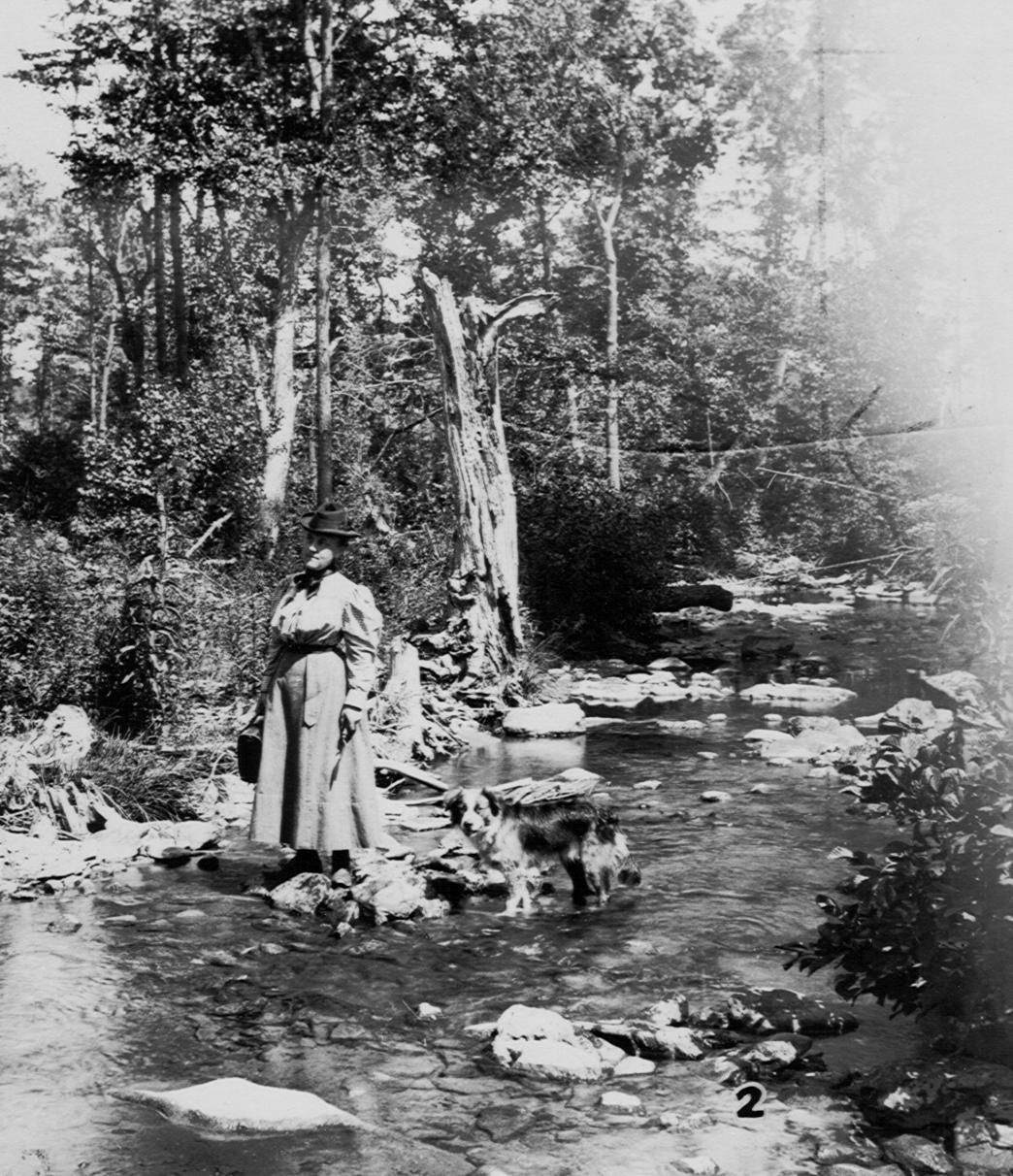
Mira Lloyd Dock, a native of Harrisburg, was born on December 25, 1853, and died on July 11, 1945. She was a trailblazer for the City Beautiful Movement, leaving behind a legacy of urban beautification and environmental preservation. She also found help and empowerment from J. Horace McFarland, who was a fellow Harrisburg citizen and urban reformer. McFarland found Dock to be an appropriate person to partner with in his endeavors as she had contacts scattered throughout the city due to her volunteering and advocacy. On December 20, 1900, McFarland convinced Mira Lloyd Dock to give a presentation to the Board of Trade, a group composed of<span> Harrisburg’s elite or middle class</span>. By showcasing potential improvements through her lantern slides and embracing civic action in Harrisburg, Mira Lloyd Dock and the Civic Club helped gain support for the city's campaign for improvement. Her speech ultimately sparked Harrisburg’s desire to incorporate more trees and parks within the city, to improve public health, and to beautify the urban space.
The Harrisburg Improvement Movement was an urban reform initiative that aimed to enhance aesthetics, expand green space, and improve public health. While other cities in the United States pursued beautification programs, Harrisburg was among the most successful in implementing reform ideals. Future initiatives in cities across the nation aimed to model their movements after the success of the Harrisburg campaign.
Her goals for the movement were not limited to beautification but also improving the health of Harrisburg citizens by enhancing water quality. One way she achieved this was by working to improve the waterways of the Susquehanna River, drastically benefiting both environmental and public health. Her campaign garnered immense support, as she emphasized not only the preservation of green space but also the health benefits for Harrisburg residents.
Dock had good reason to be concerned about the waterways surrounding the city. Many citizens were treating the Susquehanna as a dumping ground for trash and sewage, leading to poor water quality. She repeatedly addressed issues with sewage and water purity, often speaking to children benefiting from the playground program completed by the Women’s Civic Club. The members of that club visited schools to discuss proposals from the improvement campaign aimed at ensuring pure water. Dock hoped to inspire voting fathers to see the benefits of the campaign by emphasizing better sanitary conditions for both current and future residents.
Before Dock’s involvement, the Susquehanna River was polluted, treated as a dumping ground for trash and sewage. Recognizing the relationship between urban spaces and nature, Dock actively worked to address the river’s impact on community health. As a passionate advocate for clean water and urban reform, she made the preservation and beautification of Harrisburg’s waterways central to her work. She knew that improving the riverfront would not only enhance the city's aesthetics but also promote public health by addressing pollution and ensuring clean water.
Dock’s efforts to improve the riverfront began with public outreach. One of her key strategies for promoting the improvement movement was engaging the public, especially working-class citizens. She often spoke to community groups, including children, about the importance of maintaining clean streets and preserving natural resources like the river. Dock understood that educating the public was essential to gaining support for environmental and urban reform. By emphasizing the health benefits of a clean and accessible riverfront, she made a compelling case for preservation and beautification, encouraging citizens to take ownership of the city’s environmental future.
Dock’s campaigning also involved practical projects for cleaning and improving the surrounding areas. She advocated for proper sewage systems to prevent contamination of the river and promoted urban planning initiatives prioritizing sanitation. Her involvement with the Harrisburg Civic Club, which she co-founded, furthered these goals. She convinced the group to plant trees along the streets in 1898 and set up a summer playground program in 1900. Additionally, she organized a contest for window flower boxes and backyard gardens to spark public interest in beautifying their neighborhoods. This initiative promoted both cleanliness and awareness of the improvement campaign. Her efforts demonstrated how the movement could create not only an aesthetically pleasing environment but also a higher quality of life. Her actions created a renewed sense of pride within Harrisburg citizens as they could see their contributions come to fruition in the city’s transformations.
After propelling the improvement movement in Harrisburg, Dock began to advocate for clean water and improvement projects elsewhere. Through her role in the Conservation Department for the General Federation of Women’s Clubs, she helped pass the federal National Parks Bill in 1916. As a result of Dock's campaigning, Harrisburg gained designated spaces for sewage, flood control measures, and riverfront steps that beautified the waterways.
Victorian societal norms about what women could and could not do did not stop Mira Lloyd Dock from fulfilling her desires for a stronger, more visually appealing community in Harrisburg. Her work has forever influenced the beauty of not only the Harrisburg area, but other states that followed in Harrisburg’s footsteps. While her goals seemed bold at the time, her convincing lectures, volunteering, and public outreach all resulted in creating support for the improvement campaign. Much of Mira Lloyd Dock’s work has resulted in the beautification of the city, but it also offered practical health, economic, and political improvements and led to the creation of Riverfront Park. Mira Lloyd Dock was later accepted into the Pennsylvania Forestry Reservation Commission and continued to aid organizations with their beautification endeavors. Mira Lloyd Dock’s successes in Harrisburg expanded to a national scale as her campaigning inspired broader environmental reforms.
<span>A full list of the resources used in this story can be found <a href="http://www.zotero.org/groups/5114087/harrisburg_historical/collections/4VI2IZTC" target="_blank" rel="noreferrer noopener">here</a>.</p></p><p><em><strong><a href="https://harrisburghistorical.org/items/show/24">For more (including 4 images&#32;&amp;&#32;2 audio files) view the original article</a></strong></em></p>]]></summary>
    <published>2024-12-12T19:59:15+00:00</published>
    <updated>2026-04-17T19:49:02+00:00</updated>
    <link rel="alternate" type="text/html" href="https://harrisburghistorical.org/items/show/24"/>
    <id>https://harrisburghistorical.org/items/show/24</id>
    <author>
      <name>Phoebe Lemin</name>
    </author>
  </entry>
</feed>